I live in Japan, and every year a few friends from abroad send me the same message: “We have a week. What should we do?” What follows is the answer I actually give them — not the version that squeezes in Hiroshima, Kanazawa and Hokkaido because they all appear on a map that looks small.
Japan is not small. Tokyo to Kyoto alone is about the distance from London to Manchester and back. Seven days is exactly enough time to do one classic route properly, and nowhere near enough to do two. The itinerary below is the one I keep recommending because the people who follow it come home saying they enjoyed it, rather than that they survived it.
The quick answer
- Fly into Tokyo and out of Osaka (Kansai). An open-jaw ticket usually costs about the same as a return and saves you a wasted day backtracking.
- Three bases, not six: Tokyo 3 nights, Hakone 1 night, Kyoto 2 nights, Osaka 1 night.
- Skip the Japan Rail Pass for this trip. Point-to-point tickets on this route come to roughly ¥19,000. The 7-day pass is ¥50,000.
- Book early: accommodation first, then the Hakone ryokan, then teamLab tickets. Everything else can be decided the morning of.
- Realistic mid-range budget: about ¥25,000–40,000 per person per day excluding flights, and less if you eat like a local.
Why this shape works
Two decisions do most of the work.
Open-jaw flights. Flying home from Kansai instead of Tokyo removes a three-hour backtrack on your last day. Airlines price this fine; check it before you assume a return is cheaper.
Three bases. Every hotel change costs you roughly half a day once you count packing, checkout, transit and check-in. Four moves in seven days is already at the limit. If someone’s itinerary has you sleeping in six cities, they are selling you a map, not a holiday.
If you want to go deeper on any single city, my full Tokyo Travel Guide for First-Timers and Kyoto Travel Guide for First-Timers pick up where this leaves off.
Day 1: Land, get connected, do nothing ambitious
Most flights from Europe and North America land in the afternoon. Between immigration, baggage and the train, you will not be in central Tokyo before early evening.
Get a data connection sorted before you leave the airport — an eSIM you activate on landing is the least painful route for most people, and I compare the options honestly in Best eSIM for Japan. Then buy or set up an IC card for trains; Suica vs PASMO vs Welcome Suica explains which one you actually need.
For the airport run itself, see Narita Airport to Tokyo: All Options Compared — the Narita Express is around ¥3,140, the Keisei Skyliner around ¥2,580, and from Haneda you are looking at ¥500–650 and half the time.
Plan for exactly one thing on Day 1: dinner near your hotel and an early night. Jet lag from the west is brutal and there is no prize for fighting it.
Day 2: Old Tokyo
Start at Senso-ji in Asakusa before 8am. The temple is open, the approach street is empty, and the difference between 8am and 11am there is the difference between a shrine and a shopping crowd.
From there: Ueno Park and one museum (the Tokyo National Museum if you want context for everything you will see in Kyoto), then Akihabara in the afternoon. End the day in Yanaka if you want quiet backstreets, or Shibuya if you want the version of Tokyo you have seen in photos.
Where you sleep matters more than most guides admit in a city this large — Where to Stay in Tokyo breaks the areas down by what you actually want to be near.
Day 3: New Tokyo, and the one thing you must pre-book
Meiji Jingu in the morning — a genuine forest in the middle of the city — then Harajuku, Omotesando and Shinjuku. Go up to the free observation decks at the Tokyo Metropolitan Government Building rather than paying for a tower.
Reserve the evening for teamLab. It is the one Tokyo attraction that regularly sells out days in advance, and turning up hoping for a ticket does not work. I go through the timing and the traps in How to Get teamLab and Ghibli Museum Tickets Before They Sell Out — note that the Ghibli Museum is genuinely official-channel only, so ignore anyone offering you a shortcut.
Day 4: Hakone, and your first onsen
Take the Odakyu Romancecar from Shinjuku to Hakone-Yumoto — about 85 minutes, and the front seats face the windscreen. The Hakone Freepass is ¥7,100 for two days from Shinjuku (¥6,000 from Odawara) and covers the whole loop of mountain train, cable car, ropeway and pirate ship across Lake Ashi. The Romancecar itself is an extra ¥1,200 surcharge.
Do the loop clockwise, stop at the Hakone Open-Air Museum, and on a clear day you get Mt. Fuji across the lake. On a cloudy day you get sulphur, black eggs and a good story. Both are fine.
Stay in a ryokan with an onsen. This is the night that turns a trip into a memory, and it is the single upgrade I tell people not to cut. Hotel vs Ryokan explains what you are actually paying for and what the dinner involves.
Day 5: Hakone to Kyoto
Come down to Odawara and take the Tokaido Shinkansen west. Odawara to Kyoto is about 2 hours 20 minutes on a Hikari, roughly ¥12,000 for a reserved seat.
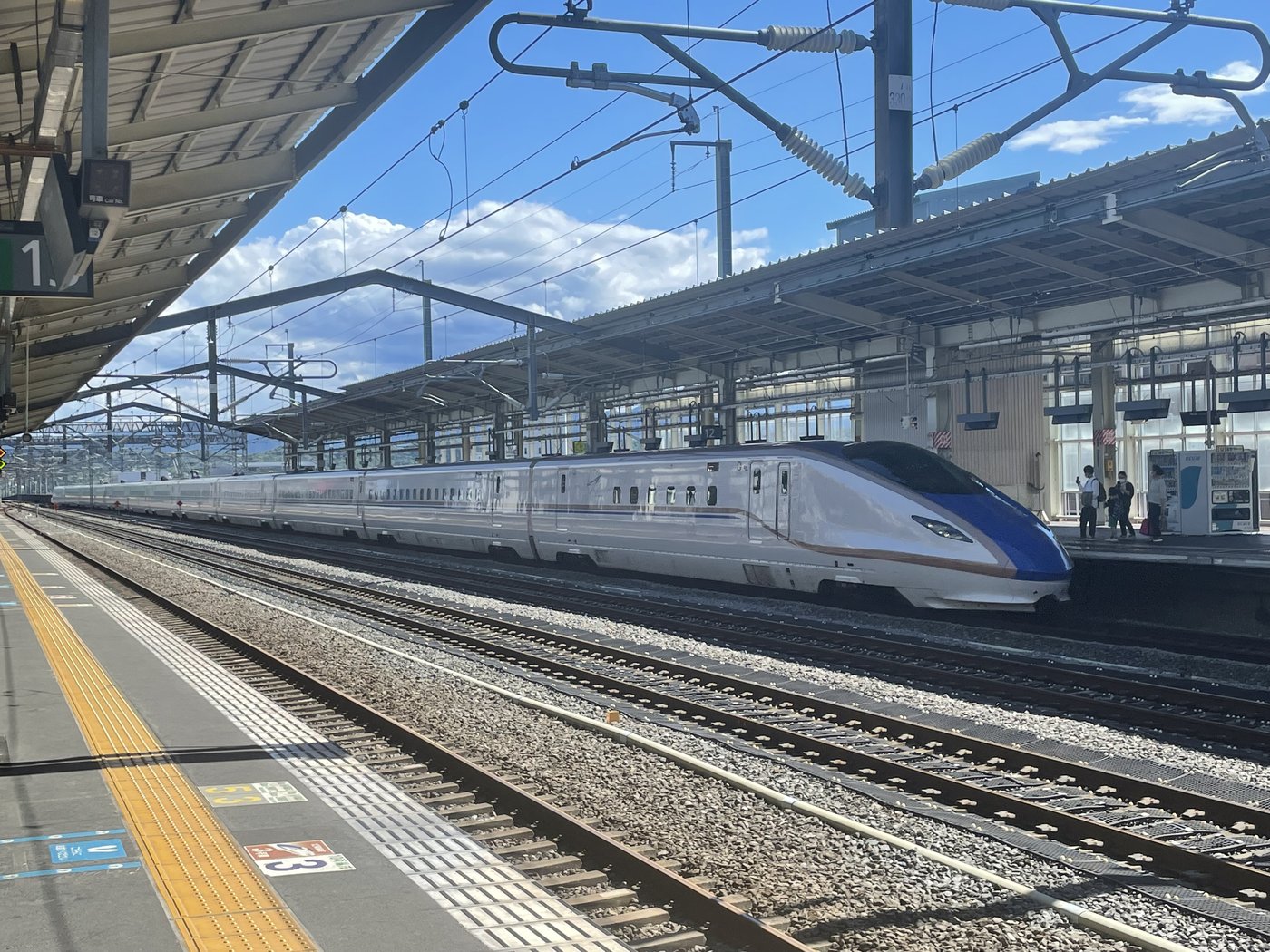
One 2026 note: during Golden Week, Obon, the September holidays and New Year, every Nozomi seat is reserved and the non-reserved cars disappear entirely — for 2026 that covered 7–16 August and 18–23 September. Outside those windows the first few cars are non-reserved and you can simply walk on. If your dates land in a peak period, book seats a few days ahead. Tokyo to Kyoto: Shinkansen vs Bus vs Flight has the full comparison if you are weighing the overnight bus.
Arrive Kyoto mid-afternoon, drop bags, and spend the evening walking Gion and the Higashiyama lanes as the lanterns come on. Do not book a formal dinner on a travel day.
One thing to budget for: Kyoto’s accommodation tax rose sharply on 1 March 2026. It is now ¥200 to ¥10,000 per person per night depending on your room rate — ¥400 for most mid-range hotels, but ¥1,000 once you cross ¥20,000 a night.
Day 6: Kyoto, properly
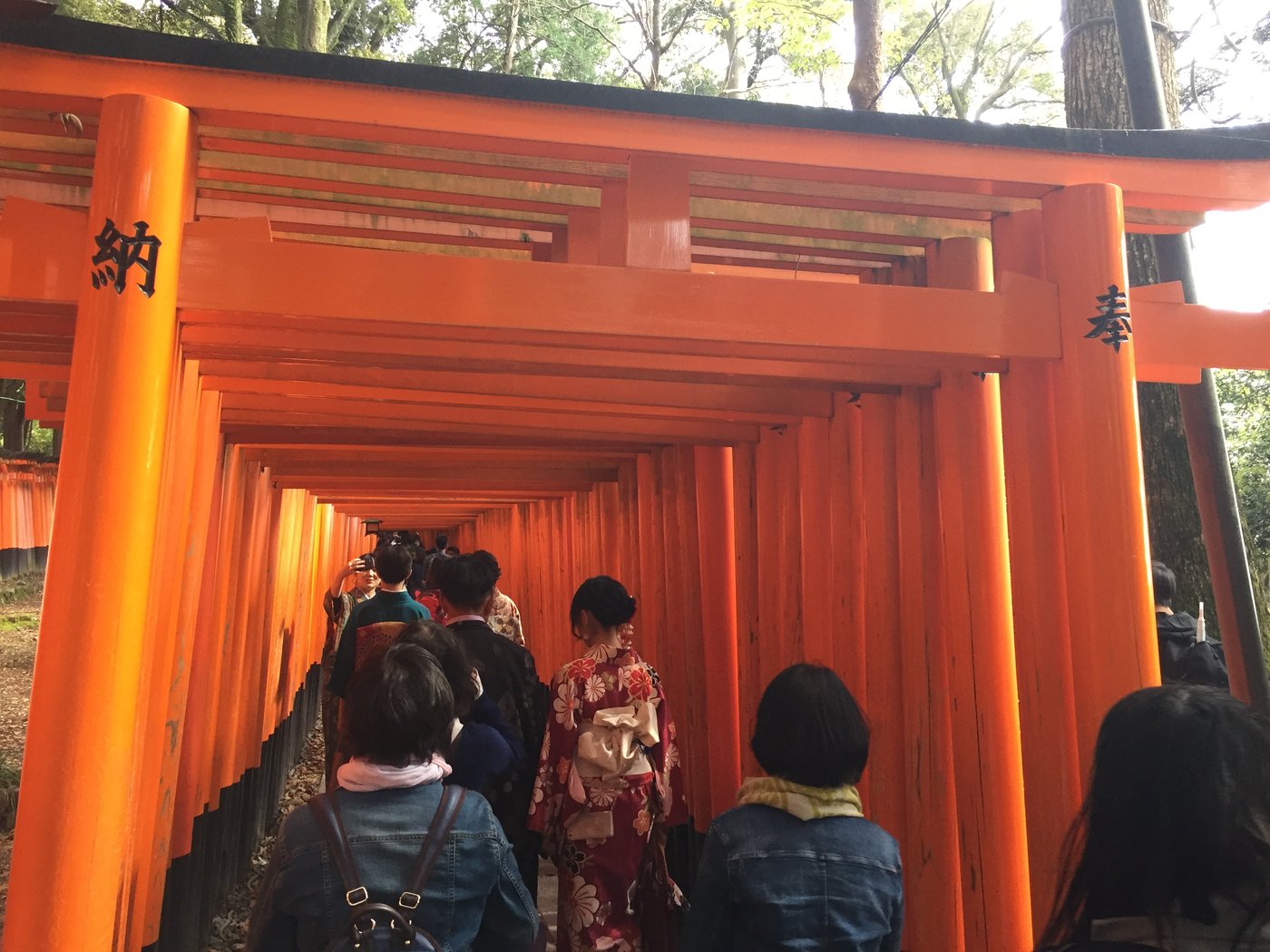
Fushimi Inari at sunrise. It is open 24 hours, it is free, and at 6:30am you will have the tunnel of gates close to yourself. By 10am it is a queue. This is the highest-return early start in Japan.
Then Arashiyama — bamboo grove first, Tenryu-ji garden second, which is the better of the two and half as crowded. Afternoon back east for Kiyomizu-dera, or Nanzen-ji and the Philosopher’s Path if you would rather walk than queue.
Kyoto buses are slow and packed. Use trains where you can, and do not be proud about taxis for short hops — a ¥1,200 taxi that saves 40 minutes is good value on a two-day stay.
Day 7: Nara or Osaka
Pick one. Both are 35–50 minutes from Kyoto.
Nara for Todai-ji’s Great Buddha and the deer — Kintetsu from Kyoto is ¥760, or ¥1,280 with a reserved limited express seat. It is the better half-day if you want temples and quiet.
Osaka for food, neon and Dotonbori — ¥580 on the JR special rapid, about 30 minutes. It is the better evening.
Do both if you start early: Nara in the morning, Osaka for the night. Sleep in Osaka so your last morning is a short run to Kansai Airport rather than a long one from Kyoto. Where to Stay in Osaka covers which side of the city to pick. The Haruka limited express from Osaka or Kyoto to Kansai Airport runs roughly ¥3,000–3,800 from Kyoto.
What this actually costs in 2026
Approximate, per person, and worth confirming before you book anything non-refundable.
| Item | Rough cost |
|---|---|
| Airport transfer in (Narita) | ¥2,600–3,150 |
| Tokyo local transport, 3 days | ¥2,000–3,000 |
| Hakone Freepass + Romancecar | ¥8,300 |
| Odawara to Kyoto Shinkansen | ~¥12,000 |
| Kyoto local transport, 2 days | ¥1,500–2,500 |
| Kyoto to Nara or Osaka | ¥580–1,280 |
| Osaka to Kansai Airport | ¥1,000–3,600 |
| Transport total | ≈ ¥29,000–34,000 |
Of that, only about ¥19,000 is on JR lines. The 7-day Japan Rail Pass (commonly called the JR Pass) is ¥50,000 through the official site, rising to ¥53,000 through overseas agencies from 1 October 2026. For this route it is a clear loss. It starts to make sense on longer, faster-moving trips — Japan Rail Pass 2026: Is It Still Worth It? runs the numbers properly.
Two smaller line items people forget: Japan’s international departure tax tripled to ¥3,000 on 1 July 2026, though it is collected inside your airfare rather than at the airport, and Kyoto’s lodging tax above.
Mistakes I watch first-timers make
Overpacking the days. Three sights a day is a full day here, because everything involves walking.
Overpacking the suitcase. If you forget something, you will find it. Umbrellas are ¥700 at any convenience store, clothes are cheap at Uniqlo, and a power bank is a short walk to any electronics shop or a ChargeSPOT rental stand. Our Japan Packing List is deliberately short for this reason.
Assuming cards work everywhere. They mostly do in cities now, but small restaurants, shrines and older shops are still cash. Carry ¥10,000–20,000 and top up at a 7-Eleven ATM.
Booking Kyoto last. Kyoto sells out before Tokyo does, especially in April and late November.
FAQ
Is 7 days enough for Japan? For one route, yes. For Tokyo, Kyoto and Hiroshima and Hokkaido, no. Pick the Golden Route and come back.
Should I add Mt. Fuji? Hakone gives you Fuji views with an onsen attached, which is why it is in this itinerary. If you want the mountain itself, swap Hakone for Kawaguchiko — same slot, better views, fewer things to do in bad weather.
Which direction, Tokyo first or Kyoto first? Tokyo first. Jet lag is easier to handle in a city with 24-hour food, and Kyoto is a better place to end on.
Do I need to speak Japanese? No. Station signage is bilingual, translation apps handle menus, and staff are patient. Learning sumimasen and arigatou gozaimasu will still improve every interaction you have.
When should I avoid these dates? Golden Week (late April to early May), Obon (mid-August) and New Year. Domestic travel peaks, trains fill, and prices rise.
The verdict
Tokyo three nights, Hakone one, Kyoto two, Osaka one, flying home from Kansai. Buy point-to-point train tickets rather than a rail pass, spend the saved ¥30,000 on a proper ryokan night, and start two of your days before 7am.
That is the trip. It is not exhaustive, and it is not supposed to be — the point of a first week in Japan is to find out which part you want to come back for.
Written from Japan by the Wayfarer Japan team. Prices and times are approximate and change — confirm before booking.