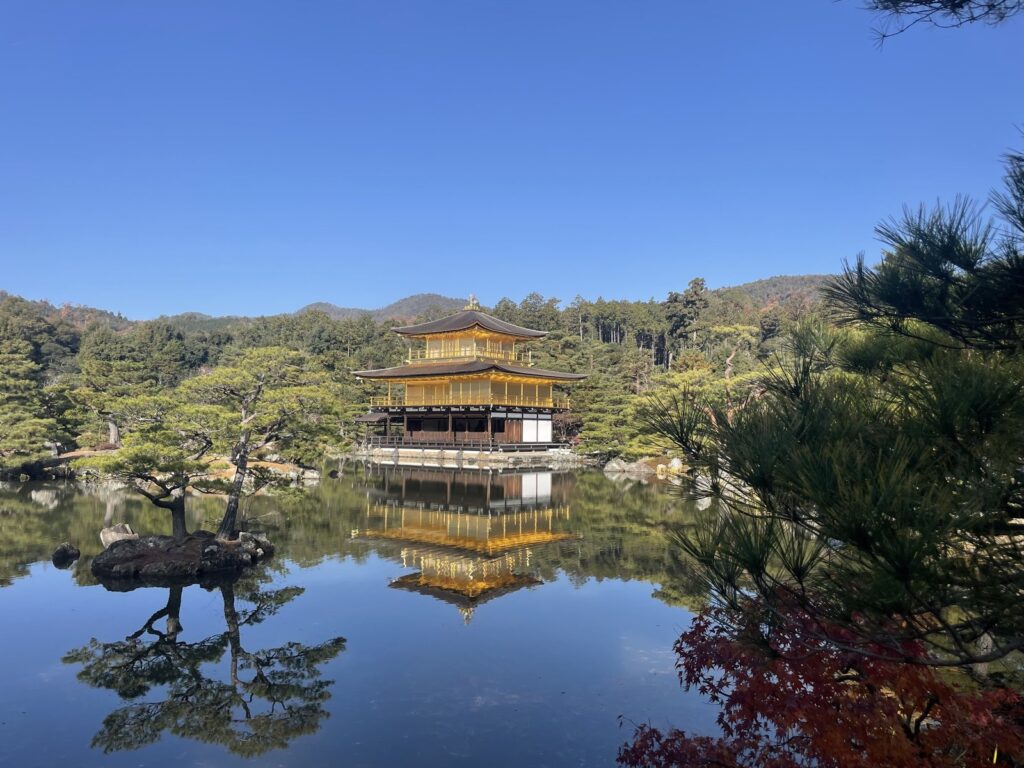
I live in Japan, and Nara is the day trip I recommend most often to friends flying in — not because it’s the most spectacular place in the country, but because it’s the easiest big thing to do badly and the easiest to do well. Half an hour from Kyoto, forty minutes from Osaka, and the whole reason you came is within a fifteen-minute walk of the station.
Nara was Japan’s capital in the 8th century, before Kyoto existed. What’s left is a compact park full of enormous wooden buildings, a bronze Buddha that has been sitting in the same spot for over 1,200 years, and roughly 1,700 wild deer that have worked out exactly how tourists behave.
The quick answer
- Nara is a half-day, not a full day. Todai-ji, the deer and Kasuga Taisha take about four hours at a relaxed pace. Add Naramachi and lunch and you have a comfortable full day.
- Go from Kyoto by Kintetsu, not JR — around ¥760 and 45 minutes on an ordinary express, or ¥1,280 and 35 minutes on a Limited Express. Kintetsu-Nara station is a five-minute walk from the park; JR Nara is about twenty.
- From Osaka, take Kintetsu from Osaka-Namba — roughly ¥680, 40 minutes on a Rapid Express, no reservation needed.
- Todai-ji’s Great Buddha Hall costs ¥800 for adults, ¥400 for ages 6–12. Nara Park itself is free and always open.
- Deer crackers are ¥200 a bundle, cash only. Feed them fast, and don’t wave them around.
- Go early. By 09:00 the Great Buddha Hall is calm; by 11:00 it is a queue. All prices below are approximate for 2026 — confirm before you book.
Getting there: Kintetsu beats JR, and the reason is walking distance
Nara has two stations, and this catches out almost everyone travelling on a rail pass.
From Kyoto. The Kintetsu Kyoto Line runs from a dedicated concourse inside Kyoto Station. An ordinary express is ¥760 and takes about 45–55 minutes, sometimes with a same-platform change at Yamato-Saidaiji. The Limited Express does it in about 35 minutes for ¥1,280 total — the same ¥760 base fare plus a ¥520 reserved-seat ticket. JR’s Miyakoji Rapid is slightly cheaper at ¥720 and takes about 45 minutes, and it’s covered by the Japan Rail Pass (commonly called the JR Pass).
From Osaka. Kintetsu’s Rapid Express from Osaka-Namba to Kintetsu-Nara is about ¥680 and 40 minutes, running through the middle of Osaka’s southern shopping district. JR’s Yamatoji Rapid from Osaka Station is around ¥840 and 45–50 minutes, or you can pick it up at Tennoji.
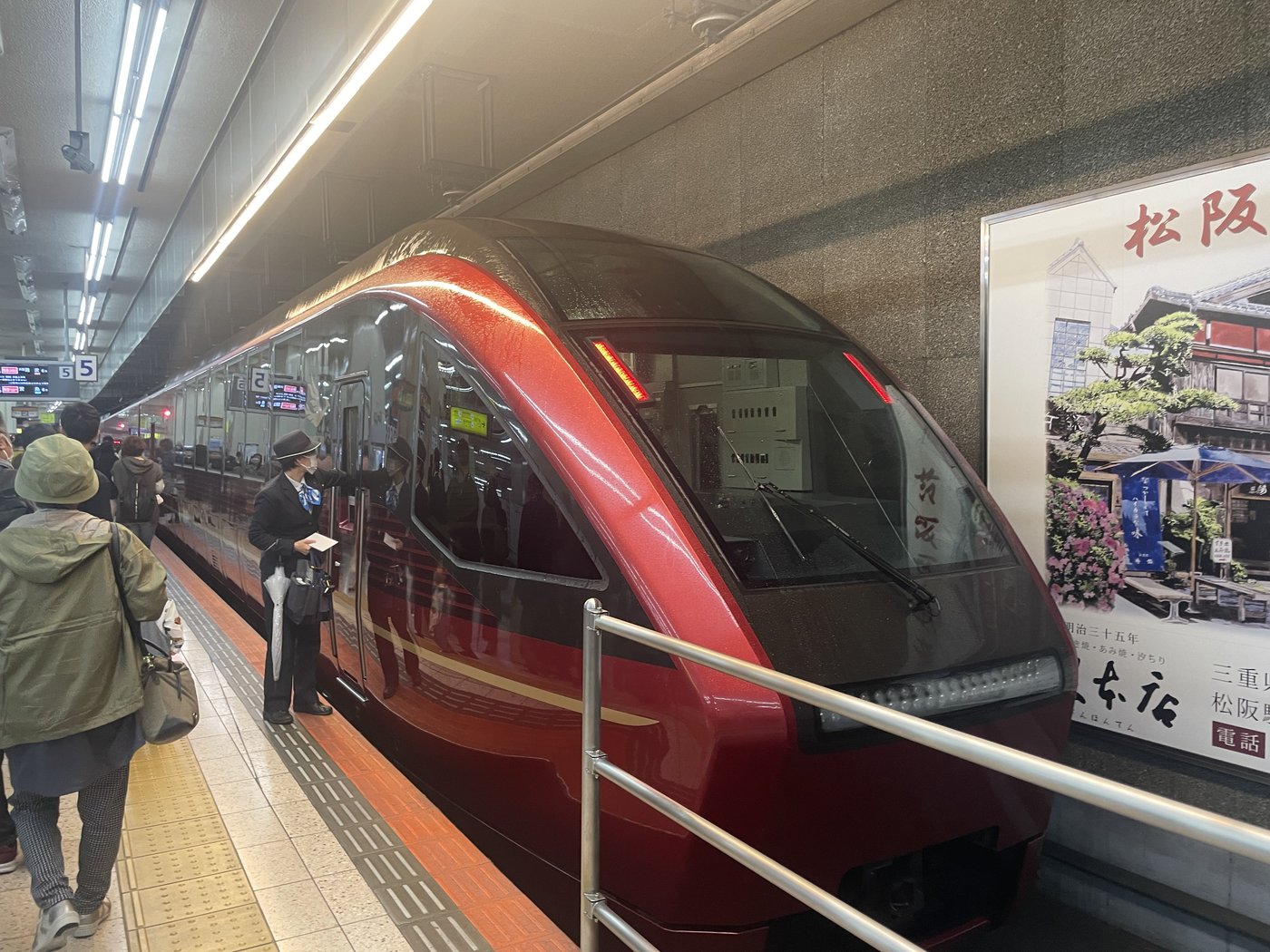
The fares are close enough that the deciding factor is where you’re dropped. Kintetsu-Nara station puts you five minutes from the edge of Nara Park. JR Nara station sits about a kilometre west, which is a dull twenty-minute walk down a commercial street, or a short bus ride you’ll have to work out on arrival. If you’re holding a Japan Rail Pass the JR route is effectively free and worth taking; otherwise take Kintetsu. I go through how Japanese fares are structured — base fare plus limited express surcharge — in Japan Train Fares Explained, and whether the pass earns its keep at all in Is the Japan Rail Pass Worth It?.
👉 Klook Kintetsu Kyoto to Nara express train ticket
There’s also a Kintetsu Rail Pass 1-day at ¥1,900 (child ¥950), which covers Kintetsu lines around Osaka, Nara and Kyoto plus Nara Kotsu buses. It’s sold only to short-term visitors, so as a resident I can’t buy one myself — but the arithmetic is simple enough: a return from Kyoto or Osaka is ¥1,360–¥1,520, so it only pays off if you’ll also use the local buses or make a second Kintetsu trip the same day.
The deer, and how not to get bitten
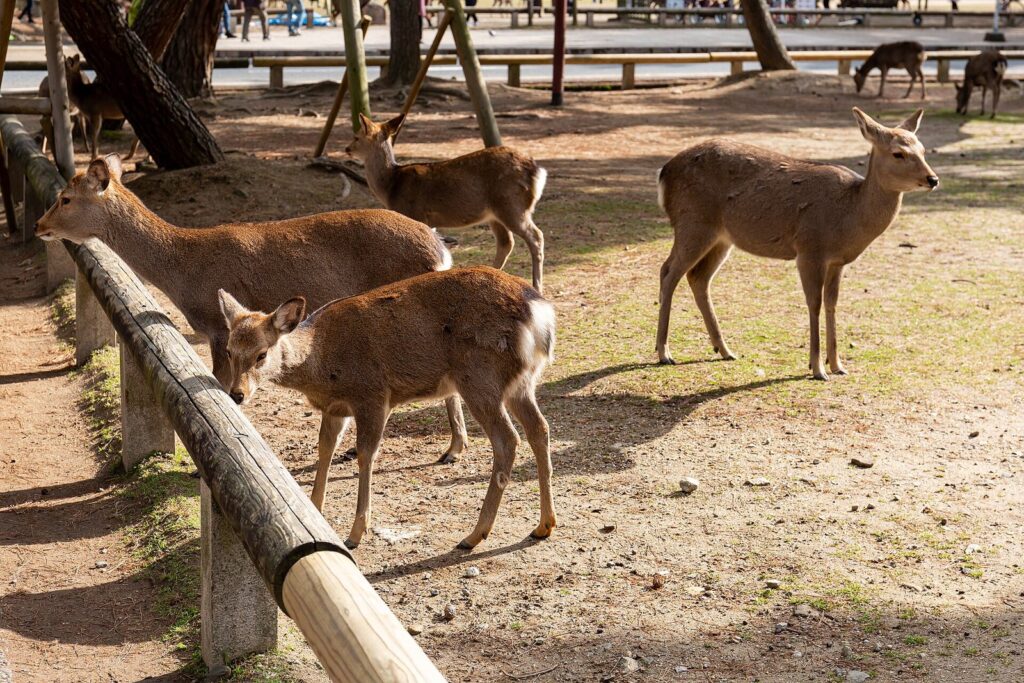
The deer of Nara Park are wild animals, protected as a national natural monument, and they are not tame in the way people expect. They are habituated, which is a different thing.
Crackers (shika senbei) cost ¥200 a bundle from wooden stalls around the park. The vendors take cash only. The moment you buy them, several deer will notice, and this is where visitors get into trouble. A few rules that actually matter:
- Feed them immediately and one cracker at a time. Holding the bundle up while your friend takes a photo is how you end up with a deer’s mouth on your shirt.
- Show your empty hands — palms up, at their eye level — when you’re finished. They understand the gesture and lose interest.
- Don’t feed them anything else. Not bread, not snacks, not the paper the crackers are wrapped in. It genuinely makes them ill.
- Give males a wide berth from roughly September to November, when they’re in rut and their antlers haven’t yet been cut, and give mothers with fawns space in late spring.
- Never hit or chase a deer. It’s an offence under Japan’s cultural properties law, not merely rude.
Yes, some of them bow. It’s a learned trade for food, not politeness, and they will keep bowing long after you’ve run out.
Todai-ji and the Great Buddha
The Daibutsuden — the Great Buddha Hall — is the reason Nara exists on most itineraries. Even after being rebuilt smaller than the original, it remains one of the largest wooden buildings on earth, and the 15-metre bronze Buddha inside was cast in 752 using so much of Japan’s copper that it arguably bankrupted the country.
Admission is ¥800 for adults and ¥400 for children 6–12, or ¥1,200 combined with the Todai-ji Museum. Opening hours are 07:30–17:30 from April to October and 08:00–17:00 from November to March. That 07:30 summer opening is the single best piece of advice in this article: arrive at opening and you’ll have the hall to yourself for twenty minutes.
Behind the Buddha there’s a pillar with a hole at its base, said to be the size of the Buddha’s nostril; crawling through it is supposed to bring enlightenment. Adults get stuck. It’s a rite of passage for Japanese schoolchildren and worth watching even if you don’t attempt it.
The rest of the park, in walking order
From Todai-ji the natural route runs south along a wooded path to Kasuga Taisha, the shrine founded in 768 and lined with around 3,000 stone and bronze lanterns. Walking the approach is free; the paid inner areas run about ¥500–¥700 each and are optional unless you want to stand among the hanging bronze lanterns.
On the way you’ll pass the Nara National Museum (around ¥700, free for under-18s), which holds one of the best Buddhist sculpture collections in the country — though its dedicated sculpture hall closes for renovation on 14 September 2026 and is not due to reopen until around spring 2028. If you happen to be here in late October or early November (24 October–9 November in 2026), its annual Shosoin Exhibition of 8th-century imperial treasures is genuinely world-class, requires timed entry booked ahead, and costs around ¥2,000.
For a quieter half hour, Isuien Garden (about ¥1,200 with its small art museum) borrows the roof of Todai-ji as part of its view — a technique called shakkei. And south of the park, Naramachi is a grid of Edo-period merchant houses, cafés and craft shops where almost no tour groups go.
Eating in Nara
Two things are worth going out of your way for. Kakinoha-zushi is pressed sushi wrapped in a persimmon leaf — a preservation method from the days when the sea was a mountain range away — and it’s sold at both stations, making it a perfect train lunch. And in the Mochiidono arcade, Nakatanidou pounds mochi in public at frankly alarming speed; the yomogi mochi is ¥200 or so and the show is free.
If you’re visiting in August
Nara’s best hours in summer are after dark, and two events are worth planning around:
- Nara Tokae, 5–14 August 2026, 19:00–21:30. Around 20,000 candles are lit through Nara Park each evening. You can light your own for a ¥1,000 donation. Deer wander through the candlelight, which is as strange and lovely as it sounds.
- Todai-ji’s Manto Kuyoe, the evening of 15 August, 19:00–21:30. Roughly 2,500 lanterns are set out in front of the Great Buddha Hall, and the window above the entrance is opened so the Buddha’s illuminated face looks out over the courtyard. Entering the hall costs the usual ¥800 (¥400 for ages 6–12) unless you’ve registered a lantern offering, but the illuminated face can be seen from the approach for nothing. The window also opens free on the nights of 13–14 August and from midnight on 1 January.
Both fall in the middle of Obon, when domestic travel peaks — I cover how to plan around that fortnight in Japan in Summer. And it will be hot: bring water, use the shaded path to Kasuga Taisha, and don’t try to do Nara between 13:00 and 15:00 in August.
Should you stay the night?
Most people don’t, and most people are right — Nara works beautifully as a day trip from either Kyoto or Osaka, and both cities have far more to do after dark. But an overnight stay buys you the park at dawn, which is the version of Nara worth having: mist in the trees, no coaches, deer asleep on the lawns.
If you’d rather not work out the trains at all, guided half-day trips from Kyoto and Osaka bundle the transport with a guide who can actually explain what you’re looking at inside Todai-ji.
👉 GetYourGuide Nara day tour from Kyoto or Osaka
FAQ
How long do I need in Nara? Four hours covers the deer, Todai-ji and Kasuga Taisha. Six to seven gets you Naramachi, a garden and a proper lunch.
Can I do Nara and Kyoto in the same day? Yes, comfortably. Go to Nara first thing, be back in Kyoto by mid-afternoon. Don’t try to add Osaka as well.
Are the deer dangerous? They’re wild animals with hard heads and, in autumn, antlers. Injuries are usually minor and usually involve someone teasing them with food. Follow the rules above and you’ll be fine.
Is Nara worth it if I’ve already seen Kyoto’s temples? Yes, because the scale is different. Nara’s buildings are older, bigger and less crowded, and the park setting is nothing like Kyoto’s city temples.
Do I need to book Todai-ji in advance? No. You buy admission at the gate. Only special exhibitions at the Nara National Museum need advance timed tickets.
Where should I base myself? Kyoto or Osaka — see Where to Stay in Kyoto and Where to Stay in Osaka. Nara itself only makes sense if you specifically want the early morning.
The verdict
Take the Kintetsu train, arrive before 09:00, buy one bundle of crackers and hand them out fast, walk to Todai-ji while the hall is still quiet, and drift south to Kasuga Taisha and Naramachi as the tour buses arrive. That’s the whole trip, it costs under ¥3,000 in transport and admission from Kyoto or Osaka, and it’s the easiest 1,300-year-old thing you will ever see.
Written from Japan by the Wayfarer Japan team. Prices and schedules are approximate for 2026 — confirm before you book.