I live in Japan, and the first week of August is when I stop pretending. Tokyo sits around 34-35C with 75-80% humidity, the pavement radiates heat until midnight, and any plan involving walking between temples quietly becomes a plan about finding the next air-conditioned building. Japanese people have handled this for centuries in the obvious way: they go up, or they go north. There is a whole summer tourism industry built on that migration, and most first-time visitors never notice it, because none of it sits on the Tokyo-Kyoto-Osaka line. If your trip lands in July, August or early September, two or three cooler nights is the best comfort upgrade available.
The quick answer
- Easiest from Tokyo: Karuizawa — about 64 minutes by shinkansen, roughly 1,000 m up, daytime highs in the low-to-mid 20s C.
- Best scenery for the effort: Oku-Nikko (Lake Chuzenji and the Senjogahara marsh) at about 1,270 m.
- Best walking: Kamikochi at 1,500 m — car-free, and the buses now board reserved passengers first.
- Best trip north: Hokkaido — Sapporo highs are usually 25-28C rather than 34C.
- Rule of thumb: air cools roughly 6C per 1,000 m of elevation. That is the whole trick.
- Book early. Obon (roughly 11-16 August) is when the entire country moves at once.
1. Karuizawa — the one you can do on a whim
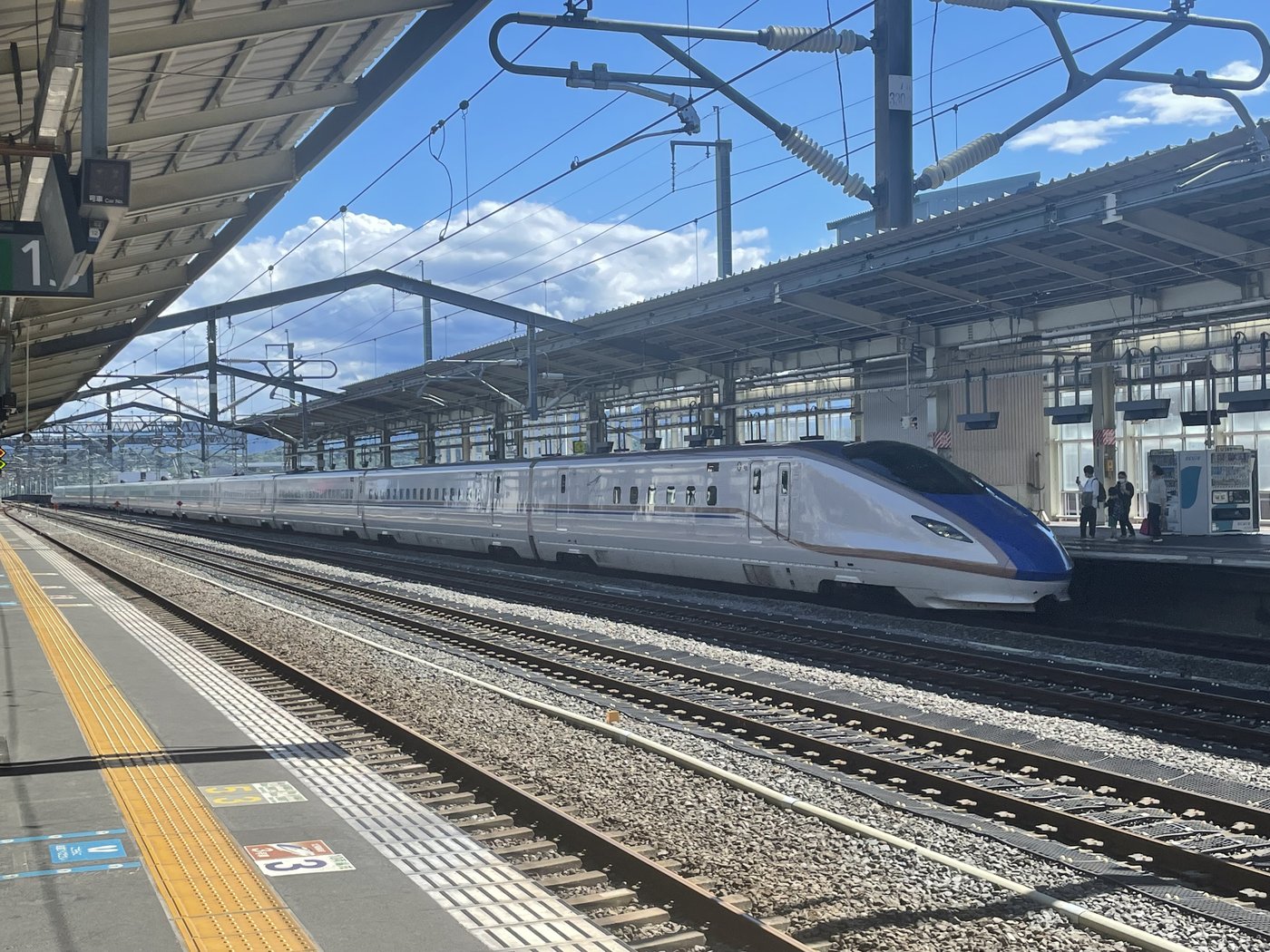
Karuizawa is a former missionary summer retreat in Nagano that became Tokyo’s holiday-home belt, and it is the least-effort escape here. The Hokuriku Shinkansen reaches it in about 64 minutes from Tokyo Station, with unreserved seats around ¥5,600 and reserved around ¥6,130 one way (approximate — confirm before booking). Take an Asama or Hakutaka; the fastest Kagayaki trains do not stop.
At roughly 1,000 m, daytime temperatures sit in the low-to-mid 20s C and evenings need a light layer. The station has a large outlet mall, but the good part is ten minutes’ walk away: Kumoba Pond, the tree-lined Old Ginza street, cycling paths through larch forest, and Shiraito Falls a short bus ride north. One night beats a day trip — the drop after dark is the point. The catch is that everyone in Tokyo knows this, so August weekends are busy and priced accordingly.
👉 Klook Tokyo to Karuizawa shinkansen tickets
2. Oku-Nikko — an alpine lake two hours from the city
Most visitors do Nikko as a day trip for the Toshogu shrines and go home. That part sits at only about 600 m and is warm in August. The cool half is Oku-Nikko, “inner Nikko”, up the hairpin Irohazaka road at around 1,270 m.
From Tobu Nikko Station the bus to Chuzenji Onsen takes about 50 minutes and costs about ¥1,250 one way; carrying on to Yumoto Onsen is about 80 minutes and ¥1,950. The two-day unlimited bus passes (about ¥2,300 to Chuzenji, ¥3,500 to Yumoto) usually pay for themselves in one round trip. Up there you get Lake Chuzenji, the 97 m Kegon Falls, and the Senjogahara marsh — a flat boardwalk trail of two to three hours across open highland grassland that feels nothing like the rest of Japan. For more in the same spirit, see Best Day Trips from Tokyo You Can Book Online.
3. Kamikochi — worth the logistics
Kamikochi is a river valley at 1,500 m inside the Northern Japan Alps, and it is the most beautiful easy walk in the country. Private and rental cars are banned; everyone arrives by bus, and the valley opens roughly 17 April to 15 November.
The usual route is via Matsumoto: either the direct highway bus from Matsumoto Bus Terminal, or the Kamikochi Line train to Shin-Shimashima (about ¥710, and not a JR line) plus a bus. Since 2025, Alpico buses between Matsumoto/Shin-Shimashima and Kamikochi run on a reservation-priority system in both directions — booked passengers board first and anyone without one only gets on if seats are left, so book on the operator’s own site, because turning up on an August morning is not a plan. The flat riverside path from Taisho Pond to Kappa Bridge to Myojin Pond takes three to four hours round trip with almost no climbing, and the water is glacier-clear. Daytime highs are often 20-24C and mornings genuinely cold.
4. Hokkaido — go north instead of up
Hokkaido is a whole trip rather than a side trip, but it is the most reliable way to leave the heat behind. Haneda to New Chitose takes about 90 minutes on one of the busiest air routes in the world — roughly a thousand flights a week — which keeps fares competitive. Sapporo in August typically runs highs of 25-28C with lows near 20C. Be honest with yourself, though: Hokkaido is not cold, it is humid, and 30C days do happen now. What you reliably get is comfortable mornings and evenings.
Timing matters for the flower fields. Furano and Biei lavender runs late June to early August, and Farm Tomita’s Lavender East is scheduled for roughly 20 June to 20 July in 2026 — arrive mid-August and expect it cut. The rolling hills, sunflower fields and Biei’s Blue Pond remain, as does Daisetsuzan National Park, where the Asahidake ropeway puts you at 1,600 m in about ten minutes.
5, 6 and 7: Tateyama, Hakuba and Oirase Gorge
The Tateyama Kurobe Alpine Route crosses the Northern Alps between Toyama and Nagano by cable car, ropeway, trolleybus and highland bus, topping out at Murodo at 2,450 m where summer days are often 10-15C. The one-way traverse from Tateyama Station to Ogizawa is about ¥10,940 for an adult. Buy the official WEB ticket in advance and reserve a time slot for each vehicle — without one, peak-week queues run to hours.
Hakuba empties after ski season and reopens as a hiking base, which means alpine scenery at off-peak room rates. The Adam Gondola runs roughly late May to early November at about ¥2,200 round trip for adults; with two chairlifts, the Happo Alpen Line lifts you 3.4 km into the alpine zone, and the walk from the top station to Happo Pond takes about an hour each way.
Oirase Gorge, in Aomori, sends a mossy forest stream 14 km down from Lake Towada with a path alongside the whole way. Buses run roughly hourly April to mid-November: about 135 minutes and ¥3,050 from Hachinohe, or 165 minutes and ¥3,480 from Aomori City. They are JR buses covered by the nationwide Japan Rail Pass, which is unusual and worth knowing.
Practical things I’d tell a friend
Layers, not a coat. Highland mornings run 10-15C while Tokyo is at 28C by breakfast. A light fleece and a rain shell cover everything here. Forget them and don’t panic: Uniqlo and GU exist in Matsumoto, Nagano and Sapporo, convenience stores sell umbrellas for around ¥700, and electronics shops and ChargeSPOT rentals cover power. Our Japan Packing List has the full version.
Rail passes cover less of this than you’d hope. The shinkansen legs are covered by the nationwide pass; the Alpine Route and the Kamikochi and Nikko buses are not. Japan Rail Pass 2026: Is It Still Worth It? walks through the arithmetic.
Mobile signal thins out. Kamikochi, Oku-Nikko and the high Alpine Route sections are patchy on any carrier, so download offline maps and bus confirmations before going up. As a resident I use a normal Japanese contract rather than a tourist eSIM, so I can’t claim to have tested one — but coverage maps and traveller reports line up, and Best eSIM for Japan compares the options honestly.
Obon is the wall. Around 11-16 August the whole country travels, and reserved seats, highland inns and rental cars go first. Japan in Summer: Surviving the Heat, Festivals and Obon covers that week in detail.
FAQ
Is Hokkaido really cooler, or is that a myth? Real, but often oversold. Sapporo highs of 25-28C against Tokyo’s 34-35C is a genuine difference and the nights are far better, but it is not a cold place in August.
Can I do any of these as a day trip from Tokyo? Karuizawa and Oku-Nikko, comfortably. Hakuba and Kamikochi, technically but miserably. Hokkaido, Tateyama and Aomori are overnight trips.
Is it cheaper than the cities? No. August is peak season in the highlands precisely because everyone is fleeing the heat. Hakuba is the exception.
What about typhoons? August and September are typhoon months, and mountain areas close trails, ropeways and roads when one passes. Keep a flexible day and check operator sites the morning you travel.
Is Hakone a good heat escape? Partly. It is higher and greener than Tokyo but only around 400-700 m, so it is cooler by a few degrees rather than a whole season — see Hakone Guide: Onsen, Mt. Fuji Views and Art for what it does do well.
The verdict
With one spare night, take the shinkansen to Karuizawa and sleep somewhere that doesn’t need air conditioning. With two, go to Kamikochi and walk the river. With four or more, fly to Hokkaido and make it the main event. All three beat the alternative, which is queuing for Kyoto temples at 35C in full sun and telling yourself you’re having a good time. If you can still move your dates, Best Time to Visit Japan explains which months avoid the problem entirely.
Written from Japan by the Wayfarer Japan team — we live here, ride these trains, and update this guide as fares and schedules change.