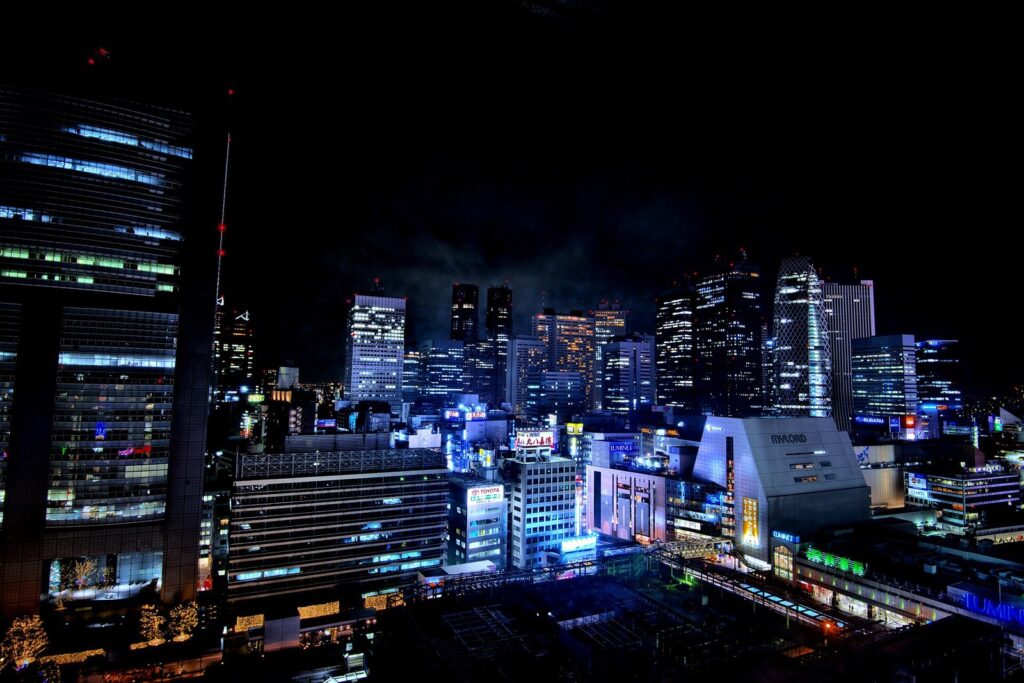
I live in Japan, and Shinjuku is where a lot of first-time visitors end up staying — it has the hotel density, the trains go everywhere, and it is the one Tokyo place name people recognise before they land. It is also the single most awkward destination from Narita, because Shinjuku sits on the west side of Tokyo and Narita is 60 kilometres east of it. Whatever you do, you are crossing the entire city.
That means the choice matters more here than it does for, say, Tokyo Station. The gap between the best route and the worst one is about 40 minutes and ¥2,000. Here is how I would actually pick, and what changed with the JR East fare revision in March 2026.
The quick answer
- Jet-lagged, heavy bags, no appetite for transfers? Take the Narita Express (N’EX) direct to Shinjuku. About 90 minutes, roughly ¥3,330 one way in ordinary reserved.
- Want the fastest realistic time? Keisei Skyliner to Nippori, then the Yamanote Line. Around 60–70 minutes total, roughly ¥2,500–2,800, with one transfer.
- Travelling with a family, a stroller, or three suitcases? The Airport Limousine Bus to Busta Shinjuku or the Shinjuku hotels — ¥3,600 adult, ¥1,800 child, 85 minutes to two hours depending on traffic.
- On a budget? The TYO-NRT bus to Tokyo Station (¥1,500) plus the Chuo Line to Shinjuku (about ¥230) comes to roughly ¥1,700 total in around 80–90 minutes. This is the best value route into Shinjuku, full stop.
- Holding a Japan Rail Pass (commonly called the JR Pass)? The N’EX is fully covered, including the reserved seat. Take it and stop reading.
- Landing after 22:30? Check the last departures before you commit — see the late-arrival section below.
- All fares are approximate for 2026 and moved upward with the March 14 JR East revision. Confirm before you book.
The routes at a glance
| Narita Express | Skyliner + Yamanote | Limousine Bus | TYO-NRT bus + Chuo | Taxi / private car | |
|---|---|---|---|---|---|
| Time to Shinjuku | ~85–95 min | ~60–70 min | ~85–120+ min | ~80–90 min | ~85 min, traffic permitting |
| One-way cost | ~¥3,330 (Green Car ~¥4,100) | ~¥2,500–2,800 | ¥3,600 | ~¥1,700 | From ~¥31,500 plus tolls |
| Transfers | None | One, at Nippori | None | One, at Tokyo Station | None |
| Luggage | Racks with cable locks | Racks, but you carry bags through Nippori | Stowed in the hold | Stowed in the hold, then you carry | Boot |
| Best for | Direct, comfortable, JR Pass holders | Speed | Families, big bags, named hotels | Budget travellers | Late arrivals, groups of four |
Narita Express: the one-seat ride
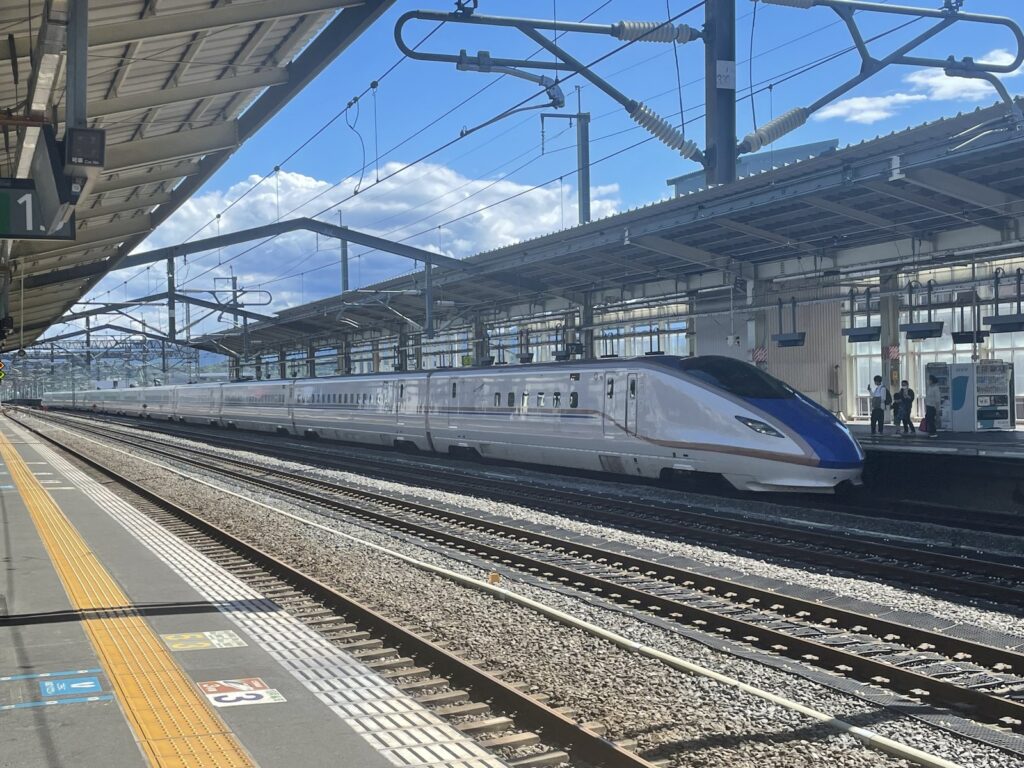
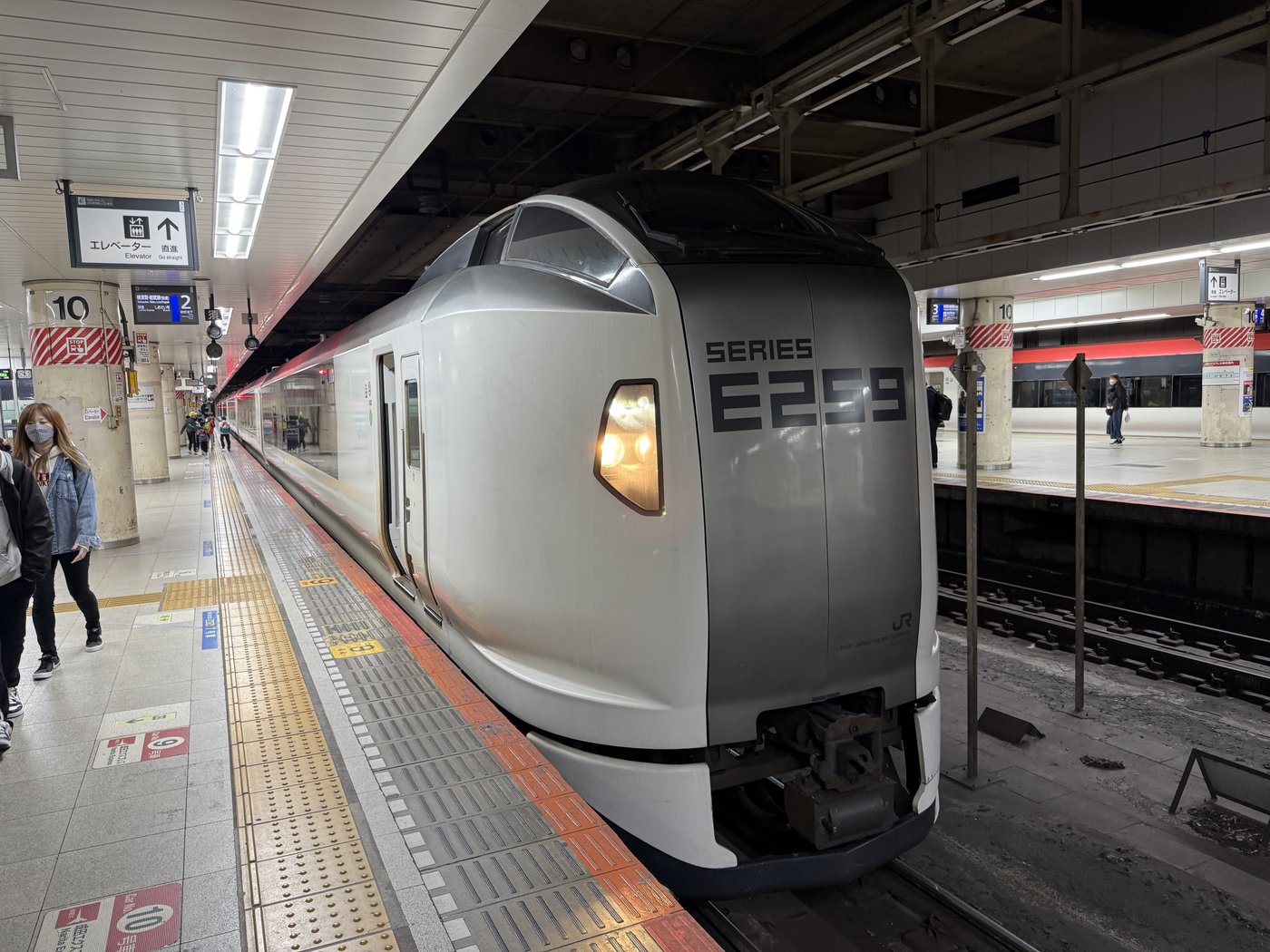
The N’EX is the only train that goes Narita to Shinjuku without a change. It runs roughly every 30 to 60 minutes, all seats are reserved, and there are luggage racks at the car ends with a cable-lock system you set with a four-digit code.
One thing catches people out: most N’EX services split at Tokyo Station. The front half continues to Shinjuku and beyond, the back half goes to Shinagawa and Yokohama. Your reserved seat is in the correct half already, so this only matters if you have wandered down the train — stay in your assigned car and you are fine.
Since the March 2026 fare revision, Narita Airport to Shinjuku in ordinary reserved is about ¥3,330, with the Green Car around ¥4,100. The Green Car is not worth the difference on this route unless the train is full.
If you are coming back to Narita on the same trip, the N’EX Tokyo Round Trip Ticket is the obvious buy: ¥5,200 for adults, ¥2,600 for children, valid 14 days, outbound and return on any two days inside that window. It covers Tokyo, Shinagawa, Shibuya, Shinjuku and Yokohama, and you can arrive at one station and depart from another. It is sold only to travellers on non-Japanese passports, so I have never bought one myself — but every visiting friend I have pointed at it has come back saying it was the easiest ticket of their trip. Two singles cost around ¥6,660, so it saves roughly ¥1,400.
Skyliner plus one transfer: genuinely the fastest
The Keisei Skyliner is the quickest train out of Narita by a wide margin — 36 to 41 minutes to Nippori. The catch for Shinjuku is that Nippori is on the wrong side of the loop, so you then ride the Yamanote Line about 20 minutes anticlockwise via Ikebukuro.
Total: roughly 60 to 70 minutes including the transfer, which still beats the N’EX by around 20 minutes. Cost is ¥2,580 for the Skyliner at the station (¥2,310 if you book online in advance) plus a little over ¥200 for the Yamanote leg on an IC card.
The transfer at Nippori is the deciding factor. It is a short, well-signed walk with escalators, and the Skyliner platform empties straight onto the JR concourse — but you are carrying your own bags, and Yamanote trains at 18:00 are not a place you want to be with two large suitcases. I take this route when I am travelling light. I send visiting family on the N’EX.
👉 Klook Keisei Skyliner ticket
Limousine bus: the family answer
The Airport Limousine runs from all Narita terminals to the Shinjuku area — Busta Shinjuku (the expressway bus terminal above the New South Exit), Shinjuku Station West Exit near the Keio department store, and a list of named hotels. The fare is ¥3,600 for adults and ¥1,800 for children, and scheduled times run about 85 to 120 minutes, longer for services that thread through several hotels.
You hand your suitcases to the crew, they go in the hold, you sit down and do not stand up again until Shinjuku. With small children or a lot of luggage this is worth more than the 30 minutes it costs you compared with the Skyliner.
The honest downside is traffic. Weekday afternoons, holidays and any incident on the expressway can add 40 minutes with no warning. If you have a dinner reservation or a domestic connection, take a train.
👉 Klook Narita Airport Limousine Bus
The cheap route: about ¥1,700 in total
The TYO-NRT bus (also branded Airport Bus TYO-NRT) is the best-value way out of Narita and almost nobody outside Japan seems to know about it. It runs to Tokyo Station’s Yaesu side, Ginza and Shinonome for a flat ¥1,500 for adults and ¥750 for children, taking about 65 minutes. From Tokyo Station, the JR Chuo Rapid Line reaches Shinjuku in around 15 minutes for about ¥230.
Total: roughly ¥1,700 and 80–90 minutes, which is less than half the N’EX and barely slower. Two things to know. Tickets cannot be booked in advance — you buy on the day at the counter or machine, and in the evening peak you may wait for the next departure. And early-morning and late-night services are double price at ¥3,000.
The pure-rail budget option is the Keisei Access Express to Nippori and then the Yamanote, at roughly ¥1,500 all in but nearer 100 minutes on ordinary commuter trains. If you hold a Japan Rail Pass and are not in a hurry, JR’s own Sobu Rapid route to Tokyo Station (¥1,340 at full fare, with a change at Chiba or Funabashi, about 90 minutes) is covered too — though if you have the pass, the N’EX is covered as well and is strictly better.
Whichever budget route you choose, have an IC card ready before you land. A Suica or PASMO in Apple Wallet or Google Wallet works on all of it and saves you queuing at a machine — I go through the options in Suica, PASMO and Welcome Suica: Which Card Should You Get?.
Taxi and private transfer
Narita runs fixed-fare taxis to central Tokyo, and Shinjuku lands in the ¥31,500 and up band before expressway tolls. Journey time is about 85 minutes with clear roads. For one or two people this is hard to justify. For four adults arriving at 23:00 with luggage, split four ways and compared against the stress of a rail transfer at midnight, it starts to look reasonable.
Arriving late at night
This is the part that ruins arrival days. The last N’EX leaves Narita around 21:45, and the last Skyliner around 22:30 to 23:00 depending on the day and terminal. Miss both and your options narrow to the late-night bus services at the doubled fare, or a taxi.
Immigration and baggage at Narita can easily take an hour on a busy evening. My rule for visiting friends: if your flight is scheduled to land after 20:30, do not plan on the last train. Either book a bus you can catch, or accept that a night near the airport and a fresh start in the morning is cheaper than a ¥30,000 taxi. Check the operator’s timetable for your actual date — these times shift with schedule revisions.
Which part of Shinjuku are you actually going to?
Shinjuku Station has more than 200 exits and they are not interchangeable. The N’EX arrives at the deep underground platforms on the south side, which is a long walk from the west-side business hotels but convenient for the New South Exit and Takashimaya. Busta Shinjuku sits directly above those same platforms. The Yamanote Line, if you came via Nippori, puts you on the central platforms with everything roughly equidistant.
Look up your hotel’s nearest exit before you land, not while standing in the concourse at 21:00 with a suitcase. If you have not booked yet, Where to Stay in Tokyo covers which Shinjuku sub-areas suit which kind of trip.
FAQ
Is the Narita Express covered by the Japan Rail Pass? Yes, including the reserved seat at no extra charge. Go to a JR ticket office or a reserved-seat machine at the airport station and book a seat before boarding.
Can I use a Suica or PASMO on the Skyliner? For the base fare portion, yes, but the limited express liner ticket is separate and must be bought at a counter, machine or online. The Access Express needs no supplement — just tap in and go.
Which is better, N’EX or Skyliner, for Shinjuku specifically? Skyliner is about 20 minutes faster and roughly ¥600 cheaper, but you carry your own bags through a transfer at Nippori and onto a Yamanote train. N’EX is one seat, door to Shinjuku. First trip with big luggage, take the N’EX; light bags or a second visit, take the Skyliner.
Do I need to book the limousine bus in advance? Not usually. You can buy at the airport counter or machine on the day. In peak season, or if you are heading to the airport from Shinjuku on a schedule, booking online is worth the two minutes.
What if I land at Haneda instead? Completely different calculation and a much shorter trip — see Haneda vs Narita: Which Tokyo Airport Should You Fly Into?.
Is there luggage delivery from Narita to a Shinjuku hotel? Yes, same-day to most central Tokyo hotels if you drop bags off by early afternoon, at around ¥2,500 to ¥3,000 per large case. Combined with the ¥1,700 budget route it can still beat the N’EX on price and you travel hands-free — more on this in What to Do With Your Luggage in Japan.
The verdict
If you are arriving on a first trip, tired, with real luggage, take the Narita Express and pay the ¥3,330 — or ¥5,200 for the round trip ticket if you are flying home from Narita. It is the route with the fewest ways to go wrong.
If you are travelling light and want the time back, the Skyliner to Nippori and the Yamanote to Shinjuku is the fastest way there and about ¥600 cheaper.
And if the budget matters more than the last half hour, the TYO-NRT bus to Tokyo Station plus the Chuo Line does the whole thing for around ¥1,700. That is the option I would take myself, and the one visitors are most surprised exists.
Written from Japan by the Wayfarer Japan team. Prices and schedules are approximate for 2026 — always confirm with the operator before booking.