Kyoto and Osaka are 43 kilometres apart. That is closer than many people’s commute, and it is why so many visitors treat the two cities as one trip: sleep in one, eat in the other, and move between them without much thought.
The catch is that there are four separate railways doing the job, run by three different companies, and the fastest one on paper is not always the fastest one for you. I live in Japan and use all three of the regular lines below depending on which end of which city I am starting from, and the honest answer is that the right choice is decided almost entirely by two things: which part of Kyoto you are leaving from, and which part of Osaka you are going to.
The quick answer
- Leaving from Kyoto Station: take the JR Special Rapid. ¥580, 29 minutes, direct to Osaka Station (Umeda), roughly four an hour, no reservation needed.
- Leaving from downtown Kyoto (Kawaramachi, Gion, Nishiki): take Hankyu (¥410, about 45 minutes to Osaka-Umeda) or Keihan (¥490, about 50 minutes to Yodoyabashi). Both start where you already are, which saves you the trip to Kyoto Station.
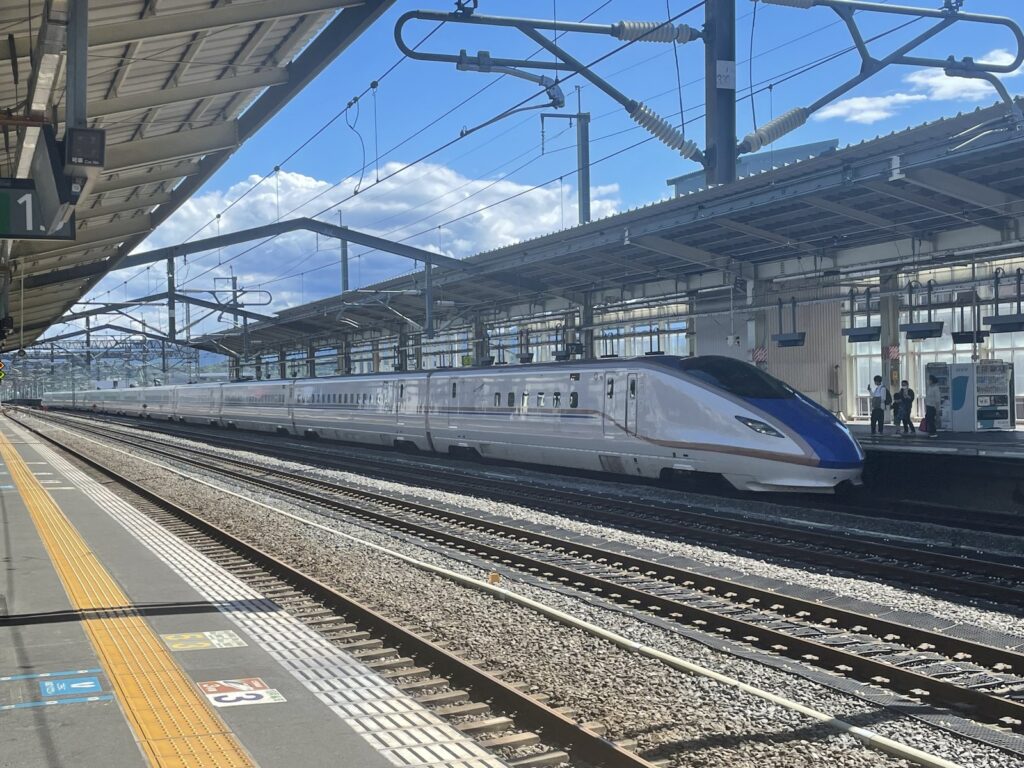
- The Shinkansen is fast but usually pointless. 13 to 15 minutes, but it costs about ¥1,450 and it drops you at Shin-Osaka, which is not central Osaka. Worth it only with a Japan Rail Pass, or if you are continuing west.
- Cheapest: Hankyu at ¥410. Fastest: Shinkansen. Best value for most people: JR at ¥580.
- No reservations, no planning. All four run constantly. Tap in with Suica, PASMO or ICOCA and get on whatever is at the platform.
- Prices are approximate for 2026. Confirm before you travel.
The routes compared
| JR Special Rapid | Hankyu Kyoto Line | Keihan Main Line | Shinkansen | |
|---|---|---|---|---|
| From | Kyoto Station | Kyoto-kawaramachi | Gion-Shijo / Sanjo | Kyoto Station |
| To | Osaka Station (Umeda) | Osaka-umeda | Yodoyabashi / Kitahama | Shin-Osaka |
| Cost | ¥580 | ¥410 | ¥490 | ~¥1,450 |
| Time | 29 min | 43–48 min | ~50 min | 13–15 min |
| Frequency | ~4/hour | ~6/hour | ~4/hour | Very frequent |
| Japan Rail Pass | Yes | No | No | Hikari and Kodama |
The JR Special Rapid: the default answer
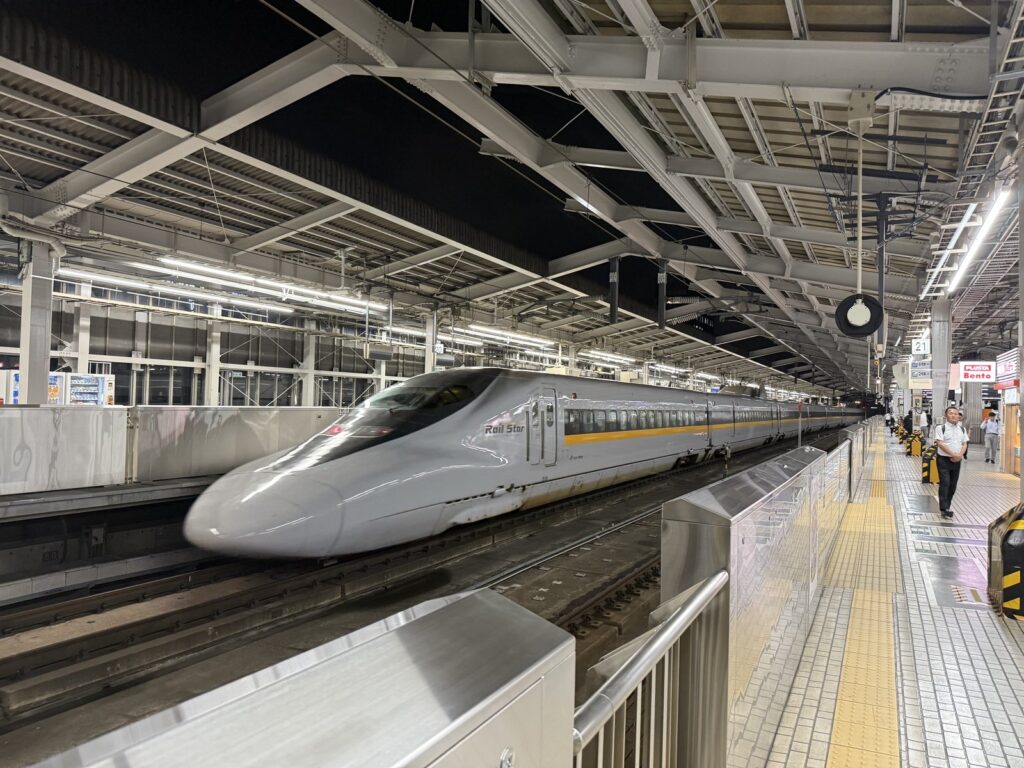
The Shin-Kaisoku, or Special Rapid Service, runs Kyoto Station to Osaka Station in 29 minutes for ¥580. It is the fastest sensible option, it is the only one that lands you in the middle of Umeda without a change, and it needs nothing more than an IC card.
Watch which train you board. On the same platforms you will find Local, Rapid and Special Rapid services, all charging the identical ¥580 — the slow ones simply stop more, and a Local will take you closer to 45 minutes for no saving at all. The train type is displayed in English on the platform boards and on the front of the train. Look for Special Rapid and ignore everything else.
Two more things in its favour. It carries on past Osaka to Kobe and Himeji, so it is the same train you will use for onward trips west. And it is fully covered by the Japan Rail Pass (commonly called the JR Pass) as well as by the regional Kansai passes, so if you are holding one, this is simply your line.
The weakness is the Kyoto end. If you are staying near Kawaramachi or Gion, getting to Kyoto Station is a 10 to 15 minute bus or subway ride plus waiting, which quietly erases the time advantage.
The Shinkansen: fast, and usually a waste of money
Kyoto to Shin-Osaka takes 13 to 15 minutes on any Tokaido Shinkansen service. Unreserved, it costs about ¥1,450 — roughly two and a half times the JR Special Rapid to save 15 minutes.
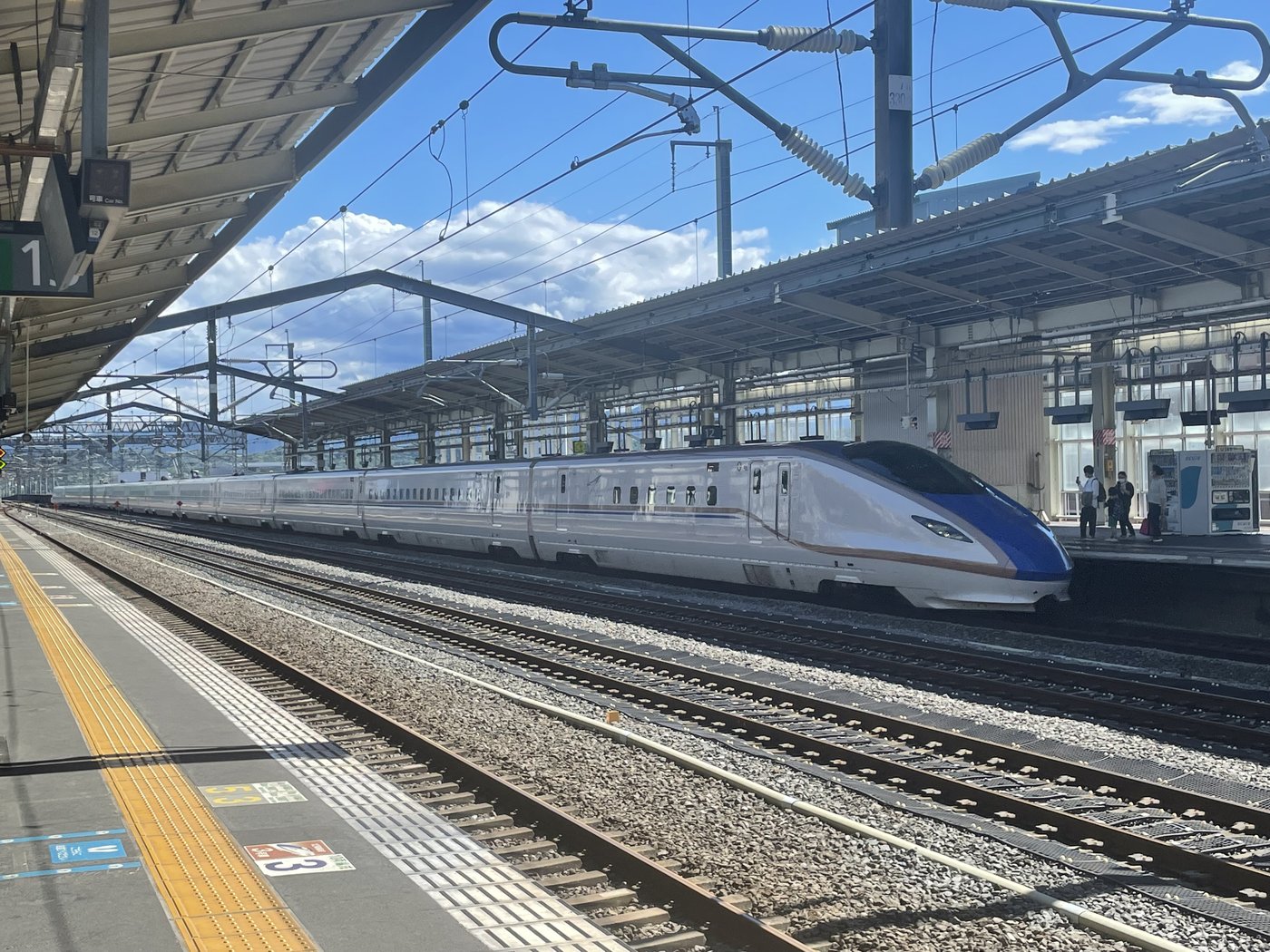
Then you are at Shin-Osaka, which is a transfer hub two and a half kilometres north of the city centre with very little around it. To reach Osaka Station and Umeda you need one more train, four minutes and ¥180. Door to door you have usually saved nothing.
It makes sense in three cases: you hold a Japan Rail Pass, which covers Hikari and Kodama trains free of charge (Nozomi and Mizuho need a separate surcharge); your Osaka hotel is genuinely by Shin-Osaka; or you are continuing to Hiroshima, Hakata or Okayama and simply staying on board. Otherwise, save the ¥870.
Hankyu: the cheapest, and the best for Umeda
The Hankyu Kyoto Line runs Kyoto-kawaramachi to Osaka-umeda for ¥410, with Limited Express services taking 43 to 48 minutes. No surcharge, no reservation — the Limited Express costs exactly the same as the local.
This is the line I recommend to friends staying in downtown Kyoto. Kyoto-kawaramachi station is directly under Shijo-Kawaramachi, so if your hotel is anywhere around Nishiki Market, Pontocho or the Kamo River you walk to the train instead of taking a bus to Kyoto Station first. At the other end, Osaka-umeda is a genuinely central terminus attached to the department stores and a short walk from Osaka Station.
Hankyu also runs a reserved-seat carriage called PRiVACE, ¥500 on top of the fare, on many Limited Expresses — a guaranteed seat with a table and a power socket. On a Sunday evening when the ordinary carriages are standing-room-only from Karasuma, that ¥500 is easy money. And if you are heading for Arashiyama, Hankyu gets you there via a change at Katsura, which is useful to know when the JR Sagano Line is packed.
Keihan: the best for Gion, Kiyomizu and Fushimi Inari
The Keihan Main Line runs from Gion-Shijo and Sanjo down to Kitahama and Yodoyabashi in Osaka for ¥490, taking about 50 minutes on a Limited Express. It is the slowest of the three, and it is still the one I would pick from the east side of Kyoto.
The reason is where its stations sit. Gion-Shijo is at the foot of Hanamikoji, the Gion street everyone photographs, and it is the closest station to Kiyomizu-dera short of a taxi. Fushimi Inari has its own Keihan stop. At the Osaka end, Yodoyabashi puts you on the Midosuji subway line, which is the single line that connects Umeda, Shinsaibashi and Namba — so if you are heading for Dotonbori rather than Umeda, Keihan often works out simpler than JR.
Keihan’s Premium Car costs ¥500 for the Kyoto–Osaka run (less for shorter hops) and buys you a reserved seat in a dedicated carriage. Like Hankyu’s, it is optional and the ordinary carriages are perfectly fine outside peak hours.
👉 Klook Kyoto Osaka Sightseeing Pass Keihan
Which Osaka are you actually going to?
Osaka has no single centre, and this is where people lose time.
- Umeda / Kita (Osaka Station): JR Special Rapid or Hankyu, both direct. No contest.
- Namba / Dotonbori / Shinsaibashi (Minami): take Keihan to Yodoyabashi and the Midosuji line, or JR to Osaka Station and the Midosuji line from Umeda. Either way, one subway ride at the end.
- Shin-Osaka: Shinkansen, or JR Special Rapid to Osaka Station and one stop back.
- Universal Studios Japan: JR to Osaka Station, then the Osaka Loop Line to Nishikujo and the Sakurajima branch — about 20 minutes from Osaka Station.
- Osaka Castle: JR to Osaka Station, then the Loop Line to Osakajokoen.
If you are still deciding where to base yourself, our guide Where to Stay in Osaka breaks down Umeda against Namba in detail, and the choice affects this journey more than the train you pick.
Passes, IC cards and whether they save you money
For a single trip, do not buy anything. Tap in with an IC card and pay ¥410 to ¥580 — see Suica vs PASMO vs Welcome Suica for which card to get, and note that ICOCA is the local equivalent and all of them work interchangeably here.
Passes only pay off if you are hopping back and forth. The Hankyu Tourist Pass, for foreign passport holders, is around ¥800 for one day and ¥1,400 for two and covers the whole Hankyu network including Kobe. The Keihan Kyoto-Osaka Sightseeing Pass runs about ¥1,500 for a day on Keihan between the two cities. Both are worth it only if you will make two or more journeys plus local hops; one return trip does not get you there. If you already hold a Japan Rail Pass, ignore all of this and ride JR — our Japan Rail Pass 2026: Is It Still Worth It? guide covers whether that pass makes sense in the first place.
Luggage, timing and crowds
None of these trains have luggage racks worth the name — they are commuter trains, not the Shinkansen. A carry-on is fine; two large suitcases in a rush-hour Special Rapid is genuinely unpleasant for you and everyone else.
If you are changing cities with everything you own, either travel outside 07:30–09:30 and 17:30–19:30, or send the bags ahead. Takkyubin forwarding from hotel to hotel costs roughly ¥2,000 to ¥2,500 a case and usually arrives next day; What to Do With Your Luggage in Japan explains how to arrange it. Coin lockers exist at all the major stations here, but the big ones at Kyoto Station fill up by mid-morning in autumn.
Last trains run to roughly midnight in both directions, which is later than most visitors need but worth knowing if you are staying in Kyoto and eating in Osaka.
FAQ
What is the cheapest way from Kyoto to Osaka? Hankyu, at ¥410 from Kyoto-kawaramachi to Osaka-umeda. Keihan is ¥490 and JR is ¥580.
What is the fastest? The Shinkansen at 13 to 15 minutes, but only to Shin-Osaka. For central Osaka, the JR Special Rapid at 29 minutes is effectively the fastest.
Is the Shinkansen worth it for this trip? Not unless you hold a Japan Rail Pass or are continuing west. It costs about ¥1,450 and leaves you outside the centre.
Do I need to book in advance? No. Every option here runs multiple times an hour with no reservation. The only bookable things are the optional Hankyu PRiVACE and Keihan Premium Car seats at ¥500.
Can I do Osaka as a day trip from Kyoto? Easily, and plenty of people do it in both directions. Half an hour each way makes an evening in Dotonbori entirely practical — see Best Things to Do in Osaka for what to do once you are there.
Does the Japan Rail Pass cover Hankyu or Keihan? No. It covers JR trains only, including the Special Rapid and the Hikari and Kodama Shinkansen.
Which is better for Nara? Neither — Nara is a separate trip from either city. Our Nara Day Trip Guide covers the routes.
The verdict
Staying near Kyoto Station? Take the JR Special Rapid. ¥580, 29 minutes, four an hour, straight into Umeda. It is the answer for most people and it needs no thought.
Staying downtown around Kawaramachi or Gion? Take Hankyu or Keihan. ¥410 and ¥490, about 45 to 50 minutes, and you board within walking distance of your hotel instead of trekking to Kyoto Station first. Hankyu for Umeda, Keihan for Namba and Dotonbori.
Take the Shinkansen only if a Japan Rail Pass is paying for it, or if you are carrying on to Hiroshima the same day.
Whichever you pick, this is one of the easiest journeys in Japan. Two IC card taps, one train, no reservation. If you are arriving in the region from the airport first, Kansai Airport to Kyoto and Osaka: All Options Compared covers that leg, which is the one that actually needs planning.
Written from Japan by the Wayfarer Japan team. Fares and times are approximate for 2026 — please confirm current prices before booking.
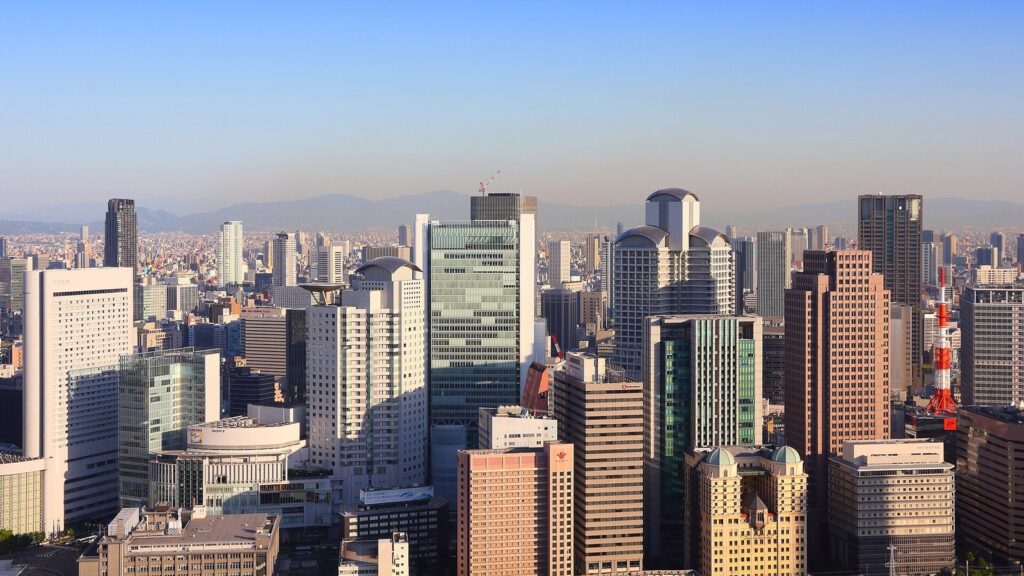
Featured image: “Osaka, Japan – Umeda district – city view of Osaka, Japan” by Marek Ślusarczyk ( Tupungato ) Photo portfolio, CC BY 3.0, via Wikimedia Commons