I live in Japan, and Kanazawa is the trip I recommend to people who tell me Kyoto felt too crowded. It has the castle town, the geisha district and the garden, with a fraction of the tour groups — and since the Hokuriku Shinkansen reached it in 2015, it stopped being a detour and became a straightforward day on the train. Here is how that journey actually works, what it costs, and the one thing about the Japan Rail Pass that makes this route unusually good value.
The quick answer
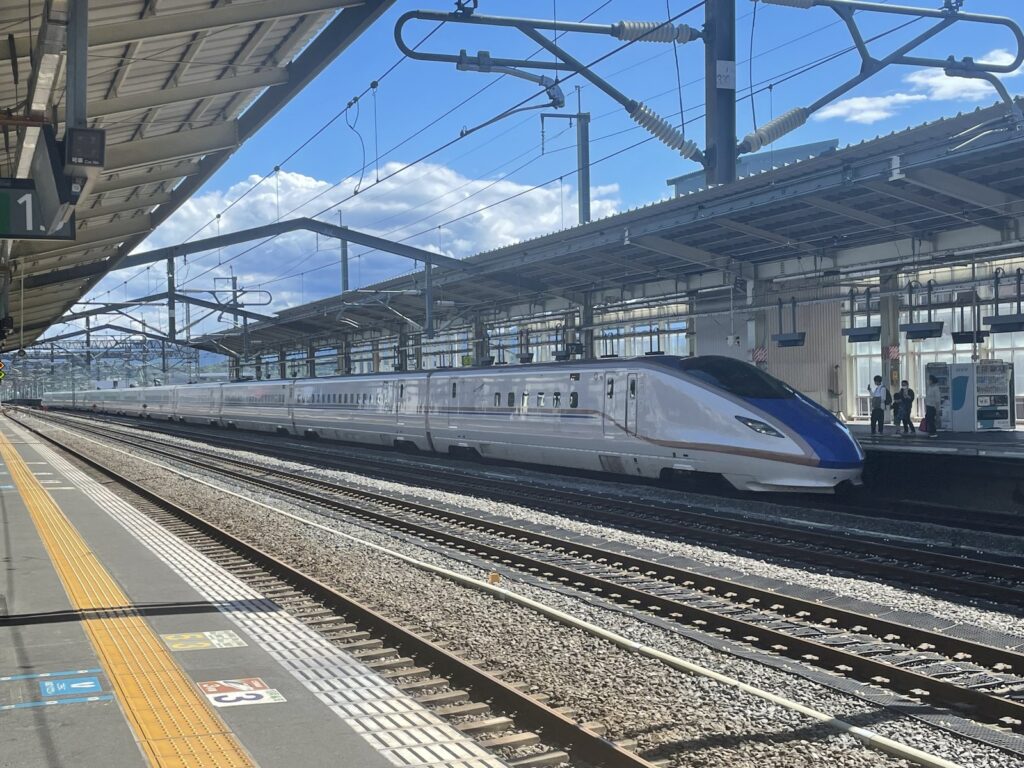
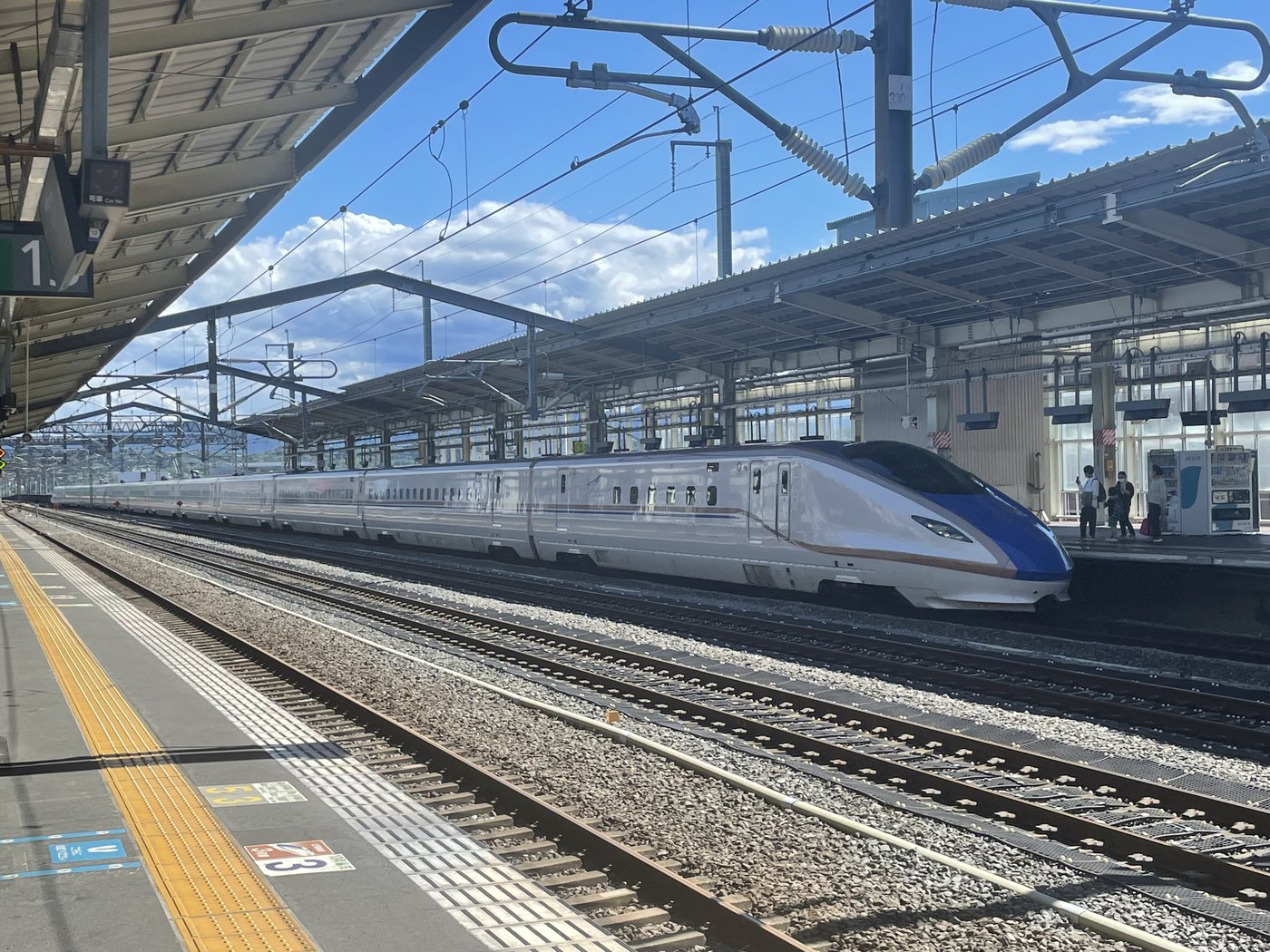
- Take the Kagayaki. Tokyo Station to Kanazawa in 2 hours 28 minutes, one train, no transfers.
- Fare: around ¥14,000–14,500 for a reserved seat, one way. Every seat on the Kagayaki is reserved — there is no unreserved option on this train.
- The slower Hakutaka stops at more stations, takes roughly 45–50 minutes longer, and has unreserved cars if you want to shave a little off the price.
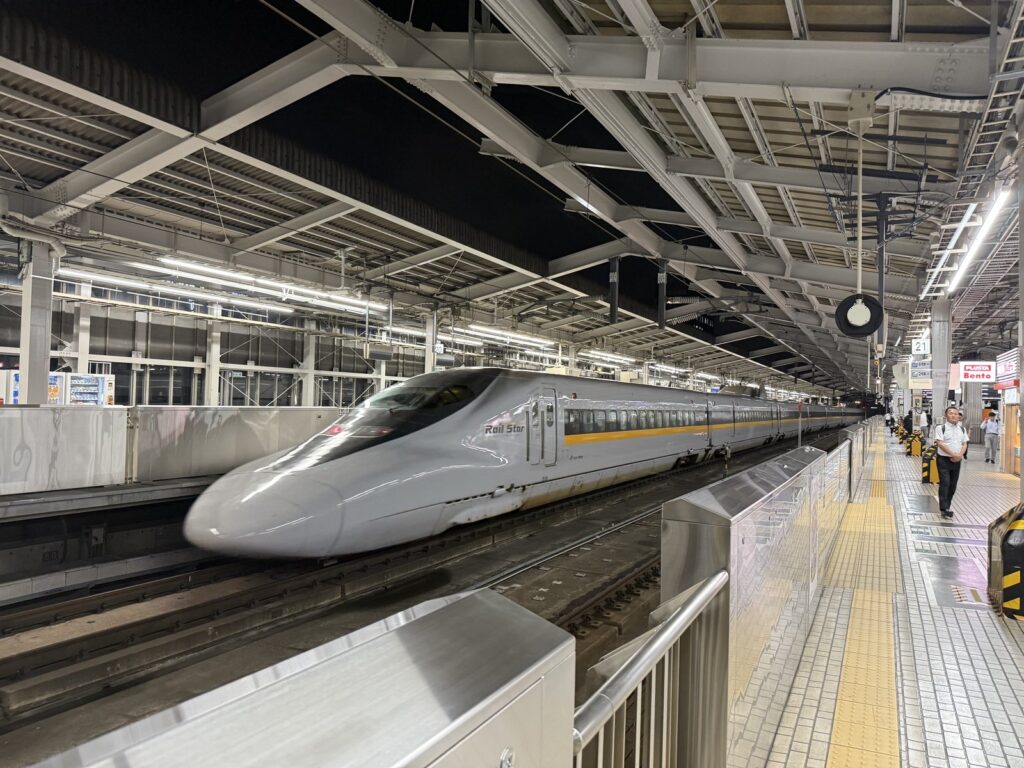
- The Japan Rail Pass covers both trains in full, reserved seat included — unlike the Tokaido Shinkansen’s Nozomi, nothing here is excluded.
- Departs from Tokyo Station, not Ueno, roughly once an hour through the day. Check the exact departure board when you arrive — platforms are well signed in English.
- Prices and schedules are approximate for 2026. Confirm before you book.
Kagayaki vs Hakutaka
| Kagayaki | Hakutaka | |
|---|---|---|
| Time, Tokyo to Kanazawa | 2h 28min | roughly 3h 10–20min |
| Stops | Omiya, Nagano, Toyama only | Most stations, including smaller ones in Nagano and Toyama prefectures |
| Seating | All reserved | Reserved and unreserved cars |
| Fare | ~¥14,000–14,500 | Similar, slightly less if you ride unreserved |
| Japan Rail Pass | Fully covered | Fully covered |
The Kagayaki is the one to default to. It is the fastest train on the line by a wide margin, and because every seat is reserved, you are guaranteed somewhere to sit even on a busy Friday evening or a Saturday morning in leaf-viewing season. The trade-off is that you must reserve ahead — there is no option to just turn up and squeeze into an unreserved car the way you can with Hakutaka or with slower Shinkansen elsewhere in Japan.
Hakutaka exists for two kinds of traveler: people connecting through smaller towns along the route, like Joetsu-Myoko or Itoigawa, and people who specifically want an unreserved seat to avoid booking in advance. For a straight Tokyo–Kanazawa run with no stops in between, Kagayaki is worth the small difference.
Buying tickets and reserving a seat
You can book a Kagayaki seat at any JR ticket office (midori no madoguchi), at the JR East or JR West ticket machines, or online through JR East’s Ekinet reservation system once you have a Suica or IC card linked to it. Same-day seats are often available outside peak weekends, but if you are traveling on a Friday evening, a long weekend, or during the autumn foliage season at Kenrokuen, book a few days ahead — Kagayaki sells out precisely because every seat is reserved.
If you are holding or planning to buy a Japan Rail Pass (commonly called the JR Pass), reserve your Kagayaki seat at a ticket office using the pass — it costs nothing extra, which is not true everywhere on the Shinkansen network. Our Japan Rail Pass 2026: Is It Still Worth It? guide walks through whether the pass makes sense for your itinerary before you buy, and How to Reserve Shinkansen Seats covers the reservation process step by step if this is your first time doing it.
One more practical plus: unlike the Tokaido Shinkansen to Osaka or Hiroshima, the Hokuriku Shinkansen has no oversized-baggage reservation requirement. You can bring a large suitcase onboard without pre-booking extra luggage space, though the overhead racks and the gap behind the last row of seats are still the only places it reasonably fits.
Is Kanazawa a day trip or an overnight?
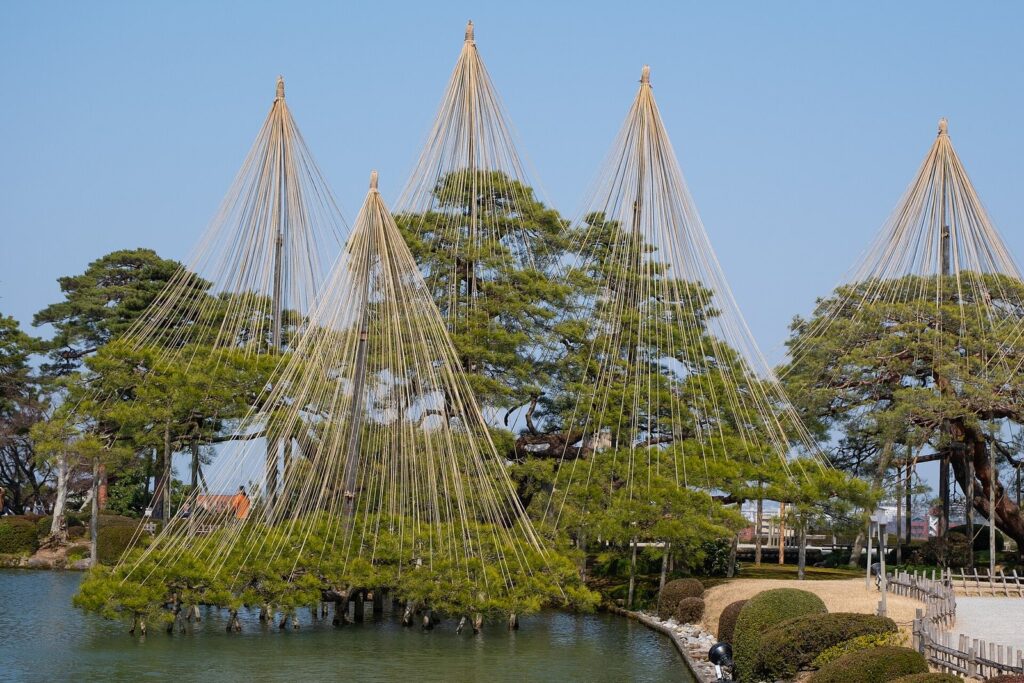
Technically a day trip is possible — 2 hours 28 minutes each way leaves a workable midday in between — but I would not recommend it. You lose almost 5 hours to the train alone, and Kanazawa rewards an evening: Kenrokuen Garden is lit up after dark during autumn and winter illumination events, and the Higashi Chaya geisha district is genuinely atmospheric once the day-trip crowds have left. One night, two days, is the version of this trip people actually remember.
If you forgot something — an umbrella, a warmer layer, a spare charger — do not worry about it. Kanazawa has its own convenience stores and an Aeon shopping mall near the station, so there is no need to pack as if the city were remote.
Kanazawa also sits on the loop route toward Takayama and Shirakawa-go, so if you have more than two days, it connects naturally into a wider old-Japan itinerary rather than being a there-and-back trip. Kanazawa Guide: Gardens, Geisha Districts and Crafts covers what to actually do once you arrive, from Kenrokuen to the Omicho fish market.
What about regional passes?
If Kanazawa is one stop on a longer Hokuriku and Chubu loop — Toyama, Takayama, Shirakawa-go, Nagoya — check Regional JR Passes: Which One Should You Buy? before paying full fare twice. Regional options on this corridor change often as JR adjusts coverage after the 2024 extension to Tsuruga, so confirm current validity and price directly with JR before counting on one.
FAQ
How long is the Shinkansen from Tokyo to Kanazawa? 2 hours 28 minutes on the Kagayaki, the fastest service. Hakutaka takes roughly 45–50 minutes longer with more stops.
How much does it cost? Around ¥14,000–14,500 one way for a reserved seat on Kagayaki. Hakutaka is similar, slightly less if you ride unreserved.
Does the Japan Rail Pass cover this route? Yes, fully — both Kagayaki and Hakutaka, reserved seats included. This is one of the few Shinkansen lines where the full-price fastest train is not excluded from the pass.
Do I need to reserve a seat in advance? For Kagayaki, yes — every seat is reserved, so book ahead for weekends and the autumn leaf-viewing season. For Hakutaka, you can ride unreserved and skip the booking.
Is Kanazawa worth visiting if I only have a week in Japan? It is a worthwhile add-on if your trip already includes Nagano, Takayama or the Hokuriku region. If your week is Tokyo–Kyoto–Osaka only, it is a detour that is easier to save for a second trip.
Which station in Tokyo do I leave from? Tokyo Station. Hokuriku Shinkansen platforms are clearly signed, and the walk from the Yaesu or Marunouchi side takes about 10–15 minutes if you are coming from a hotel nearby.
The verdict
Take the Kagayaki. It is the fastest, most comfortable way to cover the 450 kilometers between Tokyo and Kanazawa, it is fully covered by the Japan Rail Pass with no surcharge, and at 2 hours 28 minutes it turns a once-remote corner of Japan into a realistic overnight trip from the capital. Book your seat a few days ahead if you are traveling on a weekend or during the autumn illuminations, bring whatever luggage you want without worrying about oversized-baggage rules, and plan to stay at least one night — Kanazawa after dark is the reason to make the trip in the first place.
Written from Japan by the Wayfarer Japan team. Prices, schedules and pass coverage are approximate for 2026 — always confirm current fares and reservation rules before booking.
Featured image: “Kenrokuen Garden, Kanazawa (53621201294)” by Winniepix, CC BY 2.0, via Wikimedia Commons