I live in Tokyo and I don’t own a car. Almost nobody here does if they can avoid it — between the trains and the cost of a parking space, it just isn’t worth it in the city. But I’ve rented cars more than once for trips where the train network thins out: a weekend loop around the Izu Peninsula, a drive through rural Hokkaido where the next train might be two hours away. If you’re heading somewhere like that, a rental car stops being a novelty and starts being the only sensible way to see the place.
The quick answer
- You need either a Japanese driver’s license or a valid International Driving Permit (IDP) issued under the 1949 Geneva Convention — not the 1968 Vienna Convention, which Japan does not recognize.
- The IDP must be the paper booklet type. Card-format and smartphone/app versions are not accepted at the rental counter or by police.
- It’s valid for up to one year from issue, and separately capped at one year from your arrival date in Japan (checked against your passport entry stamp).
- Belgium, France, Germany, Monaco, Switzerland and Taiwan don’t issue Geneva-style IDPs; their citizens instead need an official Japanese translation of their home license, available from JAF.
- Japan drives on the left, like the UK and Australia.
- A car is genuinely useful in Hokkaido, Okinawa, rural Tohoku and parts of Shikoku. It’s a liability in Tokyo, Kyoto, Osaka and most other cities with trains.
Getting your permit sorted before you fly
This is the part that catches people out every year: your International Driving Permit has to be obtained in your home country before you arrive. Japan does not issue them, and there’s no workaround at the airport. In most countries it comes from your national automobile association — AAA in the US, the AA or RAC in the UK, CAA in Canada — usually for a modest fee and sometimes the same day you apply.
Double-check that what you’re getting is the 1949 Geneva Convention version. A handful of countries only issue the newer 1968 Vienna Convention permit, which looks similar but isn’t valid here. If you’re from Germany, France, Switzerland, Belgium, Monaco or Taiwan, skip the IDP question entirely and get a certified Japanese translation of your own license through JAF instead — rental companies in Japan are set up to recognize this exception.
Age limits and what rental companies actually ask for
Japan’s legal driving age is 18, but that’s not the number that matters at the rental counter. Most major companies — Toyota Rent-a-Car, Nissan Rent-a-Car, Times Car, ORIX — set their own minimum, typically 20 to 22. Drivers under 25 often pay a young-driver surcharge, commonly an extra ¥500–2,000 per day depending on age and company, on top of a base rate that runs roughly ¥5,000–11,000 a day for a small car and more for anything larger. Bring your passport, your home license, and the IDP or translation — all three, not just one.
What the drive actually feels like
The left-hand traffic trips up more visitors from North America and continental Europe than anything else on this list; if you’re used to driving on the left already, you’ll adapt almost immediately. Beyond that, expect narrower lanes and shoulders than you’re used to, especially in older towns and mountain roads, plus the occasional tiny kei truck backing out of an alley with no warning. Speed limits are lower than they look — 40–50 km/h is normal on ordinary roads — and there’s no right turn on red anywhere in the country. Rental cars come with GPS navigation, usually in Japanese only, so most drivers end up running Google Maps or a navigation app on their phone instead; this is one case where having a working eSIM or data plan before you land genuinely matters, more than it does for city sightseeing.
Tolls, ETC cards and a real 2026 change worth knowing
Japan’s expressways charge tolls, and the standard way to pay is an ETC card — a small card that slots into a reader built into the rental car, letting you roll through the toll gate without stopping. Most rental companies rent you one for a flat fee, commonly around ¥330 to ¥550 per rental regardless of how many days you drive, with all the tolls you rack up billed to your final invoice. Request it when you book, or ask for one at the counter.
This has become less optional in 2026: NEXCO Central and NEXCO West converted dozens of toll plazas to ETC-only in phases through spring, including stretches of the Tomei, Shin-Tomei, Chuo and Ken-O expressways. Turning up without a card now risks getting stuck at a gate with no cash lane. Get one by default if you’re renting anywhere near a major expressway corridor.
Parking in cities is the real cost
Even if the drive itself goes smoothly, city parking is where a Japan road trip quietly gets expensive. Central Tokyo, Kyoto and Osaka charge by the half hour — often ¥300–600 — with daily maximums that can still land well above what a taxi or subway fare would have cost for the same trip. Hotels in city centers frequently don’t include parking, or charge extra for it. This is one of the main reasons residents don’t bother owning a car here, and it’s the same reason I’d steer anyone away from driving a rental into central Tokyo if their plan is day trips in and out of the city — pick the car up where you’re going to need it, not where you’re going to park it overnight.
Where it’s actually worth it
Trains and buses cover Japan’s cities and connect most tourist corridors so well that a rental car adds friction without adding much. The exception is anywhere the rail network thins out: Hokkaido’s countryside, the smaller islands, rural Tohoku, inland Shikoku and much of Okinawa, where buses run infrequently and taxis for every stop get expensive fast. If you’re planning a trip built around somewhere like that — our Okinawa guide covers exactly this kind of itinerary — a car turns a day of waiting for connections into an afternoon you actually control. For everything else, the Japan Rail Pass or a regional pass will almost always get you there faster and with less hassle than renting a car and finding somewhere to park it.
👉 Klook Japan car rentals compares rates across Toyota, Nissan, ORIX and other major operators by region, including Hokkaido and Okinawa, if you’ve decided a car makes sense for your trip.
FAQ
Can I use my regular driver’s license without an IDP?
No, unless you’re from one of the translation-exception countries listed above. A normal foreign license alone isn’t accepted at the counter or recognized by police.
Can I get an International Driving Permit in Japan after I arrive?
No. It has to be issued in your home country before you travel.
Is driving in Tokyo as stressful as people say?
It’s less about stress and more about cost and parking — the roads themselves are fine, but between tolls, parking fees and traffic, trains are simply faster and cheaper for getting around the capital, the way we covered in our guide to getting around Tokyo.
Do GPS units in rental cars work in English?
Usually not well. Most visitors navigate with their phone instead, which is one more reason to sort out mobile data before you land.
The verdict
For a city-based trip, skip the rental car entirely — it adds cost and parking headaches that trains simply don’t have, and the Japan Rail Pass question is worth answering before the car rental one. But if your itinerary runs through places where the train tracks stop and the buses get thin, sort your International Driving Permit out before you leave home, book an ETC card with the car, and a rental stops being a tourist indulgence and becomes the most practical way to see that part of Japan.
Written from Japan by the Wayfarer Japan team — honest, practical travel guides from people who live here.
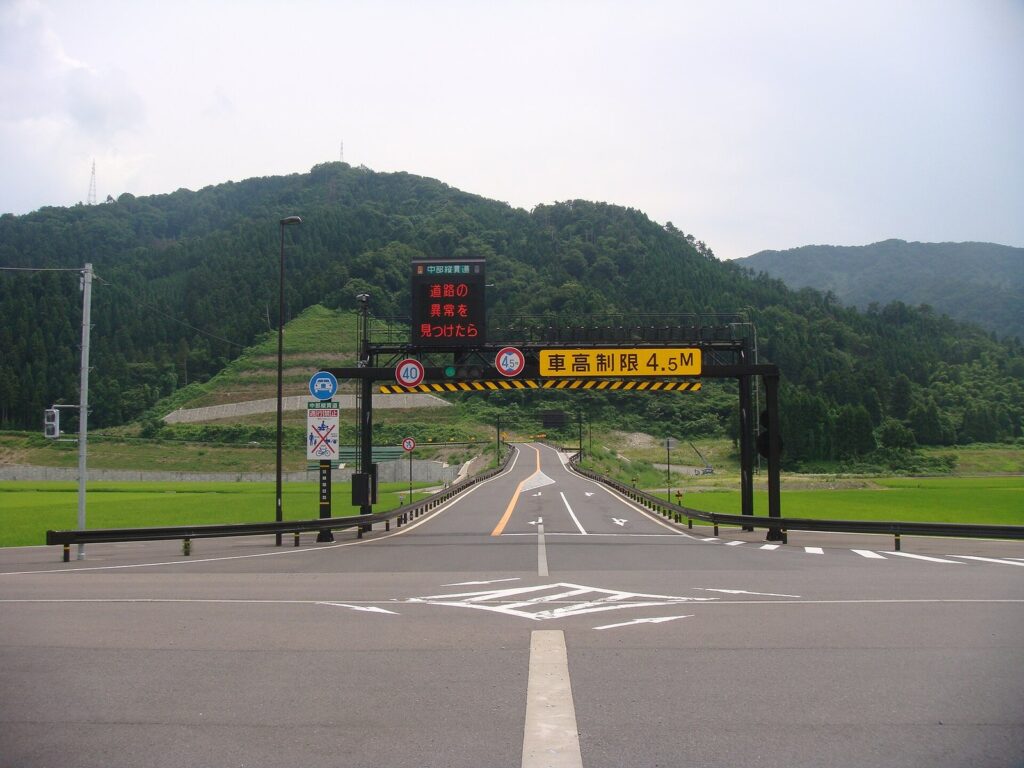
Featured image: “Chubu-Jukan Expressway (Eiheiji-Ono Road) Kamishihi IC 001” by NALA Wiki ( talk ), CC BY-SA 3.0, via Wikimedia Commons