I live in Japan, and autumn is the season I tell friends to aim for. The humidity finally breaks, the sky goes a particular hard blue, and the country turns comfortable for walking in a way it simply is not in August. It is also the season with the most planning traps, and 2026 has more than usual: a five-day Silver Week in September that Japan has not seen in eleven years, a typhoon season that still has teeth, and a three-day weekend in late November landing almost exactly on peak foliage in Kyoto. None of that should stop you coming. It just means your dates matter more this year than most.
The quick answer
- Best all-round weeks: mid-October to early November. Warm days, cool evenings, low rain risk, no national holiday crush.
- September is still summer for the first half. Expect 30C-plus days and the peak of typhoon season.
- Avoid or book far ahead: 19-23 September (Silver Week), 10-12 October, and 21-23 November. Domestic travel spikes on all three.
- Autumn leaves peak later than you think — Kyoto is usually mid-to-late November into early December, not October.
- Pack layers, not coats. A November afternoon in Kyoto can hit 18C; the same morning starts near 8C.
- Book November accommodation early. It is the single most expensive month of the year in Kyoto.
Autumn arrives later than the guidebooks say
The old advice — “September is autumn” — has quietly stopped being true. Recent autumns have been the warmest on record here, with the Japan Meteorological Agency measuring one recent September-to-November stretch nearly 2C above the long-term average nationwide. In practice, the first half of September is a summer trip, not an autumn one.
Rough numbers for Tokyo; Kyoto runs a degree or two hotter by day and cooler at dawn:
| Month | Typical daytime high | Typical morning low | What it feels like |
|---|---|---|---|
| September | 29-31C, 33C+ early in the month | 22-24C | Summer with better light |
| October | 22-25C | 15-17C | The sweet spot |
| November | 16-19C | 8-11C | Crisp; a jacket by evening |
If your priority is comfortable walking, October is the month. If your priority is red maples, you are looking at the back half of November, and you are paying for it.
September: typhoons and a rare five-day Silver Week
Two things define September.
Typhoon season peaks now. Okinawa, Kyushu and Shikoku carry the real risk; a storm track that shuts down flights to Naha rarely does more than rain on Tokyo. On the Tokyo-Kyoto-Osaka corridor, a typhoon usually costs you one reshuffled afternoon, occasionally a few hours of suspended Shinkansen service. The practical response is not to avoid September but to build one flexible day into the itinerary, keep coastal and island nights on refundable bookings, and check JR’s operating-status page the night before you travel. Operators announce planned suspensions roughly a day ahead, which is enough warning to move a leg forward.
Silver Week is back. In 2026, Respect for the Aged Day falls on Monday 21 September and the Autumnal Equinox on Wednesday 23 September. Under Japanese law a weekday sandwiched between two national holidays becomes a holiday itself, so Tuesday 22 September is off too — giving Saturday 19 through Wednesday 23 September as a five-day national break, the first of its kind in eleven years. Shinkansen reserved seats, popular ryokan and rental cars will be gone weeks in advance, and prices will be at their annual peak outside New Year.
If your trip overlaps those dates, do not fight it: book everything you can before you fly, and treat the week as a city week rather than a countryside week. Tokyo and Osaka absorb crowds far better than Hakone or Takayama do. One September bonus falls in the same window — the Kishiwada Danjiri Festival near Osaka, where teams sprint enormous wooden floats around street corners, runs on 19-20 September 2026.
Mt. Fuji’s official climbing season also closes in early September, around the 10th; after that the huts shut and the trails are genuinely dangerous. Confirm the exact date with the prefectural sites, and if you want the mountain in autumn, look at it rather than climb it, from Kawaguchiko or Hakone.
👉 Klook Mt. Fuji and Hakone day tours
October: the best weeks of the year
October is when I would tell a friend to come. Daytime highs settle in the low 20s, rain days drop off sharply after the first week, and the light is superb for photographs. Nothing is peaking, which is exactly the point — you get temples without November queues and streets without August heat.
The date to watch is Sports Day on Monday 12 October, making 10-12 October a three-day weekend. It collides with the Takayama Autumn Festival on 9-10 October, one of the best festivals in the country and, that weekend, one of the most crowded small towns in it. Takayama accommodation for those nights sells out months ahead.
Kyoto’s strangest quirk lands on Thursday 22 October, when two major festivals share a day. The Jidai Matsuri procession — roughly 2,000 people in costumes spanning twelve centuries of history — sets off from the Imperial Palace around midday and walks to Heian Shrine. That same evening, in the mountains north of the city, the Kurama Fire Festival carries flaming torches through a village street. You can technically do both. I would not: the Eizan Railway line to Kurama becomes a controlled crush, with entry restrictions and long waits to get back down. Pick one, and if you pick Kurama, accept getting home after midnight.
Halloween deserves a short warning. Shibuya is no longer the place for it: the ward enforces a year-round public drinking ban in the streets around Shibuya Station between 6pm and 5am, and has repeatedly asked people not to gather there for Halloween. Costumes are not banned and the district is not closed, but the party has moved to ticketed venues and to events in Kawasaki and Ikebukuro.
November: the most beautiful and most expensive month
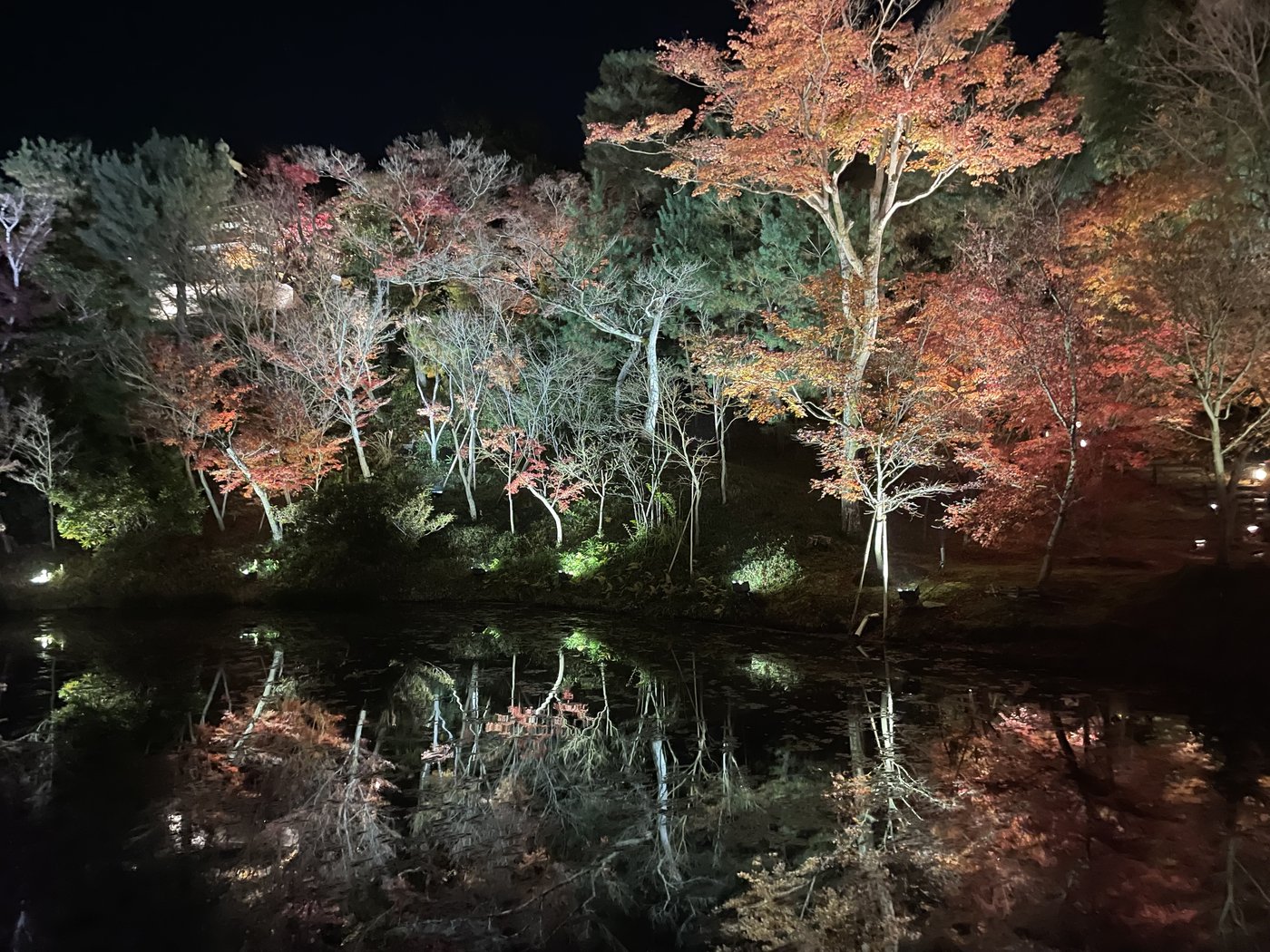
November is when Japan looks like the photographs, and it is priced accordingly. Kyoto’s foliage generally peaks between roughly 20 November and the first days of December; Tokyo runs a few days later; Nikko and Tohoku peak in late October; Hokkaido is finished by mid-October. Our guide to the Best Autumn Leaves Spots in Japan has the region-by-region timing in detail, and it is worth reading before you lock in dates.
Two things to plan around.
Rates. Kyoto hotel prices in the second half of November run well above the annual average — I have seen ordinary business hotels roughly double their October rate. Book three to six months out for a specific place at a sane price, and if Kyoto proper is beyond budget, staying in Osaka and commuting in on the 15-minute Shinkansen leg or the 45-minute local train is a legitimate strategy. Our guide to Where to Stay in Kyoto covers which areas save you the most walking.
Culture Day on Tuesday 3 November, and Labor Thanksgiving Day on Monday 23 November. The second is the problem: 21-23 November is a three-day domestic holiday weekend sitting directly on peak Kyoto foliage. If you have any flexibility, put your Kyoto nights either side of it. If you cannot, go early — Kiyomizu-dera and Arashiyama are genuinely pleasant at 7am and genuinely miserable at 11am.
What to pack, and what to buy here
Autumn packing is about range, not warmth. September needs summer clothes and a way to dry off; November needs a light down or fleece layer for mornings and evenings with a t-shirt underneath for the afternoon. Forget an umbrella and any convenience store sells a clear plastic one for a few hundred yen; misjudge the temperature and Uniqlo and GU are everywhere. There is no packing mistake in Japan that cannot be fixed within a ten-minute walk — our Japan Packing List covers the rest.
Sort connectivity before you land, mainly so live train-status and typhoon alerts work the moment you clear immigration. As a resident I use a normal Japanese carrier plan rather than a tourist eSIM, so I will not pretend to have tested one on my own phone — but the visiting friends I have advised installed a data eSIM before the flight and had it working at the gate, and it is what I keep recommending over airport SIM counters. Our Best eSIM for Japan guide compares the ones people actually use.
Getting around in autumn
Autumn is a long-distance season — Kyoto one week, Tohoku or Kanazawa the next — so it is when rail passes come closest to paying for themselves. Whether the nationwide Japan Rail Pass (commonly called the JR Pass) makes sense still depends entirely on your route; our Japan Rail Pass 2026: Is It Still Worth It? guide runs the arithmetic honestly, and for many two-city trips the answer is no.
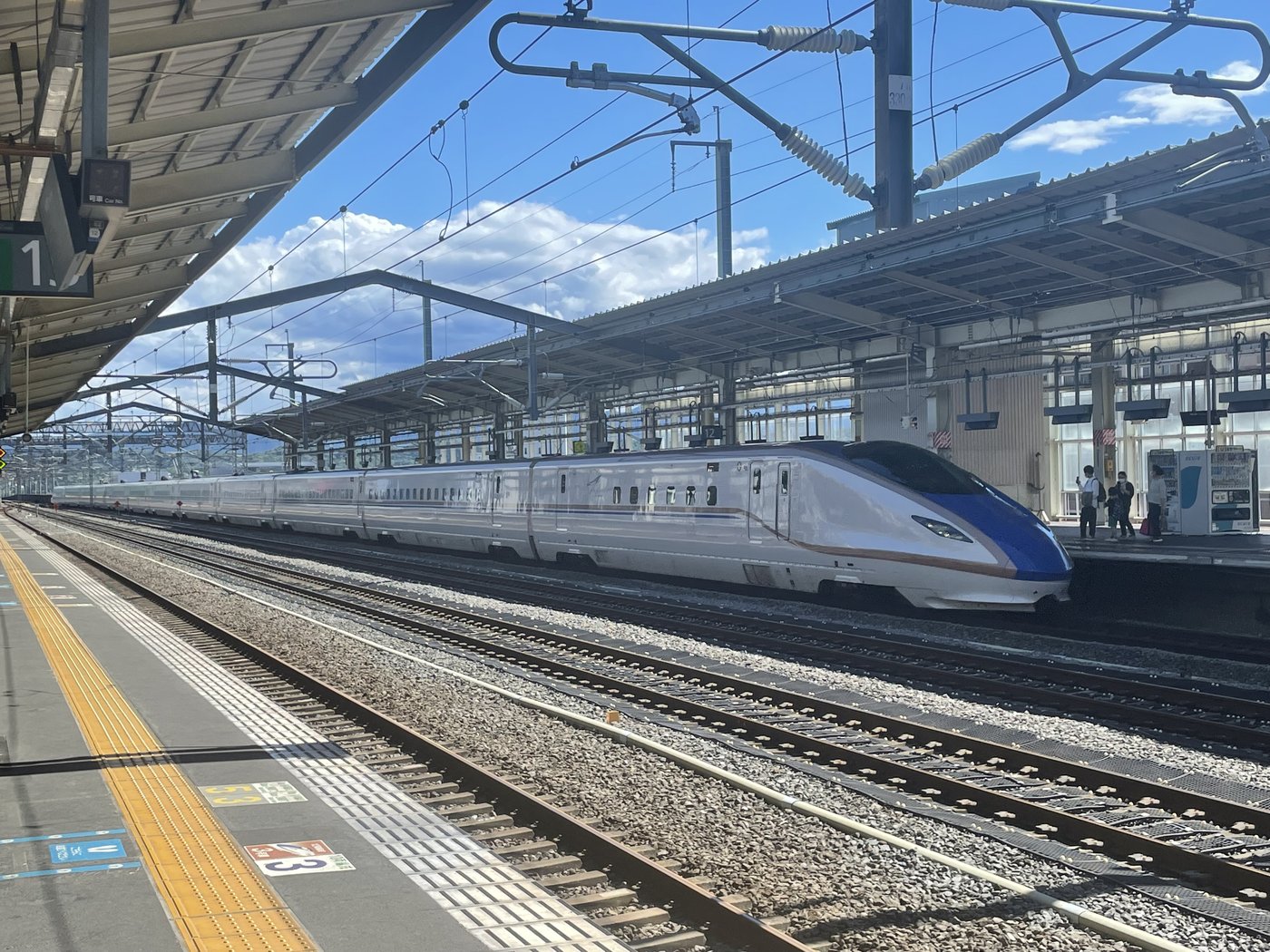
What matters more is reserving seats early. Around Silver Week, the October three-day weekend and late November, unreserved Shinkansen cars fill to standing room, and standing from Tokyo to Kyoto with luggage is a bad way to spend two hours and twenty minutes. Reservations open a month ahead; book as soon as your dates are fixed.
FAQ
Is September or November better? November, for scenery and comfort. September, for lower prices and fewer foreign visitors — with the typhoon risk and Silver Week as the trade-offs.
Will a typhoon ruin my trip? Almost certainly not, if you are on the Tokyo-Kyoto-Osaka route. Keep one flexible day and refundable bookings for any island or coastal nights.
When exactly do the leaves turn? It varies by up to two weeks each year, and recent warm autumns have pushed peaks later. Japanese foliage forecasts start publishing in September; check them about three weeks before you travel.
Do I need to avoid Silver Week entirely? No, but book far ahead and stay in a big city rather than a hot-spring town. Domestic crowds concentrate in resorts, not in Shinjuku.
Is October too early for autumn colours? In Kyoto, yes. In Hokkaido, Nikko and the Japan Alps, October is exactly right.
The verdict
If you can pick any two weeks of the year to be in Japan, take mid-October to early November. You get the weather without the crowds, festivals worth rearranging a day for, and prices that have not yet gone vertical. If red maples in Kyoto are the whole point of the trip, come in the last ten days of November, book six months out, avoid 21-23 November, and start every morning before eight. And if your dates are already fixed on Silver Week — book everything now, and enjoy the fact that the whole country is out with you. For how autumn compares with the other three seasons, see our Best Time to Visit Japan guide.
Written from Japan by the Wayfarer Japan team. Prices and dates are approximate and change — always confirm before booking.
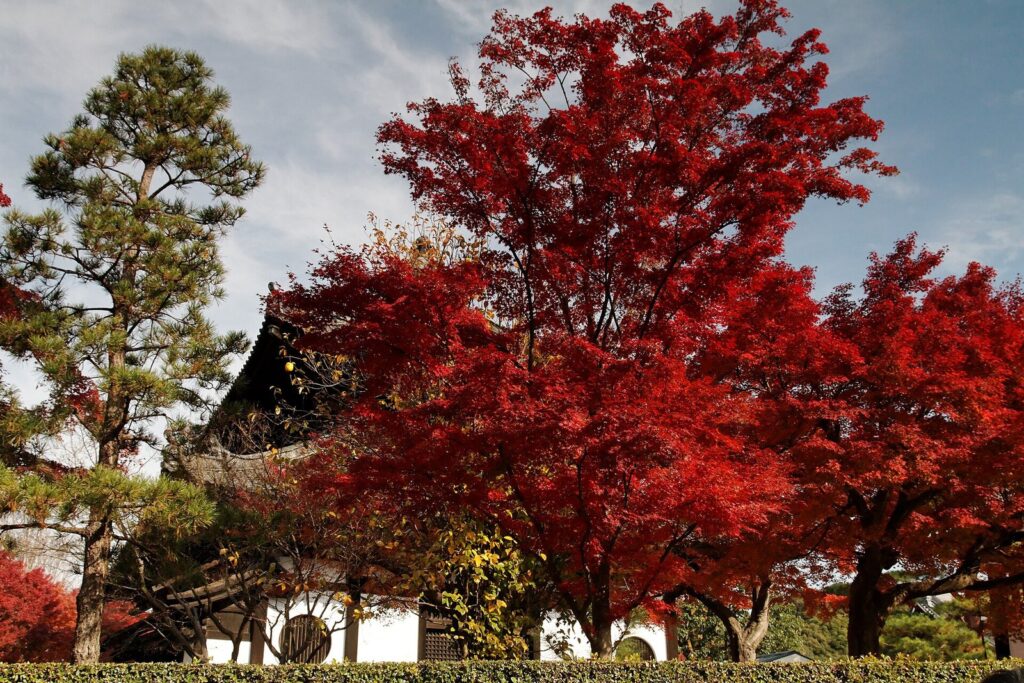
Featured image: “Tofuku-ji (4585124433)” by KimonBerlin, CC BY-SA 2.0, via Wikimedia Commons