I live in Japan, and 2026 has been the busiest year for rule changes I can remember. Most are small on their own — a few hundred yen here, a new counter at the airport there — but they land in different parts of a trip, so travelers keep meeting them one at a time. The biggest has not even started yet: from 1 November, tax-free shopping stops happening at the register and becomes a refund you claim at the airport. Here is what changed, what it costs you, and the three things worth acting on.
The quick answer
- Tax-free shopping changes on 1 November 2026. You pay the full price with 10% consumption tax at the register, then airport customs confirms the goods are leaving with you and the shop, or its refund agent, pays the tax back. Keep every receipt.
- The departure tax tripled from ¥1,000 to ¥3,000 per person on 1 July 2026. It is inside your airfare — there is nothing to pay at the airport.
- Hotel taxes rose and spread. Kyoto’s now runs from ¥200 to ¥10,000 per person per night depending on room rate; Hiroshima and Otaru added ¥200 levies in April.
- Two-tier pricing is real but rare. Himeji Castle charges ¥2,500 for non-residents against ¥1,000 for locals. A handful of sites do this; most do not.
- Train fares went up about 7% on the JR East network in March, and the Japan Rail Pass rises again on 1 October.
- Arrival got faster. One Visit Japan Web QR code now clears both immigration and customs at joint kiosks in Narita, Haneda and Kansai.
- JESTA is not your problem yet. The law passed in 2026, but the system is not expected before fiscal 2028 (April 2028 to March 2029).
1. Tax-free shopping becomes an airport refund (1 November 2026)
Until now, you showed your passport at the register and simply did not pay the 10% consumption tax. From 1 November 2026, you pay the full tax-included price, then have customs at the airport confirm before departure, within 90 days of purchase, that the goods are actually leaving the country with you. Customs only confirms the export — the refund itself is paid back by the shop, or by the refund service provider it works with. That confirmation step is the whole point: the old system was being abused by people reselling untaxed goods inside Japan.
Two parts of it are genuinely better. The old split between “general goods” (electronics, clothing) and “consumables” (cosmetics, snacks, medicine), each with its own threshold, is gone — everything you buy in one store on one day counts toward the same ¥5,000 minimum. And the sealed bags you were not supposed to open until leaving Japan are being discontinued.
What to do: keep receipts in one envelope, shop in fewer, larger stores rather than scattering ¥3,000 purchases across ten shops, and reach the airport earlier than usual on departure day. If your trip ends before 1 November, nothing changes for you.
2. The departure tax tripled to ¥3,000
Japan’s International Tourist Tax — the “sayonara tax” — went from ¥1,000 to ¥3,000 per person on 1 July 2026. It applies to everyone aged two and over leaving Japan by air or sea, including residents like me. I pay it too.
You will not queue for it: airlines and ferry operators collect it inside the ticket price, so it appears as a line item on your booking and nowhere else. One quirk worth knowing — the increase is tied to when the ticket was bought, so tickets purchased before 1 July still carry the old ¥1,000 rate even for later flights. For a family of four this is ¥8,000 more than last year. Annoying, not trip-changing.
3. Hotel taxes went up, and spread to more cities
Accommodation tax is charged per person, per night, usually collected at check-in or checkout, sometimes in cash even when you prepaid your room online.
Kyoto’s revision on 1 March 2026 is the aggressive one. The brackets are now roughly:
| Room rate per person, per night | Tax per person, per night |
|---|---|
| Under ¥6,000 | ¥200 |
| ¥6,000 – under ¥20,000 | ¥400 |
| ¥20,000 – under ¥50,000 | ¥1,000 |
| ¥50,000 – under ¥100,000 | ¥4,000 |
| ¥100,000 and above | ¥10,000 |
In an ordinary Kyoto business hotel at ¥15,000 a night, that is ¥400 — noise. On a ¥120,000 ryokan suite booked for an anniversary, it is ¥10,000 a night on top, and you should budget for it. Elsewhere, Hiroshima Prefecture added a ¥200 levy on stays of ¥6,000 or more from 1 April, Otaru in Hokkaido added ¥200 the same month, and Okinawa has announced a percentage-based tax whose start date has already moved once. Tokyo and Osaka have charged small lodging taxes for years. Remember this sits outside the rate you see on booking sites — our Where to Stay in Kyoto guide covers which neighborhoods are worth paying for in the first place.
4. Two-tier pricing is now a real thing (at a few places)
Himeji Castle more than doubled its admission for non-residents on 1 March 2026: ¥2,500 for visitors who do not live in Himeji City, against ¥1,000 for those who do, with under-18s free. Revenue nearly doubled in the first month even as visitor numbers fell, which is why the Japan Tourism Agency convened a panel in April to write national guidelines, expected by March 2027.
The framing is more reasonable than the headlines suggest. The split is by residency, not nationality — a Japanese tourist from Tokyo pays the higher rate, and a foreign resident registered in Himeji City pays the local one, because locals already fund the castle’s upkeep through city taxes. Expect more city-maintained castles and temples to try it. For now it affects a small handful of sites, and ¥1,500 is not a reason to skip Himeji.
5. Train fares rose, and the Japan Rail Pass rises again on 1 October
JR East raised fares by roughly 7.1% on average in March 2026 — its first real fare revision in decades. The Yamanote Line minimum fare went from ¥150 to ¥160, and Shinkansen and regional fares on the network moved too. I ride these trains daily and the change is barely perceptible per journey; it matters mainly because it nudges the maths on rail passes.
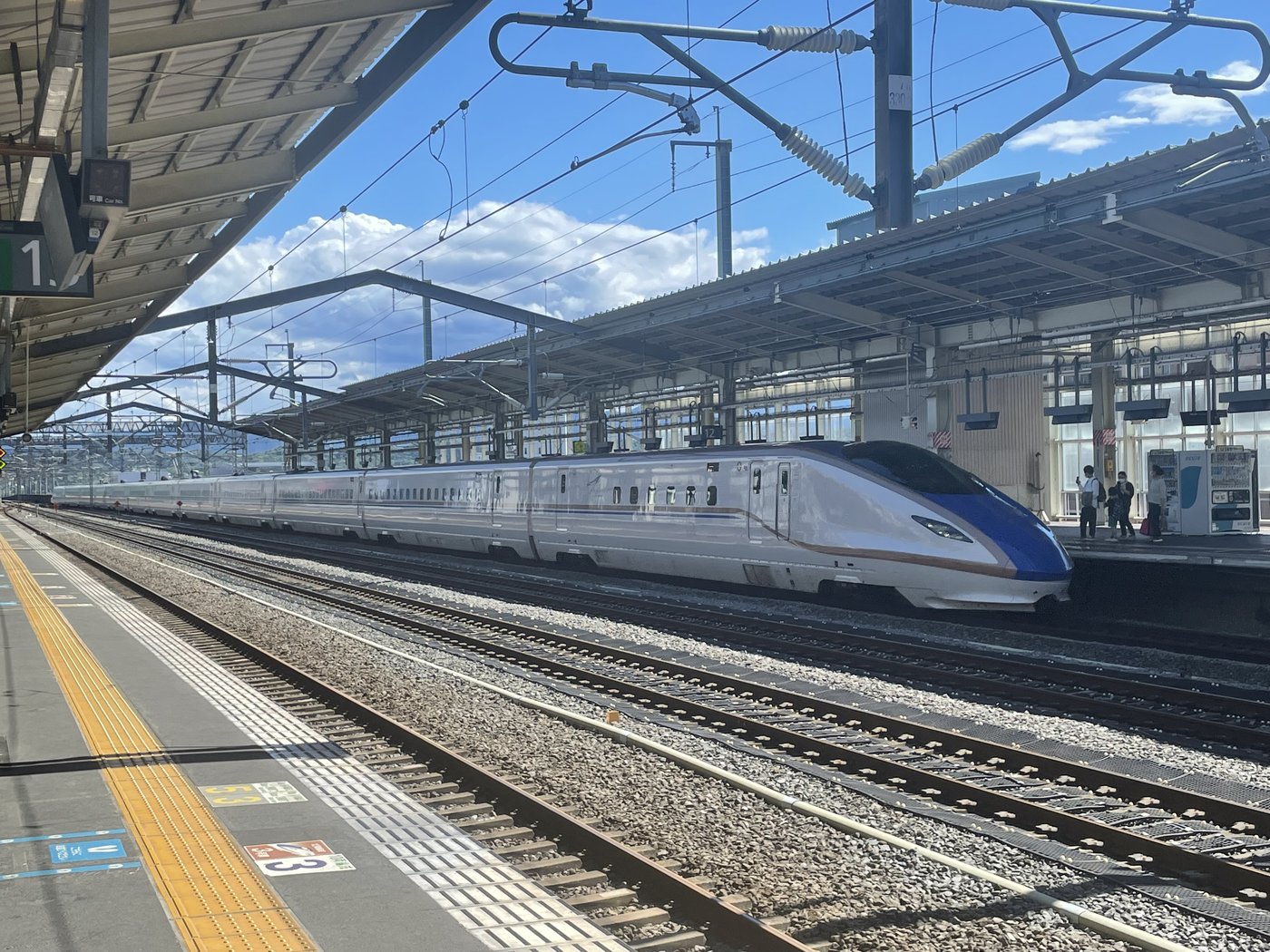
More actionable: the Japan Rail Pass goes up around 5–6% on 1 October 2026. Reported new prices include ¥53,000 for a 7-day adult standard pass (from ¥50,000), ¥84,000 for 14 days, ¥105,000 for 21 days, and ¥74,000 for a 7-day Green Car pass. Coverage from official and agency channels has differed on exactly which sales channels rise, so confirm the price on the page where you actually buy.
If your dates are fixed and you have run the numbers, buying before 1 October saves a few thousand yen — but only if your travel falls inside the exchange order’s validity window, so do not buy in August for a trip in March. Check whether you need one at all first: for a simple Tokyo–Kyoto–Osaka loop, the pass usually loses. Our Is the Japan Rail Pass Worth It? guide has the break-even numbers, and How to Buy the Japan Rail Pass Online covers the buying process.
6. Arrival is genuinely faster now
Visit Japan Web merged immigration and customs into a single QR code, and joint kiosks at Narita, Haneda and Kansai, running since April 2025, let one scan of that code and your passport handle both. Instead of queuing twice, you queue once. Register before you fly, screenshot the QR code so you are not fighting airport Wi-Fi at the gate, and have your first night’s address and phone number ready when you fill the form in. It is still free and technically optional — paper forms exist — but the time difference on a busy arrival bank is substantial. If you want data working the moment you land, sort connectivity before departure; our Best eSIM for Japan guide compares the options honestly.
7. What has not changed
Short-stay visa-free entry is unchanged for passport holders from the many countries that have it — 90 days for most, no application. JESTA, Japan’s planned pre-travel authorization, became law in 2026 but is not expected to launch until fiscal 2028 — April 2028 to March 2029, so anyone telling you to apply now is selling something. IC cards, convenience stores, luggage forwarding and the general business of getting around work exactly as they did.
Added up, for two people on a ten-day trip with a few Kyoto nights, all of this comes to roughly ¥4,000 in extra departure tax, ¥2,000–¥8,000 in accommodation tax depending on your hotel tier, and a little more in rail fares — call it ¥10,000 for the pair, against a trip our How Much Does a Trip to Japan Cost? guide puts in the hundreds of thousands. The tax-free change costs you time, not money.
FAQ
Do I still get tax-free shopping after 1 November? Yes. You pay the tax up front, customs confirms at the airport before departure — within 90 days of purchase — that the goods are leaving with you, and the shop or its refund service provider pays the tax back. Keep receipts and leave extra time at the airport.
Do I pay the ¥3,000 departure tax at the airport? No. It is collected inside your ticket price by the airline or ferry operator.
Is accommodation tax included in the price I see on booking sites? Usually not. Assume it is charged separately at the property, sometimes in cash.
Will I be charged more than Japanese people everywhere now? No. Two-tier pricing exists at a small number of sites and is based on residency, not nationality. Ordinary restaurants, trains, shops and hotels charge everyone the same.
The verdict
Nothing here should change whether you come to Japan. Three things should change what you do: register on Visit Japan Web before you fly; keep your shopping receipts together and reach the airport early if you are here after 1 November; and check the Japan Rail Pass maths before 1 October if a pass was already in your plan. The rest is a few hundred yen at a time, collected quietly, in a country that remains a remarkably good deal for what you get.
Written from Japan by the Wayfarer Japan team. Prices, dates and tax rules are approximate and change — always confirm before booking.