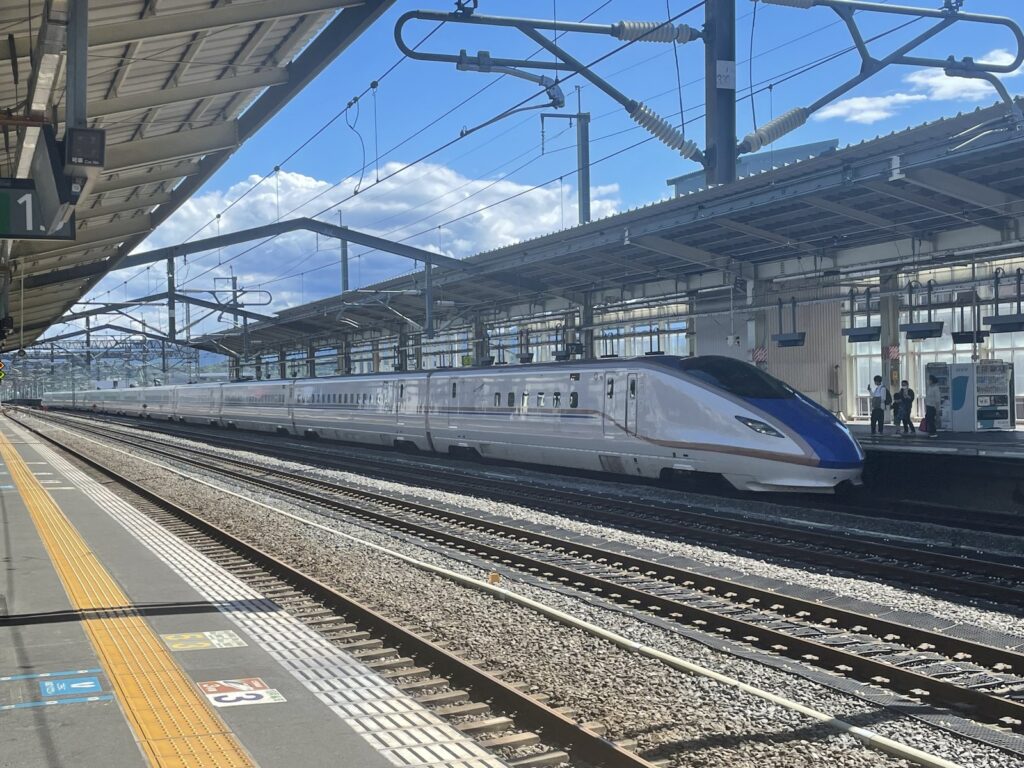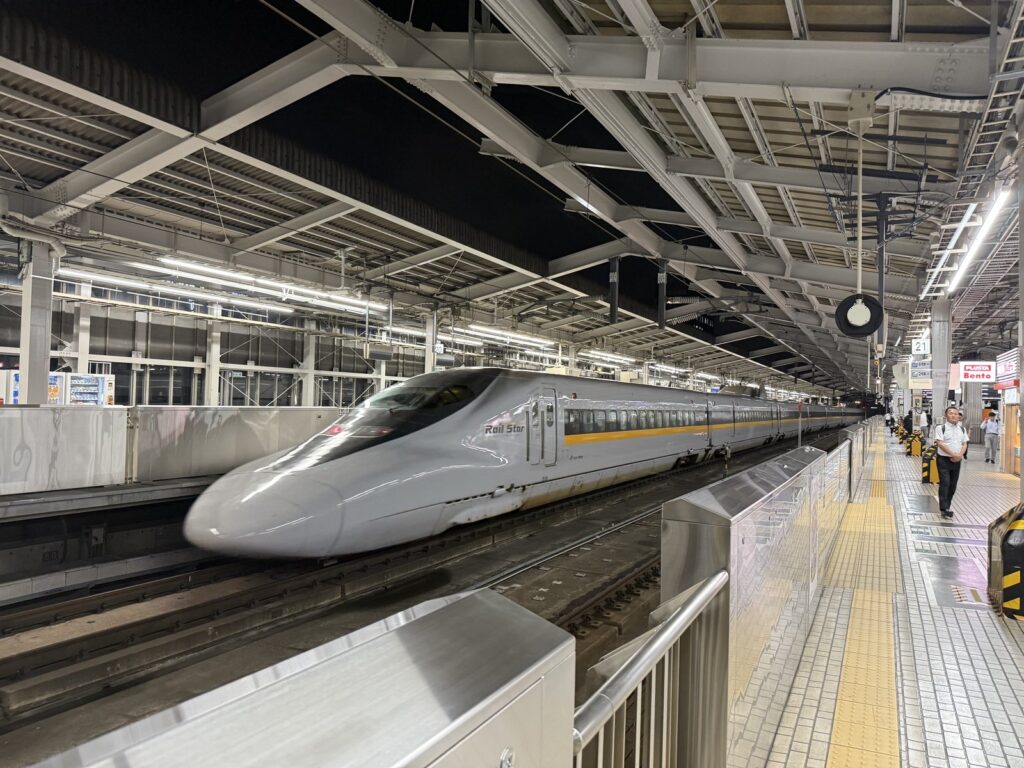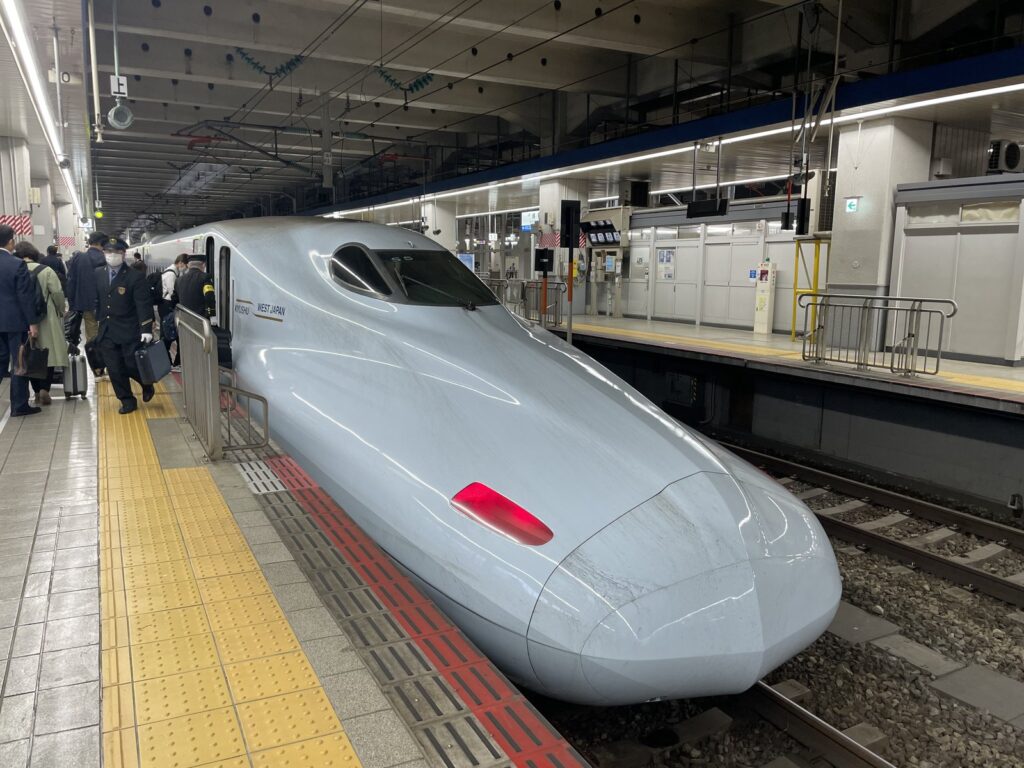
The shinkansen is the easiest 300km/h train in the world to ride, and somehow the one people worry about most. I live in Japan and take it several times a year, and the truth is that once you have understood two small things — that you hold two tickets, not one, and that a reserved seat costs almost nothing extra — the rest is just walking to a platform.
What actually catches visitors out is never the technology. It is the ticket gate that swallows one ticket and spits out two, the suitcase rule nobody mentioned, and turning up at Tokyo Station in mid-August expecting to jump on the next train. Here is how it really works in 2026.
The quick answer
- You need two tickets: a basic fare ticket (the distance) plus a limited express ticket (the shinkansen surcharge). They are usually printed as a pair and go into the gate together.
- Tokyo to Kyoto: about ¥13,320 non-reserved or ¥14,170 reserved on a Nozomi. Tokyo to Shin-Osaka: about ¥13,870 / ¥14,720, or ¥20,450 in the Green Car. Fares rose on 14 March 2026, so treat older blog figures with suspicion.
- Reserve your seat. It costs roughly ¥850 more than standing in the non-reserved queue and removes every bad outcome.
- Nozomi trains run reserved-only during Obon (7–16 August 2026), New Year and Golden Week. No reservation, no boarding.
- Luggage over 160cm (length + width + height) needs a free oversized-baggage seat on the Tokaido, Sanyo and Kyushu lines, or it is ¥1,000 on board.
- Buy online with Smart EX (English, takes foreign cards, links to your Suica) or at any station machine. There is no need to book months ahead outside peak weeks.
The two-ticket thing, explained once
Every long-distance JR journey is priced as basic fare + express surcharge. The basic fare covers the distance; the limited express ticket buys you the fast train and the seat. This is why the Tokyo–Kyoto total looks large but the “shinkansen part” is only about half of it, and it is why our guide to How Japan’s Train Fares Work is worth five minutes before your first long trip.
At the gate, put both tickets in together, one on top of the other. The machine takes them, reads them and returns them from the slot at the far end. Take them back — you need them again at the shinkansen transfer gate and at your destination. If you booked ticketless through Smart EX and registered your Suica or PASMO, you skip all of this and simply tap.
Nozomi, Hikari, Kodama: which train to take
On the Tokaido line between Tokyo, Kyoto and Osaka there are three services running on the same track at the same speed. The difference is how often they stop.
| Train | Tokyo → Kyoto | Notes |
|---|---|---|
| Nozomi | about 2h 15m | Fastest, most frequent. Not covered by the Japan Rail Pass without a supplement |
| Hikari | about 2h 40m | A few extra stops. Fully covered by the Japan Rail Pass |
| Kodama | about 3h 45m | Stops everywhere. Rarely worth it unless you are going somewhere small |
Paying cash? Take the Nozomi. Holding a Japan Rail Pass? Take the Hikari and enjoy the extra 25 minutes of legroom. The same logic applies further west, where Mizuho is the fast one and Sakura is the pass-friendly one.
Reserved or non-reserved
A reserved seat (shitei-seki) on Tokyo–Kyoto costs about ¥850 more than a non-reserved one (jiyu-seki). For that you get a guaranteed seat with your name on it, and you stop caring about crowds.
Non-reserved seating exists on Nozomi in cars 1–3, on Hikari in cars 1–5, and across more of the train on Kodama. It works well on a quiet Tuesday morning. It works badly with luggage, with children, or on any Friday evening. The Tohoku and Hokkaido lines settle the argument for you: Hayabusa and Komachi trains are fully reserved, with no non-reserved cars at all.
The rule that ruins holidays: during Obon, the year-end and New Year period, and Golden Week, JR Central and JR West run every Nozomi as all-reserved. In 2026 that covers 7–16 August. JR has also announced it will extend all-reserved operation to selected three-day holiday weekends. On those dates a walk-up passenger without a reservation cannot board a Nozomi at all — you wait for a Hikari or Kodama, which will be full of everyone else who did not know.
Reservations open at 10:00 JST exactly one month before departure, and the popular Obon and New Year departures genuinely go within minutes.
How to buy your tickets
Smart EX is JR Central’s English booking service for the Tokaido, Sanyo and Kyushu Shinkansen. It accepts overseas addresses and Visa, Mastercard, JCB, Amex, Diners and Discover, and it lets you link a Suica, PASMO or ICOCA — including a mobile one in Apple Wallet — so the card itself becomes your boarding pass. If a payment fails, it is almost always the 3D Secure step on your bank’s side rather than the site. For JR East destinations such as Sendai, Kanazawa or Nagano, the equivalent is eki-net.
Station machines are the low-tech option and perfectly good. Every shinkansen ticket machine has an English button, takes foreign credit cards, and will sell you a seat for the next train in about 90 seconds. Staffed midori-no-madoguchi counters exist too, but the queues at Tokyo and Kyoto stations in summer are not a good use of your holiday.
Passes. The nationwide Japan Rail Pass is ¥50,000 for 7 days in ordinary class, and a further price rise is scheduled for October 2026, so check the current figure before buying. It does not cover Nozomi or Mizuho outright — you can ride them, but only by paying a supplement of roughly ¥4,960 per leg between Tokyo and Kyoto or Osaka, which is usually not worth it. For a straightforward Tokyo–Kyoto–Tokyo trip the pass rarely pays for itself; our honest breakdown in Japan Rail Pass 2026: Is It Still Worth It? runs the numbers. Regional passes are often the better buy.
Luggage: the one rule that costs money
On the Tokaido, Sanyo and Kyushu Shinkansen, any bag whose three sides add up to more than 160cm requires an oversized baggage seat — a normal reserved seat next to a dedicated luggage space at the back of the car. It is free if you book it with your ticket. Turn up without one and staff can charge ¥1,000 on board and put your bag where they choose. The absolute limit is 250cm total and 30kg; anything larger has to be shipped.
Measure with the wheels and handle included. Most 28-inch check-in suitcases land right around the line.
The alternative most residents use is simply not to travel with the suitcase at all: hand it to your hotel front desk as takkyubin and it meets you at the next hotel for around ¥2,600. Our guide to What to Do With Your Luggage in Japan covers the whole system, and it turns the shinkansen from a wrestling match into a nap.
On board
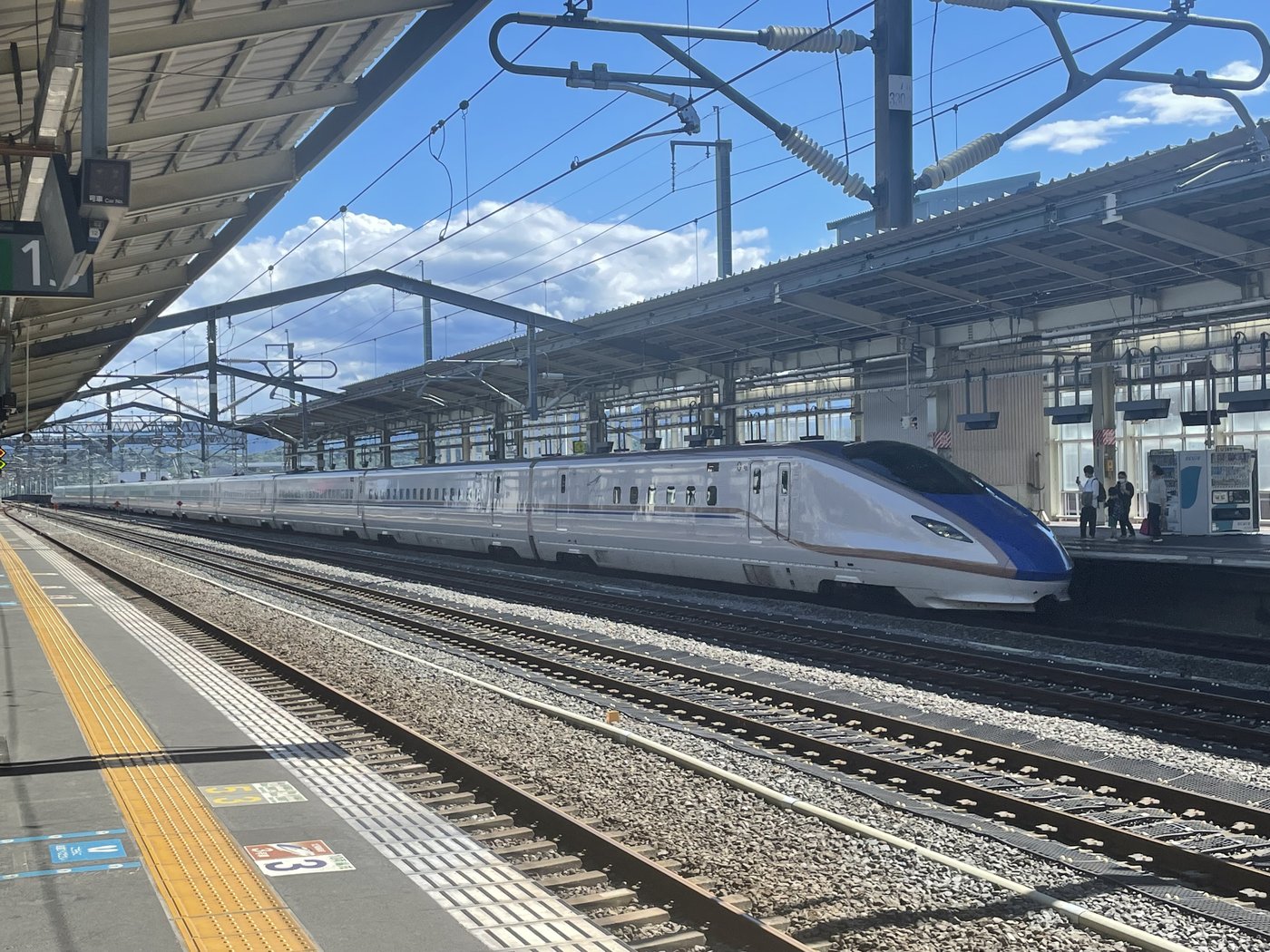
Find your car number on the platform floor markings and stand at that spot; the train stops with the doors exactly there, every time. Boarding takes about two minutes. Trains are cleaned in seven, so wait until the cleaning crew bows and leaves before stepping on.
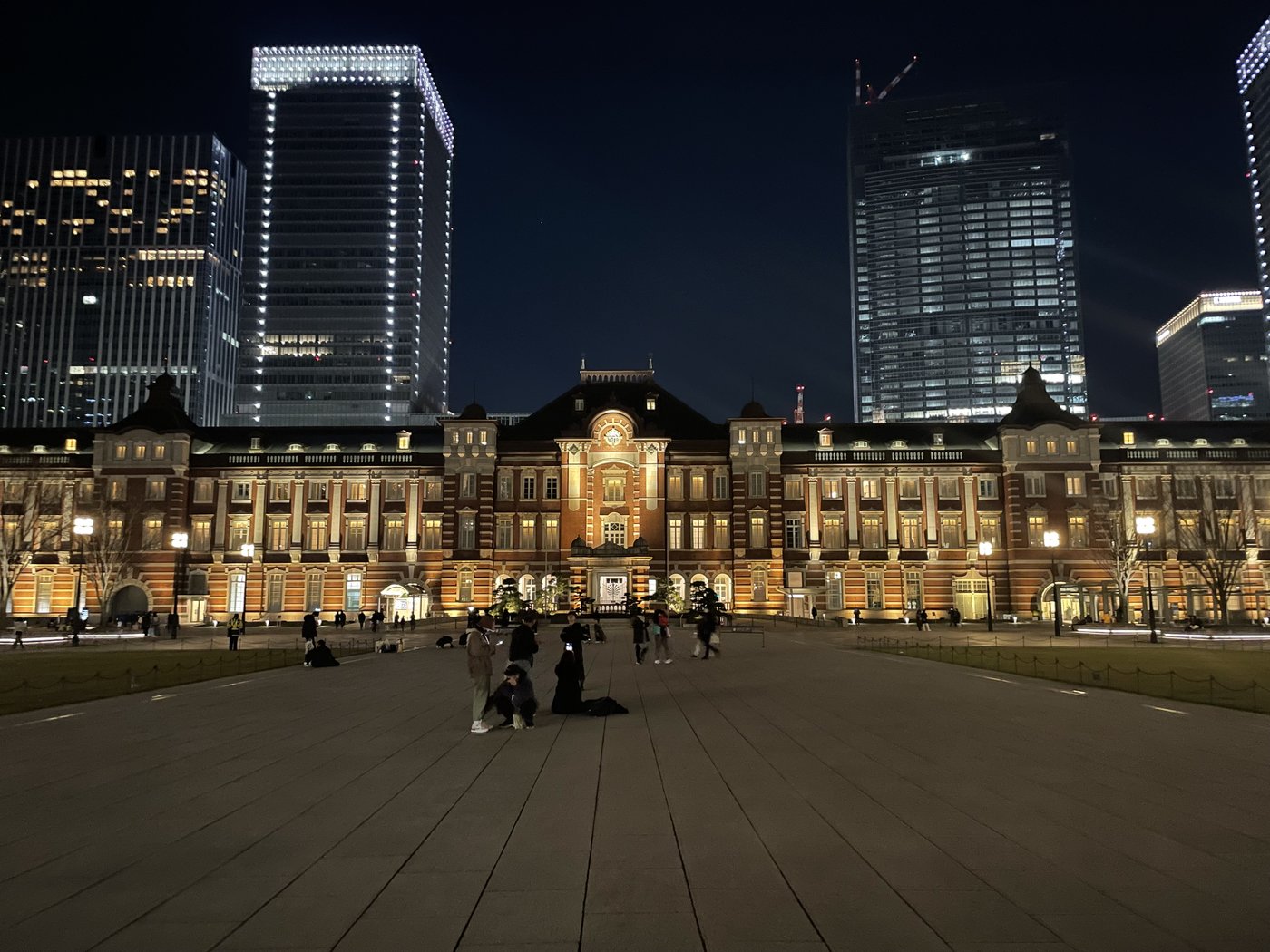
Inside, seats are three-and-two in ordinary class with real legroom, power sockets at every seat on modern sets, free wi-fi, and clean toilets. Eating is entirely normal — a station ekiben lunchbox and a coffee is the correct way to do the trip, and Tokyo Station’s Ekibenya Matsuri sells over 150 kinds. Phone calls are not normal: step into the vestibule between cars. Recline gently, and take large bags off the overhead rack rather than leaving them for the next passenger.
For Mount Fuji, heading west from Tokyo, book seat E in ordinary class (seat D in the Green Car) — the right-hand window. The view arrives roughly 40–45 minutes after Tokyo, between Shin-Fuji and Shizuoka, and lasts five to seven good minutes. Winter mornings give the best odds; on a humid August afternoon, expect cloud and be pleasantly surprised.
Announcements are in Japanese and English, and the display above the door shows the next stop. Stops are short — sometimes 90 seconds — so stand up and move to the door when your station is announced.
FAQ
Do I need to book weeks in advance? No. Outside Obon, New Year and Golden Week, booking the day before or even an hour ahead is fine. There are up to 17 Nozomi departures an hour from Tokyo at peak times.
Can I use Suica to ride the shinkansen? Not on its own. You either buy paper tickets or register your Suica/PASMO/ICOCA with Smart EX or eki-net, after which the card opens the gate. See Suica vs PASMO vs Welcome Suica for which card to get.
What if I miss my train? With a reserved ticket on the Tokaido line you can normally ride the next non-reserved car on the same day at no extra cost. Ask staff at the gate rather than guessing.
Is the Green Car worth it? For a two-hour ride, rarely. It is about ¥5,700 more Tokyo–Osaka for wider seats and a quieter car. Worth it on a long Tokyo–Hiroshima or Tokyo–Hakata run if you want to work or sleep.
Is it cheaper to fly? Sometimes, but city centre to city centre the shinkansen usually wins on total time. We compare all three options in Tokyo to Kyoto: Shinkansen vs Bus vs Flight.
The verdict
Book a reserved seat, put both tickets into the gate at once, stand on the painted marker for your car, and buy an ekiben. That is the whole skill. The only two things worth planning around are the peak-period all-reserved rule — 7 to 16 August this year — and the 160cm luggage line, and both are solved by booking a seat a few days out instead of an hour out.
All prices here are current for 2026 and quoted for regular-season travel; reserved-seat fares move by roughly ¥200 either side depending on the date, so confirm before you pay.
Written from Japan by the Wayfarer Japan team.