I live in Japan, and the Osaka-to-Hiroshima run is one I get asked about constantly, usually from people who’ve already done Tokyo, Kyoto and Osaka and are wondering whether to push further west. The honest answer is that it’s an easy trip either way you do it — the only real decision is how much time you want to trade for how much money.
The quick answer
Shinkansen (bullet train): 1h20–1h40 from Shin-Osaka to Hiroshima Station, roughly ¥9,900–10,800 one-way depending on the train and seat type
Highway bus: 3.5–4 hours in the day, 5–7 hours overnight, roughly ¥2,500–6,500 one-way
Nationwide Japan Rail Pass: covers this route on Sakura and Hikari trains, but not Nozomi (the fastest option) without a supplement
Flying: technically exists between Itami and Hiroshima airports, but between check-in time and the airport transfer it rarely beats the train on this short a hop
There’s no need to overthink luggage either — if you’re carrying too much for a tight transfer,
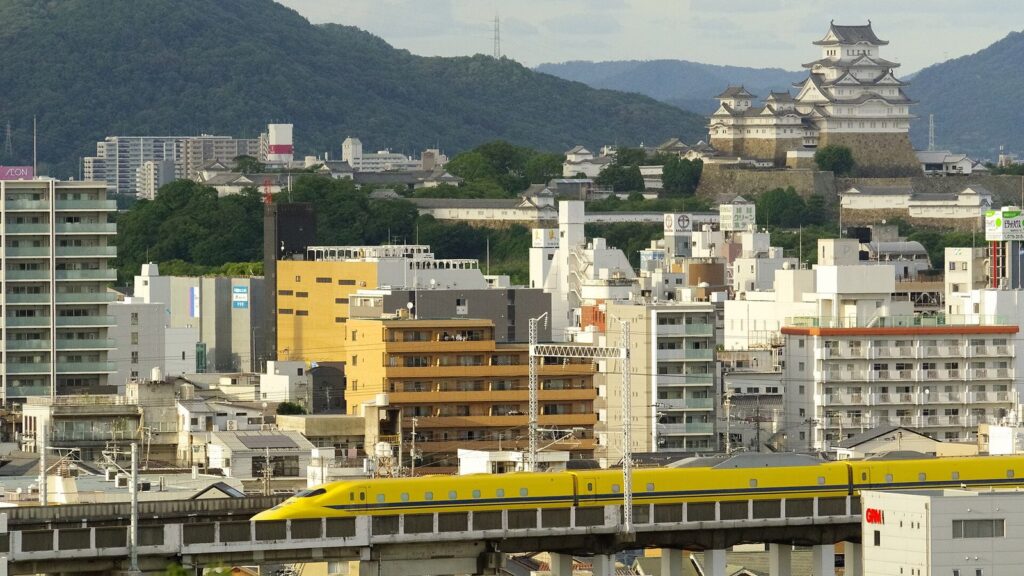
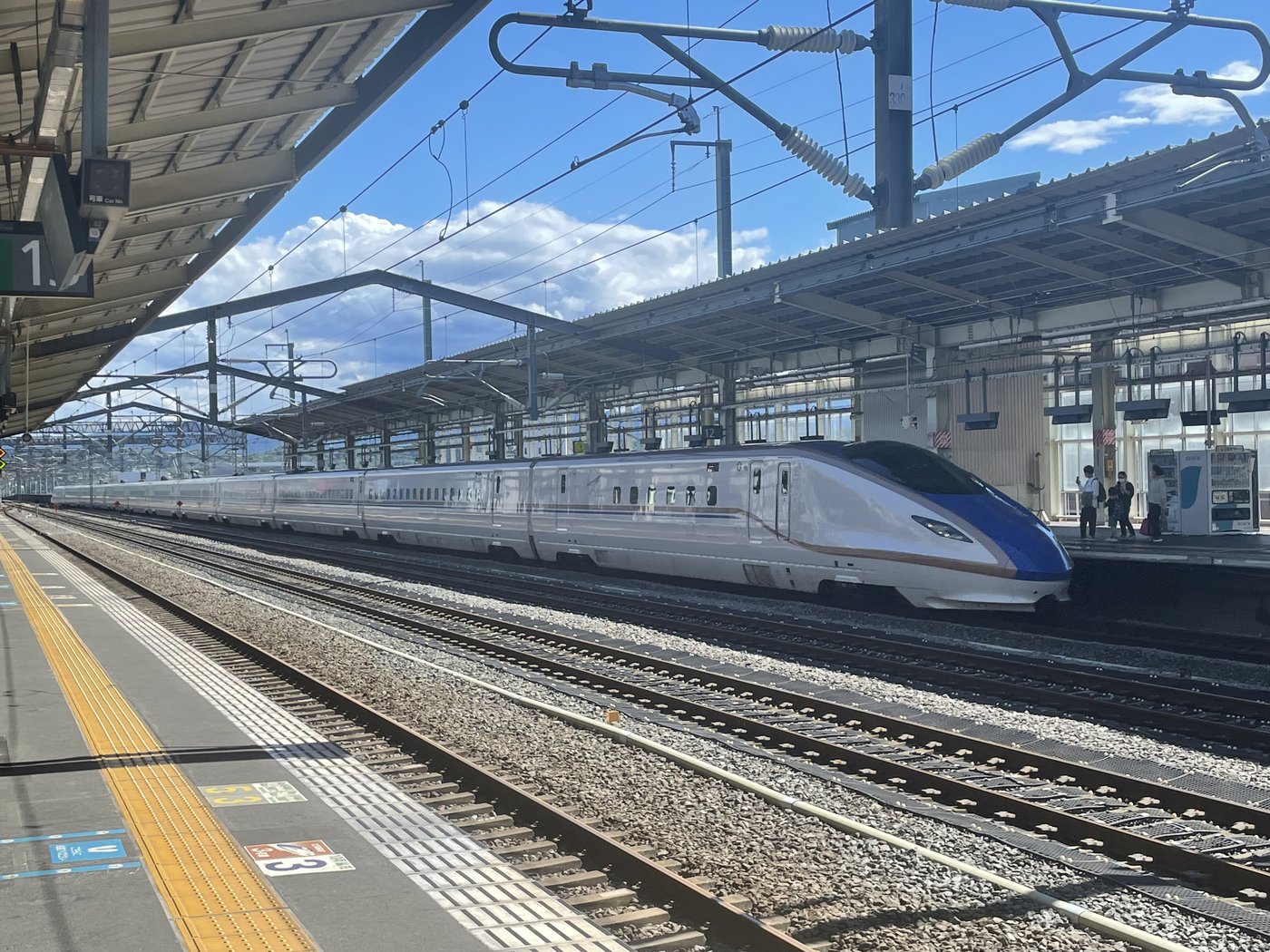
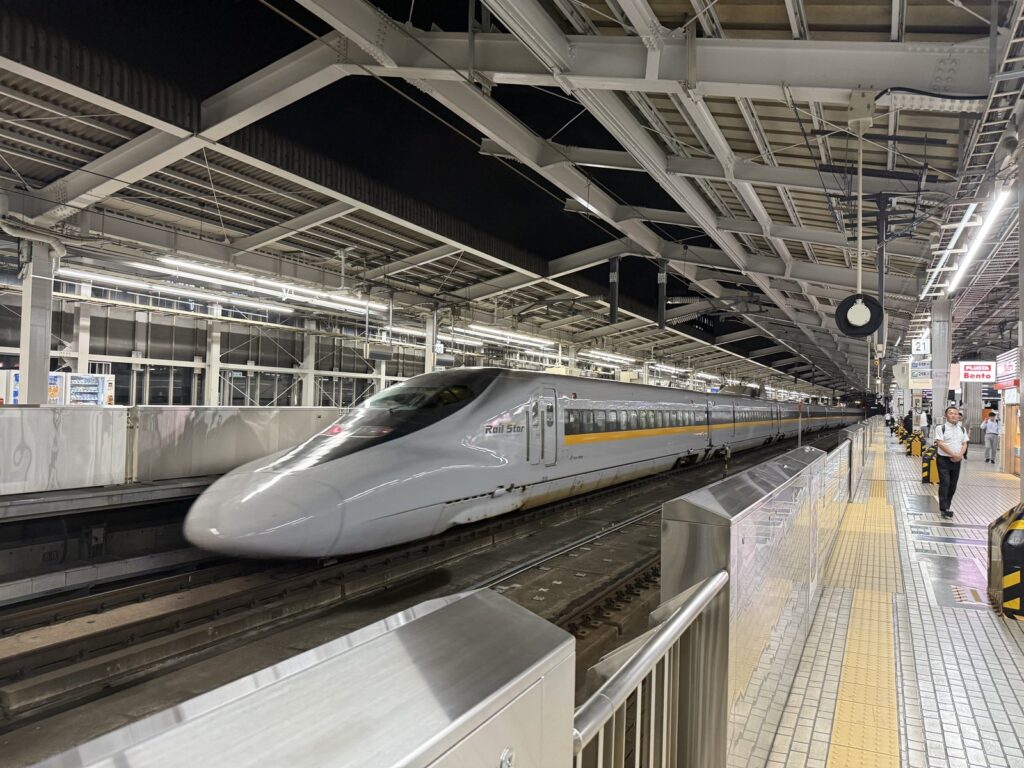
The Shinkansen — Japan’s fast, punctual bullet train.
coin lockers at Shin-Osaka and Hiroshima stations can hold a bag for a few hundred yen while you figure out the rest of the day
Shinkansen: the fast way
Shin-Osaka to Hiroshima runs on the Sanyo Shinkansen, the westward extension of the famous Tokaido line, and trains leave roughly every 10 to 20 minutes, so you genuinely don’t need to plan around a timetable the way you might for a rural local line.
Three train types cover this route:
Train
Time
Stops
Fare (unreserved, approx.)
Nozomi
~1h20–1h30
Fewest
¥9,890+
Sakura
~1h30–1h40
A few more
¥9,890+
Hikari
~1h30–1h40
A few more
¥9,890+
Reserved ordinary seats run a bit higher — around ¥10,750 on Nozomi and ¥10,220 on Sakura in regular season — and Green Car (first class) adds a premium on top of that. Unless you’re traveling during a major holiday rush like Golden Week or Obon, unreserved seats are fine; the trains are long and frequent enough that you’re unlikely to be stuck standing.
If you’re deciding whether to buy the nationwide pass at all for your trip, that’s really a separate question — see Japan Rail Pass 2026: Is It Still Worth It? for the full breakdown — but specifically for this leg, here’s what matters: the Japan Rail Pass covers Hikari and Sakura trains on the Sanyo Shinkansen at no extra charge, but it does not cover Nozomi, the fastest service, without paying the fare difference out of pocket. Since Hikari and Sakura only add about 10 minutes to the trip, this is one of the easier exclusions to live with. If you’re focusing your travel specifically on the Kansai–Hiroshima corridor rather than the whole country, a regional option like the JR Sanyo-Sanin Area Pass or JR Kansai-Hiroshima Area Pass can be worth comparing — those do include Nozomi, unlike the nationwide pass. For a deeper look at when a regional pass beats the full one, Regional JR Passes: Which One Should You Buy? covers the main options.
This content is blocked because it requires Google Maps cookies.
Highway bus: the cheap way
If you’re not in a hurry, the highway bus is a real option, not just a budget fallback. Daytime buses take about 3.5 to 4 hours and cost roughly ¥2,500 to ¥4,500, run by operators like Chugoku JR Bus and Willer Express, departing from spots like Namba OCAT or the Willer terminal near Umeda and arriving in central Hiroshima.
Overnight buses stretch to 5–7 hours (partly because of a scheduled layover) and cost ¥3,000–6,500, with the higher end buying you a private pod-style seat instead of a standard recliner. I’d only recommend the overnight bus if you’re trying to save a hotel night — otherwise the time trade against the shinkansen stops making sense once you add in a lost morning feeling groggy.
Buses have onboard restrooms and reclining seats, and there’s enough underfloor storage for standard suitcases, so this isn’t a cramped backpacker-only option. It’s a legitimate way to put the ¥7,000+ you save toward dinner in Hiroshima instead.
Flying: usually not worth it
There are flights between Osaka’s Itami Airport and Hiroshima Airport, but Hiroshima Airport sits well outside the city center, and once you add check-in buffer time and the airport transfer on both ends, you’re not saving meaningful time over the shinkansen — and you’re paying more for the privilege. This is one of the few domestic Japan routes where flying is almost never the right call; save it for longer hops like Tokyo to Fukuoka or Okinawa.
What to do once you arrive
Most people treating Hiroshima as a stop on a wider loop pair it with Miyajima, the island with the famous floating torii gate, which is a short train-and-ferry combination from Hiroshima Station. If that’s on your list, Hiroshima and Miyajima Guide for First-Timers walks through timing both in one day without rushing either one.
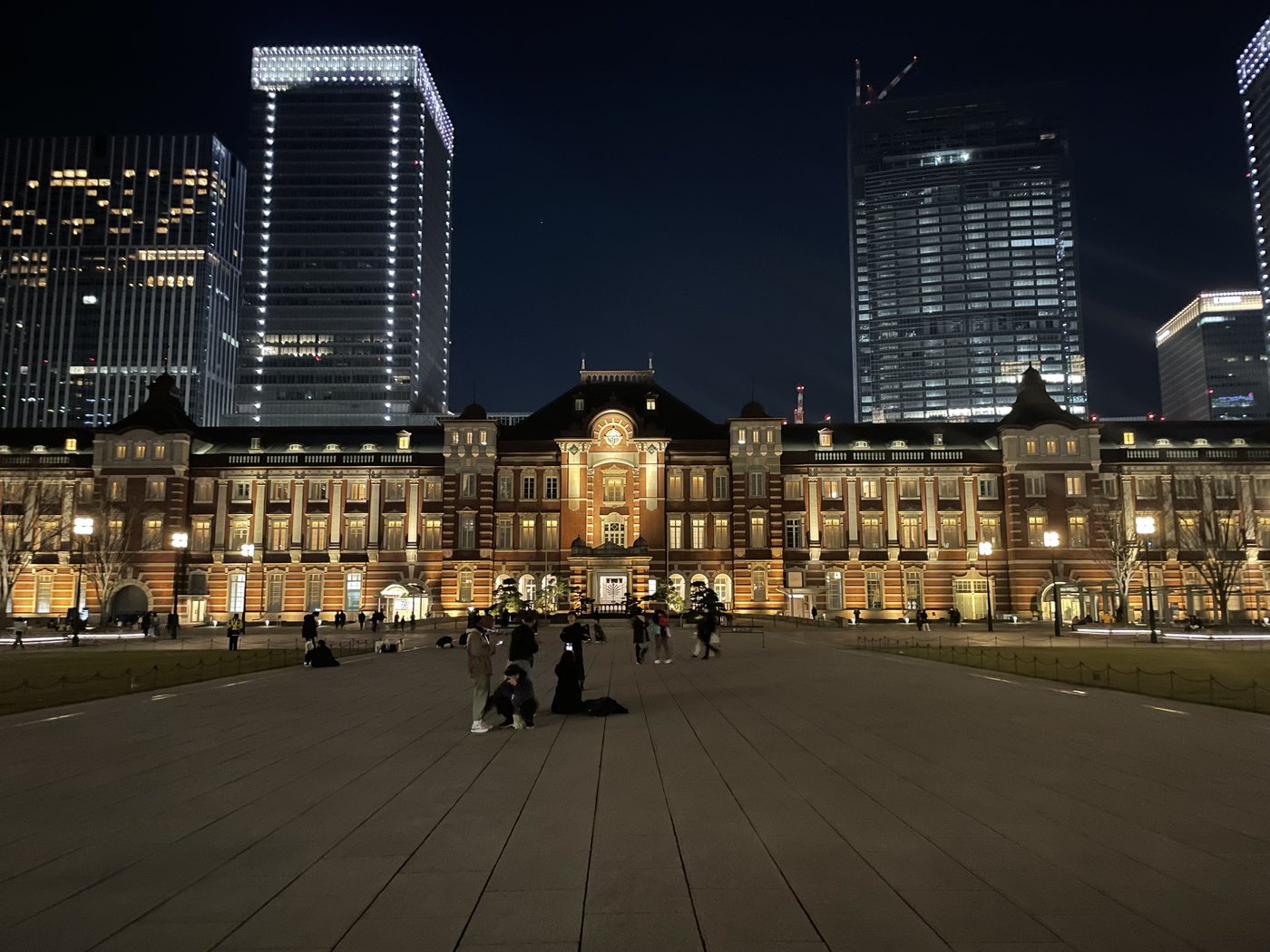
Tokyo Station’s historic Marunouchi facade, lit up at night.
And if you’re coming from Kyoto instead of Osaka, the logic is nearly identical — same trains, slightly longer ride — and Kyoto to Hiroshima: Shinkansen, Bus and Real Costs covers that version of the trip in the same format.
FAQ
Is Shin-Osaka the only station I can board from in Osaka?
Yes, for the shinkansen — Osaka Station itself isn’t on the shinkansen line, so you’ll transfer to Shin-Osaka first, which is a few minutes by local train or subway from central Osaka.
Can I use a regular IC card like ICOCA or Suica for the shinkansen fare?
You can tap IC cards for some shinkansen trips within certain regions now, but for a longer inter-city hop like this, buying a proper ticket (paper or through Smart EX) is still the standard and safest approach — don’t assume your IC card balance will cover it at the gate.
Do I need to reserve a seat in advance?
Not usually. Outside of peak holiday weeks, unreserved cars have enough capacity. If you’re traveling during Golden Week, Obon, or New Year, reserving ahead removes the risk entirely.
Is the trip worth breaking up with a stop in Himeji or Okayama?
If you have the time, yes — Himeji Castle is close to the line and an easy half-day add-on. If you’re tight on time, it’s an easy skip; the direct Hiroshima trains don’t lose much by passing through.
The verdict
For most travelers, the shinkansen is the right call — it’s fast, frequent, and comfortable enough that the extra cost over the bus rarely feels wasted. If your budget is tighter than your schedule, the daytime highway bus is a perfectly reasonable way to shave real money off the trip without much hardship. The only trap is assuming your Japan Rail Pass covers every train on this line — check whether you’re booking a Nozomi before you count on riding for free.