I live in Japan with two kids under ten, and the question I get most from visiting friends is some version of “will this actually work with a five-year-old?” The short answer is yes, more easily than almost anywhere else I’ve traveled with them. Japan is safe to let an eight-year-old walk ahead of you on a station platform, trains run so punctually that you can plan a toddler’s nap around a departure time, and there is a vending machine, clean toilet, or convenience store every few blocks when someone suddenly needs a snack or a bathroom. The harder part is picking which of the famous sights are actually fun for a seven-year-old, and which ones are a long, hot walk toward a building your kid will tolerate for ninety seconds.
The quick answer
- Shinkansen fares for kids: children under 6 ride free (up to two per paying adult, if they don’t need their own seat); ages 6–11 pay half the adult fare; age 12 and up pays full adult fare. A child who turns 6 before starting elementary school still rides free until April 1 of their first school year.
- Tokyo Disney Resort: children 3 and under enter free; ages 4–11 pay a discounted child ticket (roughly ¥4,700–¥5,600, date-based pricing); age 12+ pays the “Junior” or adult rate.
- Best base cities with kids: Tokyo and Osaka, for the density of easy wins (aquariums, parks, trains-as-entertainment) within short train rides — not Kyoto, where the big draws are temples that reward patience a small child doesn’t have yet.
- Skip or shorten: back-to-back temple days, standing-room-only rush-hour trains with a stroller, and anything marketing itself as a “walking tour.”
- Strollers: fine on trains outside peak rush hour (roughly 7:30–9:30am and 5:30–7:30pm on weekdays); elevators exist at nearly every station but are sometimes a long walk from the platform you’re on.
- Diapers, formula, and kids’ medicine are sold at any convenience store or pharmacy — you do not need to pack six days of supplies.
What actually works well with kids
Japan’s single biggest advantage with children is that getting around rarely feels like an obstacle course. Platforms have clear English signage, trains arrive within seconds of their posted time (which matters more than you’d think when you’re managing a nap schedule), and almost every station has at least one elevator or wide accessible gate for a stroller.
Ueno Park and Zoo in Tokyo is close to a perfect half-day: pandas, a lake with rental boats, wide paths for a scooter or a wobbly walker, and enough food stalls that nobody has to sit through a sit-down lunch. Odaiba, reachable via the driverless Yurikamome line kids love purely for the view out the front window, combines a science museum (Miraikan), a giant Gundam statue, and a beach-adjacent park. In Osaka, the Kaiyukan Aquarium and Universal Studios Japan (which has a genuinely excellent Super Nintendo World for kids who know Mario) both deliver without requiring the patience a shrine or temple circuit demands.
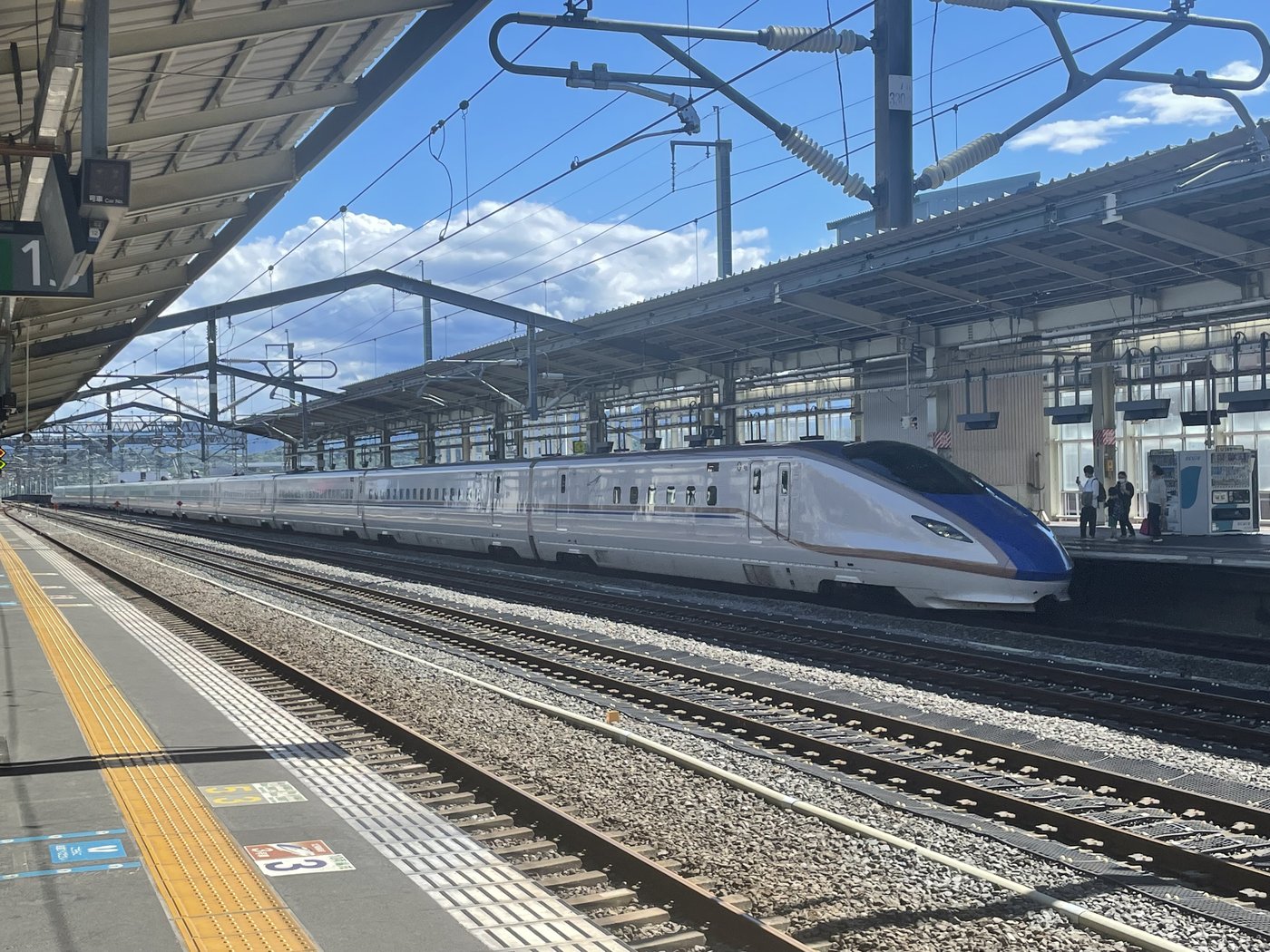
Train travel itself is entertainment, not just transport. A window seat on the Shinkansen, snacks from the trolley or a station bento, and the Mt. Fuji window on clear days between Tokyo and Osaka will often be the trip highlight your kid remembers, which takes the pressure off cramming in sights. If this is your family’s first time navigating the rail system, our How Japan’s Train Fares Work and Suica, PASMO and Welcome Suica guides cover the basics once, before you’re doing it with a stroller in one hand.
What to skip, or do differently
Kyoto’s temple circuit is the thing most families over-plan. Kinkaku-ji, Fushimi Inari’s thousand gates, and Kiyomizu-dera are genuinely beautiful, and genuinely a long, often uphill walk in heat or crowds that a six-year-old has no context for enjoying. If Kyoto is on the itinerary, pick one temple, not four, and balance it with somewhere a kid can run — the Kyoto International Manga Museum or Arashiyama’s bamboo grove plus the monkey park, where there’s a destination with a payoff (feeding monkeys) at the end of the walk.
Rush-hour trains with young kids and a stroller are worth planning around, not through. Tokyo and Osaka’s weekday rush (roughly 7:30–9:30am, 5:30–7:30pm) means packed cars where a stroller is genuinely difficult to manage and not everyone will be patient about it. Shifting a transit day to start at 10am instead of 8am costs you little and avoids the worst of it.
Ryokan with elaborate multi-course kaiseki dinners are a wonderful experience for adults and often a rough one for picky eaters facing an hour-long formal meal they don’t want. If a ryokan stay matters to you, look for family-friendly ones that offer a simpler kids’ set menu or let you request an earlier, shorter dinner — our Hotel vs Ryokan guide has more on what to ask before booking.
Practical logistics that make the difference
Diapers, wipes, formula, and children’s cold or fever medicine are stocked at every convenience store and drugstore (Matsumoto Kiyoshi, Sundrug), so packing light and restocking locally is realistic — see our Japan Packing List for what’s genuinely worth bringing versus buying there. Nursing rooms and diaper-changing stations are standard in train stations, department stores, and most malls, usually marked with a baby icon.
Car seats are legally required for children under 6 in private vehicles and rental cars, including taxis in some cases — if you’re renting a car for a day trip, request one when booking, as not all companies stock them automatically. If you’re staying urban and using trains, this mostly won’t come up.
If your child is still in a crib or needs a quiet early bedtime, business hotel rooms in Japan run small — a hotel room with a separate area to put a child down, not just a curtain, is worth checking for specifically rather than assuming. Family-oriented hotel chains and larger Western hotel brands are more likely to have connecting rooms or genuine twin-bed-plus-crib configurations than compact city hotels.
FAQ
Is Japan safe for kids to walk around unsupervised in? By most visitors’ home-country standards, yes — it’s common to see Japanese children as young as six or seven commuting to school alone. That said, use the same judgment you would anywhere with a child you don’t yet trust to navigate a new transit system.
Do I need a stroller, or will a carrier work better? Both have a place: a carrier is easier on stairs and crowded trains without elevators nearby, while a stroller is better for long park or shrine-grounds days. Many families bring a lightweight umbrella stroller for exactly this reason — easy to fold onto a train, not a struggle on the stairs you’ll occasionally meet before finding the elevator.
Are there English-speaking pediatricians if something comes up? Major cities have international clinics with English-speaking staff; ask your hotel or check your travel insurance provider’s network before you go, and keep a copy of any ongoing prescriptions’ generic names.
What’s the best length of trip with young kids? Shorter and with fewer cities than you’d plan without kids — one base city for 4–5 nights with day trips beats changing hotels every two nights. Our 5-Day Japan Itinerary and 7-Day Japan Itinerary both work well adapted down to 2–3 stops instead of the full list.
The verdict
Japan is one of the easier countries to travel in with young kids, not despite the culture but because of it — punctual trains, universal cleanliness, and food options a picky eater can usually find something in. The trip only goes sideways when the itinerary is built for an adult’s pace: four temples in a day, a different hotel every two nights, rush-hour train transfers with a double stroller. Build in fewer stops, more park and train-watching time, and let one or two “boring” adult-favorite sights go, and most families find Japan trades almost no magic for a lot of real-world ease.
Written from Japan by the Wayfarer Japan team. Prices and schedules are approximate for 2026 — always confirm with the operator before booking.