I live in Japan, and the question I get most from visiting friends isn’t “should I take a taxi” — it’s “wait, is this actually a taxi, or is it Uber, or something else.” The honest answer is that in Japan, almost all of it is a taxi. What changed over the last couple of years isn’t the cars; it’s the way you call one.
You no longer need to stand on a curb with your arm out or trust a hotel concierge to phone one for you. Four apps — GO, Uber, S.Ride and DiDi — now sit on most residents’ phones, and all four work for visitors, often with a foreign credit card and no Japanese phone number required. The trick is knowing which to open, what it actually costs, and where the limits of the system are.

The quick answer
- Taxis are metered, licensed and everywhere — safe, metered, and the drivers do not expect a tip.
- Tokyo’s base fare was revised on 20 April 2026: ¥500 still covers the first kilometre, but that first kilometre is now shorter (1 km, down from 1.096 km), and the meter ticks up faster after that — roughly a 10% real-terms increase.
- Use an app, not a street hail, if you can: GO, Uber, S.Ride or DiDi. All four work with a foreign phone number and a foreign card.
- Airports have fixed fares: Haneda to central Tokyo runs about ¥7,600–9,000; Narita’s zone fares to central Tokyo run ¥29,000–32,500 plus tolls, which is why the train or a bus is usually the smarter call from Narita.
- “Rideshare” in Japan is not Uber-style ride-hailing. What exists is a tightly regulated, taxi-company-run scheme limited to specific hours and areas with a driver shortage. For a visitor, “calling a rideshare” and “calling a taxi through an app” are, in practice, the same thing.
- A 20% late-night surcharge applies between 22:00 and 5:00, on top of the fare.
What a taxi actually costs in 2026
Japan’s taxi fares are not a free-for-all; they’re set by region and reviewed periodically by the transport ministry. Tokyo’s rates were revised on 20 April 2026 — the first change in a few years.
- Flagfall: ¥500, covering the first 1 km (previously 1.096 km — a quiet way of raising the effective price without changing the headline number).
- Distance charge: roughly ¥100 for every 232 metres after that (previously 255 m).
- Time charge: a small per-minute charge kicks in during slow traffic, so a jam costs more than distance alone suggests.
- Night surcharge: 20% extra between 22:00 and 05:00.
In practical terms, a short hop of 1–2 km around a city centre — station to hotel — typically lands around ¥700–1,200 during the day. A longer crosstown ride in Tokyo, 8–10 km, is more realistically ¥3,000–4,500 in traffic. Other cities (Osaka, Kyoto, Fukuoka) run slightly cheaper flagfalls and increments, but the same basic structure.
Credit cards, IC cards (Suica, PASMO and the rest), and QR payments are accepted in the large majority of taxis now, via a reader built into the back-seat terminal — even with drivers who speak no English. I’d still carry some cash outside major cities, where a handful of independent drivers run card-free.
The four apps, and which one to actually open
Every one of these apps dispatches licensed taxis — this isn’t a Western-style private-driver network. The differences are in coverage, fees and who you’re already signed up with.
| App | Coverage | Dispatch/booking fee | Best for |
|---|---|---|---|
| GO | Nationwide, all 47 prefectures, by far the largest fleet | ~¥0–500 call fee; ¥100 in-app fee if paying in the car | Default choice almost everywhere; highest chance of finding a car fast |
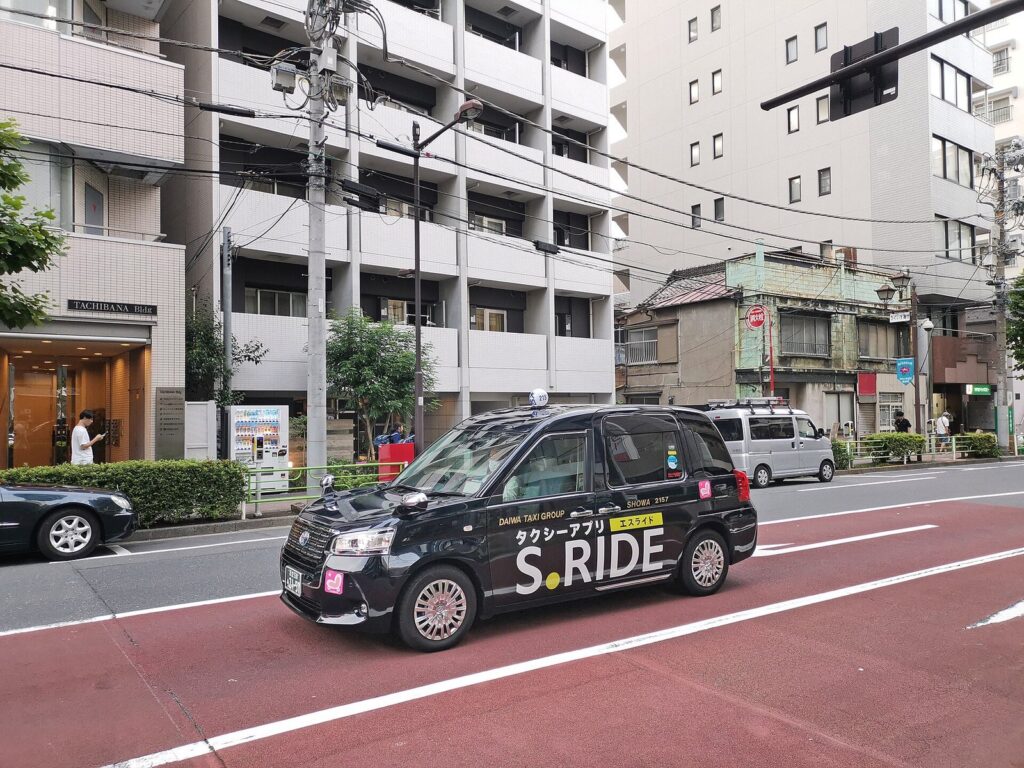
| S.Ride | Strong in central Tokyo, backed by a major fleet | Free booking fee in most cases | Tokyo nightlife districts, where it’s often quickest |
| Uber | Nationwide, dispatches licensed taxis (not private drivers) | Small service fee (~¥100) in some areas like central Tokyo | Travellers who already have Uber set up with a foreign card — no new account needed |
| DiDi | 44 of 47 prefectures | Usually fee-free | A solid backup when GO or Uber shows nothing nearby |
GO is the one I’d tell a first-timer to install — it has the largest number of cars connected, from Tokyo backstreets to regional stations. But if you already have Uber on your phone from home, don’t delete it: it works the moment you land, with your existing card on file, calling you a normal taxi through its network of partner companies.
All four let you set a destination by pin-drop or address in English and track the car arriving — which solves the old frustration of flagging a cab and explaining where you’re going in a language you don’t speak.
So what is Japanese “rideshare,” really?
This is the part that trips people up, because the English word “rideshare” carries a lot of baggage from Uber and Lyft in other countries — ordinary people driving their own cars for money, on demand, anywhere.
Japan doesn’t have that. What it has, as of 2026, is a narrow, government-regulated scheme — sometimes called Nihon-gata raidoshea (Japan-style rideshare) — where ordinary drivers supplement taxis, but only through a licensed taxi company, in designated areas, during specific hours when there’s a documented taxi shortage (early mornings, late nights, big local events). It is not a general-purpose alternative to taxis, and as a resident I’ve never personally needed it — regular taxis cover almost every situation a traveller runs into.
For you as a visitor, this distinction mostly doesn’t matter: open GO, Uber, S.Ride or DiDi, and you’re matched with a licensed, metered taxi the overwhelming majority of the time. There’s no separate “rideshare” app to seek out.
Airports: when to taxi and when not to
Airport taxis run on fixed zone fares rather than the meter, which makes them predictable but not always cheap.
- Haneda → central Tokyo: fixed fares of roughly ¥7,600 to Chiyoda, ¥8,500 to Shibuya, ¥9,000 to Shinjuku, plus tolls, with a 15–20% late-night markup (22:00–05:00). For one or two people with luggage arriving late, this is genuinely competitive with the train once you factor in a transfer.
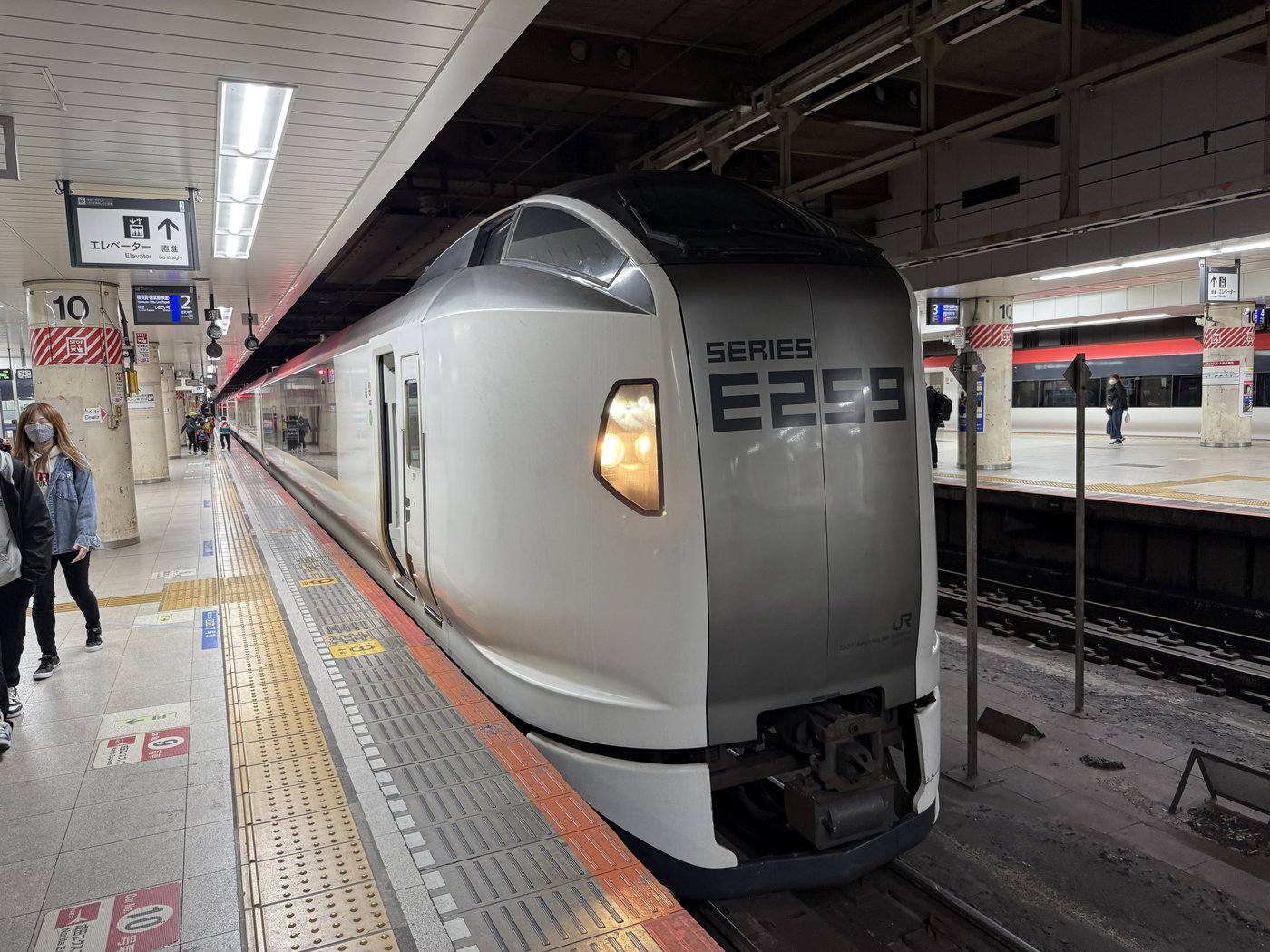
- Narita → central Tokyo: fixed zone fares starting around ¥23,500 for the eastern wards, rising to roughly ¥29,000–32,500 for central Tokyo (Chiyoda, Chuo, Taito) or more for Shinjuku/Shibuya, plus tolls. This is where I tell friends to take the Narita Express or the Keisei Skyliner instead — a fraction of the price and, in traffic, often just as fast.
If your flight lands after trains stop for the night, or you’re arriving at Haneda with jet lag and a connecting flight next morning, a fixed-fare taxi stops being a splurge and starts being the sensible option.
When a taxi genuinely beats the train
I don’t take taxis for most of my own travel in Japan — the trains are too good. See How Japan’s Train Fares Work and Getting Around Tokyo (internal links) for why rail wins most of the time. But taxis earn their keep late at night after trains stop running (most lines shut down around midnight), for a group of three or four splitting one fare, with heavy luggage or tight connections, and in rural areas — Kamikochi, parts of the Izu Peninsula, onsen towns — where bus schedules are thin and a taxi is the only practical link between a station and your ryokan.
👉 Klook also sells prepaid airport transfer and private taxi packages for Narita and Haneda if you’d rather lock in a fixed English-language booking before you land, instead of hailing one on the ground.
FAQ
Do I need to tip taxi drivers in Japan? No. Tipping isn’t expected and can confuse a driver who tries to give you exact change back. Just pay the metered fare.
Can I pay by foreign credit card? Yes, in most city taxis, via a card reader in the back seat. IC cards like Suica and PASMO work too. Carry some cash as a backup in smaller towns.
Is Uber actually different from a regular taxi in Japan? Functionally, no — Uber in Japan dispatches licensed taxis through partner companies rather than private drivers. Same cars and drivers as GO or a street hail, just booked through a familiar app.
What if no cars show up on one app? Try a second one. GO has the biggest fleet overall, S.Ride often has faster pickup in central Tokyo at night, and DiDi is worth having installed as a backup.
Are taxis wheelchair- or luggage-friendly? Most standard taxis fit two large suitcases, and larger “jumbo” taxis can be requested through GO or by phone for bigger groups or wheelchairs — worth booking ahead rather than hailing on the street.
The verdict
Taxis in Japan are safe, metered, cashless-friendly, and — since the April 2026 fare revision — a little more expensive than they used to be, but still predictable to the yen. Install GO before you land, keep Uber on your phone if you already use it at home, and save DiDi and S.Ride as backups. Skip the idea of “finding a rideshare” entirely — in Japan, every one of those apps is just a faster, easier way to call the same taxi you’d have flagged down on the street.
Written from Japan by the Wayfarer Japan team — real routes, current prices, and the small details that make a trip easier.
Featured image: “Daiwa Taxi Group Showa 2157 Toyota JPN Taxi at Negishi, Taito Tokyo” by Nord794ub, CC BY-SA 4.0, via Wikimedia Commons