The first time a Japanese colleague handed me a small box of individually wrapped cookies after a weekend trip to Hokkaido, I assumed it was a personal gift and thanked her like one. It was not for me alone. It was for the whole team, bought specifically because it was from Hokkaido, bought in a quantity that matched the headcount, and bought — I later realized — almost as a quiet apology for having been away.
That box was omiyage, and once you notice the custom, you see it everywhere: the long queues at train station gift shops on a Sunday evening, the identical-looking boxes stacked in every office pantry, the entire basement floor of a department store devoted to nothing but edible gifts. I live in Japan, and omiyage shopping took me longer to understand than almost any other local habit, because it looks like souvenir shopping and is actually something closer to a social obligation with excellent packaging.
The quick answer
- Omiyage (お土産) means a gift bought for someone else from a place you visited — not a keepsake for yourself. The kanji literally mean “local product.”
- It is built around food, specifically individually wrapped snacks in a box, because that solves the two problems with gift-giving in Japan: nobody has to reciprocate, and nobody is stuck with clutter.
- Buy it from the region it claims to be from. A Hokkaido snack bought at a Tokyo airport instead of in Hokkaido is a minor faux pas that Japanese shoppers notice and visitors never do.
- Depachika — the basement food floor of a department store — is where residents actually shop for this, not souvenir shops near the temple gates.
- The “big three” to know by name: Tokyo Banana, Royce’ Nama Chocolate, and regional Kit Kat flavors. You will see all three before your trip is over.
- Tax-free shopping rules change on 1 November 2026 — budget for the full price at the till either way, and check Cash or Card in Japan for which side of that date you land on.
It is a gift for someone else, and that changes what you buy
The core confusion for visitors is treating omiyage as a synonym for souvenir. A souvenir is for you — a magnet, a keychain, a thing that reminds you of the trip. Omiyage is for people who stayed home, and it carries a specific social weight.
The kanji are 土 (soil, local land) and 産 (product), and the practice traces back to Edo-period pilgrims who travelled to shrines like Ise and brought back regional specialties as proof of the journey and a share of its luck. Over centuries that pilgrim habit became a workplace norm: if you take time off, you are expected to bring something back for the people who covered for you. It is treated less like generosity and more like a small, expected courtesy — closer in spirit to the background politeness covered in Japan Etiquette: 15 Dos and Don’ts for Visitors than to Western gift-giving.
Food solves the practical problem built into that obligation. A box of individually wrapped cookies can be split among a dozen coworkers, eaten within a week, and generates no debt — nobody has to find a gift of equal value to give back, which is exactly the trap that a non-edible present creates in Japan. That is why the omiyage aisle is a wall of boxed snacks and almost nothing else.
Where locals actually shop: depachika, not souvenir shops
Visitors gravitate to the shops clustered around famous temples and station exits, and those are fine for a quick, obvious gift. The shopping locals actually do happens one level down — literally.
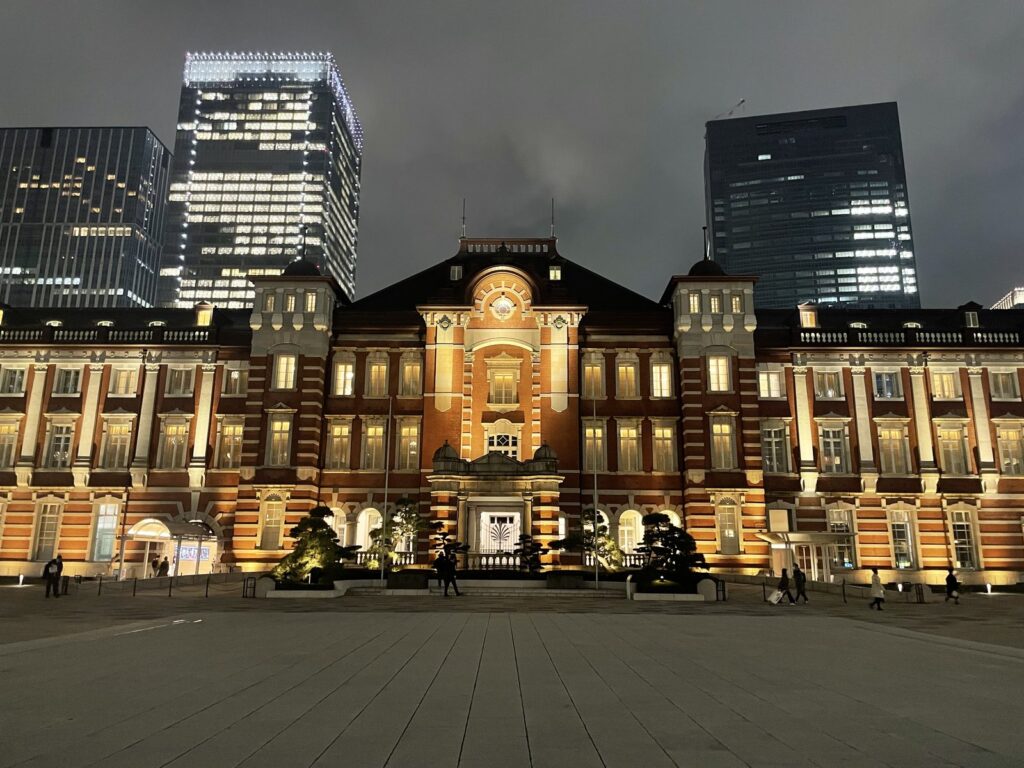
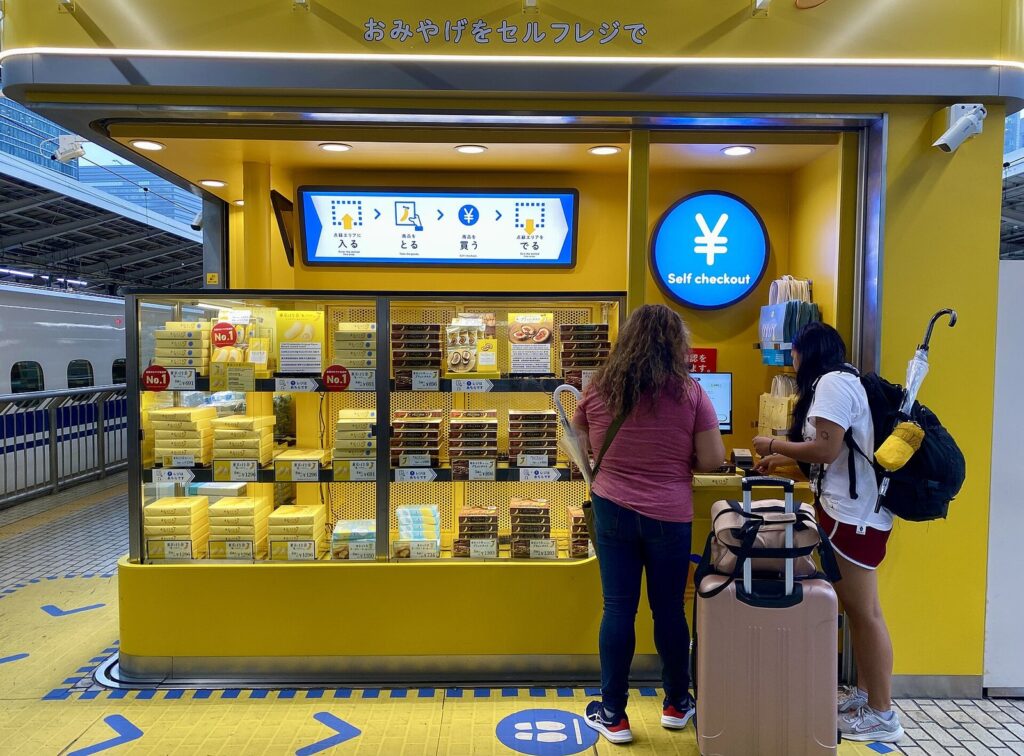
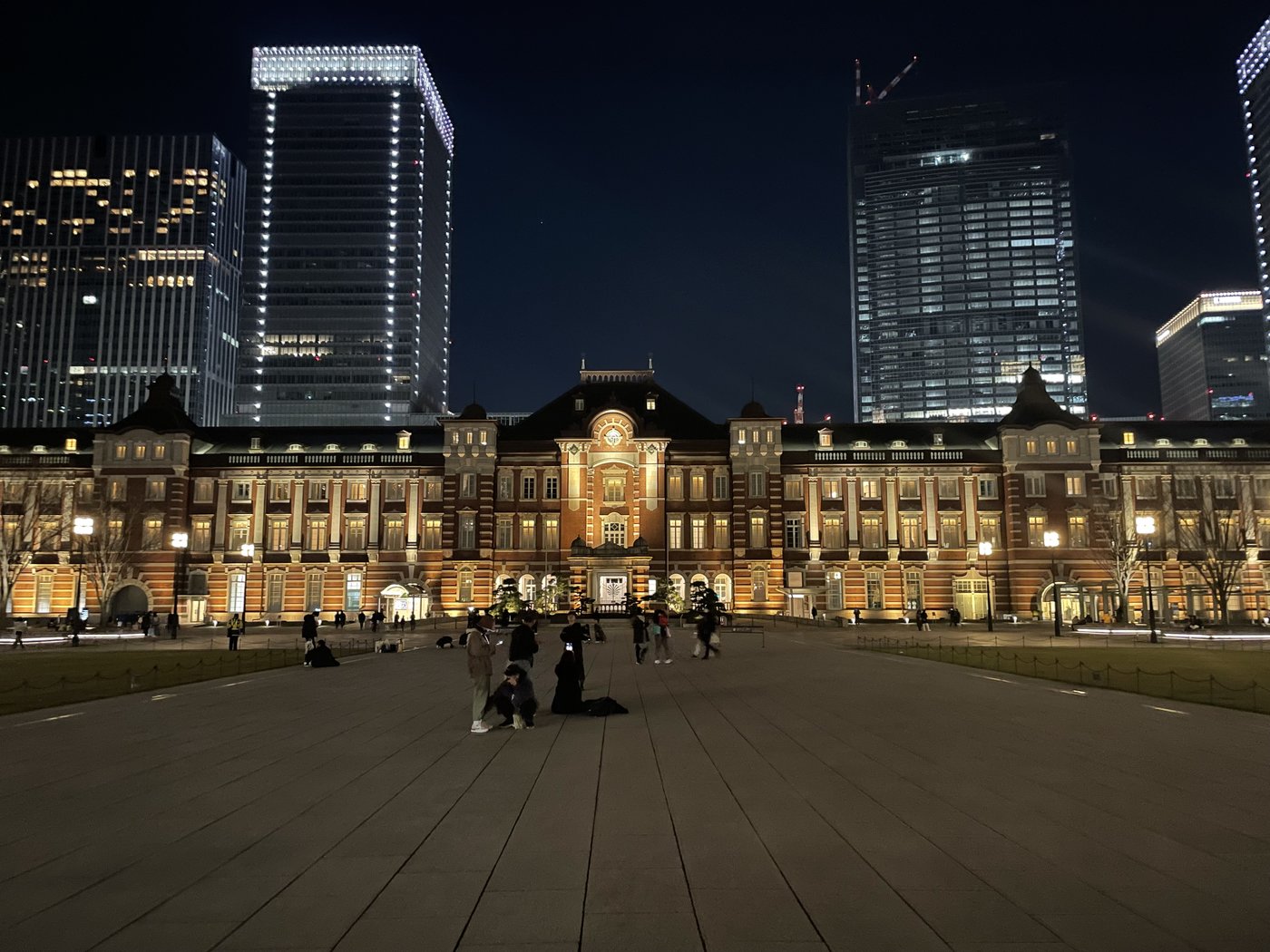
Depachika (デパ地下, “department store basement”) is the food floor beneath flagship stores like Isetan, Mitsukoshi, and Daimaru. It is part grocery store, part gift shop, and entirely worth a browse even if you buy nothing: counters of wagashi sweets, pristine fruit sold individually in boxes, pickles, tea, and omiyage sets from every region of Japan gathered in one building. Tokyo Station’s basement and surrounding concourse alone hold one of the largest concentrations of regional omiyage shops in the country, because it is the one place in Japan where someone transiting from Hokkaido to Kyushu can buy a specialty from either end.
Other reliable sources: Don Quijote (don’t confuse the discount megastore chain with a boutique — it is deliberately chaotic but cheap, and has a tax-free counter), 100-yen shops like Daiso for inexpensive, packable items such as chopsticks or stationery, and the last-chance airport shelf past security at Narita, Haneda, and Kansai, which exists specifically for the traveler who forgot to buy omiyage and is about to board.
What to actually buy: the big three, and the regional rule
Three items come up so often they function as a shared vocabulary among both residents and returning visitors:
| Item | What it is | Where to buy it |
|---|---|---|
| Tokyo Banana | Banana-shaped sponge cake filled with banana custard | Tokyo stations and airports only |
| Royce’ Nama Chocolate | Soft ganache chocolate, a Hokkaido specialty; needs refrigeration | Hokkaido, or New Chitose Airport — buy it last, not first |
| Regional Kit Kat flavors | Matcha, sake, hojicha, wasabi, and dozens of prefecture-specific flavors | Convenience stores and omiyage shops, varies by region |
The pattern underneath all three is the real rule of omiyage shopping: buy the thing that is tied to the place you are standing in. A regional Kit Kat flavor sold only in Hokkaido is a better gift than a generic one available everywhere, because the point is proof that you were actually there — the Japanese term is meibutsu, a local specialty, and every prefecture has one. If you are hopping between cities on an itinerary like the one in our 7-Day Japan Itinerary, treat each stop as its own shopping opportunity rather than trying to cover everyone in one airport dash.
Royce is the one with a catch: it is a dairy product and will not survive a hot bag for three days, so residents buy it on the way out of Hokkaido, not the way in.
Getting it all home
Suitcase space runs out before the gift list does, which leaves two options.
Pack it. Boxed snacks travel well; most are built to survive a suitcase. Liquids and anything fragile (ceramics, sake bottles) need wrapping or should be bought at duty-free counters that handle shipping-safe packaging for you.
Ship it. Japan Post’s EMS service is the standard choice for sending a box home instead of carrying it — a roughly 1kg parcel runs about ¥5,300 to the US and somewhat less to Europe as of early 2026, fully tracked, in a matter of days. Any post office handles it, and staff are used to tourists shipping omiyage overflow; just budget for the fact that a half-size box of local specialties sometimes costs more to ship than it did to buy.
Either way, remember that tax-free shopping changes on 1 November 2026, moving from an instant discount at the till to a refund claimed at the airport. If your souvenir shopping spree falls in early November, check Cash or Card in Japan first so the math at checkout doesn’t surprise you.
FAQ
Do I have to bring omiyage back from Japan for my own friends and family? No — this is a Japanese workplace and social custom, not an obligation for incoming visitors. But the shops and the concept are worth understanding, since you’ll pass hundreds of omiyage counters on any trip.
What if I just want something for myself, not a gift? Then you want a souvenir, not omiyage, and the rules relax completely — craft shops, museum stores, and the shrine gift stalls covered in Japan Etiquette are all fair game.
Is omiyage expensive? Individual boxed snacks usually run ¥800–¥2,000, designed to be split many ways rather than to impress with price.
Can I buy omiyage at the airport instead of in each city? You can, and the last-chance shelves past security stock a wide regional selection, but a specialty bought in its home prefecture is considered the more genuine version of the gift.
What about alcohol or snacks with customs restrictions back home? Rules vary by destination country, not by Japan, so check your own country’s customs allowance for food and alcohol before buying in bulk.
The verdict
Treat omiyage shopping as a short cultural detour rather than a chore: duck into a depachika basement once during the trip even if you buy nothing, pick up a regional Kit Kat or a box of local sweets at each stop rather than one giant haul at the end, and leave Royce for the Hokkaido leg. It costs very little, takes twenty minutes per city, and is one of the few souvenirs that actually earns the name — proof, in edible form, of exactly where you were.
Written from Japan by the Wayfarer Japan team. Prices are approximate for 2026 and change by season and location — confirm at the till.
Featured image: “おみやげを セルフレジで (54054248173)” by mrpbps, CC BY 2.0, via Wikimedia Commons