I live in Japan, and one of the small pleasures of the year is walking past a wagashi shop window and realizing, without reading a single label, roughly what month it is. A pale pink sweet shaped like a folded petal means cherry blossom season has started. A clear, dewy-looking jelly with a single maple leaf pressed inside means autumn has arrived. Wagashi (和菓子) does this on purpose. It is one of the few food traditions in the world built entirely around marking the passage of time.
If you’ve only encountered “Japanese sweets” in the form of mochi ice cream at a supermarket, wagashi will surprise you. It is quieter, less sweet than you’d expect, and often more about shape and symbolism than sugar rush. Here’s what it actually is, where it came from, and how to try it properly while you’re in Japan.
The quick answer
- Wagashi (和 = Japanese, 菓子 = confectionery) is the umbrella term for traditional Japanese sweets, distinct from Western-style cakes and chocolates (yogashi).
- Its roots trace to the Nara period (710-794) and early religious offerings, but the form most visitors recognize developed alongside the tea ceremony in the Edo period (1603-1868).
- Wagashi is grouped by moisture content: namagashi (fresh, like nerikiri and daifuku), han-namagashi (semi-dry, like dorayaki), and higashi (dry, like crystallized sugar sweets).
- Most wagashi is built around anko, sweetened red bean paste, rather than butter, cream or chocolate.
- The best way to try it is with a cup of matcha, ideally at an old wagashi shop in Kyoto or Tokyo rather than a convenience store.
- Designs change monthly to reflect flowers, festivals and weather — it’s essentially an edible calendar.
What “wagashi” actually means
The word splits into wa (和), meaning “Japanese,” and kashi (菓子), meaning “confectionery” or “sweets.” It exists specifically to distinguish native Japanese sweets from yogashi (洋菓子), the Western-style cakes, cookies and chocolates that arrived later with Portuguese traders and, much more heavily, after Japan reopened to the world in the Meiji era. If a menu or shop sign uses “wagashi,” you’re looking at the older, native tradition — not a croissant with red bean filling.
A short history: from offering to art form
Wagashi’s earliest ancestors weren’t really snacks at all. During the Nara period, as Japan absorbed cultural influence from Tang-dynasty China, simple fried dough twists and fruit-based confections were used mainly as religious offerings and court delicacies. Sugar was a rare, imported luxury, so these were not something ordinary people ate.
The turning point came centuries later, during the Edo period, when wagashi became tightly bound to sado, the Japanese tea ceremony. As matcha drinking spread among samurai, merchants and eventually the wider public, sweets were needed to balance the tea’s bitterness — and to be beautiful enough to match the tea room’s aesthetic. At the same time, sugarcane cultivation in Okinawa and growing trade made refined sugar more available, and adzuki (red beans) became a kitchen staple. That combination — tea ceremony culture plus accessible sugar and beans — is essentially what produced the wagashi we recognize today.
By the late Edo period, wagashi had become a genuine art form. Confectioners in Kyoto, serving the imperial court and aristocracy, developed kyo-wagashi, prized for refined, minimalist design. Regional shops across the country developed their own specialties tied to local ingredients and festivals, which is part of why a wagashi shop in Kanazawa or Matsue can feel quite different from one in Kyoto.
The three categories, explained simply
Confectioners classify wagashi by water content, which sounds technical but is actually the easiest way to understand what you’re eating:
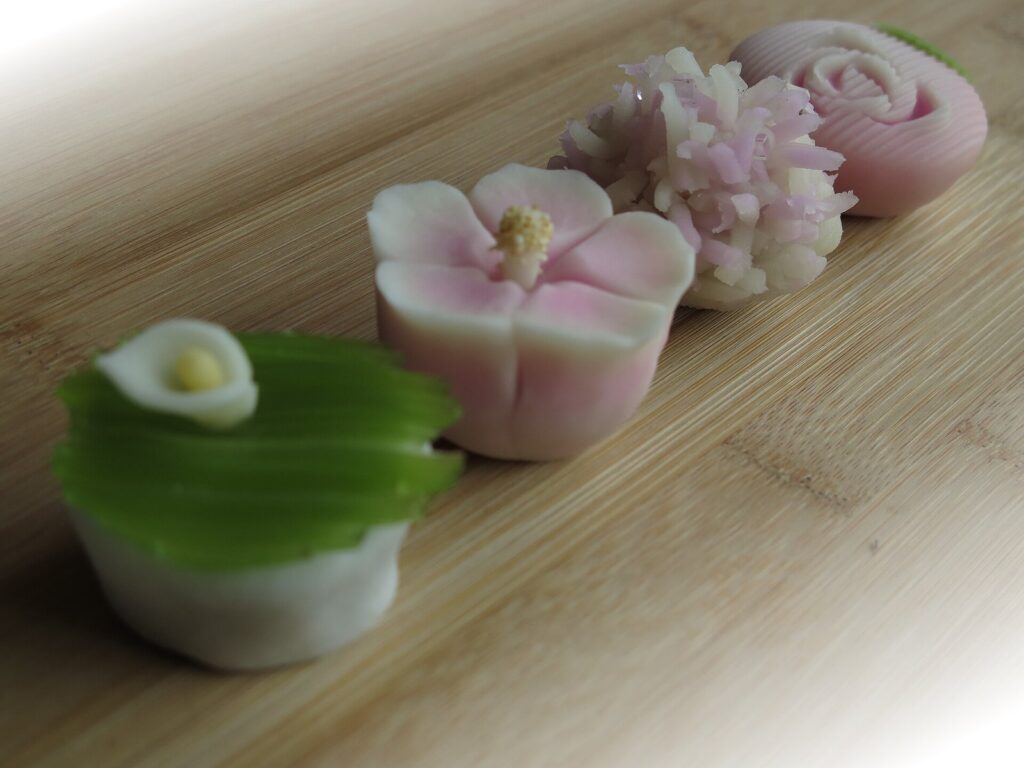
- Namagashi (生菓子) — “fresh” sweets with high moisture content, meant to be eaten within a day or two. This is where the famous hand-sculpted sweets live: nerikiri, shaped and colored bean paste formed into seasonal motifs like chrysanthemums or autumn leaves, and daifuku, a soft mochi shell wrapped around sweet bean paste. Dango — skewered rice dumplings, often grilled and glazed — also falls here.
- Han-namagashi (半生菓子) — semi-dry sweets with a longer shelf life, a middle ground between fresh and dried. Dorayaki (two small pancakes sandwiching red bean paste) and monaka (bean paste between crisp wafers) are common examples, and they travel well as souvenirs.
- Higashi (干菓子) — dry sweets, including pressed sugar candies (rakugan) and senbei-style crackers. These keep for weeks, which is why dry wagashi dominates the souvenir aisle at train stations and airports.
If you only remember one distinction, remember this: the delicate, flower-shaped sweets in a glass case that look almost too pretty to eat are namagashi, and they’re the ones worth seeking out specifically, because they don’t export or keep well — you have to be there.
Why the seasons matter so much
This is the part that surprises most first-time visitors. Wagashi isn’t just flavored seasonally the way a pumpkin latte is; its entire visual language is built around marking the calendar. In January, sweets appear shaped like pine, bamboo, plum blossoms, cranes and turtles — all traditional new year symbols. By February and March, plum and then cherry blossoms take over. Early summer brings sweets evoking hydrangeas, flowing water or cool, jelly-like textures (mizu-yokan) designed to feel refreshing in the humidity. Autumn brings maple leaves and chestnuts; December brings references to snow.
A skilled wagashi maker can represent the same base ingredient — sweetened bean paste — in dozens of different seasonal forms using color, shape and a few deft knife strokes. Many Japanese people can’t name the exact date just from looking at a wagashi display, but they can usually tell you the season, and that’s the entire point. It’s a tradition that asks you to slow down and notice time passing, which fits neatly with the quieter philosophy behind the tea ceremony — a connection worth exploring further if the mindset interests you.
How to actually try it well
Skip the pre-packaged wagashi in convenience stores if you want the real experience — it’s fine in a pinch, but it’s the instant-noodle version of the tradition. For something closer to the real thing:
- Visit an established wagashi shop, ideally one with decades or centuries of history. Kyoto has the deepest concentration, with shops near Gion and the Imperial Palace that have been operating for thirty generations in some cases. Tokyo has excellent options too, particularly around Akasaka and quieter backstreets of older neighborhoods.
- Order it with matcha, not coffee. Many wagashi shops and traditional cafes serve a set combining a seasonal namagashi with a bowl of whisked green tea — this is the pairing the sweet was designed for, and the tea’s bitterness genuinely changes how the sweet tastes.
- Look for seasonal names on the menu rather than just picking by appearance. Shop staff are usually happy to explain what a sweet represents if you ask, even with simple English or a translation app.
- Consider a hands-on workshop if you want to go deeper. Several shops in Kyoto and Tokyo offer short sessions where you shape your own nerikiri under a confectioner’s guidance before sitting down to tea — a memorable way to spend an hour, especially paired with a morning in a traditional garden or temple.
- Buy higashi (dry sweets) as souvenirs. They travel well, don’t need refrigeration, and are a far more distinctive gift than the usual box of cookies.
FAQ
Is wagashi very sweet?
Generally no — far less sweet than most Western desserts. The bean paste is sweetened, but balanced to be eaten alongside bitter matcha, so wagashi on its own can taste mild or even subtle to a palate used to American or European desserts.
What’s the difference between wagashi and mochi?
Mochi (pounded glutinous rice) is an ingredient and category within wagashi, not a separate thing. Daifuku, dango and sakura mochi are all mochi-based wagashi, but wagashi as a whole also includes non-mochi sweets like yokan (bean jelly) and higashi (dry pressed sugar).
Does wagashi contain dairy or gluten?
Most traditional wagashi contains no dairy, which makes it a good option for visitors avoiding it, though always ask at the shop to be sure about specific ingredients. Many varieties use rice flour rather than wheat, but this varies — some wagashi does use wheat-based wrappers, so it isn’t automatically gluten-free.
Where can I find the best wagashi outside Kyoto and Tokyo?
Kanazawa, Matsue and Kyoto are often cited as Japan’s three great wagashi cities, each shaped by a history of wealthy tea-ceremony-practicing lords who supported confectioners. If you’re visiting Kanazawa, it’s worth building in time to seek out a local shop rather than relying on hotel gift shops.
Can I bring wagashi home as a souvenir?
Dry wagashi (higashi) and semi-dry types like monaka travel well in luggage and make distinctive omiyage. Fresh namagashi generally doesn’t survive a long flight, so treat it as something to enjoy on the day, not to pack.
The verdict
Wagashi rewards slowing down. It’s easy to walk past a wagashi shop window without a second look, but once you know that the pink shape is cherry blossom season and the clear jelly with a leaf inside is early autumn, the whole display becomes a quiet little calendar written in sugar and bean paste. Pair it with matcha, ask what the shape represents, and you’ll walk away with a better feel for Japanese aesthetics than most museum visits provide — and a genuinely pleasant half hour sitting down in the middle of a busy trip.
Written from Japan by the Wayfarer Japan team — practical travel advice from people who actually live here.