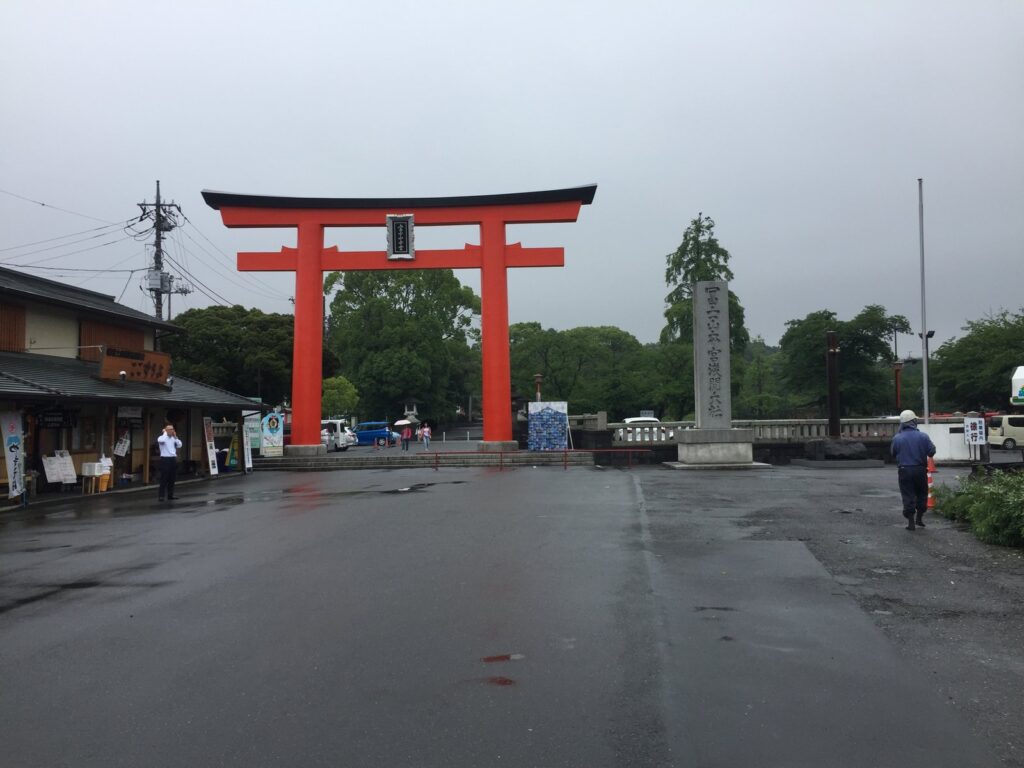
By your third day in Japan you will have walked under a torii gate without meaning to. They’re everywhere — wedged between an office block and a parking lot, at the top of a mountain, on a department store roof. I live in Japan, and the shrine nearest my station is about the size of a bus shelter, tended by a neighbor and visited mostly by people on their way to work. Visitors often expect shrines to be museums: quiet, roped off. They’re not. They’re working religious sites that anybody, of any faith or none, is welcome to walk into. Here’s what’s going on inside them.
The quick answer
- Torii gate = Shinto shrine (jinja). Big incense burner and a Buddha statue = Buddhist temple (tera). That’s 90 percent of the identification you need.
- Almost all shrines are free to enter, open from dawn to dusk, with no ticket and no dress code.
- The etiquette is short: wash your hands, bow twice, clap twice, bow once. Nobody is grading you.
- Shinto has no founder, no scripture and no weekly service. It’s a set of practices around kami — the spirits in mountains, rivers, trees, storms and ancestors.
- You do not have to believe anything to visit, buy a charm, or draw a fortune. Japanese people themselves usually don’t describe it as belief.
If you want the mythology explained on site rather than read off a sign, a half-day guided walk in Kyoto or Nikko is genuinely worth it. 👉 Klook Japan shrine and temple tours
Shrine or temple? The 30-second test
Japan has two major religious traditions living side by side, and most travelers mix them up for the first week. It matters less than you’d think — Japanese people cheerfully use both — but knowing which one you’re in makes everything else legible.
| Shinto shrine (jinja) | Buddhist temple (tera / -ji) | |
|---|---|---|
| Entrance | Torii gate | Large roofed gate, often with guardian statues |
| Object of worship | Kami (spirits), usually unseen | Buddha and bodhisattva statues |
| Typical name ending | -jingu, -taisha, -jinja, -gu | -ji, -dera, -in |
| What you do | Wash hands, bow twice, clap twice, bow once | Wash hands, offer incense, bow with hands together — no clapping |
| Associated with | Births, weddings, New Year, good fortune | Funerals, ancestors, memorial rites |
| Entry fee | Almost always free | Often ¥300–¥1,600 |
The clapping is the tell, and it’s that easy to remember. Many sites blur the line, because for over a thousand years the two traditions were physically merged, only separated by government decree in 1868. You’ll still find pagodas in shrine grounds and torii inside temples. That’s history, not confusion.
The mythology, briefly
Shinto’s stories come from two eighth-century chronicles, the Kojiki (712) and Nihon Shoki (720) — less a bible than a national origin story stitched together from older oral myth. The essentials will explain half the shrines you visit:
- Izanagi and Izanami stir the ocean with a jeweled spear and create the Japanese islands. Izanami dies giving birth to fire; Izanagi follows her into the underworld, breaks his promise not to look at her, and flees. Washing himself clean afterwards produces the three most important kami — which is why purification by water still opens every shrine visit.
- Amaterasu, the sun goddess, born from his left eye — ancestral deity of the imperial line, and the reason the flag is a sun.
- Susanoo, her storm-god brother, so disruptive he gets exiled from heaven, then redeems himself by slaying an eight-headed serpent and finding a sword in its tail.
- The cave story: insulted by Susanoo, Amaterasu hides in a cave and the world goes dark. The other gods lure her out with a raucous dance and a mirror. Light returns — which is why mirrors sit at the heart of many shrines.
There is no single all-powerful god and no doctrine of sin. Kami are countless — the old texts say “eight million,” meaning simply uncountable. Some are named deities, some are a specific waterfall or a 900-year-old cedar. The impulse is less “worship this” than “notice that this place is not ordinary.”
How to visit a shrine without worrying
Do this and you’ll be indistinguishable from the locals around you.
- At the torii, pause and bow once. Walk to the side of the path rather than straight up the middle — the center is nominally for the kami.
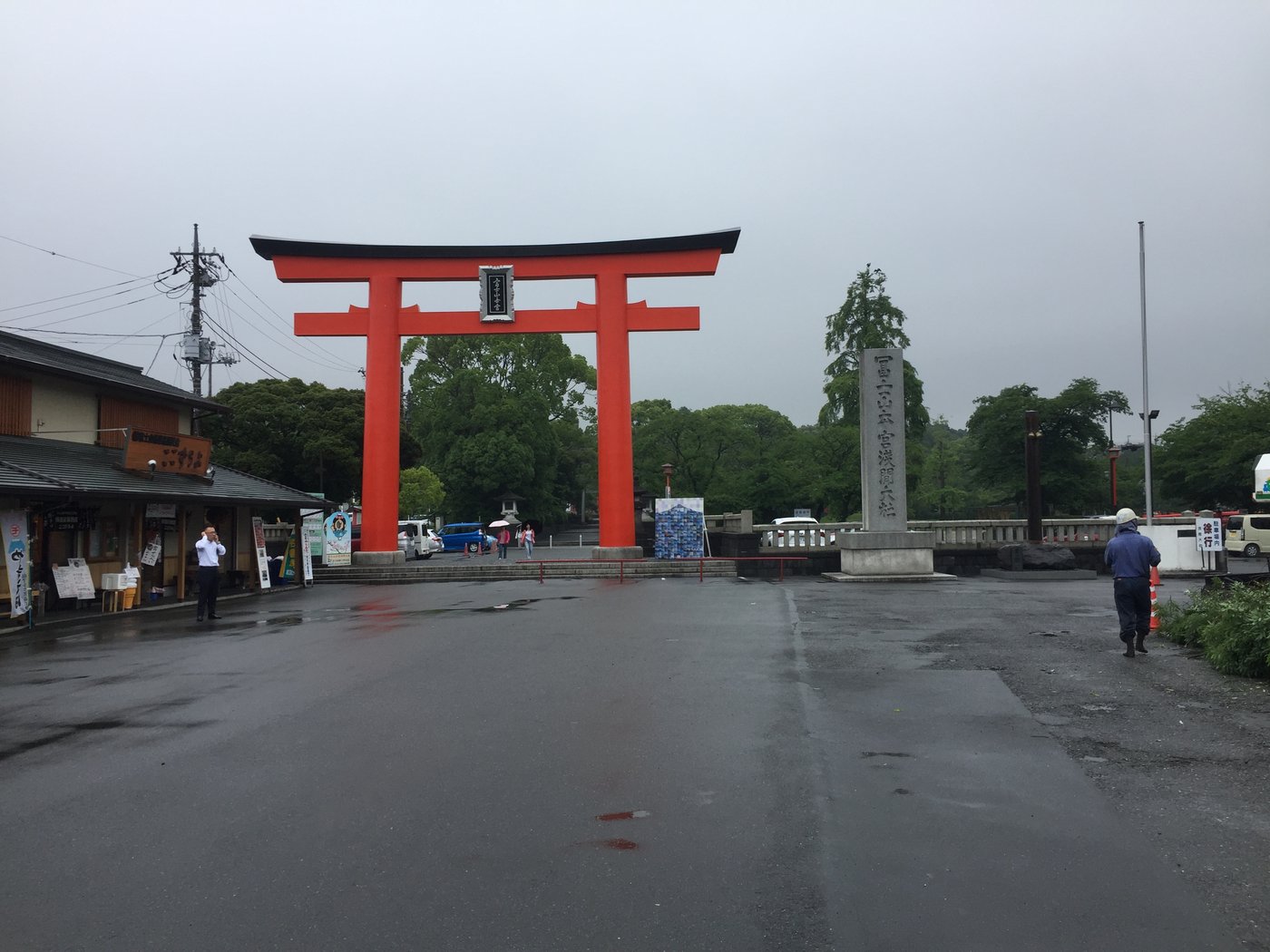
- At the water basin (temizuya), take the ladle in your right hand, rinse your left, swap and rinse your right, then tip the ladle upright to rinse the handle. Many basins lost their ladles after 2020 — running water and clean hands is fine.
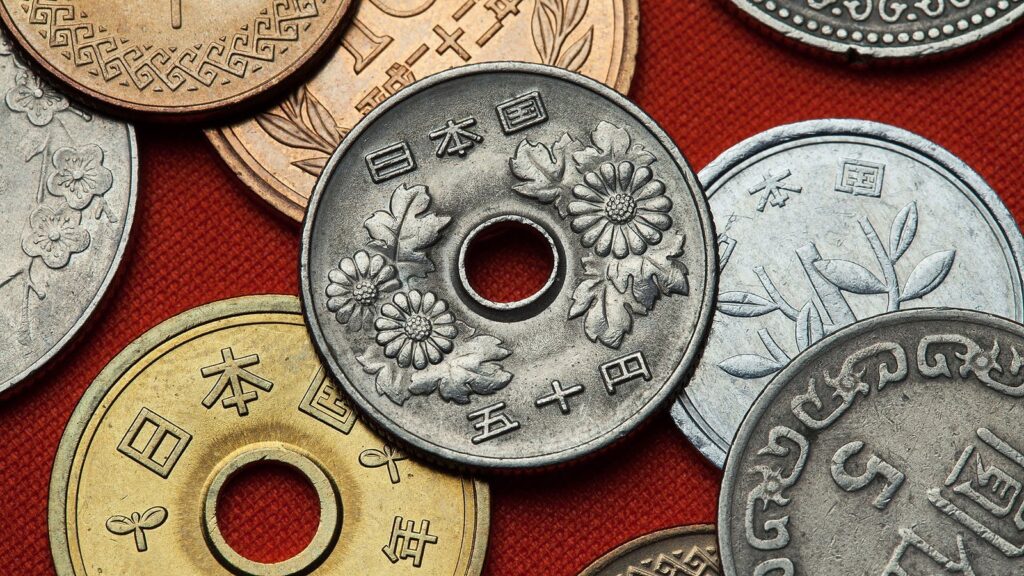
- At the main hall, toss a coin into the offering box. A ¥5 coin, go-en, puns on “connection” and is traditional, but any coin works.
- Ring the bell if there is one, then: bow twice, clap twice, hold your hands together and make your wish or thanks, bow once more.
That’s it. Photograph the grounds freely but not the inner sanctuary, and never the interior during a ceremony. If you see a wedding party, stand back and let them pass — that’s a real family, not a display.
Omamori, omikuji and goshuin
Three things you can take home, all of which residents actually buy:
Omamori (charms) — small brocade pouches for a specific purpose: traffic safety, exam success, safe childbirth, love, health. Roughly ¥500–1,000. You’re not supposed to open them, and the convention is to return them to a shrine after about a year. They make far better souvenirs than anything in an airport shop.
Omikuji (fortunes) — a paper slip, usually ¥100–200, ranked from daikichi (great blessing) down to kyo (bad luck). Drawing a bad one is not a disaster: tie it to the rack provided and leave the luck behind. Many big shrines offer English versions.
Goshuin (shrine seals) — a seal hand-brushed into a dedicated book, typically ¥500 (special or double-page designs run higher, up to around ¥2,000). Buy the book, a goshuincho, at your first shrine for about ¥1,000–3,000. It’s the best travel keepsake in Japan, and one rule applies: it’s a religious record, not a stamp rally — hand the book over open at the right page, and don’t ask at a shrine with no staff.
Prices are approximate and set by each shrine — treat them as offerings rather than fixed fees, and check on site.
Five worth planning a day around
- Meiji Jingu, Tokyo — a forest of 100,000 donated trees in the middle of the city, planted from scratch in the 1920s. Free; the inner garden is a separate ¥500. Ten minutes from Harajuku, so pair it with a Shibuya day from Tokyo Travel Guide for First-Timers.
- Fushimi Inari, Kyoto — the tunnel of vermillion torii, each one donated by a business. Free, open 24 hours, and the only realistic way to have it to yourself is before 7am. See Kyoto Travel Guide for First-Timers for how to slot it in.
- Ise Jingu, Mie — the most sacred site in Shinto, home of Amaterasu, rebuilt from scratch every twenty years; the next rebuilding completes in 2033, so preparation rituals are underway now. Free, opens at 05:00. Awkward to reach by rail, which is exactly why it’s calm. 👉 Booking.com Ise
- Izumo Taisha, Shimane — where, in the traditional reckoning, all of Japan’s kami gather each autumn. In 2026 the Kamiari-sai season runs November 9 to December 8, with the welcoming rite on the beach on the evening of November 18. Free.
- Nikko Toshogu, Tochigi — the shrine of shogun Tokugawa Ieyasu and the loud exception to the rule that shrines are austere: carved, gilded, and home to the original three wise monkeys. Admission ¥1,600 (¥2,400 with the treasure hall), buyable ahead. A long but doable day from Tokyo — see Best Day Trips from Tokyo. 👉 Klook Nikko Toshogu admission ticket
Getting to Ise and Izumo means limited express trains rather than Shinkansen for the final leg; Japan’s Trains Explained covers how those fares work.
FAQ
Do I need to be Shinto to enter a shrine? No. Shrines have no membership and no conversion. Foreign visitors are welcome to pray, buy charms and draw fortunes. Basic respect is the only requirement.
Are shrines free? Nearly always, yes. A handful of major sites charge for a garden, treasure hall or inner precinct — Meiji Jingu’s garden at ¥500, Nikko Toshogu at ¥1,600 — but the act of visiting and praying is free everywhere.
What should I wear? Whatever you’re already wearing. There is no dress code — just avoid beachwear at a formal ceremony.
Can I visit at night? Grounds are usually open, but the offices selling charms and seals close around 16:00–17:00. Fushimi Inari is the famous 24-hour exception.
What about tattoos? Shrines have no tattoo restrictions at all. That’s an onsen and pool issue — see Hotel vs Ryokan: Which Should You Book in Japan? for how to handle bathing.
The verdict
Visit shrines early, casually and often. They cost nothing, they’re open when everything else is shut, and they’re the most reliable way to find quiet in a Japanese city — a wooded lot behind a torii is silent even when the street outside isn’t.
Do one thing to make it stick: buy a goshuincho at the first shrine you like, and get a seal at every shrine after that. By the end of the trip you’ll have a hand-brushed record of where you went, and you’ll have picked up the mythology by bumping into it rather than studying it. That’s roughly how everyone here learned it too.
Next: Kyoto Travel Guide for First-Timers and Best Day Trips from Tokyo (internal links).
Written from Japan by the Wayfarer Japan team. Some links are affiliate links that support the site at no extra cost to you.