Every year around now I get the same message from friends planning a trip: “It can’t be that bad, right? I’ve been to Bangkok.” It’s a different kind of bad. Japanese summer is not just hot, it’s wet — the air holds still, the concrete radiates back at you after dark, and a ten-minute walk from the station leaves your shirt stuck to your back. I live in Japan, and by August my own routine changes completely: I move earlier, I plan around air conditioning, and I stop pretending I can walk anywhere at 2pm.
None of which means you should cancel. Summer is when Japan is at its loudest and most beautiful — fireworks over rivers, drum troupes in the street, mountains that are actually pleasant. You just have to travel differently. Here’s how.
The quick answer
- Expect 33–36°C with 70–80 percent humidity in Tokyo, Kyoto and Osaka through August. Kyoto is the worst of the three — it sits in a basin and holds heat.
- The heat is a real hazard, not an inconvenience. Over 100,000 people were taken to hospital by ambulance for heatstroke nationwide between May and September 2025 — the first time the figure has passed six figures.
- Plan around Obon, roughly August 8–16 in 2026. Trains and hotels fill, prices rise, and reserved shinkansen seats sell out weeks ahead.
- Move at the edges of the day: sightseeing 7–11am, indoors 12–4pm, back out from 5pm. This is what residents actually do.
- You don’t need to pack cooling gear. Every convenience store and drugstore here sells it, cheaply, on every block.
- Go north or up. Hokkaido, Tohoku, the Japan Alps and Hakone are 5–10°C cooler and priced like the rest of the country.
If your dates are still flexible, my honest advice on which month to pick is in Best Time to Visit Japan: Cherry Blossoms, Seasons & Crowds. If they’re locked in, keep reading.
How hot is it actually?
2025 was Japan’s hottest summer since records began in 1898 — the nationwide average ran 2.36°C above the long-term norm, according to the Japan Meteorological Agency, smashing the previous records from 2023 and 2024. Isesaki in Gunma hit 41.8°C on 5 August 2025, an all-time national high. Tokyo logged 25 days at or above 35°C across June to August, including a ten-day streak.
Whether 2026 matches that, nobody knows yet. But the trend is one direction, and you should plan for the top of the range rather than the average. A typical Tokyo August day now looks like 27°C at 6am, 35°C by 1pm, and still 29°C at 10pm. The overnight number is the one that surprises people — the city genuinely does not cool down.
The rainy season (tsuyu) usually ends in mid-July, which is when the serious heat starts. Typhoon risk climbs through August and peaks in September. A typhoon rarely ruins a whole trip, but it can cancel a flight or stop trains for a day, so leave slack around your departure and don’t book the last shinkansen of the day to your airport.
What to wear, and what to buy once you’re here
Cotton and linen, loose. Skip anything synthetic that doesn’t breathe, and skip jeans entirely — I own a pair and they stay in the closet from July to September. Bring one light layer anyway, because Japanese buildings and trains are air-conditioned aggressively and a 12°C swing at the door is normal.
Two things visitors underestimate: shoes and the sun itself. You will walk 15,000 steps a day whether you planned to or not, and sandals that are fine at home will destroy your feet on hot pavement. And a parasol is not a novelty here — men use them now too, sales have climbed for years, and shade is worth several degrees.
Here’s the part nobody tells you: do not buy any of this before you arrive. A convenience store on any corner sells cold drinks, ice packs and cooling body sheets. Drugstores like Matsumoto Kiyoshi stock menthol wipes for a few hundred yen. Don Quijote and the electronics chains have handheld and neck fans from around ¥1,500. Uniqlo’s summer basics are cheaper here than abroad and there’s a branch in every mid-sized station. Forgetting your hat is a five-minute problem, not a trip-ruining one.
If you’d genuinely rather have a cooling towel and a UV parasol in your bag on day one, buy them at home and stop thinking about it. 👉 Amazon cooling towel and UV parasol The full list of what’s worth carrying is in Japan Packing List: 15 Things You’ll Actually Need.
The resident’s heat routine
This is the schedule I actually keep in August, and it maps neatly onto sightseeing.
7:00–11:00 — outside. Shrines, gardens, markets, walking neighborhoods. Fushimi Inari at 7am in August is a completely different experience from Fushimi Inari at noon, in every sense. Temples open early; crowds don’t.
11:00–16:00 — indoors, deliberately. Museums, department store basements, aquariums, the underground mall networks under Tokyo, Osaka and Nagoya stations. This is also when you eat a long lunch instead of a quick one. Booking an indoor experience for the middle of the day — a cooking class, a teamLab-style museum, a sumo or kabuki matinee — is the single best structural fix for a summer itinerary. 👉 Klook Tokyo indoor experiences and museum tickets
16:00–late — outside again. Evening is when Japan comes alive in summer anyway: beer gardens on department store roofs, riverside dining decks in Kyoto, night markets, illuminated castles.
Two habits to copy. First, drink before you’re thirsty — vending machines are every 50 metres and a sports drink like Pocari Sweat replaces salt in a way water doesn’t. Second, use convenience stores as cooling stations. Nobody minds if you stand in the air conditioning for two minutes. That’s half of what they’re for in August.
Obon: the two weeks to plan around
Obon is when families return to their hometowns to honor their ancestors, and it is one of the three great travel crunches of the Japanese year alongside New Year and Golden Week. In 2026 the main observance falls August 13–16, with the travel peak spread roughly across August 8–16: outbound from the cities around the 8th and 11th–13th, back into them on the 15th and 16th. Confusingly, central Tokyo and Yokohama keep the old July dates (13–16 July), and Okinawa follows the lunar calendar — late August in 2026.
What this means practically:
| During Obon (Aug 8–16) | Rest of August | |
|---|---|---|
| Shinkansen reserved seats | Sell out weeks ahead | Usually available same-day |
| Non-reserved cars | Standing room, long queues | Comfortable |
| Hotel prices | Noticeably higher | Normal summer rates |
| Domestic flights | Expensive, full | Fine |
| Museums, shops, restaurants | Mostly open; some small family businesses close | Normal |
| Festivals | Peak season — the best ones are now | Fewer |
Book accommodation for these dates as early as you can, and reserve long-distance train seats the moment your dates are fixed. 👉 Booking.com Tokyo If your itinerary involves several long shinkansen legs during this window, a rail pass also removes the ticket-counter queue, which in mid-August is not a small benefit — the honest maths on whether it pays off is in Japan Rail Pass 2026: Is It Still Worth It?
Obon is not a reason to avoid Japan in August. It’s a reason to have a reservation.
The festivals worth the sweat
Summer is festival season, and these are genuinely worth restructuring a trip around. All dates below are for 2026; confirm before booking, since local organizers occasionally adjust.
- Aomori Nebuta Matsuri (Aug 2–7) — enormous illuminated warrior floats hauled through the streets of Aomori while thousands of haneto dancers bounce alongside. Evening parades, and the best of Japan’s northern festivals. Paid grandstand seats are sold in advance and are worth it if you don’t want to stand for two hours. 👉 KKday Aomori Nebuta viewing seat tickets
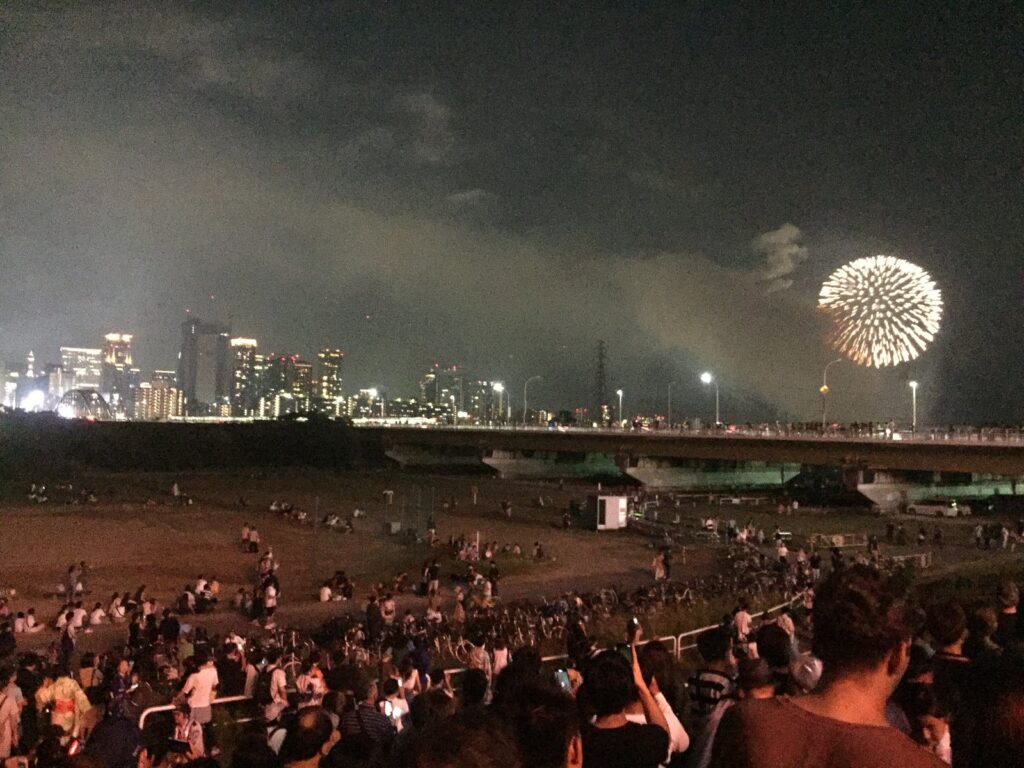
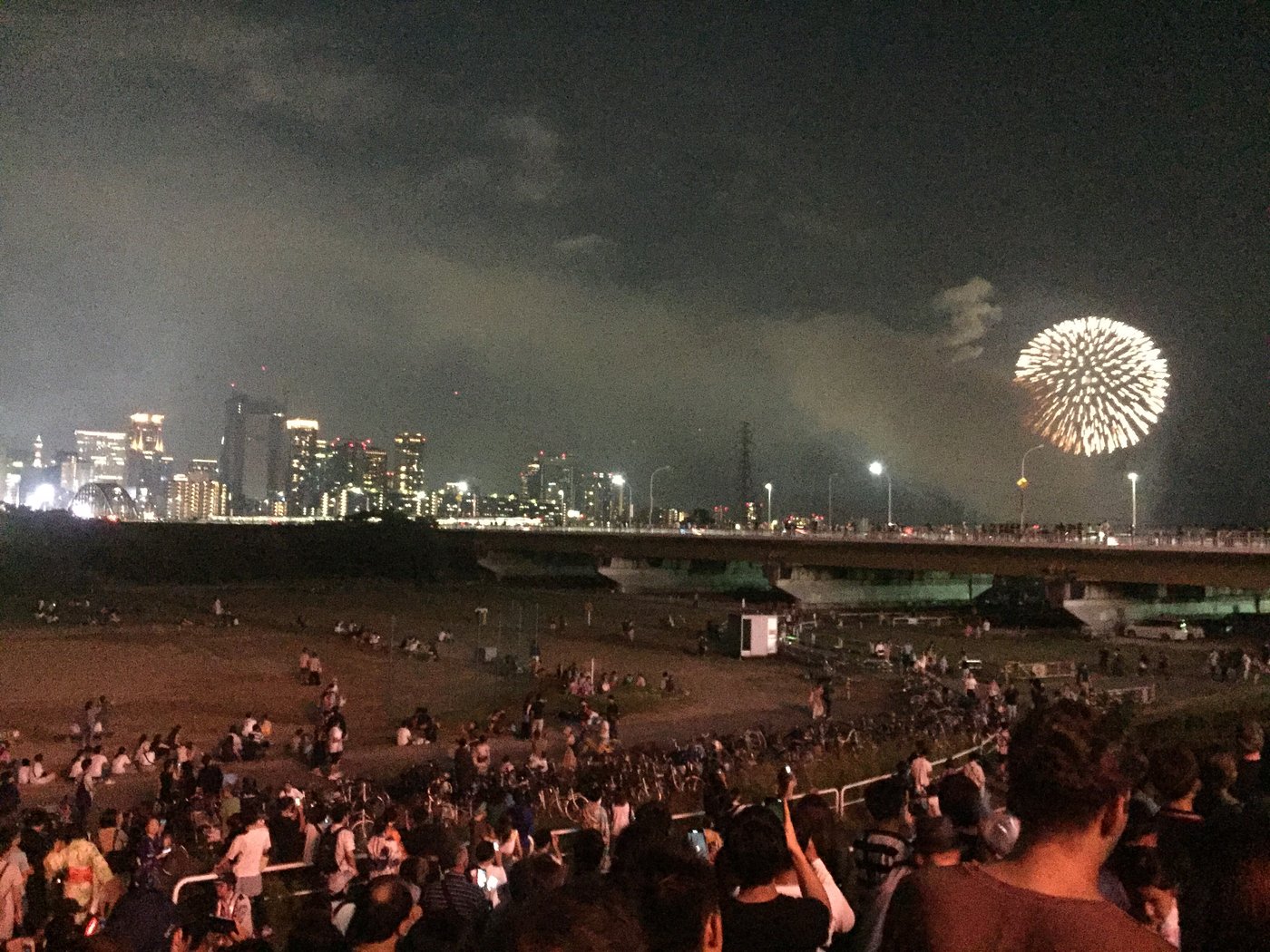
- Nagaoka Fireworks (Aug 2–3) — one of Japan’s three great fireworks festivals, launched over the Shinano River in Niigata, with shells wide enough that you have to turn your head to follow them.
- Awa Odori, Tokushima (Aug 11–15, main performances 12–15) — 400 years old, tens of thousands of dancers, and the only major festival where spectators are actively invited to join in.
- Suwako Lake Fireworks (Aug 15) — 40,000 shells over a lake in Nagano, with the sound bouncing off the surrounding mountains.
- Omagari Fireworks, Akita (Aug 29) — a national competition rather than a display; the technical peak of the entire year.
Local advice for any of them: arrive hours early, expect the trains home to be a crush, and eat at the food stalls rather than looking for a restaurant. Yukata are welcome but never required — plenty of locals turn up in shorts.
Where to escape the heat
If your dates are fixed and the forecast looks brutal, go north or go up. Hokkaido in August sits around 26°C and is the one part of the country where summer is simply pleasant — Sapporo, Furano’s lavender fields, and hiking that isn’t punishing. The Japan Alps — Kamikochi, Takayama, Norikura — are 10°C cooler than Tokyo by virtue of altitude alone. Hakone and Nikko are close enough for a day trip and noticeably cooler than the city; both are covered in Best Day Trips from Tokyo. Karuizawa is where Tokyo residents have gone to escape August for a century, and it’s 70 minutes by shinkansen.
Beaches are the exception that disappoints people: Japanese beaches in August are crowded, the sea is warm rather than refreshing, and Okinawa is hotter than the mainland, not cooler. Go to Okinawa for the water and the islands, not for relief.
Where you sleep matters more in summer than in any other season. Check that the room has its own air conditioning unit rather than building-wide climate control, and if you’re choosing between a hotel and a ryokan, note that older ryokan rooms can be warm — see Hotel vs Ryokan: Which Should You Book in Japan? 👉 Booking.com Kyoto
FAQ
Is Japan too hot to visit in July and August? No, but it’s too hot to visit badly. A trip built on all-day walking in Kyoto will be miserable. The same trip with early mornings, indoor afternoons and one northern leg is excellent.
Which is hotter, Tokyo or Kyoto? Kyoto, almost always. It sits in a basin ringed by mountains, so the heat pools and the air doesn’t move. Osaka is close behind.
Do I need to worry about typhoons? Mildly. August and September carry the highest risk. Buy travel insurance, keep a buffer day before international flights, and follow JMA warnings — Japan’s transport system shuts down early and restarts quickly.
Is it humid at night too? Yes. Cities stay near 28–30°C overnight in August. Air conditioning in your room is non-negotiable, not a luxury.
Are trains air-conditioned? Every shinkansen, limited express and city train, yes — sometimes to the point of being cold. Some local lines have “weak air conditioning” cars for people who find it too much.
Will I be able to check heat warnings and forecasts on my phone? Yes, if you’ve sorted data before you land. Japan’s heatstroke alerts and typhoon updates are all app-based and worth having live. I use a Japanese domestic plan myself rather than a travel eSIM, but for a short trip the tourist eSIMs are the simplest route — the comparison is in Best eSIM for Japan in 2026. 👉 Airalo Japan eSIM
The verdict
Come in summer if that’s when you can come — just stop planning it like spring. The single change that fixes almost everything is moving your sightseeing to before 11am and accepting that the middle of the day belongs to museums, lunch and air conditioning. Do that, and August gives you things no other season does: fireworks over a river with 100,000 people in yukata, drums echoing off a shopping arcade, a mountain valley at 22°C while Tokyo bakes.
Two bookings to make now, in order: accommodation covering August 8–16 if your trip overlaps Obon, and reserved seats on any long-distance train in that window. Everything else — the hat, the fan, the cooling wipes, the umbrella — you can buy within five minutes of arriving, at a shop that’s open at midnight. That part is genuinely the easiest country in the world to be unprepared in.
Written from Japan by the Wayfarer Japan team. Some links are affiliate links that support the site at no extra cost to you.