Japan has spent a decade shaking off its reputation as a cash-only country, and the numbers now back that up: the government’s own figure put cashless payment at 58 percent of consumer spending in 2025, up from around 20 percent a decade earlier. That is the headline. The part that trips visitors up is the other 42 percent, because it is not spread evenly. It clusters in exactly the places people travel to see — the shrine donation box, the eight-seat ramen counter, the festival stall, the mountain bus.
I live here, and my own wallet is a compromise: a card for almost everything, a phone tap for trains and convenience stores, and a folded ¥10,000 note that gets used maybe twice a week and is indispensable on both occasions. This guide is how to build the same setup for a two-week trip, with the 2026 numbers that actually matter.
The quick answer
- Bring both. Cards cover the large amounts, cash covers the small and the old-fashioned. Neither alone is enough.
- Carry ¥10,000–20,000 in cash and top up at a 7-Eleven ATM when it runs low. You do not need to arrive with a thick envelope of yen.
- Visa and Mastercard are the safest plastic. JCB is a strong backup domestically; American Express and Discover are accepted in fewer places.
- The 7-Eleven (Seven Bank) ATM is the one that always works with foreign cards, is open around the clock, and is on roughly every other block in a city.
- Always choose to be billed in yen, never in your home currency, when a card terminal or ATM offers the choice.
- Tax-free shopping changes on 1 November 2026 from an at-the-till discount to an airport refund. If your trip straddles that date, the difference is real.
What is still cash-only in 2026
This is the honest list, and it is shorter than it was five years ago but not empty:
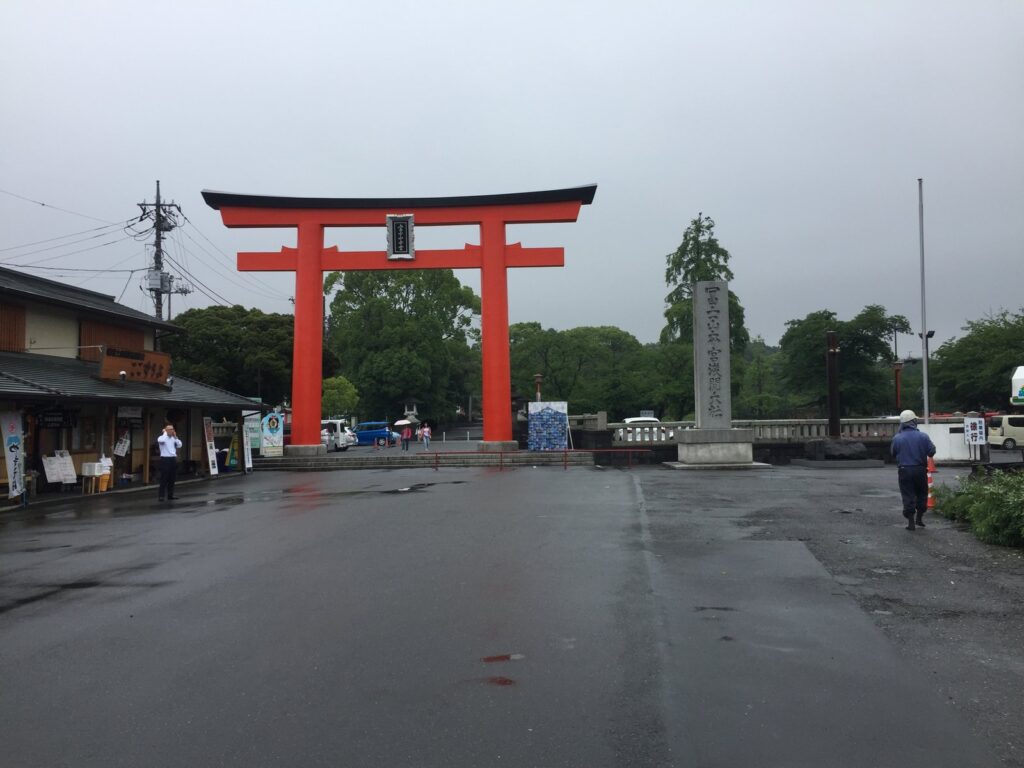
- Shrines and temples. Donation boxes, ¥300–1,000 entry fees, omamori charms, goshuin stamp books. Almost universally coins and small notes.
- Small independent restaurants, especially the ones with a vending-machine ticket system at the door. Some of those machines now take IC cards; plenty do not.
- Festival and market stalls. Summer matsuri food, temple flea markets, morning markets.
- Rural buses and small local railways. City buses in Tokyo, Kyoto and Osaka take IC cards; a village bus in the Japan Alps may want exact change.
- Older coin lockers, some public baths, some clinics, and the occasional ryokan in the countryside.
- Anywhere with a handwritten sign. It is a reliable indicator.
The pattern: the smaller and older the business, the more likely cash is the only option. The reason is not technophobia — it is the card processing fee on a ¥800 bowl of noodles.
What takes cards without fuss
Convenience stores, supermarkets, department stores, drugstores, chain restaurants, hotels, taxis (nearly all of them now), Shinkansen ticket offices and ticket machines, museums, and the big electronics retailers. In practice, if a place has more than about four staff, your card will work. Hotels in particular are card-first, and prepaying online before you arrive removes the question entirely. 👉 Booking.com Tokyo
Contactless tap is common but not universal — some terminals still want a chip-and-PIN insert, and a few older ones ask for a signature. Have a PIN you remember.
The three-layer wallet
This is the setup I would give a friend flying in tomorrow.
Layer one: a Visa or Mastercard with no foreign transaction fee. It handles hotels, big meals, department stores, train tickets and anything over about ¥3,000. Tell your bank you are travelling — a card frozen for suspected fraud on day one is the single most common money disaster visitors have here.
Layer two: an IC card on your phone, for trains, buses, convenience stores, vending machines and coin lockers. This is the layer that saves the most time, because tapping is faster than any of the alternatives and it works at hundreds of thousands of small tills. Which card to get, and the differences between Suica, PASMO and Welcome Suica, is covered in detail in Suica vs PASMO vs Welcome Suica.
Layer three: ¥10,000–20,000 in cash, ideally broken into ¥1,000 notes and a handful of ¥100 coins rather than a single ¥10,000 note. Shrines and stalls cannot break large notes easily. Convenience store purchases are the standard trick for making change.
Getting yen: where and how
Do not exchange large amounts at home, and be wary of airport exchange counters in either direction — the spread is where the cost hides. Withdrawing from a Japanese ATM with a debit card is almost always cheaper.
| Where | Foreign card fee | Per-withdrawal limit | Hours |
|---|---|---|---|
| 7-Eleven (Seven Bank) | ¥0 on many Mastercard/Maestro cards; roughly ¥110–220 on Visa | ¥100,000 | Effectively 24/7 |
| Japan Post Bank | About ¥220 | ¥50,000 | Post office hours; some 24h |
| Lawson / FamilyMart | Similar, varies by card | ¥50,000–100,000 | Usually 24/7 |
| Bank branch ATMs | Often reject foreign cards entirely | — | Limited |
Figures are approximate for 2026 and your own bank adds its own foreign withdrawal fee on top — check before you fly. The practical consequence of a flat per-transaction fee is simple: withdraw larger amounts less often. Four withdrawals of ¥30,000 cost you four fees; one of ¥100,000 costs one, at the cost of carrying more cash. Japan is safe enough that most residents consider this a non-issue.
The 7-Eleven ATM interface is available in English, Chinese, Korean and several other languages, and the machine tells you the fee before you confirm. If a machine rejects your card, try a different network before assuming the card is blocked — Japanese bank ATMs frequently decline foreign cards that 7-Bank accepts happily.
Always be billed in yen
When a card terminal or an ATM asks whether you want to be charged in yen or in your home currency, choose yen. Every time. The home-currency option — dynamic currency conversion — lets the merchant’s processor set the exchange rate, and that rate is reliably worse than the one your own bank would apply, typically by 3 to 6 percent. It is presented as a convenience. It is a markup, and declining it is the easiest money you will save on the trip.
Topping up an IC card with a foreign card
This is the one genuinely fiddly area, and the rules are specific.
Ticket machines in stations take cash for IC card top-ups, always. That path never fails.
For topping up from your phone, the situation in 2026 is: the standard Mobile Suica app expects a Japanese card, while Welcome Suica Mobile — the visitor version, valid 180 days — is designed to be topped up with an overseas card registered in Apple Pay, no Japanese account needed. It needs a reasonably recent iPhone and a current iOS. As a resident I use the ordinary Mobile Suica with a domestic card, so I cannot claim to have tested the visitor flow myself; what I hear consistently from friends who fly in is that Mastercard and American Express work for Apple Pay top-ups while many foreign-issued Visa cards get declined. If your only card is a Visa, plan on topping up with cash at machines and treat any successful phone top-up as a bonus.
Android users outside Japan generally cannot add Mobile Suica at all, and should buy a physical card at a station instead.
QR code payments: mostly not for you
PayPay dominates domestic QR payments and is why so many tiny shops here now accept anything electronic at all. Signing up, though, requires a Japanese phone number, so it is largely closed to short-term visitors. There is one useful exception: PayPay’s QR code accepts payments from a list of overseas wallets — Alipay, WeChat Pay and a dozen others across Asia — with automatic currency conversion. If you already use one of those at home, look for the PayPay sticker. If you do not, skip the entire category; you lose nothing that cards and an IC card do not already cover.
To use any of this you need data from the moment you land, which is a separate decision covered in Best eSIM for Japan — and if you would rather sort it before departure, an eSIM is the least painful route. 👉 Airalo Japan eSIM
Tax-free shopping: the 1 November 2026 change
Japan’s consumption tax is 10 percent (8 percent on most food and drink), and visitors on a short-stay entry can avoid it on purchases over ¥5,000 at the same shop on the same day. How you get that exemption changes fundamentally on 1 November 2026.
| Until 31 Oct 2026 | From 1 Nov 2026 | |
|---|---|---|
| At the shop | Show passport, pay the tax-free price | Show passport, pay the full tax-included price |
| Getting the money | Immediate, at the till | Refunded at the airport before departure |
| Sealed bags for consumables | Required, cannot open in Japan | Abolished |
| Consumables vs general goods | Separate rules and a ¥500,000 cap | Categories merged, cap removed |
| Minimum spend | ¥5,000 per shop per day | Unchanged at ¥5,000 |
The new system is better in one important way — you can finally open and use the cosmetics, snacks and medicine you bought instead of carrying a sealed bag around for two weeks — but it means budgeting for the tax up front and allowing extra airport time to scan your passport at a refund kiosk. Purchases must leave Japan within 90 days. If you are travelling in October, the old system still applies; in November, plan for the queue. Other 2026 rule changes are collected in What Changed for Travelers in Japan in 2026.
FAQ
How much cash should I bring from home? Enough for the first day — the equivalent of ¥10,000–20,000 — and withdraw the rest here. Airports have ATMs before you reach the exit.
Is tipping expected anywhere? No. Not restaurants, not taxis, not hotels. Leaving money on a table usually results in staff running after you to return it. More on this in Japan Etiquette.
Can I use my card for Shinkansen tickets? Yes, at ticket offices and machines, and online. Rail passes are bought online with a card before you arrive, which is also the cheapest way to handle them. 👉 Klook Japan Rail Pass Whether a pass makes sense at all is a separate question — see Is the Japan Rail Pass Worth It?.
What if I run out of cash at 2am? Convenience store ATMs run around the clock, and there is a convenience store near you.
Are the new banknotes an issue? Japan issued a redesigned series in 2024. Both old and new notes are legal tender and accepted everywhere; a handful of older vending machines still reject the new ¥1,000 note, which is a minor annoyance, not a problem.
Should I put money in the little tray? Yes — cash goes in the tray on the counter, not into the cashier’s hand. Change comes back the same way.
The verdict
Bring a Visa or Mastercard with no foreign transaction fee, add an IC card to your phone or buy one at the first station, and keep about ¥15,000 in your pocket topped up from 7-Eleven ATMs. Decline every offer to be billed in your home currency. That covers a two-week trip with no drama, and it means the ¥900 gyoza place with the ticket machine and no card reader — usually the best meal of the trip — is never off the table. What all of it adds up to over a trip is broken down in How Much Does a Trip to Japan Cost?.
Written from Japan by the Wayfarer Japan team. Prices and fees are approximate for 2026 and change without much notice — confirm with your own bank before you travel.
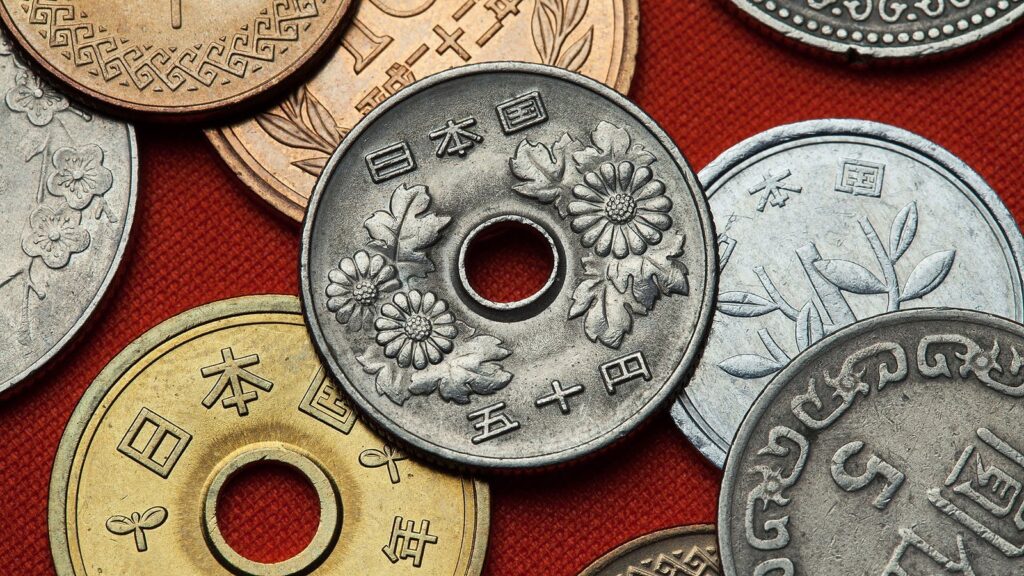
Featured image: “Yen 2” by Astelus, CC BY-SA 4.0, via Wikimedia Commons