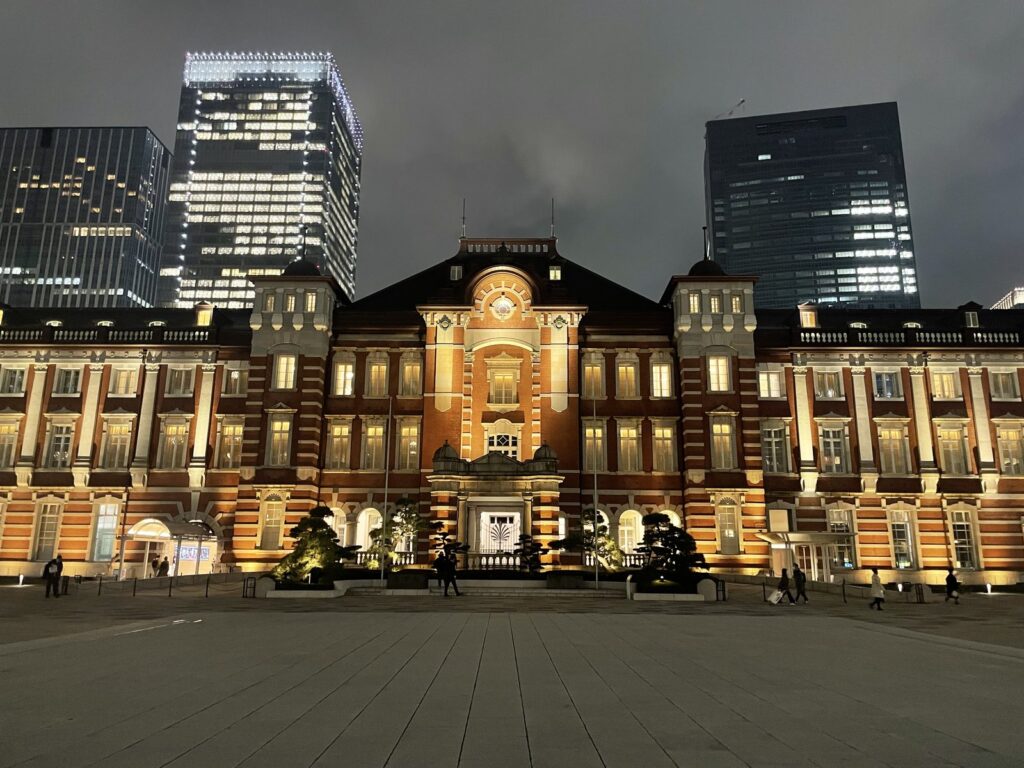
The first time I went to a public bath in Japan I spent about four minutes standing in the changing room trying to work out where to put a towel that was clearly too small for any of the jobs it might have. Nobody was watching. That is the thing I wish somebody had told me earlier: the etiquette is real, it matters, and it is also about six rules long.
I live in Japan, and going to an onsen or the local sento is an ordinary Tuesday thing here, not a special occasion. Here is exactly what happens, in order, plus where to go first and what it costs in 2026.
The quick answer
- Yes, you bathe naked, in a same-gender bath. No swimsuits. The small towel you carry is for modesty walking around and for washing — it never goes in the water.
- You wash completely before you get in. Sitting on a low stool at a tap, with soap, all of you. The bath is for soaking in clean.
- Budget ¥600–1,800 for a bath. A neighbourhood Tokyo sento is ¥600; a proper day-use onsen with outdoor pools is ¥800–2,200.
- Tattoos are not illegal and the rules are loosening, but they are still decided facility by facility. Cover stickers, tattoo-friendly lists and private baths all solve it.
- You can turn up with nothing. Towels and soap are rented or sold on site, usually for a few hundred yen.
- Best first onsen for visitors: Hakone if you’re based in Tokyo, Kinosaki if you want the yukata-and-wooden-clogs version, Kusatsu if you want the real thing.
Onsen, sento, super sento: which one are you in?
Onsen means natural hot spring water — legally defined by temperature and mineral content. Sento is a public bath heated with a boiler: the local neighbourhood institution, cheap and unglamorous, often with a mural of Mt. Fuji on the wall. Super sento is the modern hybrid — a big suburban bathing complex with several pools, a sauna, restaurants and a relaxation floor, sometimes with genuine hot spring water piped in.
Prices differ accordingly. Tokyo caps its sento fee by ordinance, and on 1 August 2026 it rose from ¥550 to ¥600 for adults, with ¥200 for ages 6–11 and ¥100 for under-6s. That is the cheapest legitimate bath in Japan and, for a lot of visitors, the least intimidating place to make your first mistakes. A day-use onsen is usually ¥800–2,200. If you stay at a ryokan with its own bath, it’s included — and you’ll also see a small bathing tax (nyuto-zei) of about ¥150 per person per night on the bill, which is a genuine local tax, not a hotel fee.
The routine, step by step
- Shoes off at the entrance. Into a locker or a shelf. Pay at the front desk or a ticket vending machine.
- Split by gender at the curtains. Red/女 is women, blue/男 is men. They sometimes swap sides overnight, so read rather than remember.
- Undress completely in the changing room. Everything into a basket or locker, including underwear. Take only the small towel through to the bathing room.
- Wash at the taps, sitting down. Rinse the stool and mirror area first, then soap, shampoo and rinse all of you thoroughly. Keep the shower low so you don’t spray the person next to you, and rinse your seat when you finish.
- Get in slowly and quietly. Long hair goes up. The small towel goes on your head or on the rim — never in the water. No photos, no phones, no swimming, no loud conversation.
- Dry off before the changing room. Wring out the small towel and wipe yourself down at the doorway so you don’t flood the tatami or the floor mats.
Two extras worth knowing. Very hot baths — 42°C and up — are best taken in short spells; ten minutes is plenty. And drink water: the vending machines and, in older places, the bottles of milk by the exit are there for exactly this.
The tattoo question in 2026
There is no national law banning tattooed people from bathing. Each facility sets its own rule, which is why the internet gives you contradictory answers. The historical association with organised crime drove the bans, and it is fading — the Japan Tourism Agency has been encouraging facilities to move away from blanket refusals, offering cover stickers and promoting private baths instead.
The practical picture: some places have simply dropped the rule. Hakone Yuryo, one of the easiest day-use onsen to reach from Tokyo, lifted its tattoo restriction in April 2025. Municipal baths often can’t refuse you — Dogo Onsen Honkan in Matsuyama is run by the city and admits tattooed bathers. And large tourist-facing resort towns are far more relaxed than a small rural inn.
Your three reliable options, in order: book a room or a ryokan with a private bath (kashikiri-buro or a room with its own open-air tub), which removes the question entirely; check the facility’s own website before you travel, where the rule is usually stated plainly; or cover a small tattoo with a skin-tone patch, sold at drugstores and often at the onsen front desk. If your tattoos are large, don’t gamble on a sticker — book private. Being turned away at the door after a two-hour train ride is a bad afternoon.
Where to go for your first onsen
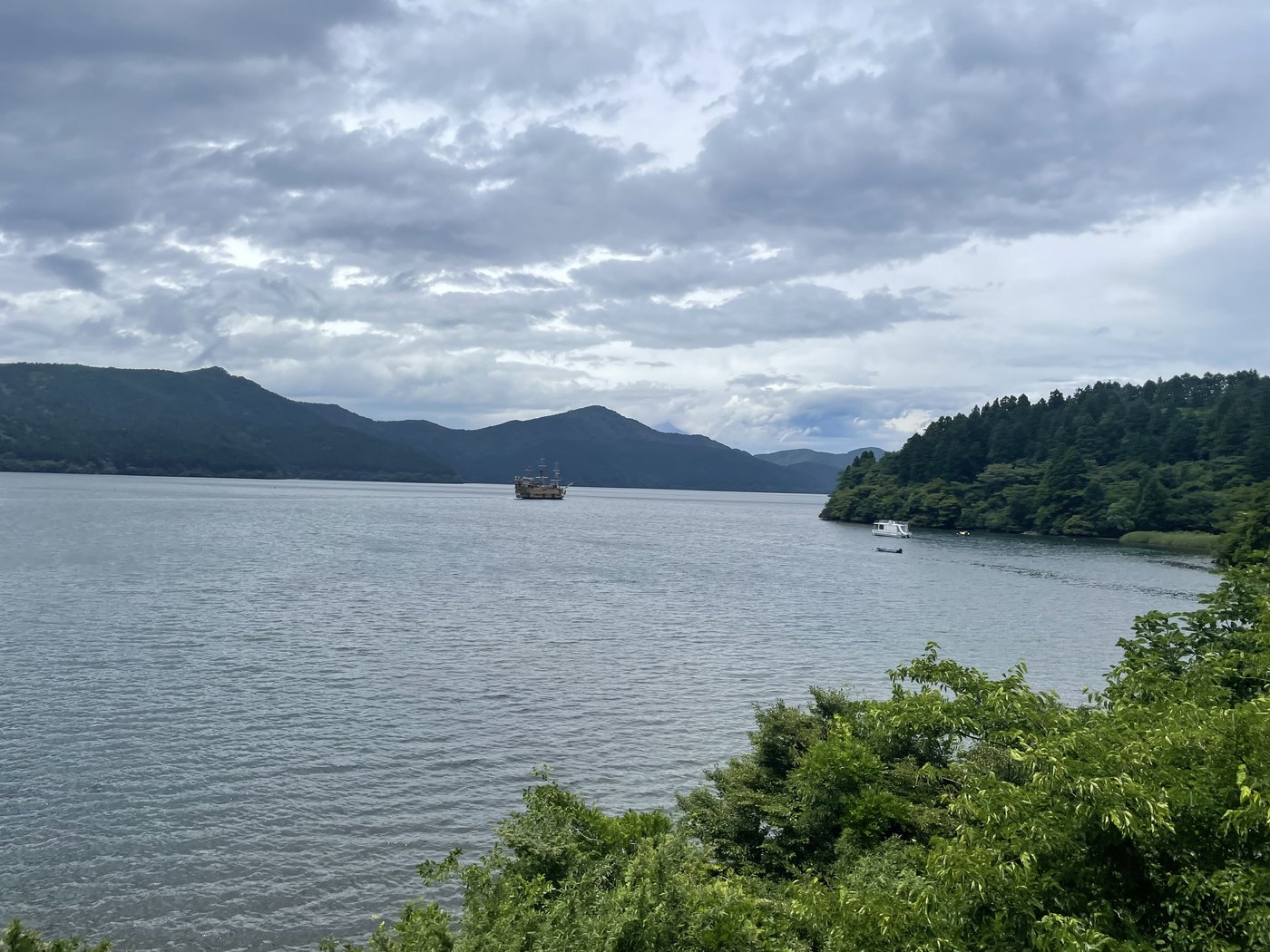
Hakone is the obvious answer if you’re based in Tokyo — 90 minutes on the Odakyu line, and you can bathe without staying the night. Hakone Yuryo sits in the woods a shuttle-bus ride from Hakone-Yumoto station, with outdoor baths and private rooms; the main bath is roughly ¥1,700–1,800 on weekdays and ¥2,000–2,200 at weekends, and private open-air rooms start around ¥9,400 for two people for two hours. Full route and sightseeing details are in Hakone Guide: Onsen, Mt. Fuji Views and Art. 👉 Klook Hakone Yuryo onsen admission ticket
Kinosaki Onsen, on the Sea of Japan side near Kyoto, is the town where the bath-hopping tradition is the entire point. Guests walk between public baths in yukata and wooden geta, and the streets are designed for it. Each bath is ¥800, or ¥1,500 for a one-day pass covering all of them — and staying overnight usually includes the pass. Note that one of the seven, Sato no Yu, has been closed for a long rebuild and isn’t expected back until around 2030, so six are open. 👉 Booking.com Kinosaki Onsen ryokan
Kusatsu, in the mountains north-west of Tokyo, has the most dramatic water in Japan — strongly acidic, sulphurous, pouring through the wooden channels of the Yubatake in the middle of town. The Sainokawara Rotenburo, a huge open-air bath in a riverside park, is ¥800 for adults and open from 7:00 in summer.
Beppu, in Kyushu, is the volume play: thousands of sources, steam rising out of drains, and public baths that still cost a few hundred yen.
And the fifth option is to skip day-use entirely and stay somewhere with the bath attached. A ryokan dinner, a soak, and a futon is a different experience from a hotel with a spa floor — the comparison is in Hotel vs Ryokan: Which Should You Book in Japan? 👉 Booking.com Hakone ryokan with private onsen
What to bring (and what you can buy there)
Almost nothing. Rental towel sets are typically ¥200–500; soap and shampoo are provided at anything above the most basic sento. Onsen shops sell their own face towels for around ¥380 if you’d rather keep one as a souvenir. Bring a hair tie, a ¥100 coin for the locker in older places, and cash — small municipal baths still don’t take cards. If you wear contact lenses, take them out before a sulphur bath. Our general Japan Packing List covers the rest, and the short version is the usual one: you can buy it here.
FAQ
Do I really have to be naked? In the shared baths, yes. Swimsuits are only worn at a handful of bathing theme parks. Nobody is looking at you — the social contract in a Japanese bath is aggressive disinterest.
Can I go if I have my period? Most facilities ask you not to use the shared baths. A private bath is fine.
Are mixed-gender baths still a thing? Rare, and mostly at old rural inns (konyoku). Everything a first-timer is likely to visit is split by gender.
Can I bring my phone in for photos? No. Cameras and phones are banned in bathing areas everywhere, without exception.
What about kids? Normal and welcome, at a reduced fee, usually with the parent of the same gender. Small children can go either side.
Is it safe in summer? It’s fine, and cooler mountain onsen towns are one of the better August escapes — see Where to Escape Japan’s Summer Heat. Hydrate more than you think, and go easy on the hottest pools after a long day outside.
Do I need mobile data for this? It helps for checking tattoo policies, closing days and shuttle-bus times on the way. I use a Japanese domestic plan rather than a travel eSIM, but for a short trip a tourist eSIM is the simplest route — comparison in Best eSIM for Japan in 2026. 👉 Airalo Japan eSIM
The verdict
Wash thoroughly, keep the towel out of the water, and stop worrying. Everything else is detail. The etiquette exists to keep the water clean and quiet, not to catch you out, and staff at tourist-area onsen have seen every possible variety of confused visitor.
If you have one afternoon, do Hakone from Tokyo. If you have a night, spend it in Kinosaki or Kusatsu, where the town itself is built around bathing and the walk between baths in a yukata is half the experience. If you have tattoos, book a private bath and enjoy the trip instead of researching it. 👉 Booking.com Kusatsu Onsen
Written from Japan by the Wayfarer Japan team. Some links are affiliate links that support the site at no extra cost to you.
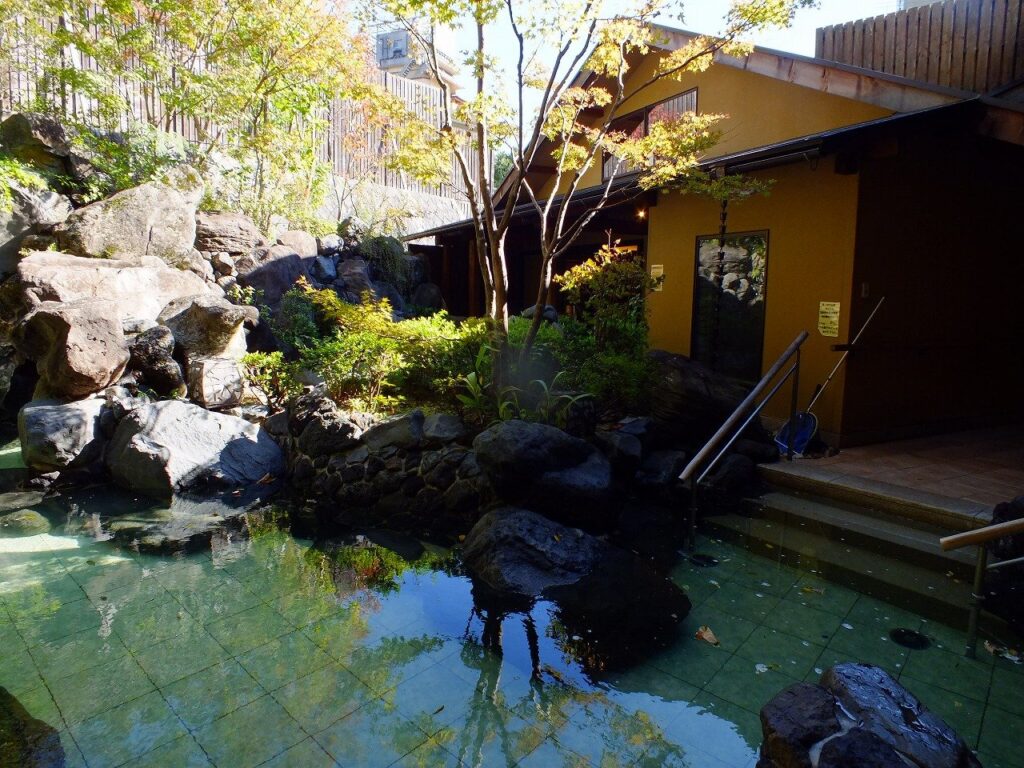
Featured image: “Yumotokan-Ogoto onsen Rotenburo 露天湯幻逍遥-Yugenshoyo” by イーゴス108, CC BY-SA 3.0, via Wikimedia Commons