I live in Japan, and Suica is the piece of technology I touch most often: gates in the morning, a coffee at the konbini, a coin locker, a vending machine on a hot platform. It is genuinely one of the best things about daily life here. But I also watch visiting friends make the same three or four mistakes with it, and every one of them is avoidable if somebody tells you the rules in advance.
This is that briefing. Not which card to buy — I’ve covered that in Suica vs PASMO vs Welcome Suica — but how to use the thing once it’s in your hand or on your phone.
The quick answer
- Tap the whole card or phone flat on the reader for about a second. Don’t wave it, don’t hover it.
- Always tap in AND tap out. The fare is calculated on exit, not entry.
- Top up with cash at any ticket machine or convenience store — say “Suica charge, please” and hand over a note.
- Maximum balance is ¥20,000 (rising to ¥300,000 in a new app due autumn 2026).
- Don’t ride across regional IC boundaries on local trains — that’s the one mistake that genuinely traps people at a gate.
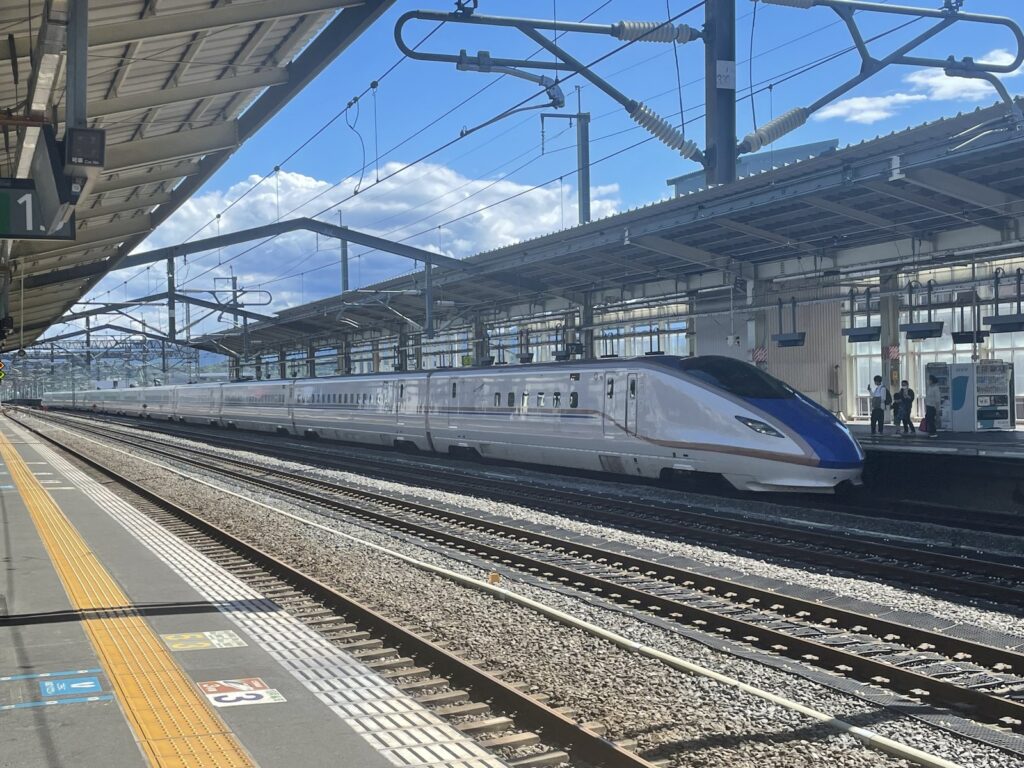
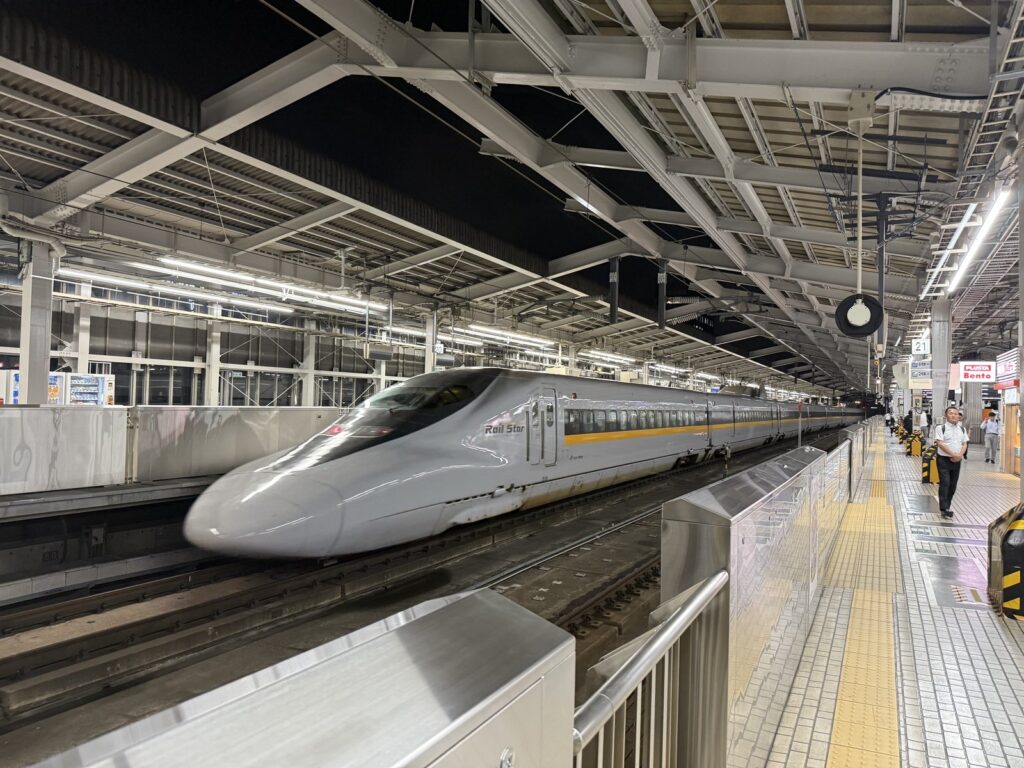
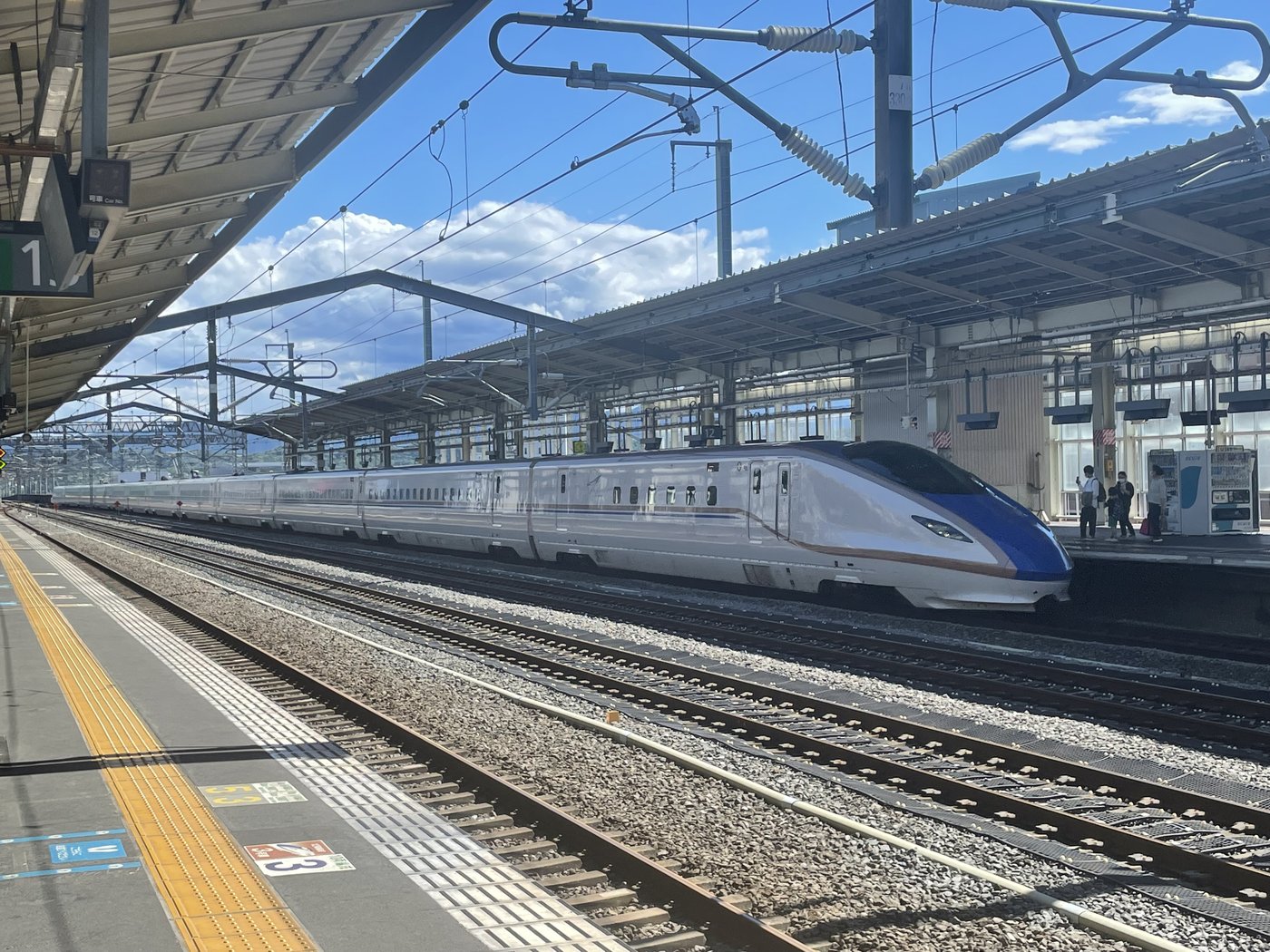
- It is not a shinkansen ticket on its own, and not a limited express ticket either.
Tapping in and out
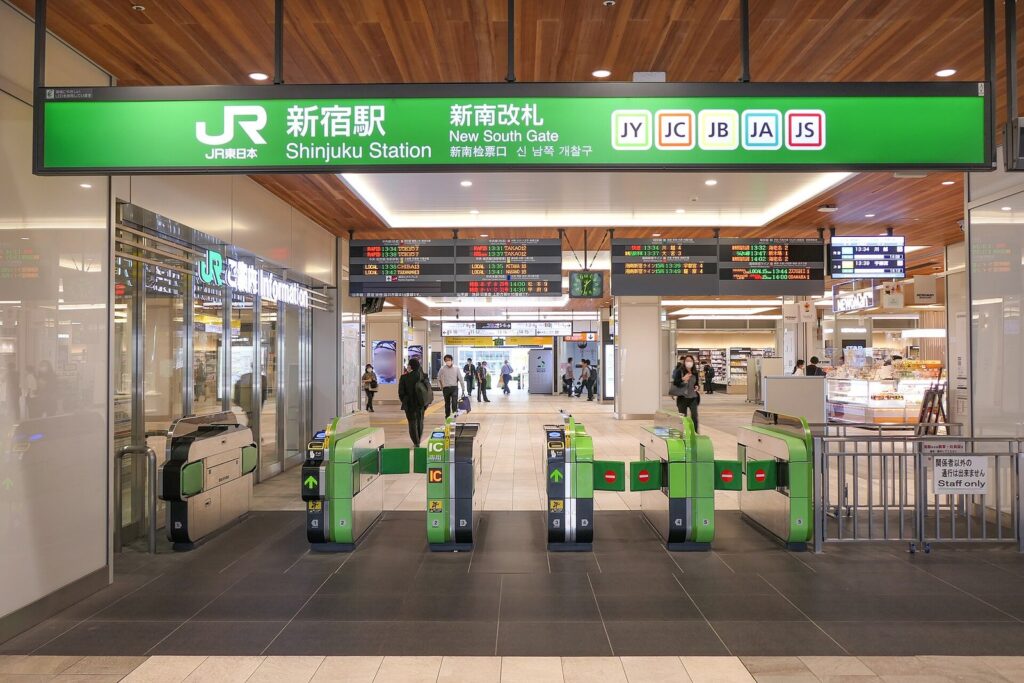
Every ticket gate has a blue-ish reader panel on the right-hand side. Put the card flat on it — the full surface, not an edge — and keep it there for about a second until the gate chirps and the flaps stay open. The remaining balance flashes on the little display as you walk through. With a phone, it’s the same motion: the back of the handset flat on the panel.
Then tap out at your destination. This matters more than people expect. Japanese fares are distance-based, so the system only knows what to charge you when you exit. If you forget, your card is left “open” and the next gate you touch will reject you until staff clear it.
At small rural stations there may be no gates at all — just a lonely IC reader pole on the platform or by the station door. Tap that one, on the way in and the way out. If you can’t find a reader, get on anyway and speak to staff at the other end; nobody will be angry with you.
On buses, the pattern varies. In most of Tokyo you tap once as you board (flat fare). Outside the big cities, you tap on entry at the middle door and again as you leave by the front door, because the fare depends on distance. Watch the person in front of you — that’s what I do in an unfamiliar city.
If the gate does flash red and beep, it usually means one of two things: not enough balance, or a missing tap-in. Don’t panic and don’t force it. Go to the staffed window at the end of the gate line — there is always one — show the card, and they’ll fix it in under a minute. The fare adjustment machines (marked “Fare Adjustment”, yellow-ish) do the same job for topping up mid-journey.
Topping up (charging) your card
Three ways, all easy:
1. Ticket machines. Any JR or subway machine with an IC symbol. Touch “English”, insert the card, choose an amount, feed in cash. Options are typically ¥500, ¥1,000, ¥2,000, ¥3,000, ¥5,000 and ¥10,000. Most machines take notes and coins but not foreign credit cards, so bring cash for this.
2. Convenience stores. My favourite trick for visitors. At any 7-Eleven, FamilyMart or Lawson register, put the card on the counter and say “Suica charge”. Hand over a ¥1,000 or ¥5,000 note, they tap it in, done. No queue at the station, no machine interface to decode.
3. Your phone, with a card. If you have Suica in Apple Wallet or the Welcome Suica Mobile app, you can top up from your seat on the train. Be aware that foreign-issued Visa cards are frequently rejected for Suica top-ups; Mastercard and Amex tend to go through, and the Welcome Suica Mobile app accepts foreign Visa and Mastercard through Apple Pay. If your card is refused, it is not your fault and nothing is broken — go and top up with cash at a konbini instead.
The current ceiling on any Suica is ¥20,000. For a normal travel day that is plenty; if you’re buying shinkansen-adjacent things or paying for a group dinner, it isn’t. Which brings us to the change coming this autumn.
What’s changing in autumn 2026
JR East is in the middle of the biggest Suica overhaul in its history — moving balances off the chip and onto a central cloud server. The visible parts for travelers: a rebuilt Suica app due in autumn 2026, adding QR-code payments and lifting the balance limit to ¥300,000. Further out, the company has said the Suica area will unify across eastern Japan from spring 2027, which should eventually kill the boundary problem described below.
None of this changes how you tap in 2026. Treat the ¥20,000 limit as real for now and check the app when you land.
The rules that trip visitors up
1. Don’t cross an IC area boundary on local trains
This is the big one. Japan’s IC network is split into regional areas — Suica (JR East), TOICA (JR Central), ICOCA (JR West) and others. Your card works in all of them, but a single journey cannot start in one area and end in another. Tap in at Atami and ride a local train two stops to Mishima and the exit gate will reject you, because no system can compute that fare.
The card isn’t broken; you just have to see a member of staff, pay the difference in cash and have it unlocked. To avoid it entirely: for any long journey that crosses regions, buy a paper ticket or ride the shinkansen instead. Within a single metro region — all of greater Tokyo, all of Kansai — tap freely and never think about it.
2. Suica is not a shinkansen ticket
Tapping your Suica does not get you onto the Tokaido Shinkansen. There are two legitimate ways to use IC for bullet trains: Touch de Go! Shinkansen, which lets you tap straight through for shorter unreserved journeys on JR East lines, and Smart EX / EX, where you register a card online and your IC card becomes the boarding token for the Tokaido and Sanyo Shinkansen. Otherwise, buy a shinkansen ticket the normal way — see How to Ride the Shinkansen.
3. Limited express trains need a second ticket
Suica covers the basic fare on ordinary trains. Named limited express services — the Narita Express, Thunderbird, Odoriko and so on — charge a separate limited express supplement on top, and reserved seats need a reservation. If the fare logic here feels opaque, How Japan’s Train Fares Work untangles it properly.
4. One card, one person
You cannot tap two people through on the same card. Everyone travelling needs their own, including children over six (children’s cards get a discounted fare). Two adults sharing one card at a gate is the fastest way to summon a station attendant.
5. Keep a small buffer
Gates check you have at least the minimum fare before letting you in. Living here, I keep about ¥2,000 on mine at all times, and top up whenever I’m at a konbini anyway. It costs nothing to carry a buffer and it saves you the walk back to a machine.
What else Suica pays for
Far more than trains, and this is where it starts to feel magic: convenience stores, vending machines (including the ones on platforms), coin lockers at stations, most taxis, station bakeries and bookshops, drugstores, chain restaurants and cafés, some supermarkets, and a growing number of temple and museum shops. Look for the IC or Suica logo at the till and say “Suica” as you hand your phone or card over.
It is not universal — small izakaya, family-run shops and rural businesses are often cash-only. Japan is far more cashless than it was, but not all the way there; Cash or Card in Japan has the honest picture.
Phones: what actually works
On iPhone, Suica works beautifully. Add one in Apple Wallet, or issue one instantly through JR East’s free Welcome Suica Mobile app, which gives visitors a 180-day card with no deposit and no counter queue. Turn on Express Transit so you don’t have to authenticate at the gate, and note that iPhones keep enough reserve power to open a gate for a few hours after the battery dies — which has saved me more than once.
On Android, the honest answer is that most phones bought outside Japan lack the FeliCa chip Suica needs, including many global Pixel models. Check your handset before you rely on it; if it can’t do it, a physical card solves everything. Some visitors pre-book a physical IC card for airport pickup so they can walk straight to the train.
👉 Klook Japan IC card (Suica) airport pickup
Leftover balance at the end of your trip
- Regular Suica (the one with the ¥500 deposit): refundable at JR East station offices — you get the deposit plus your balance, minus a ¥220 handling fee. Only in JR East territory, so not in Kyoto or Osaka.
- Welcome Suica: the tourist card is not refundable, and it expires 28 days after issue. Spend the balance down at the airport konbini before you fly.
- Mobile Suica: just leave the balance on it. It sits in your phone until your next trip.
Honestly, for small amounts the refund queue isn’t worth it. Buy snacks for the flight instead.
FAQ
Do I tap in and out for buses too? Usually yes outside the big cities, where fares are distance-based. In central Tokyo it’s often a single tap on boarding. When unsure, copy the passenger ahead of you.
Can I use Suica in Kyoto and Osaka? Yes. Suica works on trains, subways, buses and shops across the Kansai region. Just don’t start a single train journey in one IC area and end it in another.
What if I lose it? An unregistered card is gone, along with the balance. A registered “My Suica” or a Mobile Suica tied to your account can be reissued — another quiet argument for putting it on your phone.
Does the balance expire? The money doesn’t, but a card goes dormant after ten years of no use. Welcome Suica is the exception: 28 days and it’s finished.
Can I use it for a rental car or hotel? Rarely. Both usually want a credit card. Suica is for small and mid-sized daily payments.
The verdict
Suica rewards about five minutes of learning. Tap flat, tap out, keep a couple of thousand yen on it, don’t ride local trains across regional boundaries, and remember that the shinkansen and limited expresses want a proper ticket. Do that and you’ll glide through two weeks in Japan without ever queueing at a fare machine — and by day three you’ll be tapping for coffee without thinking, which is exactly how the rest of us live.
Written from Japan by the Wayfarer Japan team — practical, honest advice from people who actually live here.
Featured image: “JRE-Shinjuku-STA New-South-Gate” by MaedaAkihiko, CC BY-SA 4.0, via Wikimedia Commons