I live in Japan, and solo travelers are one of the easiest groups to spot here — not because they stand out as nervous or lost, but because the whole country is quietly built for doing things alone. Trains run on a timetable you can set your watch to, restaurants have counter seats designed for one, and nobody looks twice at a person eating, hiking or sightseeing by themselves. If you’ve been putting off a trip because you don’t have a travel partner lined up, Japan is one of the least stressful places in the world to go it alone.
The quick answer
- Japan is consistently ranked among the safest countries for solo travelers — it placed 10th of 163 countries on the 2026 Global Peace Index, and Kyoto scored 93/100 on a 2026 ranking of safest cities for a first solo trip.
- Solo dining is completely normal and often designed for it: ramen chains like Ichiran use private booth seating, and conveyor-belt sushi and standing bars are built around single diners.
- Capsule hotels, single rooms and hostels are affordable and common — a Tokyo capsule hotel typically runs ¥3,000–6,500 ($19–42) a night in 2026, far below a solo hotel room rate.
- Public transport is simple to navigate alone: load a Suica or Welcome Suica IC card and you can ride almost anything without buying individual tickets or needing a travel companion to help with language.
- Women-only train carriages run on many lines during weekday rush hours (roughly 7:30–9:30am and 5:30–8pm), which is worth knowing even though they’re optional for solo female travelers, not a replacement for general safety awareness.
Why Japan feels easier alone than almost anywhere else
A lot of what makes solo travel hard elsewhere — unpredictable safety, confusing transit, feeling awkward eating alone, language barriers that require a second person to help sort out — is either minimized or solved outright here. Crime against travelers is rare, trains and buses run close to schedule and are clearly signed in English in any city tourists actually visit, and “hitori meshi” (eating alone) isn’t a sad default, it’s a completely unremarkable way to eat. I’ve sat at a ramen counter at 9pm on a Tuesday next to a dozen other solo diners, all of whom were there for exactly the same reason: it’s just a normal way to have dinner.
This matters more for a first solo trip than people expect. The mental overhead of solo travel usually isn’t the being-alone part — it’s constantly having to solve small logistics problems without someone to split the thinking with. Japan removes a lot of those problems before they start.
Safety, realistically
Japan’s reputation for safety is well earned by the data, not just anecdote: a Numbeo-style safety index put the country at 77.2 for 2026, trailing only the UAE worldwide, and it has ranked in the global top 10 on the Global Peace Index for several years running. Violent crime against tourists is very rare, and the more common travel nuisances elsewhere — aggressive touts, overcharging scams, pickpocketing in crowds — are far less frequent here than in most major travel destinations.
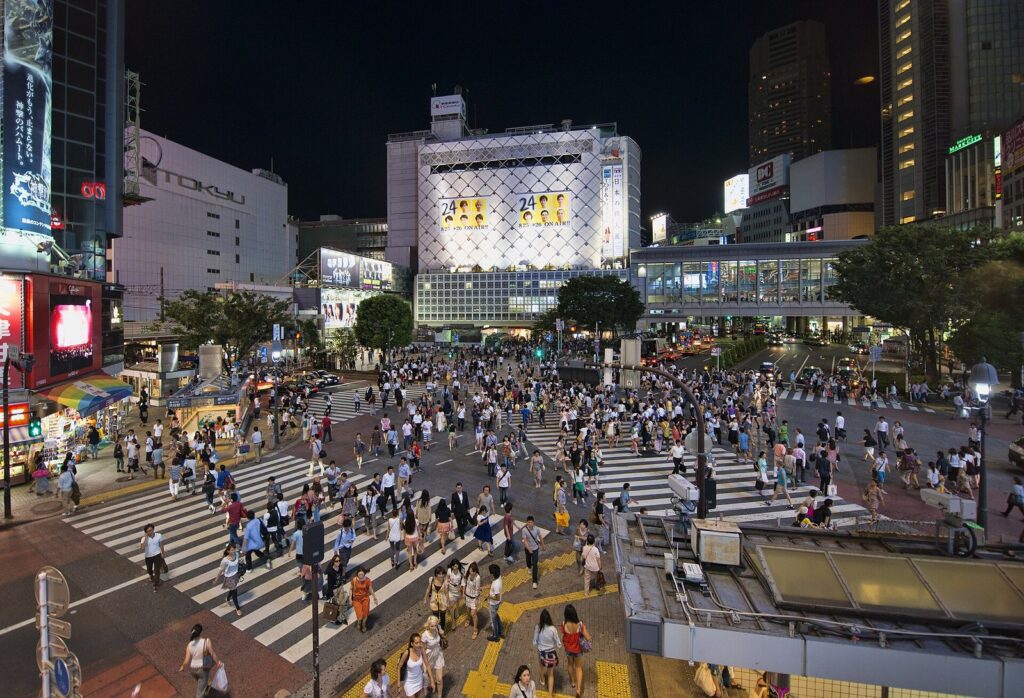
That doesn’t mean zero caution. Standard travel sense still applies: watch your bag in very crowded spaces like Shibuya Crossing or packed rush-hour trains, be aware in nightlife districts late at night (Kabukicho in Tokyo and similar areas have a small but real problem with touts pulling people into overpriced bars), and keep normal digital hygiene with your phone and cards. For solo female travelers specifically, women-only train carriages exist on many commuter and subway lines during weekday rush hours — they’re there if you want them, not a sign that trains are otherwise unsafe.
Solo dining actually works here
This is one of the most pleasant surprises for first-time solo travelers. Japanese food culture has entire categories of restaurant built around single diners rather than tables for two or four:
- Ramen counters — Ichiran is the most famous example, with individual booth seating, a curtain for privacy, and an order form so you never have to speak to anyone if you don’t want to. A bowl runs roughly ¥980–1,180 depending on the city.
- Conveyor-belt sushi (kaiten-zushi) — counter seating, pick what you want off the belt or order on a tablet, pay by plate count. Zero awkwardness eating alone.
- Standing bars and small izakaya counters — common in train station areas, built for a quick solo drink and a few small plates after work.
- Convenience stores — genuinely good solo meals at any hour; see Why Japan’s Convenience Stores Are Amazing for what’s actually worth buying.
You will occasionally find traditional sit-down restaurants, particularly in rural areas, that are set up mainly for groups — if a place looks like it’s all large tatami rooms, a counter-style spot nearby is usually an easier solo option.
Where to stay alone
Solo accommodation in Japan is both plentiful and cheap compared to most countries, because the market here has long catered to solo business travelers:
| Type | Typical cost (solo, per night) | Best for |
|---|---|---|
| Capsule hotel | ¥3,000–6,500 | Budget stays, novelty experience, usually single-gender floors |
| Business hotel single room | ¥6,000–12,000 | Private space, reliably clean, near stations |
| Hostel dorm | ¥2,500–4,500 | Meeting other travelers, cheapest option |
| Solo-friendly ryokan | ¥10,000–20,000+ | A one-time splurge for an onsen/ryokan experience alone |
Business hotel chains (APA, Toyoko Inn, Super Hotel) are built almost entirely around single travelers and are a safe default in any city. If you want to compare options and lock in a room ahead of time, 👉 Klook Tokyo hotels and 👉 Klook Kyoto hotels both list these chains alongside solo-friendly guesthouses. For more detail on choosing a neighborhood, see Where to Stay in Tokyo and Where to Stay in Kyoto.
Getting around without anyone’s help
A Suica or Welcome Suica IC card is the single most useful tool for a solo trip — tap in, tap out, and it works on nearly every train, subway and bus in the country, so there’s no need to decode fare charts or ask a stranger for help buying a ticket. Combine it with a transit app (Google Maps handles Japanese train routing well) and navigating alone becomes close to foolproof. If you’re relying on your phone for maps and translation, sort out your eSIM or pocket WiFi before you land — see Best eSIM for Japan for what to buy. For city-specific transit logic, Getting Around Tokyo and Kyoto to Osaka cover the lines you’ll use most.
FAQ
Is Japan actually safe for a woman traveling alone? Yes, by both reputation and data — Japan ranks among the safest countries globally for solo female travelers. Standard precautions still apply at night in nightlife districts, and women-only train carriages are available during weekday rush hours if you prefer them.
Will I feel awkward eating alone? Almost never. Solo dining is completely normal in Japan, and entire restaurant formats (ramen booths, conveyor-belt sushi, standing bars) are designed specifically for it.
Do I need to speak Japanese to travel alone here? No. Major cities have English signage on trains and in stations, and most restaurants either have English menus or picture/vending-machine ordering that sidesteps language entirely.
Is it more expensive to travel solo in Japan? Slightly, since you can’t split hotel rooms or taxis, but capsule hotels, business hotel singles and solo-friendly dining keep daily costs lower than in most other major destinations.
Is it lonely traveling around Japan by myself? Hostels and walking tours are an easy way to meet people if you want company some of the time, but the country is comfortable enough solo that plenty of travelers do the whole trip without ever feeling like they need to.
The verdict
Japan removes most of the friction that makes solo travel hard elsewhere — it’s safe, the transit is simple enough to navigate without help, and the food culture doesn’t just tolerate eating alone, it’s built around it in places. It’s one of the most beginner-friendly countries in the world to travel through solo, and a genuinely good choice for a first solo trip if you’ve been hesitating.
Written from Japan by the Wayfarer Japan team — practical travel advice from people who actually live here.
Featured image: “1 shibuya crossing 2012” by chensiyuan, CC BY-SA 4.0, via Wikimedia Commons