Japan has one of the best rail networks on earth, and for most visitors the train — not taxis, not driving — is how you’ll get almost everywhere. But the first time you see a Tokyo rail map, it looks like someone spilled spaghetti. Don’t worry. Once you understand the handful of building blocks, it all clicks. I live here and ride these lines constantly; here’s the mental model that makes Japan’s trains simple.
The quick version
- Several different companies run trains in Japan — they overlap, but they’re separate.
- JR (Japan Railways) is the big national network, including the Shinkansen (bullet train). This is what the Japan Rail Pass covers.
- Private railways and subways fill in the gaps, especially inside cities. These are not covered by the Japan Rail Pass.
- You don’t need to understand who runs what. Get an IC card (Suica/PASMO), tap in and out, and follow Google Maps. That’s 90% of it.
The big picture: it’s not one system
The single most confusing thing for first-timers is that Japan’s trains aren’t run by one company. Several operators share the same cities and even the same stations. That’s why the map looks busy — you’re seeing many networks layered on top of each other.
You almost never need to care which company you’re on. But knowing the main types explains the map, the ticket gates, and — importantly — what the Japan Rail Pass does and doesn’t cover.
Here’s the practical catch worth knowing: because these are separate companies, fares are charged per company, not as one combined fare. If your route hops from a JR line onto a subway or a private railway, you pay each operator’s own fare — so a trip that crosses companies can cost a little more than the same distance on a single line. Your IC card works all this out and deducts it automatically, so you never have to calculate anything; just know that switching operators can nudge the price up, which is why two routes of similar length can differ in cost.
JR (Japan Railways)
JR is the largest network and the backbone of intercity travel. It was once the national railway and is now a group of regional companies (JR East, JR Central, JR West and others), but travelers can just think of it as one big brand: JR.
JR runs:
- The Shinkansen (bullet train) — the fast long-distance trains between cities (more below).
- Major city loop and commuter lines — most famously Tokyo’s Yamanote line, the green loop that connects Shinjuku, Shibuya, Tokyo Station and more.
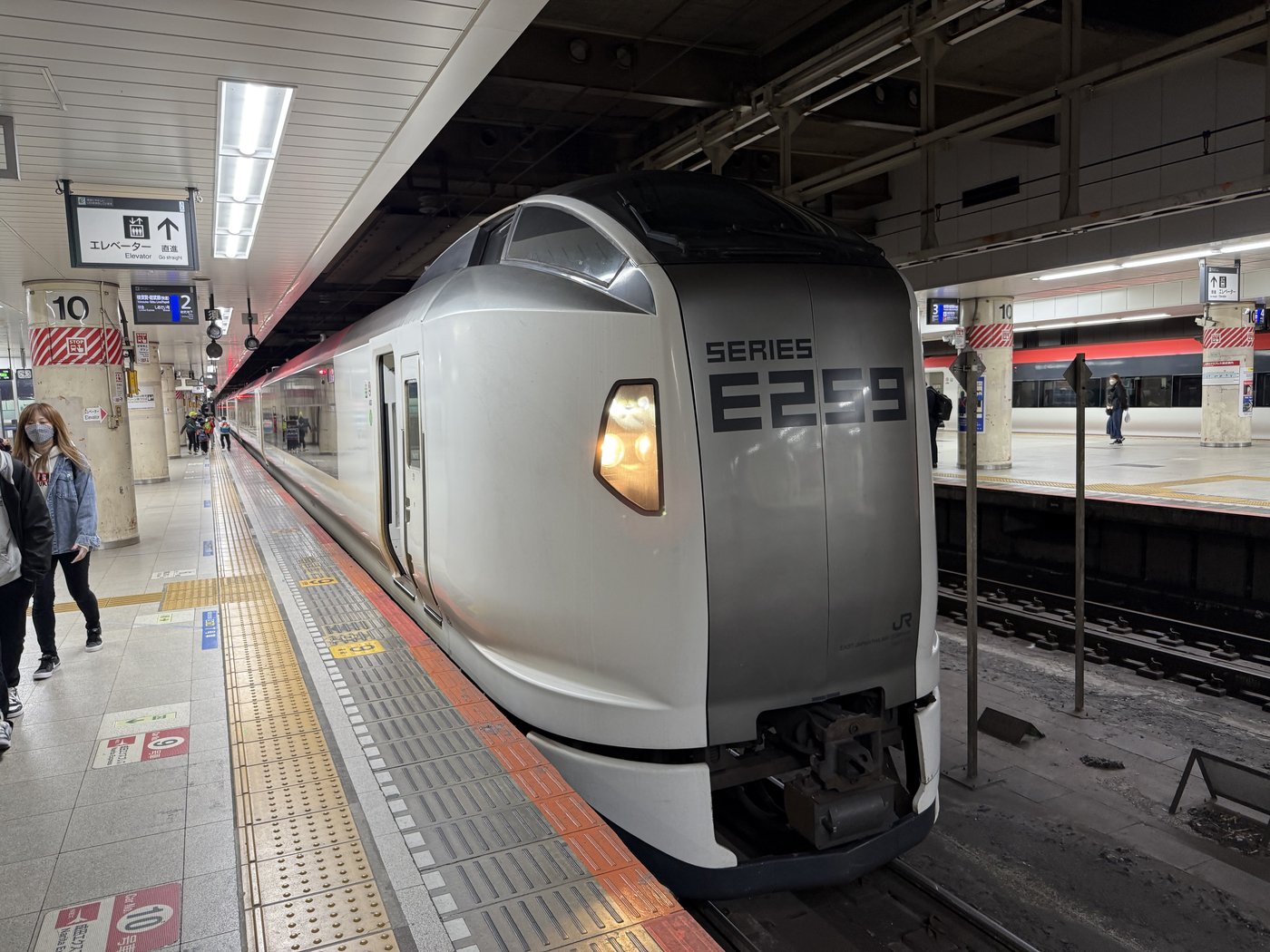
- Airport trains like the Narita Express.
Why JR matters to you: the Japan Rail Pass (commonly called the JR Pass) covers JR trains nationwide — including most Shinkansen. If you’re doing long distances, JR is the network you’ll live on. (See Is the Japan Rail Pass Worth It? — internal link.)
The Shinkansen (bullet train)
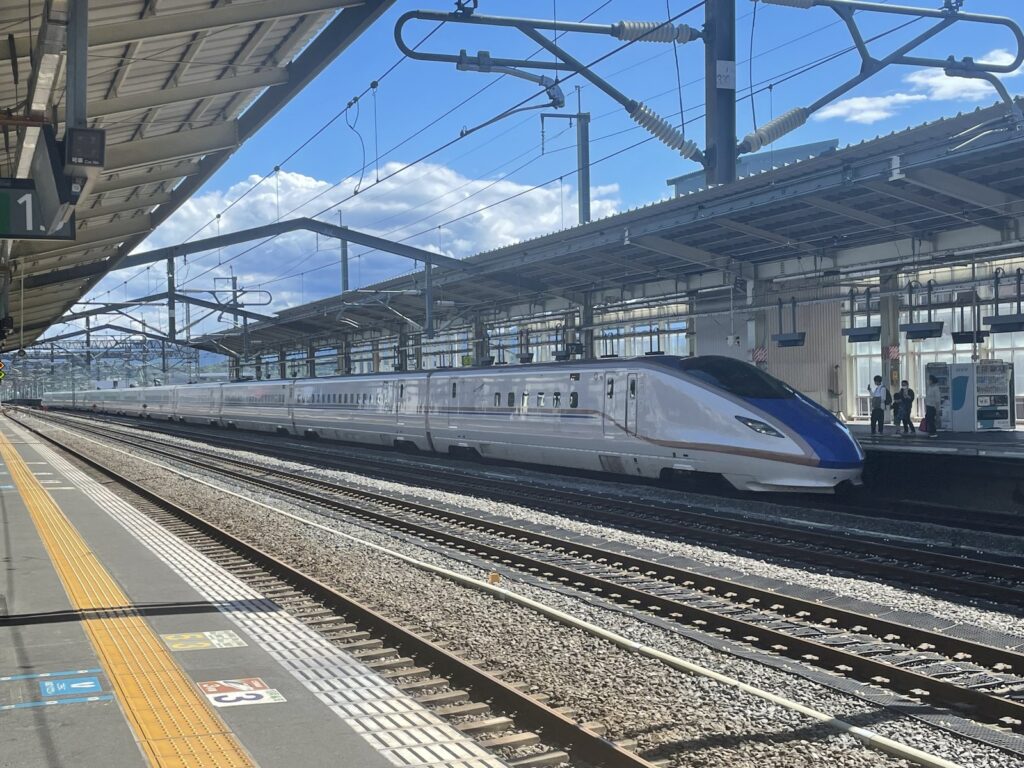
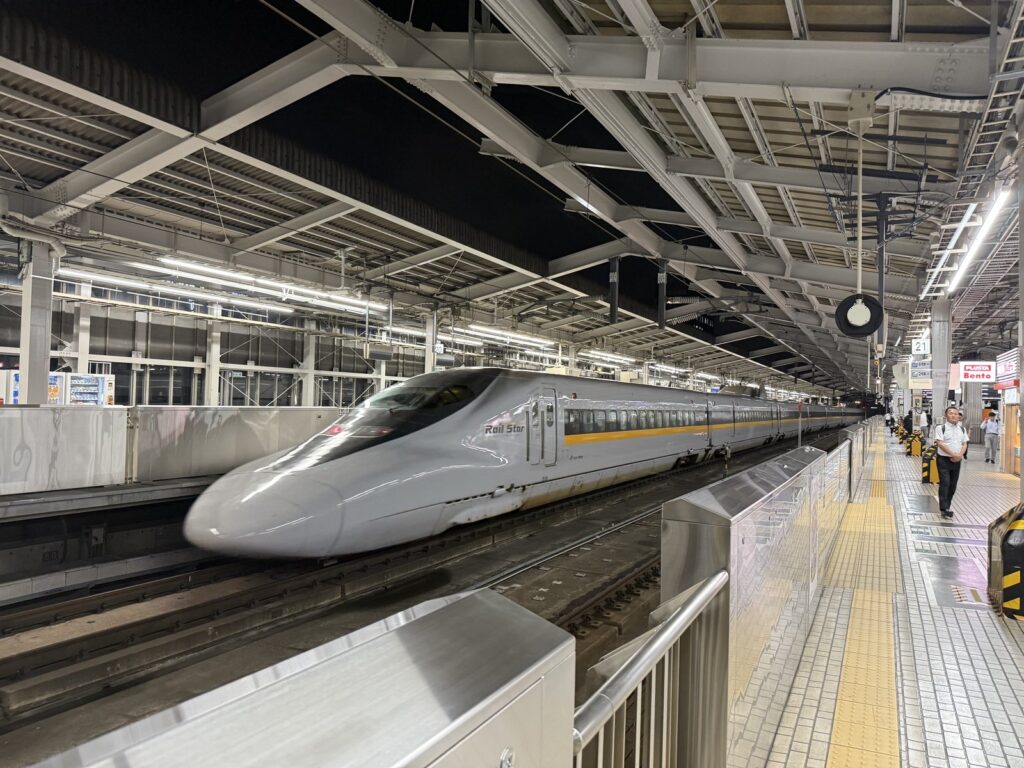
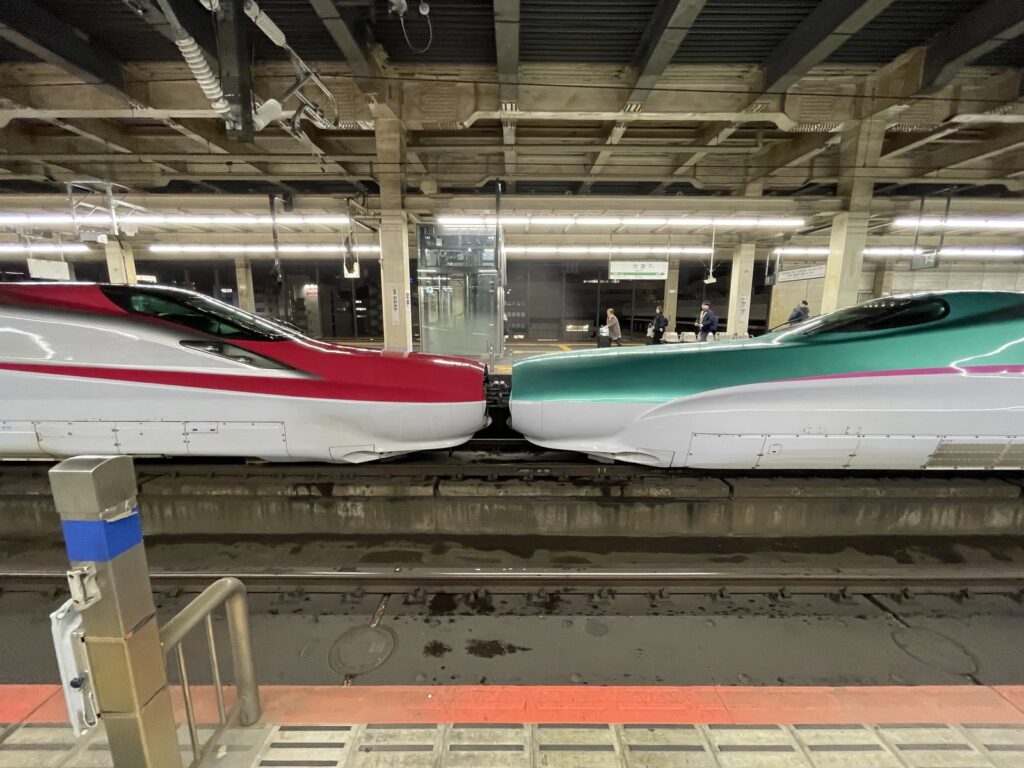
The Shinkansen is Japan’s high-speed rail — sleek, punctual to the minute, and the fastest comfortable way between cities (Tokyo to Kyoto in about 2 hours 15 minutes). It’s run by JR.
One thing to know: the very fastest services on the main Tokyo–Osaka line (called Nozomi) are not included in the basic Japan Rail Pass — the pass covers the slightly slower Hikari and Kodama. Since October 2023 you can still ride Nozomi (and Mizuho on the Sanyo–Kyushu route) with a pass by buying a supplementary ticket at a JR ticket office or ticket machine in Japan, but it costs extra on top of the pass. Factor that in if you’re comparing options.
Private railways (私鉄 / shitetsu)
Alongside JR, Japan has many private railway companies — these are called shitetsu. They often run the most convenient routes to specific suburbs, tourist areas and mountains. Examples you’ll bump into include lines to places like Hakone, Nikko and Mount Koya, and big city networks run by companies such as Tokyu, Keio, Odakyu, Kintetsu and Hankyu.
Why they matter to you: private railways are not covered by the Japan Rail Pass. Sometimes a private line is faster or cheaper to a destination than the JR route — but you’ll pay separately. Your IC card handles this automatically, so you rarely need to think about it day to day.
Subways / Metro
Inside big cities, subways handle short hops JR and private lines don’t. Tokyo has Tokyo Metro and Toei; Osaka has Osaka Metro; and so on.
Subways are also separate from JR and not covered by the Japan Rail Pass. Again — your IC card just works across all of them.
How you actually ride: IC cards
Here’s the good news that makes all of the above irrelevant in practice: the IC card.
An IC card (the main ones are Suica and PASMO) is a rechargeable tap-to-pay card. You tap in at the gate when you enter and tap out when you leave, and the correct fare is deducted automatically — across JR, private railways and subways alike. No working out fares, no buying a paper ticket for every ride. You can also use it at convenience stores and vending machines.
For most visitors, the plan is simply: get an IC card, keep it topped up, tap in and out, follow Google Maps. (For which card to choose — including the tourist “Welcome Suica” — see Suica vs PASMO vs Welcome Suica — internal link.)
Paper tickets and the Japan Rail Pass still exist and have their place (especially for the Shinkansen and long distances), but day to day, the IC card is how you move.
So do you need the Japan Rail Pass?
Only if your route is right for it. The Japan Rail Pass is a fixed-price pass covering JR trains for 7, 14 or 21 days — great value for fast, long loops across the country, poor value for city-based trips. It’s a maths question, not a default. We break it down in Is the Japan Rail Pass Worth It? and How to Buy the Japan Rail Pass Online (internal links).

Practical tips from someone who lives here
- Trust Google Maps. It tells you the line, platform, departure time and cost — and it’s remarkably accurate in Japan.
- Station numbering helps. Stations have codes like “G-09”; useful when names are unfamiliar.
- Avoid rush hour with luggage (roughly 7:30–9:30am and 5:30–7:30pm in big cities) — trains get extremely full.
- Mind the last train. City trains generally stop around midnight; missing it means a taxi.
- Stand left (mostly). On escalators, people stand on the left in Tokyo (on the right in Osaka) — follow the locals.
FAQ
Do I need to understand which company runs each line? No. Get an IC card and follow Google Maps. The company only matters for the Japan Rail Pass (which covers JR only).
Is the Shinkansen the same as a normal train? It’s high-speed intercity rail, run by JR, usually with reserved seats. Different platforms and gates from local trains.
Can one IC card cover everything? Yes — a single Suica or PASMO works on JR, private railways and subways across most of the country.
Are taxis a good alternative? For most trips, no — trains are faster and far cheaper. Taxis are for late nights or heavy luggage.
The verdict
Japan’s rail map looks overwhelming because it’s several networks — JR, private railways and subways — sharing the same cities. But you don’t need to master it. Remember the shape: JR is the national backbone (and the Shinkansen, and what the Japan Rail Pass covers); private lines and subways fill the gaps; and an IC card ties it all together. Get a Suica or PASMO, follow Google Maps, and Japan becomes one of the easiest countries anywhere to get around.
Next: decide on your Japan Rail Pass (Is It Worth It?) and pick your IC card (Suica vs PASMO) — internal links.
Written from Japan by the Wayfarer Japan team.