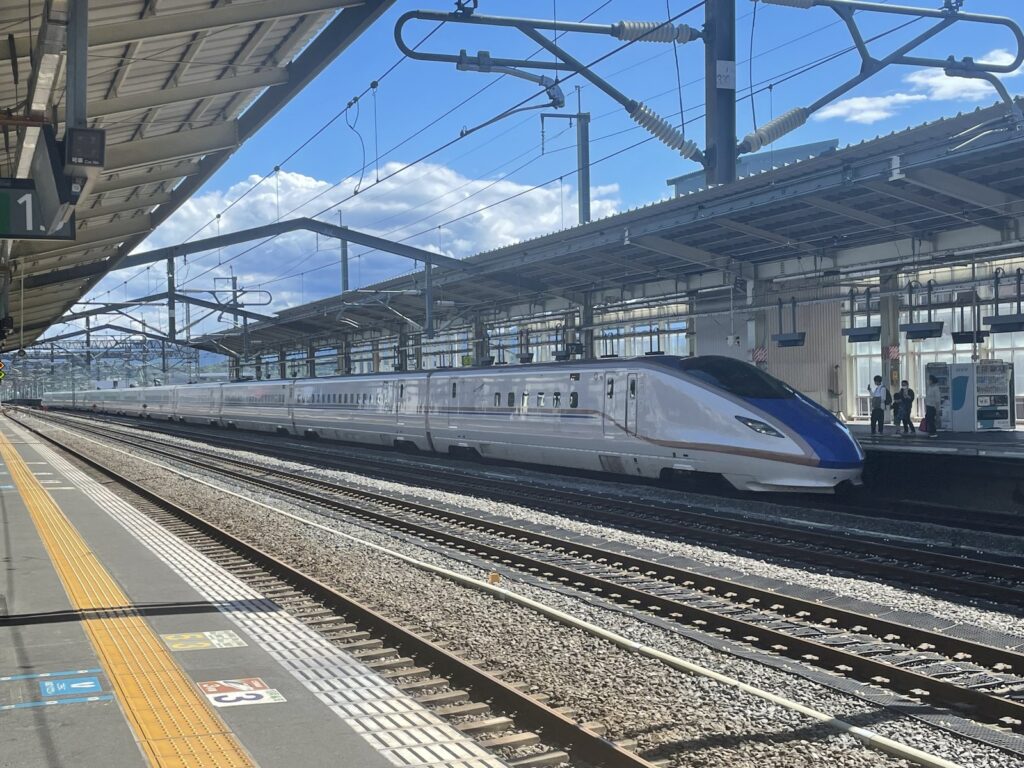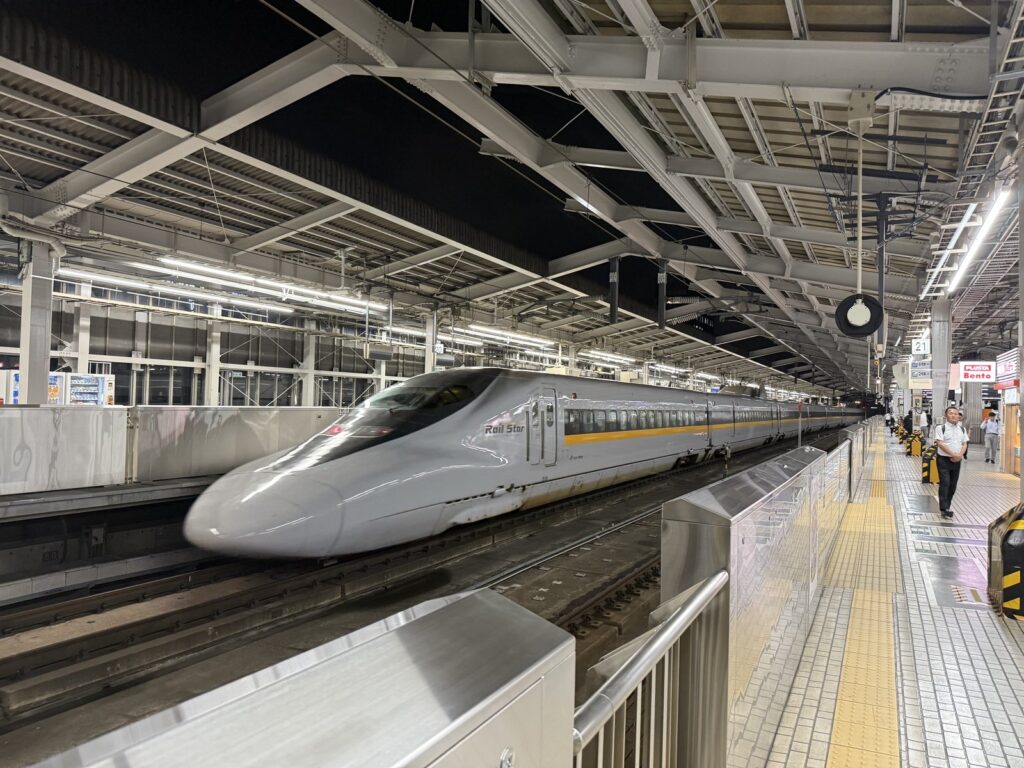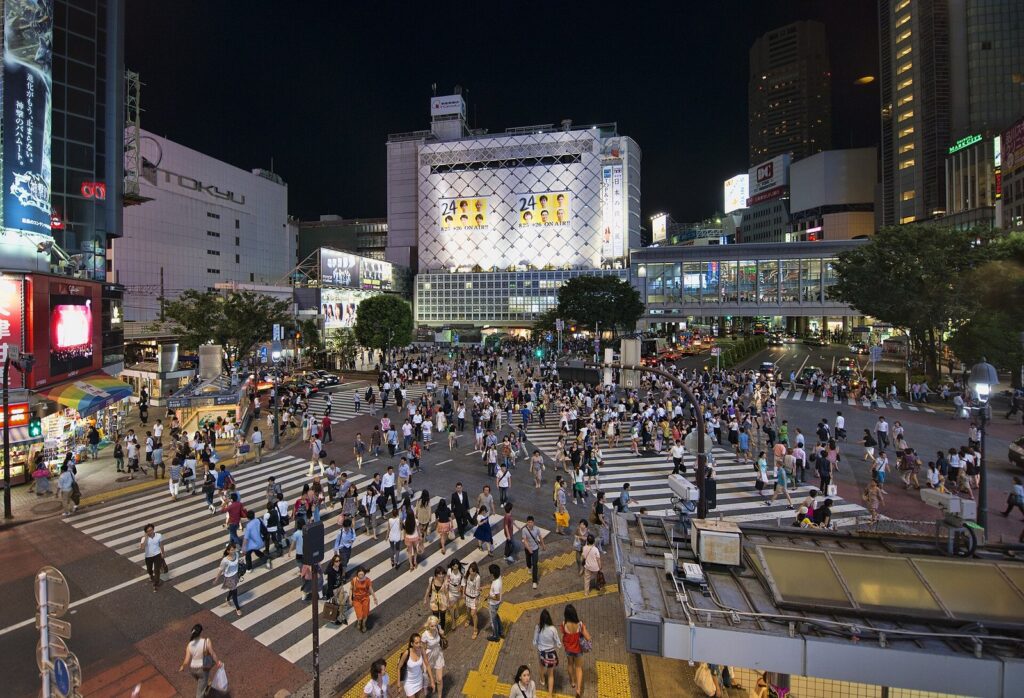
I live in Japan, and Shibuya has quietly become one of the most common places for visitors to base themselves. The redevelopment around the station added a lot of hotel rooms, the Ginza and Hanzomon lines put you a short ride from most of central Tokyo, and it is the one neighbourhood people have seen a hundred times on video before they arrive.
Getting there from Narita is another matter. Narita is 60 kilometres east of Tokyo and Shibuya is on the west side of the loop, so whatever you choose, you are crossing the whole city with your luggage. The good news is that Shibuya is one of the few destinations where the obvious answer — the Narita Express — is genuinely the right one for most people.
All JR fares here reflect the fare revision of 14 March 2026, which raised ordinary fares by an average of 7.8 percent and scrapped the old cheap “inside the Yamanote loop” fares. Older guides will quote lower numbers.
The quick answer
- First trip, real luggage, no transfers? The Narita Express (N’EX) runs directly to Shibuya. About 85 minutes, ¥3,330 in ordinary reserved.
- Fastest realistic time? Keisei Skyliner to Nippori, then the Yamanote Line. Around 75–85 minutes total for roughly ¥2,840 — barely faster than the N’EX, with one transfer.
- Family, stroller, or three suitcases? The Airport Limousine Bus to Shibuya Mark City or Cerulean Tower — ¥3,600 adult, ¥1,800 child, two to three hours depending on traffic.
- Cheapest sensible route? The TYO-NRT bus to Tokyo Station (¥1,500) plus one train to Shibuya (¥180–260), so about ¥1,700–1,760 in 95–105 minutes.
- Landing after about 21:00? The last N’EX toward Shibuya leaves Narita around 21:44. Check your date before you plan around it.
The routes compared
| Narita Express | Skyliner + one train | Limousine Bus | TYO-NRT bus + train | Taxi | |
|---|---|---|---|---|---|
| Time to Shibuya | ~85 min | ~75–85 min | 120–180 min | ~95–105 min | ~85 min, traffic permitting |
| Transfers | None | One | None | One | None |
| One-way cost | ¥3,330 (Green Car ¥4,100) | ~¥2,840 (~¥2,570 booked online) | ¥3,600 | ~¥1,700–1,760 | ¥28,000 + tolls |
| Luggage | Racks by the door, seat reservation | You carry it through the transfer | Handed to the crew, in the hold | You carry it | Boot |
| Frequency | Roughly hourly | Every 20–40 min | Frequent | Frequent | On demand |
Narita Express: for once, the obvious answer is right
The N’EX is the only service that puts you inside Shibuya Station without a change. Narita Airport to Shibuya takes about 84 minutes and costs ¥3,330 in ordinary reserved seating, or ¥4,100 in the Green Car. Every seat is reserved, there is luggage space at the ends of each car, and the train is quiet enough to sleep on — which matters more than it sounds after eighteen hours awake.
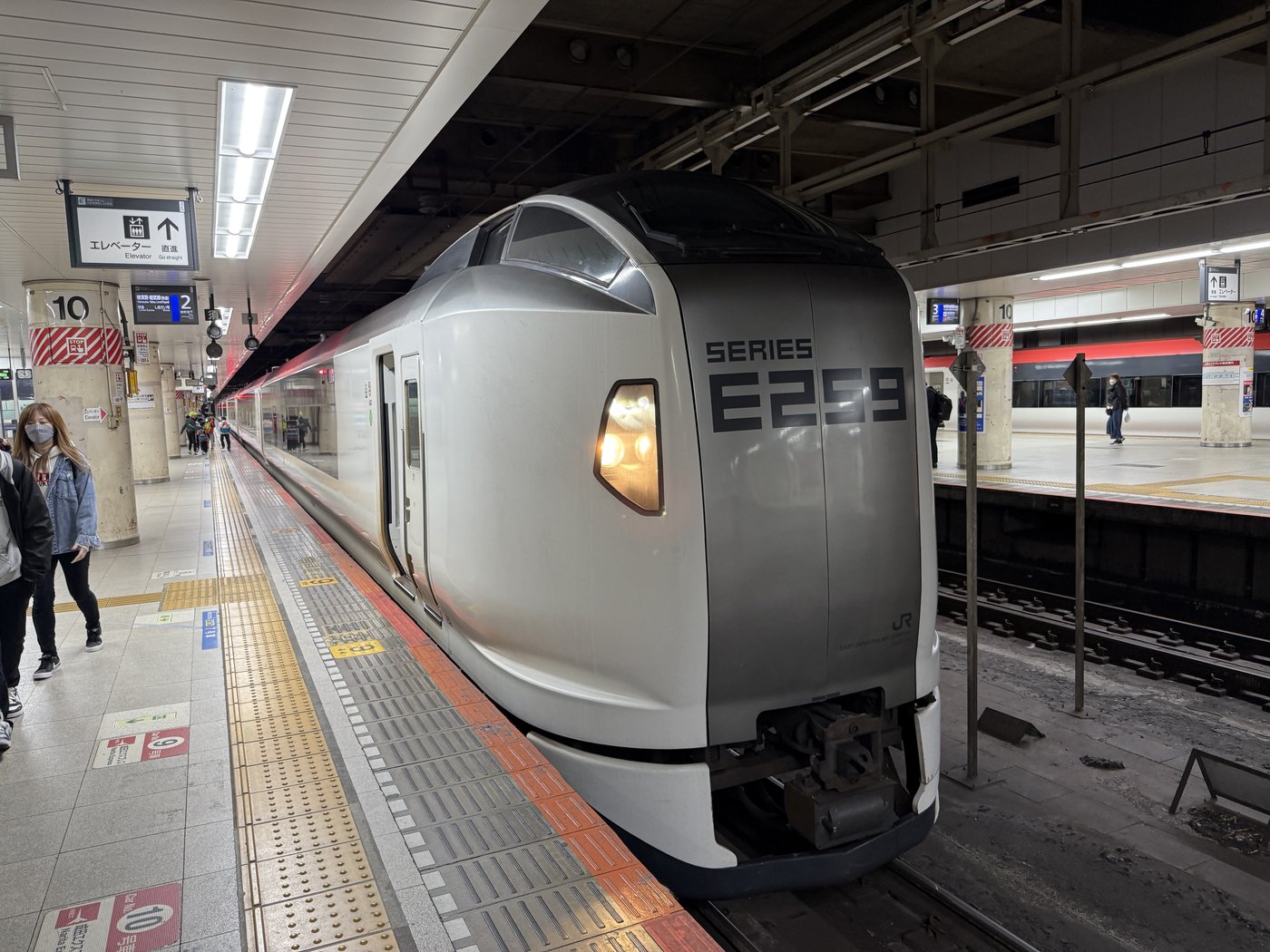
Two things visitors rarely know in advance. First, not every N’EX goes to Shibuya. The service splits at Tokyo Station, and only the Shinjuku-bound half calls at Shibuya; the rest run to Yokohama and Ofuna. That works out to roughly one an hour, about 19 a day, with 30-minute gaps at the peaks. Check the platform display rather than assuming.
Second, the platform situation improved enormously in 2020. The N’EX uses Shibuya’s Saikyo and Shonan-Shinjuku Line platform, which used to sit some 350 metres south of the main station and was moved to run alongside the Yamanote platforms. You now step off the train and you are simply in Shibuya Station, not at the end of a long walkway. That change is why I recommend the N’EX for Shibuya when I would not recommend it for, say, Ueno.
If you are flying home from Narita too, the N’EX Tokyo Round Trip Ticket is ¥5,200 for adults and ¥2,600 for children, valid 14 days, and covers Shibuya. It is sold only to travellers on non-Japanese passports, so I have never been able to buy one myself — but two singles cost ¥6,660, so the saving is real.
If you hold a Japan Rail Pass (commonly called the JR Pass) starting on arrival day, the N’EX is covered; you just collect a seat reservation. Whether the pass is worth buying at all in 2026 is a separate question, and I work through it in Japan Rail Pass 2026: Is It Still Worth It?.
👉 Klook Narita Express N’EX ticket
Skyliner plus one train: fast, but the advantage shrinks
The Keisei Skyliner is the quickest train out of Narita by a wide margin — 36 to 41 minutes to Nippori. For Shinjuku that advantage survives the transfer. For Shibuya most of it evaporates, because Nippori sits on the far side of the Yamanote loop and the ride round to Shibuya takes 30 minutes and costs ¥260.
Add it up: about 75 to 85 minutes and ¥2,840, against 85 minutes and ¥3,330 for a train that asks nothing of you. You save maybe ten minutes and ¥500, and in exchange you haul your bags onto a Yamanote train. At 18:00 on a weekday with two large suitcases, that is not a trade I would make.
A better version of this route: stay on the Skyliner to Keisei-Ueno and take the Ginza Line straight through — 29 minutes, ¥210, no changes, and it delivers you into the basement of Shibuya Scramble Square rather than onto the JR concourse.
The Skyliner is ¥2,580 at the station (¥1,280 base fare plus a ¥1,300 liner charge), or from around ¥2,310 booked online in advance. One recent change: since the December 2025 timetable revision, boarding without a liner ticket and paying on board costs an extra ¥300. Buy before you board.
👉 Klook Keisei Skyliner ticket
The limousine bus: for anyone travelling with children
The Airport Limousine runs from all three Narita terminals to three Shibuya stops: Shibuya Mark City (Shibuya Excel Hotel Tokyu), Shibuya Fukuras by the station, and the Cerulean Tower Tokyu Hotel. The fare is ¥3,600 for adults and ¥1,800 for children, and the scheduled time is two to three hours depending on traffic — the honest range, not the optimistic one.
You hand your suitcases to the crew, they go underneath, and you do not stand up again until Shibuya. Seats are reserved and open for booking a month ahead; if space remains you can also tap a contactless card at the bus. With a toddler and a stroller, the extra 45 minutes buys a great deal of calm.
A cheaper LCB service runs the same corridor at ¥2,500 (children ¥1,250) in about 110 minutes to Shibuya Fukuras — but only once a day each way, leaving Narita Terminal 1 at 10:20. Excellent value if your flight happens to fit. Most will not.
👉 Klook Narita Airport Limousine Bus
The cheap route: about ¥1,700
The Airport Bus TYO-NRT is the best-value way out of Narita and still under-known outside Japan. A flat ¥1,500 for adults and ¥750 for children to Tokyo Station’s Yaesu side, Ginza or Shinonome, in as little as 65 minutes. From Tokyo Station, Shibuya is ¥260 and about 27 minutes on the Yamanote, or ¥180–210 on the Metro with one change.
Total: roughly ¥1,700 to ¥1,760 in 95 to 105 minutes — half the N’EX for twenty minutes more. Two caveats: seats cannot be reserved, so at the evening peak you may wait for the next departure, and early-morning and late-night services cost double at ¥3,000.
The all-rail budget option is the Keisei Access Express, which runs through to Shinagawa with no transfer for ¥1,630 in about 88 minutes; Shinagawa to Shibuya is then ¥210 and 15 minutes. It is a commuter train with no real luggage space, but it is one seat for most of the way.
Taxis and late arrivals
Narita’s fixed-fare taxis to Shibuya-ku run ¥28,000 by day and ¥33,000 between 22:00 and 05:00, plus expressway tolls, and must be booked at least three hours ahead. Split four ways after a midnight landing it is not as absurd as it looks — for two people it is.
The timing to watch: the last N’EX toward Shibuya leaves Narita around 21:44, the last Skyliner around 22:30–23:00. Immigration and baggage can eat an hour on a busy evening, so my rule for visiting friends is simple — if your flight is scheduled to land after 20:30, do not plan on the last train.
And whatever you forgot to pack, do not stress about it: Bic Camera, Don Quijote, Uniqlo and GU are all within walking distance of Shibuya Station, and every convenience store sells umbrellas and phone chargers.
FAQ
Does the Narita Express really stop at Shibuya? Yes, but only the trains running through to Shinjuku and Ikebukuro — roughly one an hour. The Yokohama-bound services do not.
Is the Skyliner worth it for Shibuya? Less than for Shinjuku or Ueno. You save around ten minutes and ¥500 over the N’EX, but you carry your own bags through a transfer. Take it if you are travelling light; take the N’EX if you are not.
Can I use a Suica or PASMO? For the Yamanote, Ginza Line and Access Express legs, yes — just tap in. The Skyliner and N’EX each need a separate reserved ticket on top. If you are still choosing a card, see Suica vs PASMO vs Welcome Suica. Flying into Haneda instead is simpler and cheaper, which I compare in Haneda vs Narita: Which Tokyo Airport Is Better for You?.
Can I send my luggage ahead? Yes. Same-day delivery to most central Tokyo hotels works if you drop bags off by early afternoon, at around ¥2,500–3,000 per large case — combined with the TYO-NRT bus you travel hands-free for less than the N’EX. More in What to Do With Your Luggage in Japan.
Where in Shibuya should I stay? Around the station is convenient but loud; Shinsen, Daikanyama and Ebisu are ten minutes away and much calmer. More on the trade-offs in Where to Stay in Tokyo.
The verdict
For Shibuya specifically, the Narita Express is the route I recommend to almost everyone arriving for the first time. ¥3,330, no transfers, and since the platform moved in 2020 it drops you inside the station rather than a long walk from it. Just check which N’EX you are boarding.
If you are travelling light and want the time back, Skyliner to Keisei-Ueno and the Ginza Line is the smarter version of the fast route — and it puts you in the middle of Shibuya, not at the JR gates.
And if the budget matters more than half an hour, the TYO-NRT bus plus one train does the whole journey for about ¥1,700. That is the one I would take myself.
Written from Japan by the Wayfarer Japan team. Prices and schedules are approximate for 2026 — always confirm with the operator before booking.
Featured image: “1 shibuya crossing 2012” by chensiyuan, CC BY-SA 4.0, via Wikimedia Commons