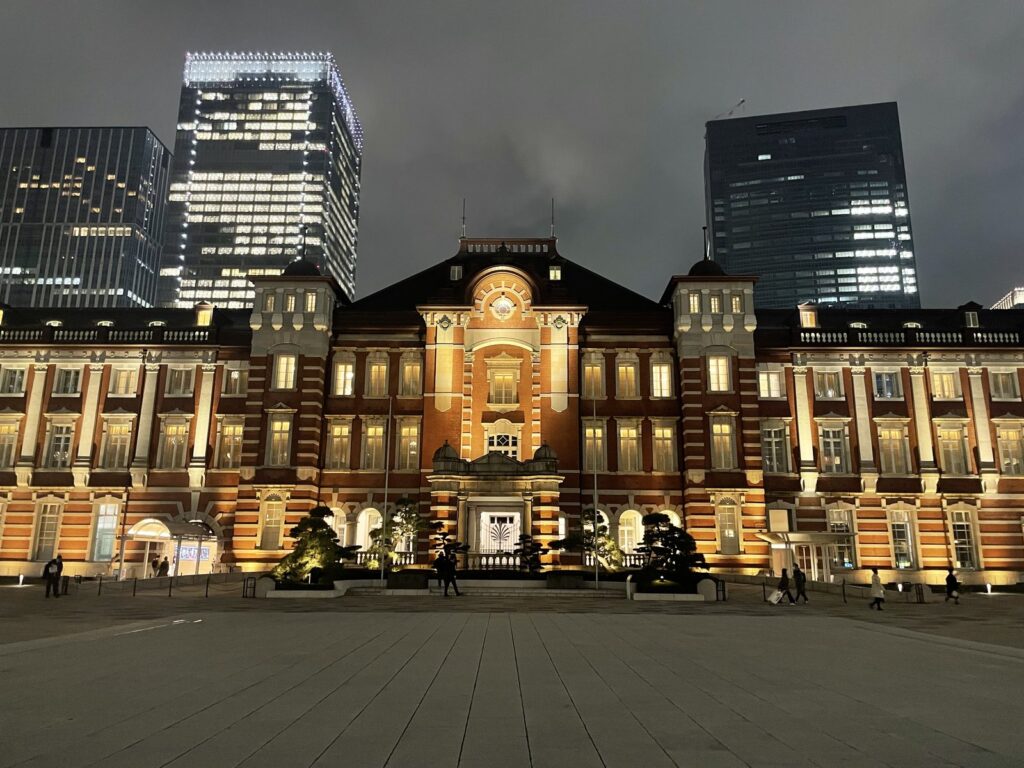
Sometime in early November, Tokyo quietly flips a switch. It has nothing to do with Christmas in the religious sense — almost nobody here celebrates it that way — but the city still goes all in on lights, because a cold, dark evening is a good excuse for a spectacle. By the second week of November, Marunouchi’s trees are already glowing, and the illumination season runs clear through February, long after most “Christmas lights” elsewhere in the world have come down.
This is a different event from Japan’s famous autumn koyo illuminations, which light up maple leaves at temples and gardens for a few weeks in November. Those are covered in our guide to Best Autumn Leaves Illuminations in Japan. What follows here is the winter season proper — the LED tunnels, tree displays and light shows that start in November and often run past New Year, mostly in central Tokyo, mostly free, and mostly ignored by first-time visitors who only hear about cherry blossoms and autumn leaves.
The quick answer
- Marunouchi, near Tokyo Station, runs the longest and is the easiest to combine with sightseeing: free, and open from mid-November to mid-February 2027.
- Roppongi Hills and Tokyo Midtown sit a short walk apart and both run through most of December — do them on the same evening.
- Shibuya’s “Blue Cave” (Ao no Dokutsu) is the most photographed single display, but its 2026-27 dates were not confirmed at the time of writing — check close to your trip.
- Caretta Shiodome has a free timed light-and-music show roughly every 20 minutes through mid-February.
- Yomiuriland’s Jewellumination, outside the city center, is the biggest single display by scale and the only one on this list that charges admission.
- Everything above is free except Yomiuriland — budget one evening, not one ticket, for most of this list.
If you are planning a December or January trip generally, our Japan in Autumn and Japanese New Year Traditions guides cover what else is happening around the same weeks.
Central Tokyo: free and walkable
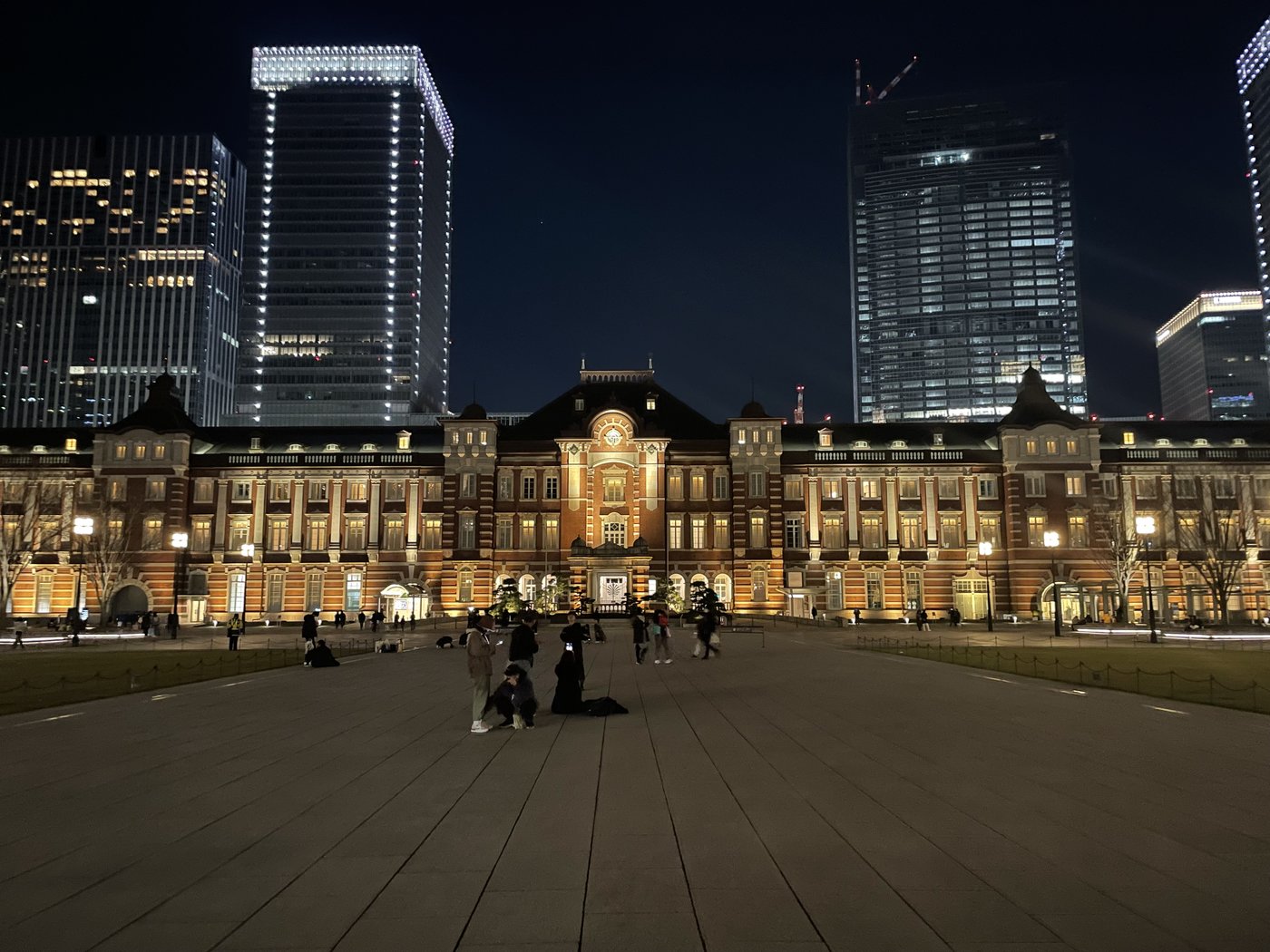
Marunouchi, the business district between Tokyo Station and the Imperial Palace moat, runs the longest season of any major illumination in the city. For 2026-27 it is scheduled for November 12, 2026 through February 14, 2027, lit from 16:00 to 23:00 (until midnight through December). It is free, unticketed, and you can walk through it on your way between Tokyo Station and the Ginza shopping district, which makes it the easiest illumination to see without planning a dedicated trip.
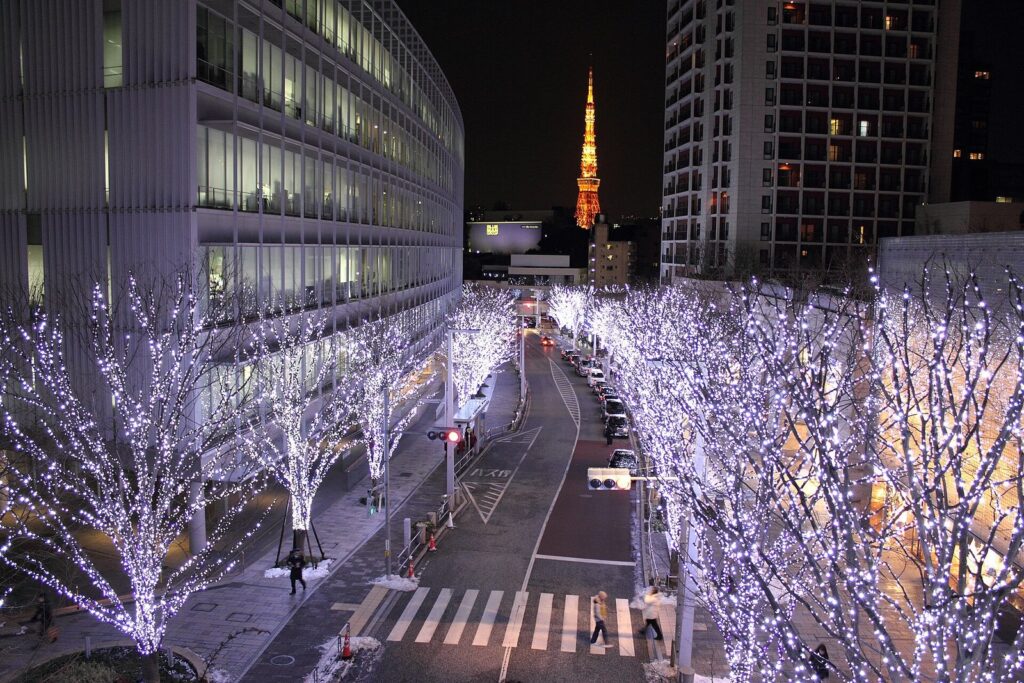
Roppongi Hills’ Keyakizaka-dori is a tree-lined street that turns into a tunnel of warm-white lights for the season. In 2026 it runs November 5 to December 25, roughly 17:00 to 22:00, free. Pair it with Tokyo Midtown, a five-minute walk away, which runs its own display from November 26 to December 25, 2026 (17:00–23:00, also free) — and keeps a scaled-down “Walkway of Light” version going until February 23, 2027 for anyone visiting after the Christmas crowds have thinned out.
Caretta Shiodome, near Shiodome Station, runs a free LED show synced to music roughly every 20 minutes through the evening, scheduled for November 18, 2026 to February 14, 2027. It is a good option if you want a shorter, self-contained display rather than a whole walking circuit — most people see the full show in under half an hour.
Shibuya’s “Ao no Dokutsu” (“Blue Cave”), a tunnel of blue LEDs through Yoyogi Park toward Shibuya, is the single most Instagrammed illumination in the city most years. At the time of writing, organizers had not yet confirmed the 2026-27 dates — last season it ran December 4 to 25 — so check closer to your travel dates rather than planning around it months out.
Outside the center: Yomiuriland’s Jewellumination
If you want scale over convenience, Yomiuriland, an amusement park on the Tokyo-Kanagawa border reachable from Shinjuku in about 30 minutes, runs the Jewellumination — around 6.5 million LEDs covering the whole park, which is a different order of magnitude from a single street or garden. For 2026-27 it runs October 29, 2026 to April 4, 2027, roughly 16:00 to 20:30 with some variation by date.
Admission for the illumination itself runs around ¥1,800 for adults, separate from full park admission if you also want to ride the attractions — exact pricing varies by date, so check the official site or a booking platform before you go. It is the only major Tokyo-area illumination on this list that is not free, which makes sense once you see the scale of it.
👉 Klook Tokyo night illumination cruise
How to actually plan the evening
- Roppongi Hills + Tokyo Midtown is the easiest double, since they are a five-minute walk apart and both run through most of December.
- Marunouchi is the one to default to if your dates fall outside the Christmas window — it is the only one still running in late January and into mid-February.
- Dress warmer than you think you need to. Tokyo evenings in December and January sit close to freezing, and you will be standing outside, not walking briskly. If you did not pack a proper coat, Uniqlo and GU stores are everywhere and cheap, and most hotels will not blink at you wearing a down jacket indoors afterward.
- Trains stay crowded later than usual. Illumination season adds an evening wave of foot traffic on top of the normal commute, especially on weekends near Christmas — leave extra time to get back.
- Most of this list is free and unticketed, so there is nothing to book in advance except Yomiuriland, which can be worth securing if you are traveling on a weekend close to Christmas.
FAQ
Is this the same as the autumn leaf illuminations I’ve read about? No — those run earlier (mostly November) and light up maple trees at temples and gardens, mostly in Kyoto and at Tokyo’s Rikugien Garden. See Best Autumn Leaves Illuminations in Japan for that season. Winter illuminations are a separate, secular light-festival tradition with no connection to koyo.
Do I need to book tickets for the Tokyo illuminations? For Marunouchi, Roppongi Hills, Tokyo Midtown, Shibuya and Caretta Shiodome, no — all are free and unticketed. Yomiuriland is the exception, since it has an admission charge.
When is the best time to go to avoid crowds? Weeknights, and avoid the week of Christmas itself if you can. Early-to-mid December on a weekday evening gets you the same lights with a fraction of the people.
Is Shibuya’s Blue Cave worth planning my trip around? Only loosely — its dates are announced late most years and can shift. Treat it as a bonus if your dates line up, not a reason to fix your travel dates around it.
Can I see more than one illumination in one night? Easily, if you pick ones close together. Roppongi Hills and Tokyo Midtown are a five-minute walk apart, and Marunouchi is a short train ride from either on the Hibiya or Toei Mita lines.
The verdict
If you only have one evening, make it Roppongi Hills and Tokyo Midtown together — two free, high-quality displays within a five-minute walk of each other, running through most of December. If your trip falls in January or early February, after most “Christmas light” displays elsewhere have gone dark, Marunouchi is the one still running, and it sits right next to Tokyo Station, so it costs you almost nothing to add on. Either way, this is one of the easiest “extra” things to do in Tokyo in winter: free, no reservation, and genuinely pretty once the sun goes down.
Written from Japan by the Wayfarer Japan team — practical travel advice from people who actually live here.
Featured image: “Roppngi Hills at night” by Kakidai, CC BY-SA 3.0, via Wikimedia Commons