I live in Japan, and Kyoto is the city that surprises first-timers the most — not because it’s hard to visit, but because it’s bigger and more spread out than the postcard images suggest. This was the imperial capital for over a thousand years, and it shows: thousands of temples and shrines, whole districts that still look like old Japan, and a rhythm that’s noticeably slower than Tokyo. It also gets very crowded in the wrong season if you don’t plan around it. Here’s how I’d approach a first Kyoto trip, from how long to stay to what’s genuinely worth the queue.
The quick answer
- Budget 2–3 full days in Kyoto — enough for the major sights without racing between them (see Where to Stay in Kyoto for how to split your time by area).
- Stay near Kyoto Station or a subway line, not just near one temple — the sights are spread across the whole city, and buses get slow and crowded.
- Get an IC card (Suica, PASMO or a Welcome Suica) before you arrive, since Kyoto’s buses and trains run on the same tap-in, tap-out system as everywhere else in Japan.
- Go early or go late at the famous spots — Fushimi Inari, Kinkaku-ji and Arashiyama’s bamboo grove are dramatically calmer before 8am.
- Book anything with a queue in advance — a few teahouses, some kaiseki restaurants and the more popular experiences sell out during cherry blossom and autumn leaf season.
How many days do you actually need
Two full days covers Kyoto’s essentials — one day in the east (Higashiyama, Gion, Kiyomizu-dera) and one in the west or south (Arashiyama, or Fushimi Inari) — but three days lets you slow down and add a temple garden or two without feeling rushed. If you’re combining Kyoto with a Nara day trip, add a day for that. Kyoto rewards unhurried mornings more than most Japanese cities; the same street that’s shoulder-to-shoulder at noon can feel almost empty an hour after sunrise.
Most first-timers pair Kyoto with Tokyo and sometimes Osaka. A common pattern is Tokyo first, then the Shinkansen west to Kyoto for 2–3 nights, with Osaka added on either as a day trip or a short stay of its own, since Kyoto and Osaka are only around 15 minutes apart by Shinkansen.
Where to stay
Unlike Tokyo, where almost any Yamanote Line station works, Kyoto genuinely rewards picking the right base. Kyoto Station is the easiest choice for first-timers — every bus and train line radiates out from there, and it’s a straight shot to Nara or Osaka if you’re day-tripping. Gion and Higashiyama put you inside the most atmospheric part of the old city, at the cost of being further from the station and pricier. Downtown (Kawaramachi/Karasuma) balances the two, with better restaurants and nightlife than the station area. I go through the full trade-offs, including two cheaper alternatives if central Kyoto is booked out or overpriced, in Where to Stay in Kyoto. 👉 Booking.com Kyoto hotels
Getting around Kyoto
This is the one place where Kyoto is genuinely less convenient than Tokyo or Osaka: the subway network is small, so a lot of getting around happens by bus. Buses are reliable but can crawl through traffic in peak season, and boarding gets crowded around Kiyomizu-dera and Arashiyama in the middle of the day. The same IC card that works on Tokyo trains works on Kyoto’s buses and subway, so there’s no separate ticket to figure out — just tap on and off (see Suica, PASMO and Welcome Suica if you haven’t sorted a card out yet). For longer hops between districts, taxis are more affordable in Kyoto than you’d expect, and worth splitting between two or three people rather than waiting for a packed bus. 👉 Klook Kyoto bus pass
What to actually see
Kyoto has more temples and shrines than any trip can realistically cover, so I’d pick two or three areas rather than trying to see everything.
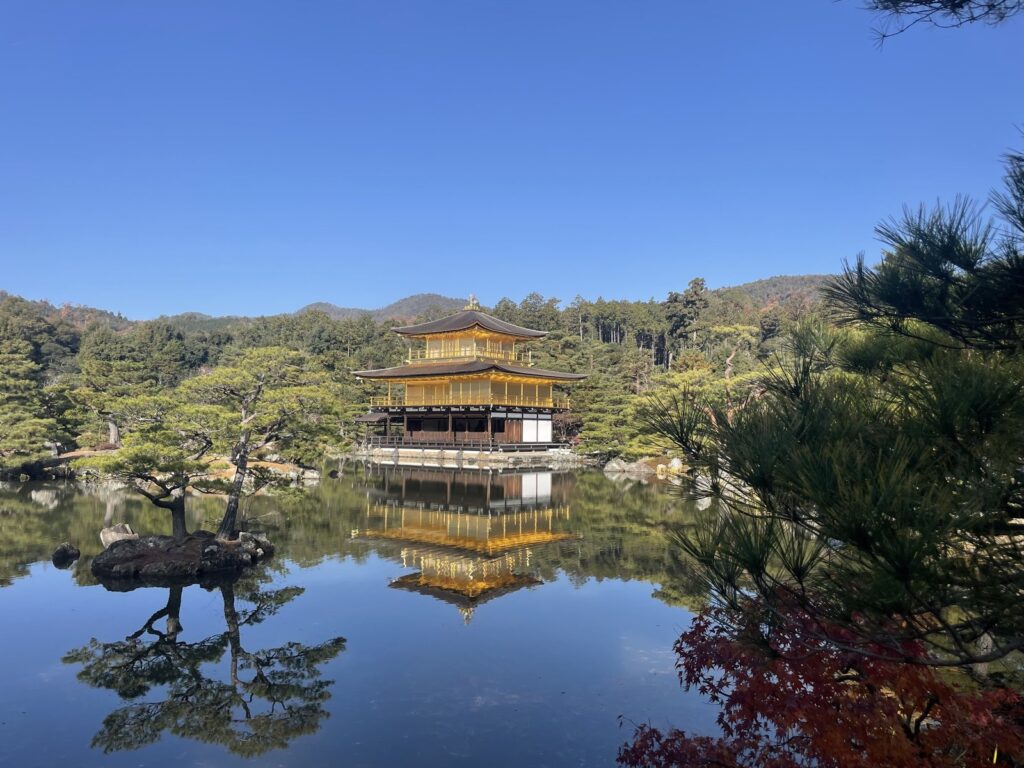
Higashiyama and Gion, in the east, is the classic old-Kyoto walk — Kiyomizu-dera’s wooden stage, the sloping lanes of Sannenzaka and Ninenzaka, and a real chance of spotting a geiko or maiko in the evening around Gion’s lantern-lit streets. Fushimi Inari, with its thousands of vermilion torii gates climbing the mountainside, is free, open 24 hours, and best done at dawn before the tour groups arrive. Arashiyama, on the western edge, has the famous bamboo grove along with Tenryu-ji temple and a scenic riverside — worth a half-day, ideally combined with an early start for the same reason as Fushimi Inari. Kinkaku-ji, the Golden Pavilion, is smaller than photos suggest but still worth a stop if it’s on your route. And Nishiki Market, downtown, is the easiest place to eat your way through Kyoto’s food culture in an hour or two.
If you’re only doing one full day, I’d pair Fushimi Inari at sunrise with Higashiyama and Gion in the afternoon and evening — it covers the two sides of Kyoto, shrine and temple district, without much backtracking. 👉 Klook Kyoto attraction tickets
Day trips from Kyoto
Kyoto’s location makes it one of the best day-trip hubs in Japan. Nara, with its deer park and Todai-ji’s giant bronze Buddha, is under an hour away and easily doable without changing hotels. Osaka is close enough to visit for dinner and come back the same night. Uji, between Kyoto and Nara, is a quieter stop for anyone who loves matcha and wants a break from the bigger crowds.
When to go
Kyoto is at its most beautiful — and its most crowded — during cherry blossom season (late March to early April) and autumn foliage (mid-to-late November). Both are worth planning around if your dates are flexible, since hotel prices and crowd levels rise sharply. Early June and late autumn just after peak leaf season tend to be calmer, and winter is genuinely underrated: fewer people, occasional snow on the temples, and clear views. I break down the seasonal trade-offs across the whole country in Best Time to Visit Japan.
Practical prep before you land
A few things are easier to sort out before your flight than after you land:
- Connectivity. Landing with data already working saves you hunting for wifi at Kyoto Station — I compare the options in Best eSIM for Japan.
- The Japan Rail Pass. Worth considering if Kyoto is one stop on a wider Tokyo–Kyoto–Osaka trip involving multiple Shinkansen rides; often not worth it for a Kyoto-only visit. See Is the Japan Rail Pass Worth It? to work out whether it pencils out for your itinerary.
- Packing. Kyoto involves a lot of walking on stone paths and temple grounds, so comfortable shoes matter more here than almost anywhere else in Japan. If you forget something, convenience stores and Uniqlo cover the basics — no need to overpack. Full checklist in Japan Packing List.
- Cash. Kyoto is more card-friendly than it used to be, but smaller temples, shrine donation boxes and some traditional shops still expect cash.
None of this needs to be perfect before you land — sorting an IC card or a missing item once you’re in Kyoto is genuinely fine.
FAQ
Is two days enough for Kyoto? It covers the highlights, but three days lets you add a temple garden or Arashiyama without feeling rushed — and Kyoto rewards a slower pace more than most cities.
Do I need the Japan Rail Pass just for Kyoto? Not if Kyoto is your only stop — local buses and subway aren’t covered by it anyway. It’s worth it mainly if you’re also taking multiple long-distance Shinkansen rides.
Kyoto or Osaka — which should I stay in? Kyoto for temples and traditional atmosphere, Osaka for food and nightlife. They’re close enough that either makes a fine base with the other as a day trip.
Is Kyoto walkable? Within districts like Higashiyama or Arashiyama, yes — but the districts themselves are spread across the city, so you’ll rely on buses, the subway or taxis to move between them.
The verdict
Kyoto is best treated as several distinct districts rather than one compact sightseeing loop. Base yourself near Kyoto Station or a subway line, budget at least two full days, get to the famous spots early, and pick two or three areas rather than trying to see it all. Do that, and Kyoto tends to deliver exactly what people come to Japan hoping to find.
Written from Japan by the Wayfarer Japan team. Some links are affiliate links that support the site at no extra cost to you.