Osaka is an easier city to book than Kyoto. It has far more hotel rooms, prices are gentler, and the subway is dense enough that almost anywhere central works. But “almost anywhere” still hides a real decision: Osaka has two downtowns, about 4 km apart, and picking the wrong one can add half an hour to every evening or every day trip. I live in Japan and end up giving this same advice to visiting friends several times a year, so here it is properly — which area suits which kind of trip, and what changed for 2026.
The quick answer
- First trip, want food and neon on your doorstep? → Namba / Dotonbori (the Minami side).
- Using Osaka as a base for Kyoto, Nara, Kobe and Himeji? → Umeda / Osaka Station (the Kita side).
- Arriving or leaving by Shinkansen, or continuing to Tokyo? → Shin-Osaka.
- Want cheaper rooms and old-school Osaka? → Tennoji / Shinsekai.
- Doing Universal Studios Japan with kids? → the Bay Area, or Namba if you only need one USJ day.
- Quieter, but still walkable to the action? → Shinsaibashi or Honmachi.
Osaka rooms sell out later than Kyoto’s, but the good-value ones near Namba still go early for autumn and New Year. 👉 Booking.com Osaka
Namba / Dotonbori — best for first-timers
If you only remember one line from this article: most first-timers should stay in Namba.
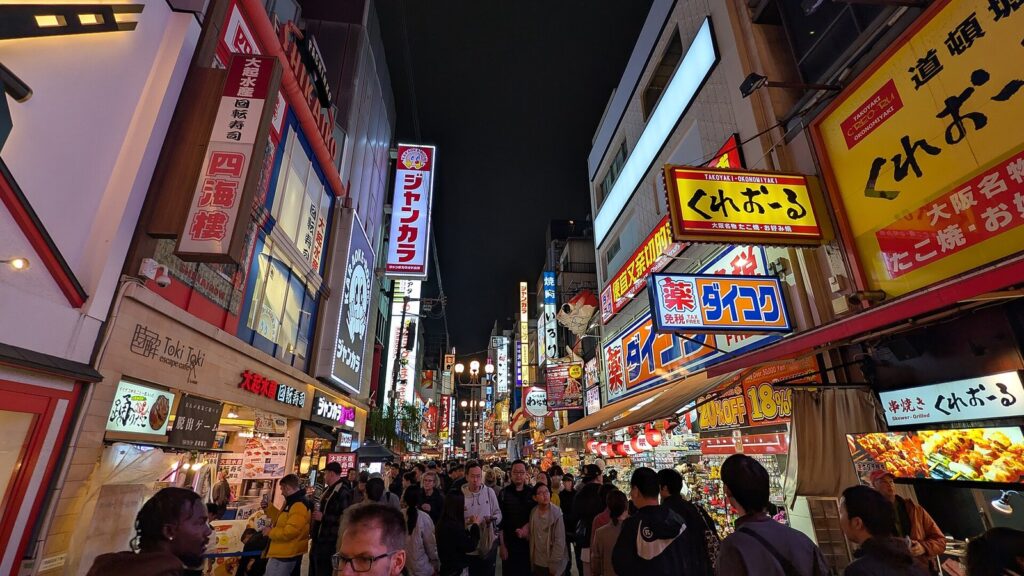
This is Minami, the southern downtown, and it is the Osaka people picture — Dotonbori’s canal and its running-man sign, Kuromon Market, standing bars under the railway arches, takoyaki stalls open past midnight. You can eat your way through a week here without repeating yourself, and after dinner you walk back to your hotel instead of working out a last train.
It is also the most practical arrival point from Kansai Airport. The Nankai line runs straight from KIX into Namba Station: the limited express Rapi:t takes roughly 40 minutes for about ¥1,670 (a little less on a pre-booked digital ticket), and the ordinary Airport Express costs around ¥970 and takes about 45 minutes. Prices change — check before you book — but the point stands: no transfer, no dragging a suitcase through a second station.
Shinsaibashi, one stop north, is the same neighbourhood with the volume turned down a notch, and Namba’s noise is worth taking seriously if you’re a light sleeper. Ask for a high floor away from the street.
Best for: first visits, food-led trips, night owls, anyone flying into KIX. 👉 Booking.com Namba / Agoda Osaka
Umeda / Osaka Station — best for day trips
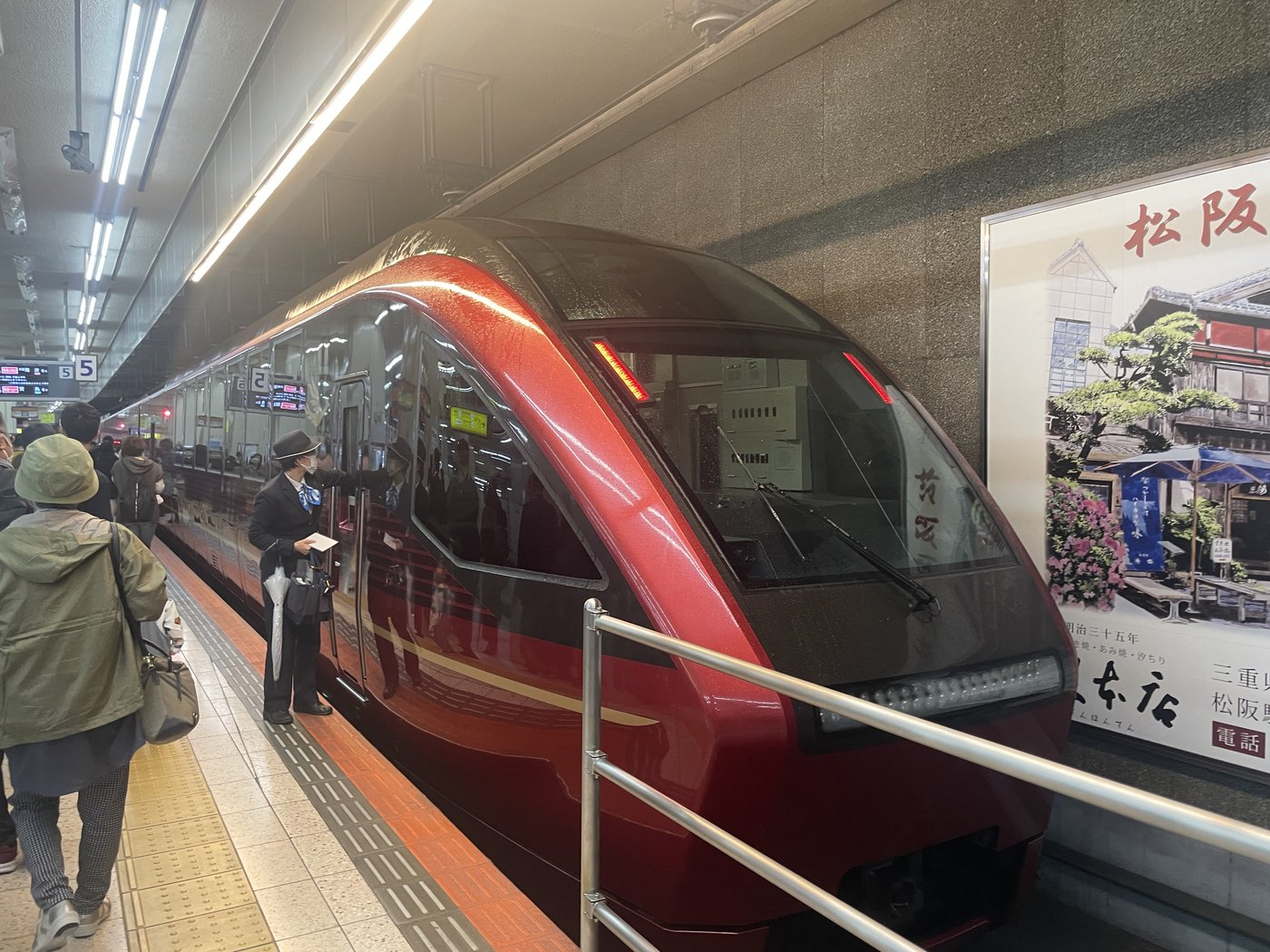
Kita, the northern downtown, is built around one enormous station complex — JR Osaka, Hankyu Umeda, Hanshin Umeda and two subway stations, all stitched together by department stores and underground malls.
That density is the reason to stay here. Kyoto is about 30 minutes by Hankyu or JR, Kobe about 25, Nara about 45, Himeji under an hour. If your plan is “sleep in Osaka, spend the days elsewhere” — which is a genuinely smart way to see Kansai, because Osaka rooms cost noticeably less than Kyoto’s — Umeda saves you a transfer every single morning.
The trade-off is atmosphere. Umeda is polished, corporate and a bit vertical; the eating is good but it happens inside buildings rather than spilling into the street. It’s a fine place to sleep and a slightly dull place to wander.
Best for: Kansai-wide itineraries, business travellers, rainy-season trips (you can cross most of the district underground). 👉 Booking.com Umeda Osaka
Shin-Osaka — best for Shinkansen days
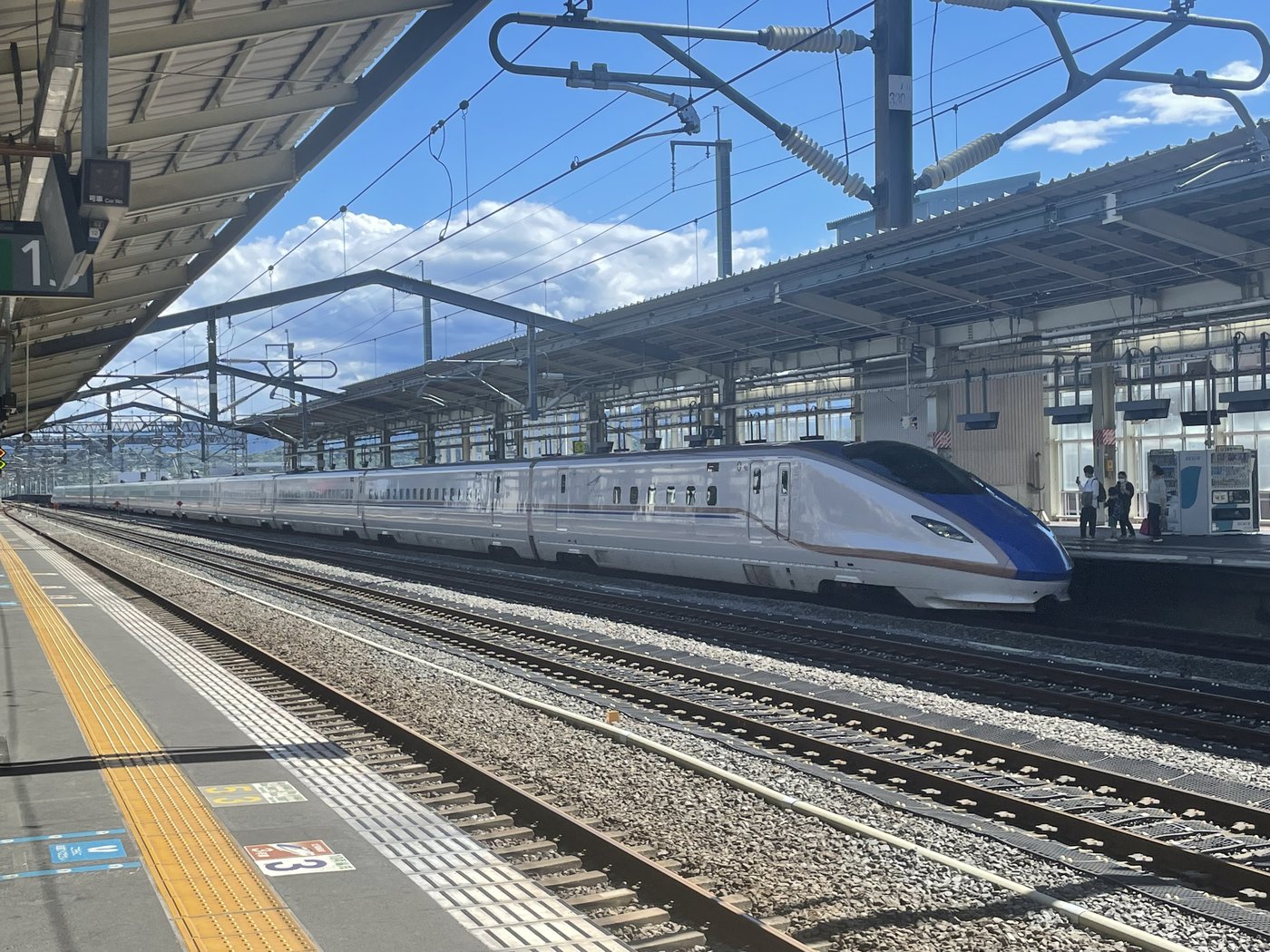
Shin-Osaka is where the bullet trains stop, and that’s essentially all it is: a station with a ring of business hotels around it. There’s little reason to explore, but it’s three subway stops from Umeda and about ten minutes from Namba.
Stay here if you’re arriving late from Tokyo, leaving early for Hiroshima, or building a trip around a rail pass. If you’re travelling on the Japan Rail Pass (commonly called the JR Pass), the Shinkansen and the JR Kyoto Line both run from here, which makes Shin-Osaka the most pass-efficient base in the city. Our guides Japan Rail Pass 2026: Is It Still Worth It? and Tokyo to Kyoto: Shinkansen vs Bus vs Flight cover whether that pass makes sense for your route.
Best for: one-night stopovers, rail-pass trips, early departures. 👉 Booking.com Shin-Osaka
Tennoji / Shinsekai — best value
South again, around Tennoji Park and the Tsutenkaku tower, rooms are consistently cheaper than Namba or Umeda for a similar standard. Shinsekai is scruffy, cheerful and full of kushikatsu — deep-fried skewers, one dipping sauce per table, no double-dipping, that’s the whole rule.
Tennoji Station is a major hub: the JR loop line, the Midosuji subway to Namba and Umeda, the Kintetsu line to Nara, and the Haruka limited express to Kansai Airport (about 35 minutes). Practically, you’re 5–10 minutes from Namba on the subway while paying less.
The area has an old reputation for being rough. In 2026 it is fine — busy, a bit worn in places, and no more concerning at night than any large station district — but if you want to feel pristine, stay north.
Best for: budget travellers, longer stays, Nara day trips. 👉 Booking.com Tennoji
Bay Area — only if you’re doing Universal Studios
The hotels clustered around Universal Studios Japan exist for one purpose, and they do it well: you roll out of bed and into the park gates. Some hold early-entry perks. Otherwise you’re 20–30 minutes from anything else in Osaka, in a district with little evening life.
My advice: if USJ is one day of a longer trip, stay central and take the train out. If you’re doing two park days with kids, the walk-back-for-a-nap advantage is worth it. 👉 Booking.com Universal Studios Japan Osaka / Klook
What changed in 2026: the accommodation tax
Osaka Prefecture’s lodging tax was overhauled, and from 1 September 2025 it applies to cheaper rooms than before and is charged separately from the room rate — you pay it at the property, even if you prepaid online.
Current per-person, per-night rates:
| Room rate per person | Tax |
|---|---|
| Under ¥5,000 | none |
| ¥5,000–¥14,999 | ¥200 |
| ¥15,000–¥19,999 | ¥400 |
| ¥20,000 and above | ¥500 |
It’s small money, but it surprises people at check-out, and it means carrying a little cash or a card for a charge you thought you’d already settled. Kyoto revised its own lodging tax on 1 March 2026, so check that rate separately for your other stops. Figures are approximate and worth confirming when you book.
Booking tips from someone who lives here
- Pick your side of the city first, hotel second. Namba or Umeda decides more about your trip than the hotel’s star rating does.
- Stay near the Midosuji subway line. It runs Shin-Osaka–Umeda–Shinsaibashi–Namba–Tennoji and connects every area in this article.
- Japanese business hotels are small. A “double” can be 15 m² with a 140 cm bed. Filter by room size if two of you plus luggage need space.
- Consider splitting Kansai. A few nights in Osaka plus a few in Kyoto beats commuting daily — see Where to Stay in Kyoto.
- Sightseeing pass: the Osaka Amazing Pass covers unlimited city transport plus entry to around 40 attractions for about ¥3,500 (1 day) or ¥5,000 (2 days) in the 2026 season. Worth it only if you’ll hit three or more paid sights in a day. 👉 Klook Osaka Amazing Pass
- You don’t need a rail pass for the city. Just tap in with an IC card — see Suica vs PASMO vs Welcome Suica.
FAQ
How many nights in Osaka? Two or three for the city itself. Add nights if you’re using it as a Kansai base — plenty of visitors sleep in Osaka for five nights and day-trip to Kyoto, Nara and Kobe.
Osaka or Kyoto as a base? Osaka for food, nightlife, cheaper rooms and better transport links. Kyoto if temples and early-morning quiet are the point of your trip. They’re 15 minutes apart by Shinkansen, 30 by ordinary train, so neither choice locks you out of the other.
Is Namba safe at night? Yes. It’s crowded rather than dangerous. Normal city sense applies — and the touts outside some bars near Dotonbori are best ignored.
Should I stay in a ryokan in Osaka? Osaka isn’t really the place for it; it’s a merchant city, not an onsen town. Save the ryokan night for Kyoto, Hakone or Kinosaki — our Hotel vs Ryokan guide explains the difference.
Do I need to book far ahead? Less than in Kyoto, but autumn, New Year and cherry-blossom season still tighten up months out.
The verdict
For a first trip, Namba — you’ll eat better, walk more and see the Osaka you came for. If your itinerary is really a Kansai itinerary, take Umeda and buy back a transfer every morning. Shin-Osaka for rail logistics, Tennoji for value, the Bay Area only for Universal.
Then read Osaka Travel Guide for First-Timers for what to do once you’ve dropped your bags, and Where to Stay in Tokyo if the rest of the trip runs east.
Written from Japan by the Wayfarer Japan team. Some links are affiliate links that support the site at no extra cost to you.
Featured image: “A street in Dotonbori, Osaka, Japan” by Joli Rumi, CC BY-SA 4.0, via Wikimedia Commons