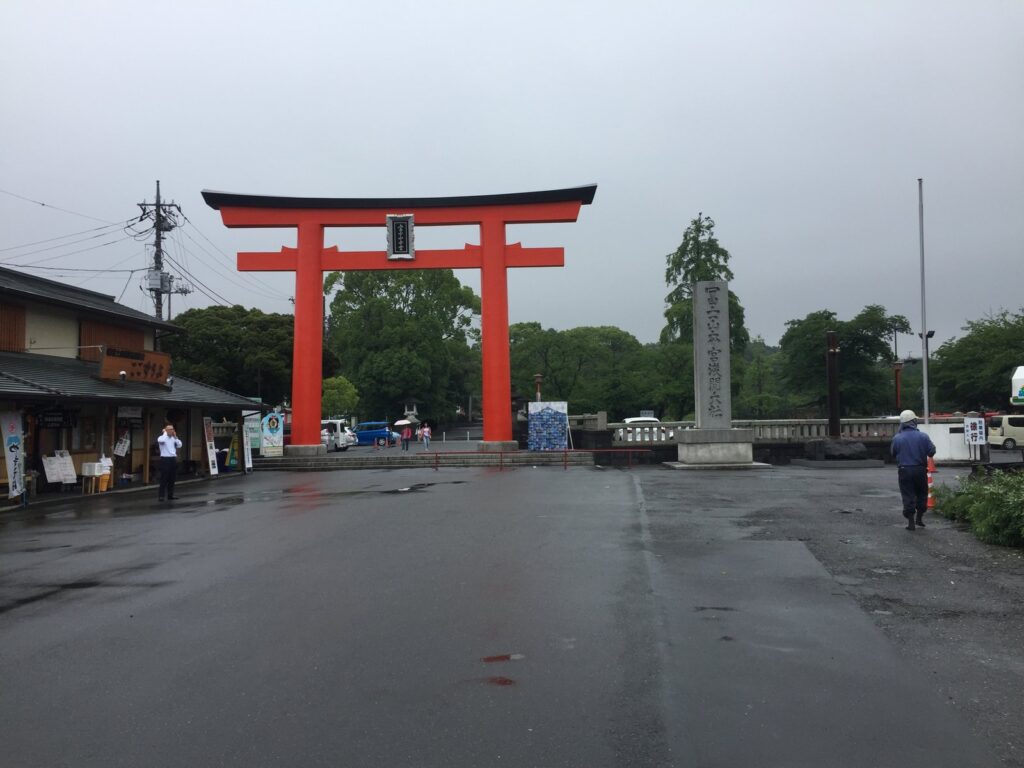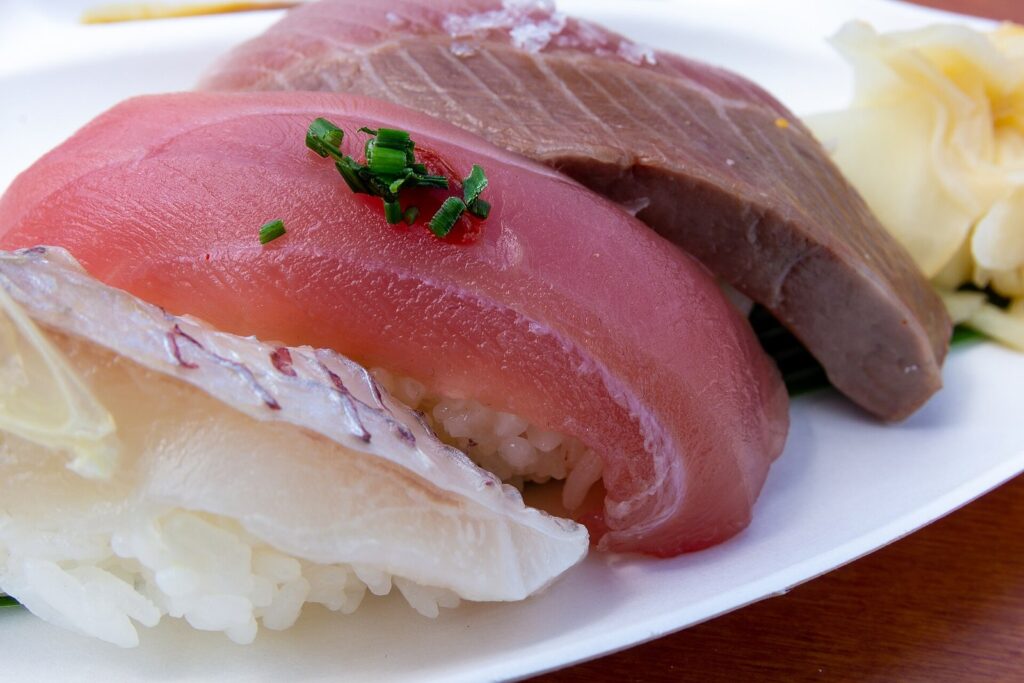
On 5 January 2026, at the first tuna auction of the year at Toyosu market in Tokyo, a 243 kg bluefin caught off Oma in Aomori sold for ¥510.3 million — the highest price ever paid for a single fish, and half again the previous record of ¥333.6 million from 2019. The buyer was the company behind the Sushizanmai chain, and part of that fish was served to ordinary customers within a day.
That same week I had lunch at a conveyor belt place near my station where the standard plate is ¥115.
Both are sushi, and the distance between them is the whole story. I live in Japan and eat at every point on that scale, and the thing that surprised me most when I read into it is that almost nothing about sushi is as old as it looks. The raw fish is recent. The rice is the ancient part — and originally, nobody ate it.
The quick answer
- Sushi began as preservation, not cuisine. Fish was packed in salt and rice and left to ferment for months. The rice was the pickling agent and got thrown away.
- Vinegar was the shortcut. In the Edo period (1603–1868), cheap rice vinegar let cooks fake the sour taste in hours instead of a year.
- Nigiri is about 200 years old and was invented as fast food, sold from street stalls in Edo (now Tokyo) and eaten standing up with your fingers.
- Raw fish came later still. Without refrigeration, Edo sushi was cooked, marinated or cured. Tuna belly, the most expensive thing on the menu today, was once thrown away.
- Conveyor belt sushi was invented in Osaka in 1958, inspired by a beer bottling line, and it is why sushi is an everyday meal here rather than a luxury.
It started as a way to keep fish from rotting
The ancestor of sushi is nare-zushi, a technique that reached Japan from mainland Asia more than a thousand years ago. Gutted freshwater fish was salted, packed into cooked rice, weighted down and left for months while lactic fermentation did its work. The acid preserved the fish. The rice was a tool — sour, slimy and thrown out when the barrel was opened.
This is not a museum piece. Funazushi, made with crucian carp from Lake Biwa and fermented for a year or more, is still produced in Shiga Prefecture and sold in Kyoto department stores. It smells like a strong cheese and tastes closer to aged cured meat than to anything in a sushi restaurant. If you want the actual origin, that is where to find it, and it will not remind you of lunch.
The first real change came when people started eating the rice too, cutting fermentation to a few weeks so the grains stayed intact. Sour rice with fish on it became the point rather than a side effect.
Vinegar, and the Edo hurry
The leap that produced modern sushi was commercial. By the 18th century, brewers around Handa in what is now Aichi Prefecture were making cheap rice vinegar from sake lees, a byproduct that had been waste. Suddenly you could add sourness straight to freshly cooked rice instead of waiting for microbes to make it.
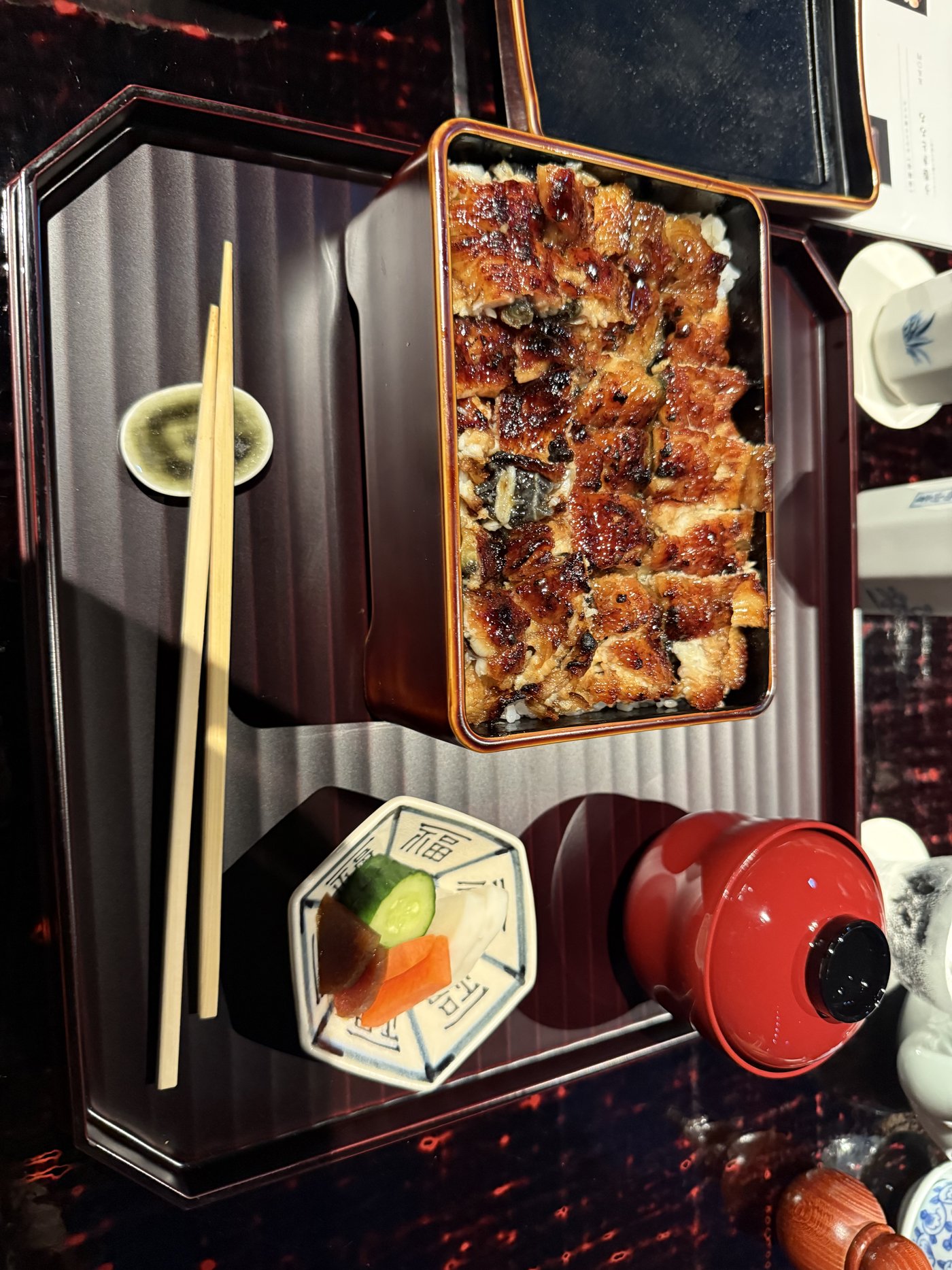
That gave you haya-zushi — “fast sushi” — and it landed in the right city. Edo in the early 1800s was one of the largest cities on earth, full of single men working construction and the trades, with no kitchens and no time. It ran on street food: the four great Edo snacks were soba, tempura, grilled eel and sushi, all cheap, all eaten standing at a yatai stall.
Nigiri: fast food with a name attached
Hand-pressed nigiri is usually credited to a man called Hanaya Yohei, working in the Ryogoku district around the 1820s. Rather than pressing fish and rice in a box and slicing it, he shaped a mouthful of vinegared rice by hand and laid fish over it. It took seconds to make and one bite to eat.
The pieces were much larger than today’s, which is the likeliest reason sushi still arrives two pieces at a time: the original was cut in half so it could be managed politely.
Crucially, none of it was raw in the way you would expect now. Edo had no ice and a humid summer. So Edomae — “in front of Edo,” meaning fish from the bay at the city’s doorstep — became shorthand for a set of preservation techniques that still mark a serious sushi chef:
| Technique | What it means | Classic example |
|---|---|---|
| Zuke | Marinating in soy sauce | Lean tuna |
| Nikiri | Brushing with a cooked soy glaze so no dipping is needed | Most white fish |
| Su-jime | Curing in salt then vinegar | Kohada (gizzard shad) |
| Nitsuke | Simmering in a sweet-savoury broth | Clams, conger eel |
| Yude | Boiling | Shrimp, octopus |
A good counter still does all of this. When a chef says a piece needs no soy sauce, that is not a flourish — the seasoning went on in the kitchen, the way it did 200 years ago.
How Tokyo’s sushi became Japan’s sushi
Two disasters spread Edo-style sushi across the country.
The Great Kanto Earthquake of 1923 flattened much of Tokyo. Chefs who lost their shops went home to the provinces and took nigiri with them, and within a generation the Tokyo style had displaced the older regional pressed and fermented sushi almost everywhere.
Then came the postwar food controls. Rice was rationed and restaurants were effectively barred from selling cooked meals. In 1947 Tokyo sushi shops negotiated a workaround: a customer brought their own cup of rice, and the shop returned it as roughly ten pieces of sushi, charging only for the labour. Legally that was food processing, not catering. Sushi shops survived, and the ten-piece set on lunch menus today is a fossil of a rationing rule.
Nobody wanted the tuna
The single biggest change in what sushi tastes like happened in living memory: refrigeration.
Fatty tuna belly, toro, the most expensive thing at almost every counter today, spoiled fast and was disliked in the Edo and Meiji periods. It was fed to cats, used for fertiliser, or sold as the cheapest item in the shop. It became a delicacy only when freezing, chilled transport and a postwar taste for richer food arrived together.
The next step was global. From the 1970s, Japanese traders noticed that cargo planes flying electronics to North America went home empty, and began filling them with Atlantic bluefin — a fish New England crews had been selling for pennies as pet food. Within a decade a worldwide tuna market existed, and that market is why one Oma bluefin can now be worth more than a house.
Salmon is newer still. Pacific salmon carried parasites and was never eaten raw here. Farmed Norwegian salmon was pushed into the Japanese market from the mid-1980s in a long, patient campaign, and only became normal at conveyor belt shops in the 1990s. It is now the single most ordered item in the country.
The conveyor belt that made sushi ordinary
In 1948 an Osaka restaurateur named Yoshiaki Shiraishi watched beer bottles ride past on a conveyor at an Asahi brewery. He spent nearly a decade adapting the idea to a dining counter and in 1958 opened Mawaru Genroku Sushi in Higashi-Osaka: the first kaitenzushi. The 1970 Osaka Expo put it in front of the whole country.
The effect was to turn sushi from an occasion into a Tuesday. Base plates at the big chains run about ¥110–120 in suburban branches, and a typical adult meal of ten or so plates lands near ¥1,200–1,500. Newer branches barely use the belt — you order on a touch panel and the plate arrives on an express lane — but Shiraishi’s price logic is intact. Osaka is quietly proud of this, and rightly so; it is one of the city’s real contributions to how the world eats, worth knowing if you are reading Best Things to Do in Osaka.
And then it went back upmarket
While the belt made sushi cheap, the counter went the other way. Omakase — leaving the choice to the chef, served piece by piece at the pace they decide — turned a meal into a performance with a fixed script, and Michelin’s arrival in Tokyo in 2007 gave it a scoreboard.
The range now is enormous. A good neighbourhood sushi lunch is ¥1,500–3,000. A respectable omakase dinner starts around ¥10,000–15,000. The famous names run ¥40,000–60,000 and up per person before drinks, book out months ahead, and have risen sharply in the last few years, largely because of tuna prices.
Meanwhile sushi kept mutating abroad. The inside-out California roll, invented in North America because diners disliked visible seaweed, has come back and now rides Japanese conveyor belts as a foreign curiosity.
FAQ
Is sushi always raw fish? No. Sushi means the vinegared rice. Cooked eel, boiled shrimp, simmered clam, omelette and cured mackerel are all traditional, and the oldest styles have no raw fish at all.
Should I put soy sauce on the rice? Turn the piece and touch the fish to the sauce, not the rice, which will fall apart. If the chef has already brushed it, eat it as it is. Fingers are fine at a counter — more general rules in Japan Etiquette: 15 Dos and Don’ts for Visitors.
Is conveyor belt sushi any good? The big chains are decent and remarkably cheap, and they are where most people in Japan actually eat sushi. Order the seasonal specials from the panel rather than taking whatever passes.
Can I watch the tuna auction at Toyosu? Yes. The close-up observation area, roughly 120 places a day, is allocated by a free online lottery on the market’s official site, applied for in the preceding month. Miss out and the second-floor viewing windows open around 5:00 with no booking. Auctions run from about 6:30.
Do sushi restaurants take cards? High-end counters usually do; small old-school shops sometimes still do not. Carry some cash — see Cash or Card in Japan? How to Pay for Everything.
The verdict
Sushi is not an ancient ceremony kept carefully under glass. It is a thousand-year-old preservation trick that got hijacked by a vinegar industry, turned into street food by a city in a hurry, spread by an earthquake and a rationing rule, made luxurious by refrigeration and made cheap again by a beer conveyor. It has been reinventing itself the entire time.
Which is a good reason not to be precious about it while you are here. Eat at a ¥115-a-plate chain and at a ten-seat counter where the chef hands each piece across the wood, and treat both as the real thing. They are the same food, 200 years apart.
Written from Japan by the Wayfarer Japan team.
Featured image: “Nigiri Moriawase (Sushi Sei) (42217840971)” by Asok5 from Budapest, Hungary, CC BY-SA 2.0, via Wikimedia Commons