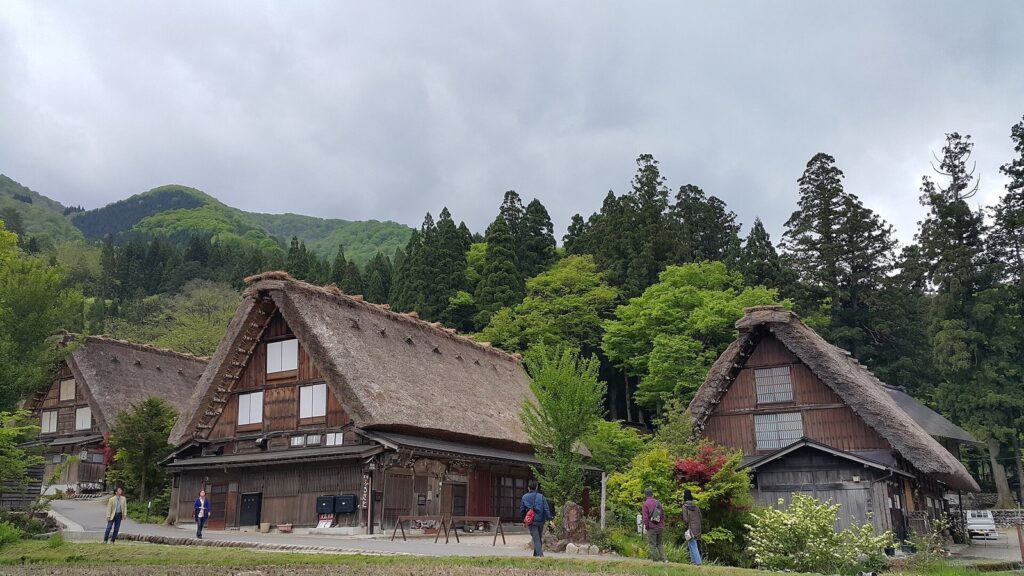
I live in Japan, and whenever friends visit and ask for “someplace that still looks like old Japan,” this is the pair of towns I send them to. Takayama and Shirakawa-go sit in the mountains of Gifu Prefecture, a few hours from both Nagoya and Kanazawa, and together they’re one of the easiest ways to step out of the Tokyo-Kyoto-Osaka triangle without a complicated itinerary. Takayama has a preserved Edo-era merchant district and two morning markets; Shirakawa-go is a UNESCO World Heritage village of steep, thatched gassho-zukuri farmhouses built to survive brutal mountain snow. Neither is huge, so most travelers see both on a single loop.
This isn’t a place I visit constantly myself — it’s a mountain detour, not a commuter route — but I’ve mapped this loop for enough visiting friends and family that I know the connections cold, and I checked current fares and hours before writing this.
The quick answer
- Base yourself in Takayama for one night, and do Shirakawa-go as a half-day bus trip from there.
- From Nagoya: take the Limited Express Hida direct to Takayama, about 2 hours 20 minutes to 2 hours 40 minutes, roughly ¥5,500–7,000 one-way in reserved seating.
- From Kanazawa: a direct highway bus to Shirakawa-go takes about 75–85 minutes and costs around ¥2,800 one-way; from there, another bus continues to Takayama.
- Takayama to Shirakawa-go: hourly buses, about 50 minutes, roughly ¥2,800 one-way. Seat reservations are recommended and required on some departures.
- Neither the Nohi Bus network nor most Shirakawa-go buses accept the Japan Rail Pass — budget for these separately.
- Two nights (one in Takayama) is comfortable; one very long day trip from Nagoya or Kanazawa is possible but tight.
Getting there: the three realistic routes
From Nagoya (most common approach). The Limited Express Hida runs about ten round trips a day from Nagoya Station straight to Takayama, following the Hida River through a series of gorges that make the ride itself worth doing in daylight. If you’re weighing whether the Japan Rail Pass is worth it for this leg specifically, remember the Hida is JR-operated, so a national pass does cover it — one more data point if you’re deciding whether the Japan Rail Pass makes sense for your whole trip.
From Kanazawa. If your route already includes Kanazawa — and I’d genuinely encourage adding it, since it pairs beautifully with this loop and I’ve written a full Kanazawa guide — a direct highway bus from Kanazawa Station’s west gate runs to Shirakawa-go roughly every three hours, taking 75–85 minutes. From Shirakawa-go you continue by a separate bus to Takayama, or backtrack to Kanazawa the same day if you’re only doing the village.
From Tokyo. There’s no fast direct route, which is exactly why this region stays quieter than Kyoto or Hakone. The realistic options are Tokyo → Nagoya by shinkansen, then the Hida to Takayama, or Tokyo → Toyama on the Hokuriku Shinkansen, then a bus toward Shirakawa-go from the Toyama side. Either way, plan on 4.5–5.5 hours of total travel, so this is not a Tokyo day trip — build in at least one overnight.
👉 Klook Nohi Bus Takayama Shirakawago tickets
A day (or half-day) in Takayama’s old town
Takayama’s Sanmachi Suji district is the reason people compare it to a smaller, quieter Kyoto: dark-wood merchant houses, sake breweries with cedar balls hanging over their doors, and none of the crowd density of the bigger cities. Two morning markets run daily — Miyagawa Market along the river (open roughly 7:00–12:00, later start in winter) and the smaller, more traditional Jinya-mae Market in front of the old prefectural office (roughly 6:00–12:00). Both are free and need no booking; go early for the best produce and pickles before tour groups arrive.
Takayama Jinya itself, the preserved Edo-period government house, charges a modest admission (around ¥500) and is worth 30–45 minutes if you want to see how regional administration actually worked under the shogunate. For a broader sense of the old farming and mountain lifestyle, Hida Folk Village (Hida no Sato), a short bus ride from the station, is an open-air museum of relocated traditional houses — admission is around ¥700, or look for a combined ticket that bundles the round-trip bus fare with entry.
👉 GetYourGuide Hida Folk Village skip-the-line ticket
Shirakawa-go: what you’re actually seeing
Ogimachi, the main village at Shirakawa-go, has around 60 gassho-zukuri houses still standing, several open to the public as small museums so you can see the steep thatched roofs from the inside — designed at that pitch specifically to shed heavy snow. The Shiroyama viewpoint above the village, a short uphill walk or a shuttle bus ride from the car park, gives the classic postcard shot of the whole valley; it’s free to reach on foot.
If you’re visiting in winter, the village holds a handful of evening light-up dates (four dates announced for the 2026 season, in January and February) when the thatched houses are illuminated against the snow. These are genuinely spectacular but also genuinely restrictive: advance reservations are mandatory for both entry and the special buses that run only on those nights, bookings often open as early as October, and unaffiliated bus seats can sell out fast because tour operators hold blocks in advance. If a light-up date is the whole point of your trip, book the transport before you book anything else.
Outside those four nights, Shirakawa-go is open and walkable any time, and honestly a clear autumn or spring day with the rice fields visible is just as photogenic as the snow — and far less stressful to plan around.
How much time to give this loop
- Half-day from Kanazawa or Takayama: enough to see Ogimachi and the Shiroyama viewpoint, not much else.
- One night in Takayama: the sweet spot for most people — morning market, old town, Hida Folk Village on day one, Shirakawa-go as a half-day trip on day two before heading onward.
- Two nights: adds breathing room for a slower pace, an evening in Takayama’s old town after the tour groups leave, or a side trip to Shirakawa-go’s quieter neighbor village, Gokayama.
Don’t worry about overpacking for this — if you forgot a warm layer, Takayama has a Uniqlo-adjacent selection of everyday clothing shops near the station, and any convenience store in town sells umbrellas, hand warmers and basic supplies if the mountain weather turns.
Where to stay
Takayama itself makes a far better base than Shirakawa-go, which has limited lodging (mostly traditional minshuku in the farmhouses themselves — atmospheric, but book months ahead if you want one). Staying in Takayama’s old town puts you within walking distance of both morning markets and the train station.
FAQ
Can I do Takayama and Shirakawa-go as a day trip from Tokyo? Not comfortably. Total travel time alone runs 4.5–5.5 hours each way via Nagoya or Toyama. Plan at least one overnight, ideally in Takayama.
Does the Japan Rail Pass cover any of this? It covers the Limited Express Hida between Nagoya and Takayama, since that’s a JR line. It does not cover the highway buses to and from Shirakawa-go, which are run by Nohi Bus and partner operators — budget those separately.
Do I need to book the Takayama–Shirakawa-go bus in advance? Some departures require reservations and some don’t; in peak seasons (cherry blossom, autumn foliage, winter light-up) book ahead through Japan Bus Online or a reseller to avoid being turned away at a sold-out departure.
Is Shirakawa-go worth it if I can’t get a winter light-up reservation? Yes. The light-up is a bonus, not the main event — the village, the thatched houses and the Shiroyama viewpoint are open and worth visiting year-round.
Should I add Kanazawa to this loop? If your route allows it, yes — Kanazawa connects directly to Shirakawa-go by bus and has its own distinct pull of gardens, geisha districts and crafts.
The verdict
Takayama and Shirakawa-go reward travelers who are willing to spend one extra night outside the main cities. Neither town takes long to see properly, the connections between them are straightforward once you know the bus schedules don’t run on the Japan Rail Pass, and the payoff — an Edo-period merchant town and a UNESCO farming village, both still lived-in rather than reconstructed for tourists — is hard to match anywhere closer to Tokyo or Kyoto.
Written from Japan by the Wayfarer Japan team — we live here and update our guides as prices, schedules and rules change.
Featured image: “Historic Village of Shirakawa-go (2016) – img 03” by Chainwit., CC BY 4.0, via Wikimedia Commons