Every country has a harvest season, but Japan turns it into a small national obsession. The moment the heat breaks in September, menus change overnight. Department store food halls swap out summer melon displays for chestnuts and pears. Izakaya chalkboards start advertising “aki no aji” – literally “the taste of autumn” – and everyone from convenience store clerks to Michelin chefs seems to agree on what belongs on the list.
I live in Japan, and autumn is my favorite season to eat here, not because the food is exotic but because so much of it is only available for a few weeks a year. Miss the window and you’re waiting until next September. If you’re visiting between September and November, here’s what to look for and how to actually find it.
The quick answer
- Matsutake mushrooms (September-November): Japan’s most prized and most expensive mushroom, usually grilled or steamed in a clay pot with rice
- Sanma / Pacific saury (September-October): a fatty, smoky grilled fish, cheap and everywhere in September, the signature “aki no aji” dish
- Kuri (chestnuts): turned into kuri gohan (chestnut rice) and mont blanc-style desserts sold everywhere from bakeries to convenience stores
- Shinmai (new rice): the year’s freshly harvested rice, sold from around mid-September, noticeably sweeter and shinier than rice from earlier in the year
- Kaki (persimmons) and nashi (pears): the fruit stalls fill up with both from October
- Best places to try all of this at once: a department store basement food hall (depachika) or an autumn kaiseki set menu at a ryokan
Matsutake: the mushroom everyone talks about
Matsutake is a wild pine mushroom that cannot be farmed, which is exactly why it’s expensive and why Japanese food culture treats it the way other countries treat truffles. It can’t be cultivated on demand, so supply depends entirely on rainfall, temperature and where it happens to grow that year. Domestic matsutake typically runs from late September through November, and prices vary wildly by size, origin and how good the season is – a single domestically grown one can easily run into the thousands of yen, and the very best specimens go for far more at auction.
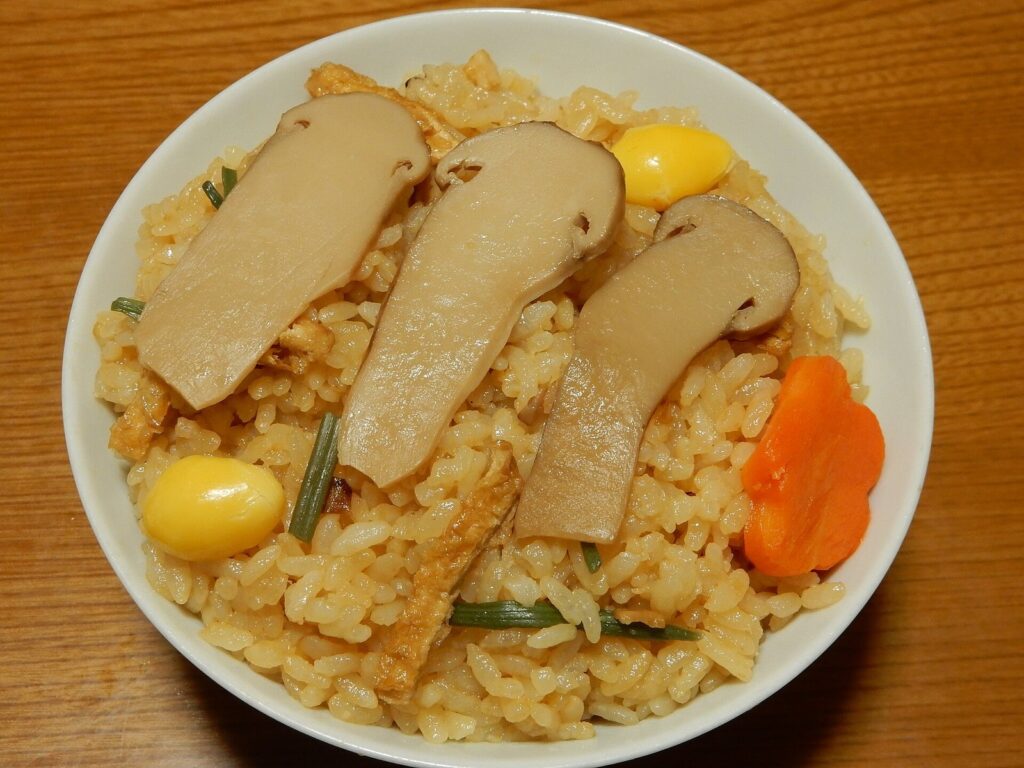
You don’t need to buy a whole matsutake to try it. Restaurants serve it in small, seasonal ways: matsutake dobin-mushi (a savory broth steamed in a small teapot), matsutake gohan (rice steamed with slices of the mushroom), or as part of an autumn kaiseki course. If you see matsutake on a set-menu insert at a restaurant in September or October, it’s usually there because it’s genuinely in season, not just decoration.
Sanma: the fish that defines the season
If matsutake is autumn’s luxury, sanma (Pacific saury) is its comfort food. It’s a long, silvery fish that’s simply salted and grilled whole, usually served with grated daikon radish and a squeeze of sudachi citrus. It used to be cheap year-round in autumn; catches have been unpredictable in recent years due to changing ocean conditions, but 2025’s haul was a notable improvement, and in a good season you can find grilled sanma sets at everyday restaurants for a few hundred yen.
The most famous way to experience it as a visitor is at a sanma matsuri (saury festival). Tokyo’s Meguro area holds one of the best-known ones, typically on a Sunday in September, where thousands of free grilled sanma are handed out to a line that can stretch for hours. Dates shift slightly year to year, so check the current year’s announcement before planning a trip around it, and get there early – the line is the real event.
Chestnuts, new rice, and the desserts that follow
Kuri (chestnuts) hit their peak in late September and October. The classic home-cooked dish is kuri gohan, rice cooked with whole chestnuts and a little salt or soy, and it’s worth ordering if you see it on a set-menu lunch. On the dessert side, chestnut season means Mont Blanc season – cafes and konbini alike roll out chestnut cream cakes and soft-serve, and comparing versions from different shops is a genuinely fun way to spend an autumn afternoon in Tokyo or Kyoto.
At the same time, shinmai (freshly harvested new rice) starts appearing on shelves from around mid-September, especially from rice-growing regions like Niigata, Akita and Hokkaido. It’s noticeably glossier and sweeter than rice sold earlier in the year, and restaurants that take pride in their rice will often say so on the menu.
Round it out with kaki (persimmons) and nashi (Japanese pears), both in full swing from October, sold everywhere from supermarkets to roadside stalls in the countryside.
Where to actually find all of this
Depachika (department store basement food halls) are the easiest one-stop option. Isetan Shinjuku, Mitsukoshi Ginza and Takashimaya Nihonbashi all set up dedicated autumn sections with matsutake, chestnut sweets, sanma bento and seasonal wagashi in the same few aisles, and you can sample and buy without committing to a sit-down meal.
Autumn kaiseki menus at ryokan and traditional restaurants are the deeper version of the same idea – multi-course meals built entirely around what’s in season that week, matsutake and all. If you’re already booked into a ryokan for a trip to Hakone, Kyoto or Kanazawa this autumn, ask whether the autumn kaiseki set is available; it usually costs more than the standard dinner but it’s the single best way to taste several seasonal dishes at once.
If you’d rather have someone else pick the stops for you, a guided Tokyo food tour that includes a depachika visit is a low-effort way to taste several of these items without guessing which shop is good. 👉 GetYourGuide Tokyo depachika food tour
FAQ
Is matsutake worth trying if I’m not a mushroom person? It has a distinctive, almost pine-like aroma that’s more about the smell than an intense flavor. If you’re curious, try it in a small dobin-mushi broth rather than committing to an expensive dish – it’s a better way to judge whether you like it.
When exactly does autumn food season start and end? Roughly September through late November, though it shifts a little with the weather each year. Matsutake and sanma both start in September; chestnuts, new rice and persimmons build through October; by late November the season shifts toward hot pot and winter fish.
Do I need to speak Japanese to order any of this? No. Depachika staff are used to visitors pointing at displays, and most seasonal dishes are labeled with the ingredient name (matsutake, kuri, sanma) even on Japanese-only menus, which makes them easy to recognize once you know the words.
Is autumn food expensive? Matsutake is the one genuine splurge item. Everything else – sanma, chestnut sweets, new rice, persimmons – is ordinary, everyday-priced food that just happens to be seasonal.
The verdict
Japan’s autumn food season isn’t a festival with a start date so much as a slow rollout: sanma and the first matsutake show up in September, chestnuts and new rice follow in October, persimmons and pears carry it into November. You don’t need to plan around it – if you’re visiting Japan anytime in that window, it’s already on the menu. Walk into a depachika, look for the seasonal signage, and order whatever the shop is proudest of that week.
Written from Japan by the Wayfarer Japan team – practical, honest travel guidance from people who actually live here.