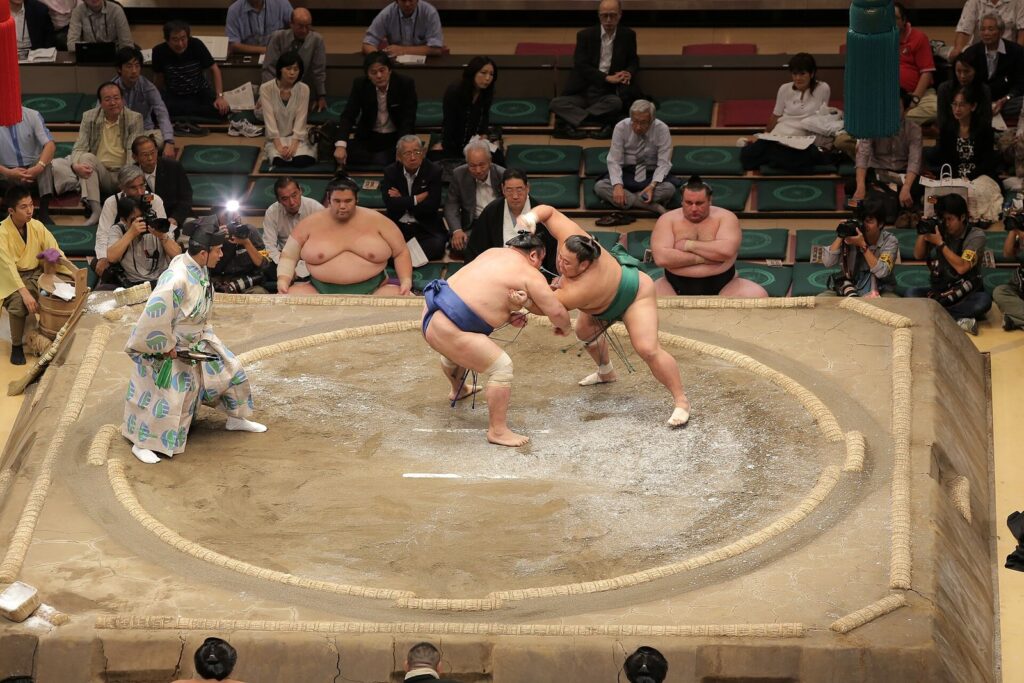
Sumo looks simple from the outside: two enormous men, a ring of rice-straw rope, and a bout that’s often over in seconds. Watching it live is a different experience entirely. The drum announcing the day’s card, the ritual salt-throwing, the crowd holding its breath before two wrestlers explode off the line — it’s one of the most distinctly Japanese things a visitor can see, and it runs on a ticketing system that trips up a lot of first-timers.
I live in Japan, and I still had to relearn the sumo ticket system the last time I went, because the rules around box seats, sale dates, and which tournament is even happening change enough to catch people out. Here’s what actually works in 2026.
The quick answer
- There are six 15-day Grand Sumo tournaments a year: January, May and September in Tokyo; March in Osaka; July in Nagoya; November in Fukuoka.
- Tickets go on sale roughly a month before each tournament through the official site, Ticket Oosumo, which has an English interface.
- Arena/chair seats (the cheapest, upper-level individual seats) run from around ¥3,500–8,500; tatami box seats (masu-seki) cost more and are sold as a unit for 2–4 people.
- If official sales sell out or the Japanese-only steps feel like a hassle, English-language tour packages with pre-secured tickets are sold through Klook and GetYourGuide — pricier, but simpler.
- Fridays through the final three days of each tournament sell out fastest; weekday tickets earlier in the run are the easiest to find.
- The most exciting bouts (the top-ranked Makuuchi division) happen late in the day, roughly 3:30–6pm.
When the tournaments happen
Sumo runs on a fixed six-tournament calendar (basho), each lasting 15 consecutive days:
| Tournament | Month | City | Venue |
|---|---|---|---|
| Hatsu Basho | January | Tokyo | Ryogoku Kokugikan |
| Haru Basho | March | Osaka | Edion Arena Osaka |
| Natsu Basho | May | Tokyo | Ryogoku Kokugikan |
| Nagoya Basho | July | Nagoya | IG Arena |
| Aki Basho | September | Tokyo | Ryogoku Kokugikan |
| Kyushu Basho | November | Fukuoka | Fukuoka Kokusai Center |
Tokyo hosts three of the six, so if your trip lines up with January, May or September, you’re in luck without any extra travel. The November tournament in Fukuoka is worth planning around too: the venue seats around 8,000, noticeably smaller and more intimate than Tokyo’s roughly 11,000-seat Kokugikan, so even mid-tier seats feel close to the ring. If you’re already building a Kyushu itinerary around Fukuoka, catching a day of the Kyushu Basho is an easy add.
How to buy tickets officially
The Japan Sumo Association sells tickets through Ticket Oosumo (sumo.pia.jp), which runs in English as well as Japanese. Sales for each tournament typically open about a month in advance — for example, tickets for the November Fukuoka tournament went on sale in mid-September. Mark the on-sale date on your calendar if you want a specific day or seat type, because:
- Weekend days and the final three days of the tournament (when the tournament often gets decided) sell out within hours.
- Weekday tickets in the first week are the easiest to get, sometimes still available right up to the day.
You’ll need to create an account and, in most cases, either have a Japanese address for shipping or pick up tickets at a convenience store using a reservation number — the site walks you through this, but it’s a few more steps than buying a typical event ticket abroad.
Seat types and what they actually cost
Sumo venues have three broad seating tiers:
- Ringside seats (sunawari): The cushions right at the edge of the ring. Thrilling, occasionally dangerous (wrestlers do fall into them), and mostly held by season-ticket holders, sponsors and regulars. Don’t count on getting these as a first-time visitor.
- Box seats (masu-seki): Tatami-floor boxes on the lower level, sold as a unit for two to four people rather than per person — so a single box might run ¥12,000 or more, split between however many are sitting in it. You sit on cushions, shoes off, often with a small table for snacks.
- Arena/chair seats: Individual upper-level seats, the best value for a first visit. These typically run from about ¥3,500 up to ¥8,500 depending on how close to the front they are. You get less atmosphere than a box seat but a clear view of the whole ring, and you don’t need three friends to make the price work.
For a first sumo experience, a mid-tier chair seat is usually the sweet spot: close enough to follow the action, cheap enough that a bad seat isn’t a disaster.
The easier (pricier) route: guided tour tickets
If the Japanese-language steps of official sales feel like too much, or you’re booking close to your trip and the good seats are already gone, tour operators sell sumo tickets bundled with an English-speaking guide. These aren’t scalped tickets — operators buy blocks of official seats and package them with commentary, so you’re not doing anything that risks your entry.
👉 Klook packages typically include a reserved seat, a short briefing on the rules and rituals before the bouts start, and sometimes a small sumo-themed souvenir.
👉 GetYourGuide also lists guided sumo experiences, useful if you want to compare a couple of operators before booking.
Expect to pay noticeably more than the face-value ticket price for this convenience — it’s the trade-off for guaranteed seats and not having to navigate a Japanese ticketing site.
What the day actually looks like
Doors open around 8:30am, but the morning bouts are lower-ranked wrestlers (many of them teenagers) fighting to nearly empty seats — genuinely interesting if you love sumo, skippable if you don’t. The venue fills up through the afternoon as the rankings climb. The top Makuuchi division, including any yokozuna (grand champions), takes the ring from roughly 3:30pm, building to the final and most anticipated bout around 6pm.
You don’t need to arrive at 8:30am. Showing up by early-to-mid afternoon still gets you the best of the tournament, and most box and chair seats stay valid for the full day, so you can come and go.
A few practical notes: bento boxes and drinks are allowed and part of the culture — buying a sumo-themed bento is half the fun. Photography without flash is generally fine, but stand up and block someone’s view during a bout and you’ll hear about it fast. And if you forgot to bring anything — a cushion for a hard chair seat, a jacket for an unheated arena in January — convenience stores near every venue sell exactly what you need; nobody expects tourists to arrive perfectly prepared.
FAQ
Can I still get tickets if I didn’t book in advance? Sometimes, especially on weekdays early in the tournament — but the safest bet for weekends or the final days is booking as soon as tickets go on sale, or using a tour operator that’s already secured seats.
Do I need to speak Japanese to buy tickets myself? No — Ticket Oosumo has an English interface, though the account setup and pickup process take a bit more patience than a typical Western ticketing site.
Which tournament is best for a first-time visitor? Any of the three Tokyo tournaments (January, May, September) are the easiest to combine with a standard Tokyo itinerary. If you’re already routing through Fukuoka, November’s Kyushu Basho has a smaller, closer-feeling venue.
How long should I plan to stay? Most visitors watch for a few hours in the afternoon rather than the full day. Two to three hours covering the higher divisions is enough to get the full experience without sumo fatigue.
Is sumo worth it if I don’t know the rules? Yes — the drama of the ritual and the crowd reaction carries you even before you understand rankings and techniques. Reading up on it beforehand, like our guide to the history of sumo, makes the higher-ranked bouts click faster.
The verdict
Sumo tickets aren’t hard to get, but the system rewards a bit of planning: know your tournament dates, buy through Ticket Oosumo the moment sales open if you want a specific seat, and fall back on a Klook or GetYourGuide package if you’re booking late or just want the guided version. Either way, an afternoon at a Grand Sumo tournament is one of the more memorable few hours you can spend in Japan — and unlike a lot of “must-see” tourist experiences, it’s exactly as intense in person as it looks on screen.
Written from Japan by the Wayfarer Japan team — real experience, honest advice, no fluff.
Featured image: “Sumo Wrestling – Tokyo” by ElHeineken, CC BY-SA 4.0, via Wikimedia Commons