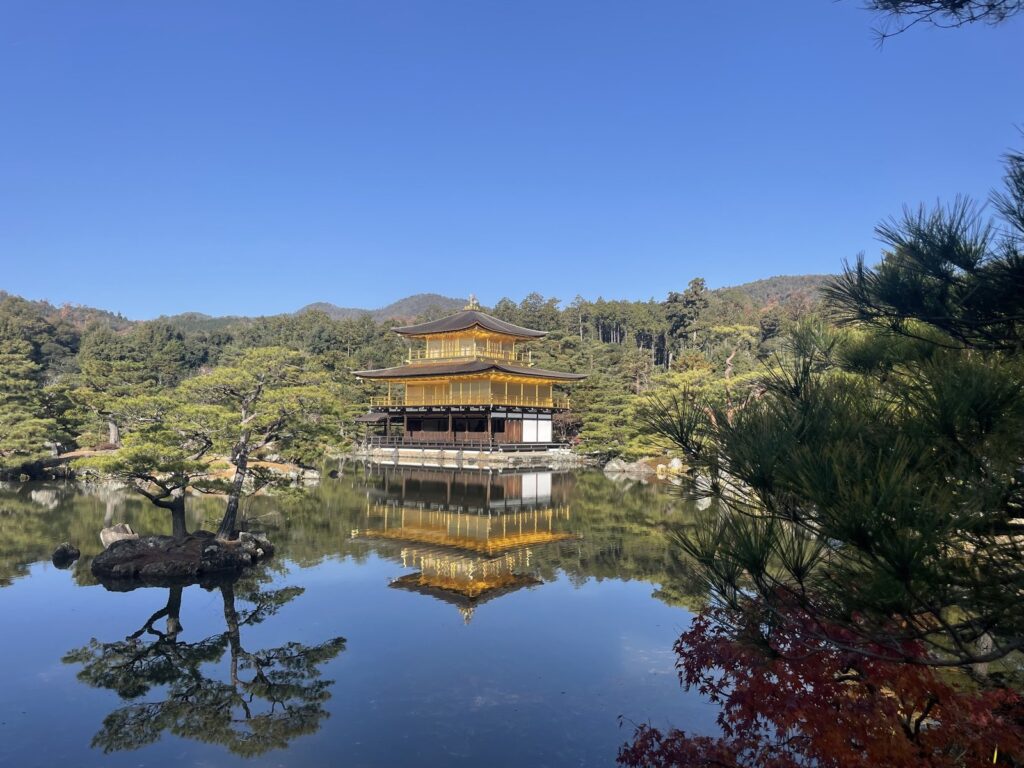
I live in Japan, and even after years here, Koyasan still feels like somewhere else entirely. It’s not a shrine you tick off between train connections. It’s a whole town, built on a mountain basin at about 800 meters, where more than a hundred Buddhist temples sit among cedar forests and the only sounds most mornings are bells and gravel underfoot. Most visitors come as a day trip from Osaka or Kyoto. The ones who stay the night, in one of the town’s shukubo (temple lodgings), usually say it’s the one experience from their whole Japan trip they talk about afterward.
This guide covers how to actually get there, what to see with the time you have, and what a shukubo stay costs and involves, so you can decide whether to do Koyasan as a day trip or build in the night.
The quick answer
- Getting there: Nankai Koya Line train from Namba (Osaka) to Gokurakubashi, then the Koyasan Cable Car up the mountain, then a local bus into town. Total journey from Osaka is about 2 hours.
- The ticket to buy: the Koyasan World Heritage Ticket covers the round-trip train, the cable car, and unlimited town buses for 2 days — cheaper than buying each leg separately.
- Must-see in a day: Okunoin cemetery (especially the lantern-lit approach) and the Danjo Garan temple complex with its vivid orange Konpon Daito pagoda.
- Best for autumn leaves: early to mid November, which also happens to be peak crowds for shukubo bookings.
- Staying overnight: a shukubo room with two vegetarian Buddhist meals (shojin ryori) typically runs ¥12,000–25,000 per person, more in peak season. Book 1–2 months ahead for weekends.
- Day trip or overnight: a day trip covers the highlights; staying over gets you the morning prayer ceremony and Okunoin without the crowds.
Getting to Koyasan
Koyasan sits in Wakayama Prefecture, about two hours south of Osaka by train, and it’s a genuine mountain journey, not a quick suburban hop. From Namba Station, the Nankai Koya Line runs direct to Gokurakubashi, the last stop at the base of the mountain. From there, the Koyasan Cable Car — a funicular, really — climbs a steep incline to Koyasan Station in about five minutes.
The easiest way to pay for all of it is the Koyasan World Heritage Ticket, sold at Nankai stations and increasingly as a digital pass. It bundles the round-trip Nankai Koya Line fare, the cable car, and unlimited rides on the local buses that connect the temple sites around town (walking the whole layout on foot would eat your whole day). Buying the pieces separately costs more and is more hassle, so unless you already hold a rail pass that covers this line, get the bundle.
👉 Klook Koyasan World Heritage Ticket
If you’d rather not navigate the connections yourself, Klook also sells guided day tours from Osaka that handle the transport and walk you through Okunoin and Danjo Garan with an English-speaking guide — a reasonable option if you’re short on time or traveling with people who’d rather not read train boards.
👉 Klook Koyasan day tour from Osaka
From Kyoto, you’ll transfer through Osaka or Namba first; there’s no direct line, so budget closer to 2.5–3 hours each way. If you’re coming via the Japan Rail Pass (commonly called the JR Pass), note that the Nankai line is private and isn’t covered — you’ll pay for this leg separately regardless, similar to how the Hakone Tozan line works outside JR coverage.
What to see with a day
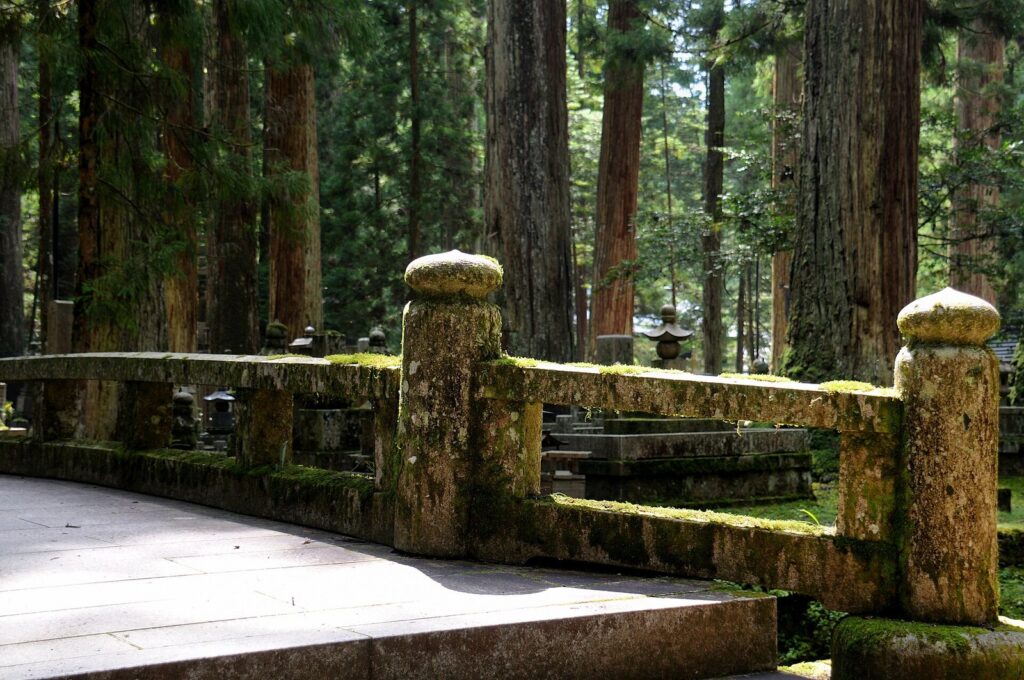
Okunoin is the reason most people come. It’s a two-kilometer stone path through old-growth cedar forest, lined with roughly 200,000 graves and memorial markers — some for famous historical figures, some for entire companies that erected monuments for employees. At the far end is the mausoleum of Kobo Daishi (Kukai), the monk who founded Shingon Buddhism here in the 9th century and who, by tradition, is not considered dead but in eternal meditation. Monks still bring him meals twice a day. Walk it in late afternoon if you can; the light through the cedars and moss-covered stone is the version of Okunoin everyone photographs, and if you’re staying overnight, walking it again after dark with the stone lanterns lit is a genuinely different experience.
Danjo Garan is the other essential stop — the original temple complex Kobo Daishi laid out, centered on the Konpon Daito, a vivid vermillion pagoda that’s hard to miss from almost anywhere in town. Kongobu-ji, the head temple of Shingon Buddhism, is nearby and worth the entry fee for its rock garden and painted sliding doors.
If you have more time, the Reihokan Museum holds a serious collection of Buddhist art and temple treasures, and the Koyasan World Heritage Ticket gets you a small discount on entry.
Staying in a shukubo
This is where Koyasan stops being a sightseeing stop and becomes something closer to a retreat. Dozens of the temples here operate as shukubo — temple lodgings open to travelers, not just pilgrims. I’ve stayed overnight here myself, and what stays with me isn’t the room (simple tatami, futon, shared or en-suite bath depending on the temple) but the rhythm of it: an early vegetarian dinner of shojin ryori, lights out early because the town genuinely goes quiet, and an optional 6am prayer ceremony in the temple’s main hall before breakfast.
Expect to pay roughly ¥12,000–25,000 per person per night, including both meals, with peak autumn and August rates pushing toward ¥30,000–50,000 at the nicer temples. Rooms are basic by hotel standards — this isn’t a ryokan with a private onsen — but several temples do have shared baths, and a few now offer private bathrooms for a premium.
Book through the temple’s own site if it has one, or through the Koyasan Shukubo Association’s booking portal, which lists most of the roughly 50 participating temples. Reserve 1–2 months ahead for weekends and well ahead for early-to-mid November, which is both peak autumn leaf season and the busiest shukubo weeks of the year. Shukubo bookings generally aren’t sold through Klook or similar platforms — this is one to arrange directly with the temple.
FAQ
Is Koyasan worth it as just a day trip? Yes. You can see Okunoin and Danjo Garan comfortably between a morning departure from Osaka and an evening return. You’ll miss the prayer ceremony and the after-dark walk through Okunoin, but the core sites don’t require an overnight stay.
Do I need to be Buddhist or religious to stay in a shukubo? No. Temples here host travelers of any or no faith. The morning prayer ceremony is optional to attend, and staff are used to guests who are there for the cultural experience rather than religious practice.
Is it cold? Koyasan sits at altitude, so it runs noticeably cooler than Osaka or Kyoto — often 5°C colder in the same season. If you forgot a warmer layer, it’s genuinely not a crisis; there are a couple of small shops in town, though options are far more limited than in a city, so it’s worth packing for the mountain rather than relying on buying something there.
Can I visit as part of a Kumano Kodo trip? Yes, and several tour operators pair the two. If pilgrim trails and remote shrines interest you, Kumano Kodo and Nachi Falls covers the longer multi-day version of that same region.
Is there Wi-Fi or phone signal? Signal is fine in the town center but patchy in parts of Okunoin’s forest and inside some temple buildings. Not a place to count on a video call.
The verdict
Koyasan rewards slowing down more than almost anywhere else covered on this site. A day trip from Osaka gets you the headline sights and is a sensible add-on to a Kansai itinerary — similar in spirit to a trip out to Nara or Hiroshima and Miyajima. But if your schedule allows one night in a shukubo, take it. It’s a quieter, stranger, more memorable version of Japan than the cities give you, and it’s one of the few places in the country where a 9th-century routine is still the one being followed tonight.
Written from Japan by the Wayfarer Japan team — we live here and check prices and routes regularly, but always confirm current fares and shukubo availability before you book.
Featured image: “OKU – Stone bridge in Okunoin Cemetery, Koyasan, Japan, 2015” by Josep M. Gracia, CC BY-SA 4.0, via Wikimedia Commons