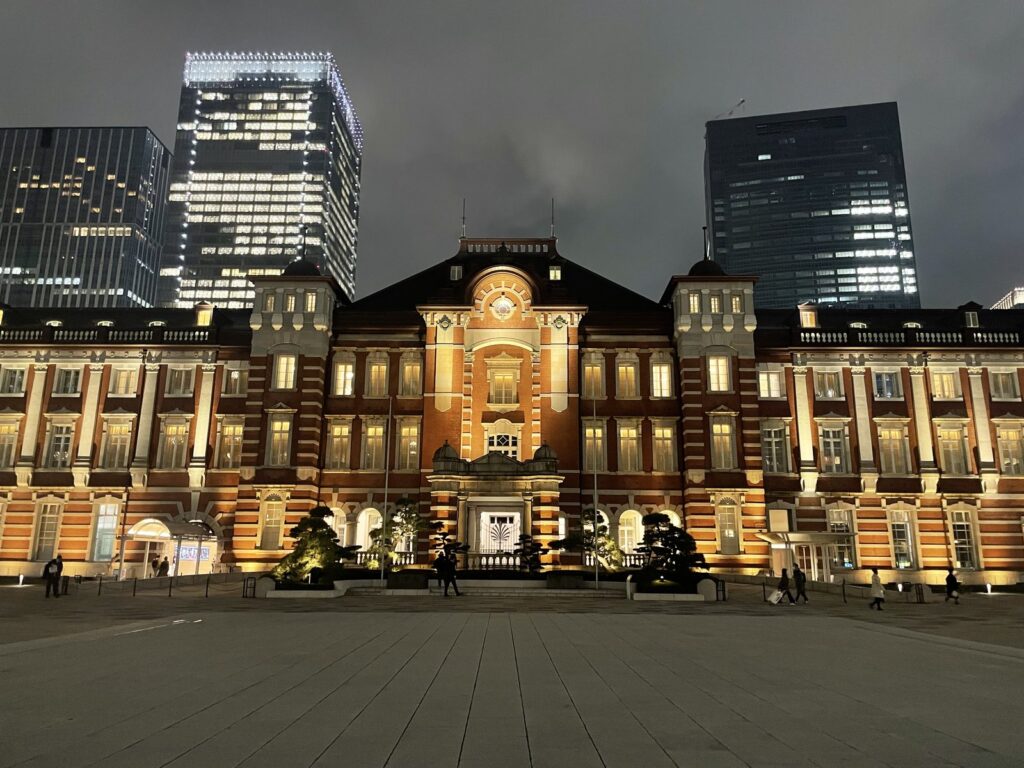
Daytime koyo (autumn colour) is beautiful. Koyo after dark is a completely different experience. A handful of Japan’s best autumn spots switch on spotlights for a few weeks each November, and the maples that looked pretty at noon suddenly look theatrical — deep red against black sky, doubled in reflection on a temple pond. I live here and I still make a point of going to at least one illumination every autumn, because it is one of the few things in Japan that genuinely does not photograph as well as it looks in person.
The catch is that these events run on short, specific windows tied to that year’s leaf-turning forecast, and several of the best ones require you to plan around limited hours or timed tickets. Here is what is actually worth building an evening around in 2026, and how to do it without wasting a trip.
The quick answer
- Kyoto has the most famous temple illuminations: Eikando, Kiyomizu-dera and Kodai-ji all light up their gardens for roughly two to three weeks from mid-to-late November. Expect crowds and queues even at night.
- Tokyo’s best is Rikugien Garden in late November to early December — a proper Edo-period stroll garden lit from within, and far calmer than the Kyoto circuit.
- Nabana no Sato in Mie, between Nagoya and Kyoto, is a different animal entirely: a huge illumination park that layers autumn colour with light art on a scale nothing else in Japan matches.
- Dates shift every year with the leaf forecast — treat anything you read in summer as provisional and recheck in October.
- Some of these need advance tickets, others are pay-at-the-gate. Do not assume either way; check the specific venue.
If you are still working out when to fly in for autumn generally, see Best Autumn Leaves Spots in Japan and Japan in Autumn 2026 for the season-wide timing picture.
Kyoto: the temple circuit
Kyoto runs more autumn illuminations than anywhere else in Japan, largely because its temple gardens were designed centuries ago with reflection and framing in mind — they were built to be looked at, and light just makes that more obvious.
Eikando (Zenrin-ji) is the one locals rate highest. Around 3,000 maples surround a pond and a hillside pagoda, and the light-up throws the whole thing into deep red. In 2026 the temple’s autumn viewing runs roughly November 7 to December 6, daytime 9:00–17:00 and evening light-up 17:30–21:00 (last entry 20:30, and it is an entry-and-exit system — you cannot do both in one ticket). Adult entry is around ¥600 for either session. Go on a weeknight if you can; the last weekend of November is the single busiest night of the Kyoto year.
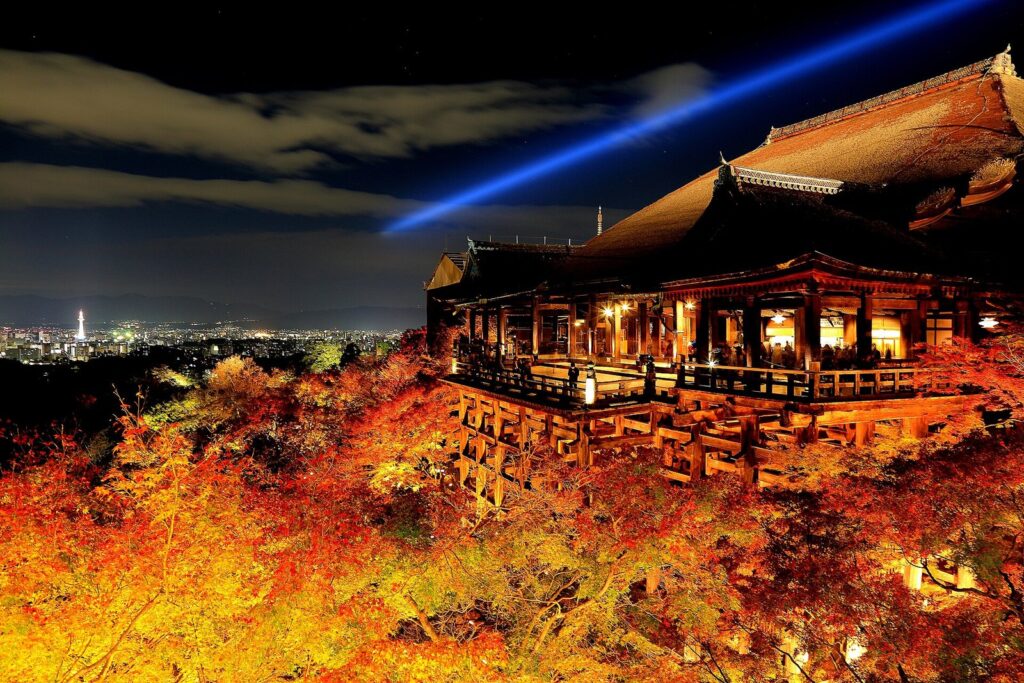
Kiyomizu-dera is the postcard option — its wooden stage lit up above the valley, with a blue searchlight beam (“Kannon’s mercy light”) visible across the city. The 2026 light-up is expected around November 22 to December 7, 17:30–21:00, adults around ¥400. It is the most crowded of the three because you can see the stage from public viewpoints even without paying, so the queue to actually walk the stage at night can be long.
Kodai-ji, near Gion, does a quieter version with its pond and bamboo grove lit separately — good if the other two feel too packed. Its autumn light-up typically starts in mid-November; check the current dates before you go since they move slightly each year.
None of these need advance booking as of 2026 — you pay at the entrance — but arrive at opening time if you want to avoid a 30-to-60-minute queue on weekend nights.
Tokyo: Rikugien over Roppongi
Tokyo does not have Kyoto’s temple density, but Rikugien Garden in Bunkyo ward is worth building an evening around. It is a genuine Edo-period daimyo stroll garden — designed to be walked in a loop, with the view changing at every turn — and its maples around the central pond are lit for about two weeks.
For 2026, the illumination is scheduled for roughly November 25 to December 6, 18:00–20:30 (last entry 19:30). Tickets are around ¥1,000 in advance online, ¥1,200 at the gate, and the garden caps daily numbers, so buying ahead is worth it if your dates are fixed. It is a five-minute walk from Komagome Station on the JR Yamanote Line, which makes it an easy add-on to a normal Tokyo evening rather than a special trip.
If you want a second option in Tokyo, Rikugien is usually paired in guides with Koishikawa Korakuen, though its illumination hours and dates are smaller-scale and worth checking on the day.
Nabana no Sato: the outlier
Nabana no Sato, in Mie Prefecture between Nagoya and Kyoto, is not a temple garden — it is a flower park that turns into one of Japan’s largest illumination displays every winter, and the season overlaps with the tail end of koyo. Expect a completely different kind of spectacle: a tunnel of LED lights, a giant illuminated “Kegon Falls” light sculpture, and — genuinely useful if you are travelling with kids who have had enough temples — restaurants and a Ferris wheel on site.
The 2025–2026 season runs from October 18 through May 31, with the main light displays strongest from November through winter. Entry is seasonal, typically ¥2,500–¥3,000 depending on the exact dates, and that usually includes a food-and-drink voucher. It is most practical as a stop between Nagoya and Kyoto rather than a dedicated trip from Tokyo.
👉 Klook Nabana no Sato illumination ticket
How to actually plan the evening
- Pick one, not three. Kyoto’s temple light-ups sit close together on a map but not close enough to do comfortably in one night once you factor in queues — Eikando to Kiyomizu-dera is a 20–30 minute taxi in illumination-season traffic. Choose the one you care about most and do it properly.
- Go early in the window, not the final weekend. The last Saturday before peak-season ends is the busiest night of the Kyoto travel year, full stop. Early-to-mid week in the first half is calmer and the leaves are usually still near their best.
- Bring a real coat. November evenings drop into single-digit Celsius after dark and you will be queueing outdoors. Forgot one? Uniqlo and GU are everywhere and cheap.
- A tripod is usually banned. Most temples ban tripods at night for crowd-flow reasons; a phone in night mode or a small mirrorless camera handheld works fine.
- If you would rather someone else handle the logistics, a guided evening tour covering two or three Kyoto illuminations by taxi or bus is a reasonable option.
👉 GetYourGuide Kyoto night illumination tour
FAQ
Do I need to book Kyoto temple illuminations in advance? Generally no — Eikando, Kiyomizu-dera and Kodai-ji all sell tickets at the gate. The exception is if a temple announces a timed-entry system for a particularly busy year; check its site close to your travel dates.
Is Rikugien worth it if I have already seen Kyoto’s temples? Yes, for a different reason — it is a stroll garden rather than a temple, so the framing and pacing feel different, and it is far less crowded than Kyoto in late November.
When exactly do the leaves peak for illumination season? Organisers generally time the light-up window to the forecast peak for that garden, so the dates are a reasonable proxy for when the colour will be good — but check the live foliage report a week or two out, since forecasts shift.
Can I combine an illumination with a normal daytime itinerary? Easily. Most run evening-only, so a normal day of sightseeing leaves you free for a light-up afterward. Just budget extra time getting back — trains on illumination nights carry later crowds than usual.
Is Nabana no Sato worth a special trip from Tokyo? Probably not on its own — it is a long way from Tokyo. It makes far more sense worked into a Nagoya–Kyoto leg of a longer trip.
The verdict
If you only do one, make it Eikando — it is the illumination locals themselves rate highest, and the reflection off the pond is the single best photo of autumn Japan I know of. If you are Tokyo-based and do not want to travel for it, Rikugien delivers a genuinely different, calmer version of the same idea five minutes from a Yamanote Line station. Either way, check the current-year dates in October before you build an evening around them — these are short windows, and unlike daytime koyo, once the lights come down for the night there is no second look.
Written from Japan by the Wayfarer Japan team — practical travel advice from people who actually live here.
Featured image: “Kiyoumizudera2” by Haibo Lu, CC BY-SA 4.0, via Wikimedia Commons