I live in Japan, and Kyoto is the trip I make from Kansai Airport most often. It isn’t a short ride — you’re looking at 75 minutes to just over two hours depending on what you pick — but it’s a genuinely easy one. There’s really one train that does the job properly, a bus for when your luggage has other ideas, and a taxi for the handful of situations where neither of those work. Here’s what each actually costs and takes in 2026, and which one you should book before you land.
The quick answer
- Almost everyone should take the Haruka limited express. It’s the only direct train to Kyoto Station, it takes about 75–80 minutes, and with the tourist-only HARUKA One-way Ticket it’s roughly ¥2,200 instead of the ¥3,060–3,590 you’d pay at the regular fare.
- Big luggage or a hotel near Kyoto Station’s Hachijo-guchi (south) exit? The airport limousine bus is about ¥2,800, takes roughly 100 minutes, and needs zero transfers or stairs — but you need to reserve a seat.
- Landing very late, travelling as a group, or just done with trains after a long flight? A taxi or a flat-rate private transfer gets you there in 90–150 minutes for a fixed price, which is steep for one or two people but reasonable split four ways.
- Doing Nara or Himeji as a side trip too? Look at the JR Kansai Area Pass before buying single tickets — it can beat paying for each leg separately.
- Not sure which part of Kyoto to base yourself in yet? Where to Stay in Kyoto is worth reading before you pick a hotel and lock in your route.
The options at a glance
| Haruka (non-reserved) | Haruka (HARUKA ticket) | Limousine bus | Taxi / private transfer | |
|---|---|---|---|---|
| Travel time | ~75–80 min | ~75–80 min | ~100 min | ~90–150 min |
| Price | ¥3,060 | ~¥2,200 (tourists only) | ¥2,800 | ¥20,000–35,000 (flat-rate services often cheaper) |
| Transfers | None | None | None | None |
| Reservation | Not required | Required in advance | Required in advance | Book ahead for fixed rate |
| Best for | Anyone without the discount ticket | Most visitors | Heavy luggage, no stairs | Late arrivals, groups, families |
These are 2026 figures and accurate as of writing, but Japanese transport fares and timetables get revised. Treat the numbers as close estimates and check before you travel.
Option 1: The Haruka limited express
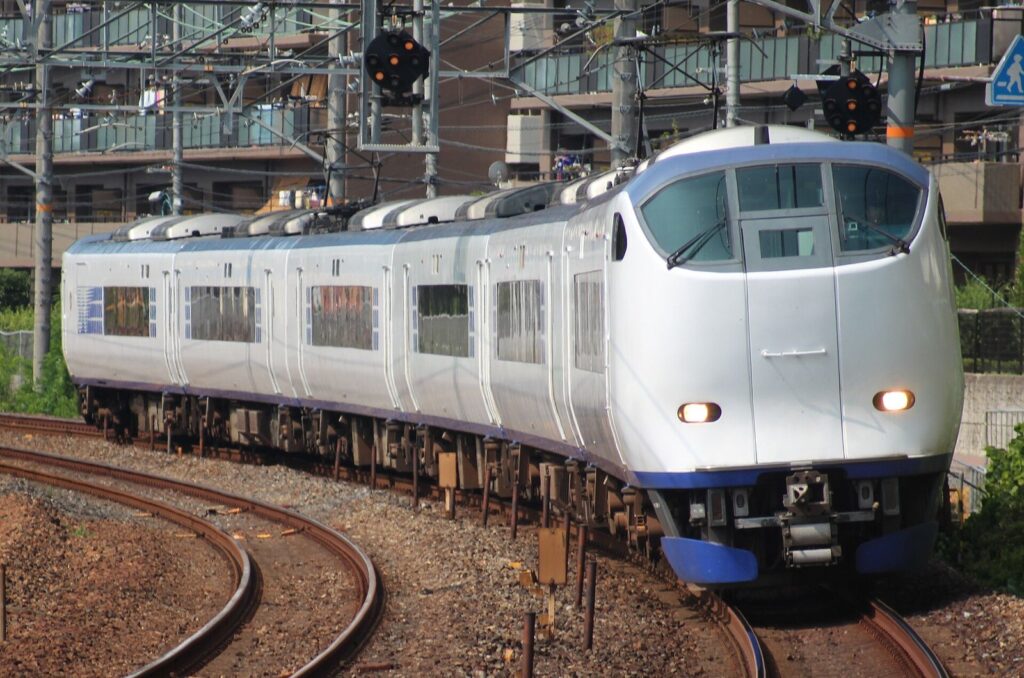
The Haruka is JR West’s airport express, and it’s the only train that runs from Kansai Airport to Kyoto Station without a change. It departs roughly every 30 minutes through the day, and the ride itself is comfortable — proper airline-style seats, luggage racks big enough for a large suitcase, and a quiet, mostly business-and-tourist crowd rather than a commuter rush.
At the regular fare, a one-way trip to Kyoto is about ¥3,060 non-reserved or ¥3,590 reserved. What makes the Haruka worth planning around is the HARUKA One-way Ticket, sold only to travelers holding a foreign passport with Temporary Visitor status. To Kyoto it’s around ¥2,200 for a non-reserved seat — close to what the bus costs, for a train that’s 20-plus minutes faster.
You can’t buy this discount ticket on the spot after landing. Book it in advance online — through JR West’s own site or a booking platform — then collect the physical ticket at the airport station’s ticket office or a green ticket machine with your passport. Non-reserved is fine outside the first couple of hours after a big wave of international arrivals; if the platform looks busy, you can add a reserved seat separately at a machine for a small top-up.
One outdated tip still floating around older guides: the ICOCA & HARUKA combo ticket that bundled a prepaid IC card with the fare was discontinued back in 2023. If a blog tells you to buy that set at the airport, it’s working from old information — buy the HARUKA One-way Ticket and a Welcome Suica or ICOCA separately instead. Suica vs PASMO vs Welcome Suica covers which IC card actually makes sense for your trip.
👉 Klook HARUKA one-way ticket to Kyoto
Option 2: The airport limousine bus
Buses leave from stops directly outside both terminals and run straight to Kyoto Station’s Hachijo-guchi (south) exit for about ¥2,800, taking roughly 100 minutes depending on expressway traffic. Departures run from around 4:30am to past 9pm from the Kyoto side, and a little later from the airport, so it covers most flight times — but reservations are required for services heading to the airport, and it’s worth booking your Kyoto-bound seat ahead in cherry blossom and autumn color season when demand spikes.
The bus wins in one specific situation: you’re hauling more luggage than you want to carry through a station, and your hotel is a short walk or taxi ride from Kyoto Station. One bag goes straight into the hold, one seat, no stairs, no transfers. It’s slower than the Haruka and only marginally cheaper once you’ve bought the discount train ticket, so choose it for the logistics, not to save money.
Option 3: Taxi or a flat-rate private transfer
A metered taxi from Kansai Airport to central Kyoto is expensive — expect somewhere in the ¥20,000–35,000 range depending on your exact destination and time of day, with a late-night surcharge (roughly 10–20%) added between 10pm and 5am. Flat-rate services from operators like MK Taxi are often a better deal than a metered ride if you know your destination in advance, typically running from around ¥24,000 per vehicle for Kyoto Station, tolls extra. There are also shared shuttle options that seat you with other travelers heading the same direction for a per-person fare well under a private car.
Hard to justify for one or two people when the Haruka exists. But for a family of four landing at 11pm with jet-lagged kids and four suitcases, splitting a flat-rate car can come out close to four Haruka reserved tickets — and it takes you door to door with no walk from the station.
Do the rail passes make sense here?
Two passes are worth a moment’s thought, and both are tourist-only:
- The JR Kansai Area Pass (roughly ¥2,800 for 1 day, ¥4,800 for 2, ¥5,800 for 3, ¥7,000 for 4) covers the Haruka between the airport and Kyoto plus local JR trains around Kyoto, Osaka, Kobe, Nara and Himeji. If you’re planning a Nara or Himeji day trip on top of the airport ride, a 1- or 2-day pass can work out cheaper than buying tickets separately — Kansai Airport to Nara has the numbers for that specific route.
- The nationwide Japan Rail Pass (commonly called the JR Pass) also covers the Haruka. If you already have one activated from your arrival date, just use it — but it isn’t worth buying for this ride alone. Japan Rail Pass 2026: Is It Still Worth It? runs through when it actually pays off.
The Kansai Area Pass and the HARUKA discount ticket cover the same ride, so there’s no reason to buy both — pick whichever matches the rest of your itinerary.
👉 Klook JR West Kansai Area Pass
Two things that catch people out
Terminal 2 has no train or bus station of its own. If you’re flying a low-cost carrier like Peach into Terminal 2, you’ll need the free shuttle bus to Terminal 1 first, which takes 7–9 minutes and runs every 10–15 minutes. Add 20–30 minutes to whatever time you’d otherwise budget.
The last Haruka and last buses run earlier than a lot of people expect. Both services stop for the night well before midnight. If your flight lands after 10pm, check the timetable before you leave home — a delayed evening arrival can turn into an unplanned taxi fare. Getting connected the moment you land makes checking all of this much easier; Best eSIM for Japan covers what actually works for a short trip.
FAQ
Is the Haruka worth it without the tourist discount?
At the full ¥3,060–3,590 fare it’s still the fastest option, but the price gap with the bus narrows a lot. With the ¥2,200 discount ticket, it’s the clear best choice for almost everyone.
Can I use my Japan Rail Pass on the Haruka?
Yes, including reserved seats, as long as the pass is activated. It doesn’t cover the limousine bus or any taxi service, since those aren’t JR.
How early should I book the HARUKA One-way Ticket?
A day or two ahead is plenty outside peak seasons. During cherry blossom (late March–early April) and autumn colors (mid-November), book further ahead since both the train and the bus fill up.
Is there a cheaper way to Kyoto than the Haruka or the bus?
You can ride the JR Kansai Airport Rapid to Osaka Station and change to a JR Kyoto Line rapid service, but it involves a transfer with luggage and the time saved over the discounted Haruka fare is minimal. For most travelers it’s not worth the hassle.
The verdict
Buy the HARUKA One-way Ticket before you fly, collect it at the airport station, and you’ll be walking into Kyoto Station about 75 minutes after wheels-down for roughly the same price as the bus. Switch to the bus only if your luggage situation makes a hands-free ride worth the extra 20 minutes, and save the taxi for a late landing or a group that makes the math work. Once you’re there, Kyoto Travel Guide for First-Timers and Best Things to Do in Kyoto pick up from Kyoto Station.
Written from Japan by the Wayfarer Japan team — we live here, ride these trains, and update this guide as fares change.
Featured image: “JRW 281 Haruka 201200913” by Rsa, CC BY-SA 3.0, via Wikimedia Commons