I live in Japan, and one of the questions I get asked most by friends visiting is some version of “can we actually just rent kimono and walk around?” The answer is yes, and it’s far easier than people expect. You don’t need a reservation made months in advance, you don’t need to know anything about how kimono work, and you don’t need to bring anything with you. You show up, pick a design, and twenty to thirty minutes later you’re walking out the door dressed for the day. If you’ve read Kimono Explained, you already know the history and the rules that make a kimono formal or casual. This is the other half: the practical side of actually putting one on as a visitor, where to do it, what it costs, and the small details that make the difference between a fun afternoon and a rushed, overpriced one.
The quick answer
- Basic rental plans run roughly ¥3,000 to ¥5,500 for the kimono, obi, bag and sandals; hairstyling typically adds ¥1,000 to ¥2,500. These are approximate 2026 figures — always check the current plan on the booking page before you commit.
- Kyoto’s Higashiyama and Gion districts and Tokyo’s Asakusa are the two best places to do this, because both are historic, walkable, and full of shops built specifically for same-day tourist rental.
- The whole process, from choosing a design to walking out dressed, usually takes 20 to 40 minutes.
- You keep the outfit all day and return it to the same shop by closing time (usually 6 or 7 PM); most shops don’t require you to come back at a specific hour.
- Book online in advance for popular shops during cherry blossom (late March to early April) and autumn foliage (mid-November) season, when walk-in slots can fill up by midday.
- Comfortable, flat shoes are not needed — zori sandals are included — but bring a small bag for your phone and wallet, since most kimono don’t have pockets.
Where to actually do this
Kyoto: Higashiyama and Gion. This is the single best place in Japan to rent a kimono, for one simple reason: the scenery matches the outfit. The stone-paved lanes around Kiyomizu-dera, the Sannenzaka and Ninenzaka slopes, and the Gion geisha district all look the way they do partly because so many visitors are walking through them in kimono. Shops cluster within a five-to-ten-minute walk of Kiyomizu-dera and along the approach to it, which means you can rent, get dressed, and be taking photos on a 1,000-year-old staircase within the hour.
Tokyo: Asakusa. If your trip doesn’t include Kyoto, Asakusa is the Tokyo equivalent. Senso-ji, the Nakamise shopping street leading up to it, and the surrounding lanes of low wooden buildings give the same visual payoff as Higashiyama, just inside Tokyo. Shops are concentrated around the temple’s main approach and along Kaminarimon-dori, often with same-day availability even on weekends.
Smaller but worthwhile options. Kamakura, Nara, and Arashiyama (on the western edge of Kyoto, near the bamboo grove) all have a handful of rental shops aimed at the same idea: historic streets plus traditional dress equals good photos. These are quieter than Gion or Asakusa if you’d rather avoid crowds, though the selection of kimono designs tends to be smaller.
What’s actually included and what it costs
Entry-level plans at most shops cover the same basics: a cotton or polyester kimono (not silk — more on that below), an obi, a small bag, tabi socks, and zori sandals. That’s the ¥3,000 to ¥5,500 range you’ll see advertised. Hairstyling is usually a separate add-on, typically ¥1,000 to ¥2,500, and most shops offer it, since an elaborate updo is part of the look for a lot of visitors, especially for photos.
Where the price climbs is silk kimono, “retro” or antique-style designs, furisode (the long-sleeved style worn by young unmarried women, explained in Kimono Explained), and bundled photoshoots with a professional photographer. Those packages can run well past ¥10,000 per person. If you just want the experience of walking around dressed for the day, the basic plan is genuinely enough — the silk and the professional photos are for people who want keepsake portraits, not a requirement for having a good time.
Men’s and children’s kimono are available at most shops that cater to tourists, usually at a similar or slightly lower price point than women’s plans, though the selection of designs is typically smaller.
How the day actually goes
You arrive at the shop (walk-in is usually fine outside peak season; see below for when to book ahead), browse a wall or rack of kimono and obi combinations, and pick what you like — most shops have anywhere from 100 to 300+ designs. Staff measure you, help you into the kimono, which has to be wrapped and tied correctly to sit right, and fit the obi. If you’ve added hairstyling, that happens next. The whole thing, start to finish, usually takes 20 to 40 minutes, less if the shop isn’t busy.
You then keep the outfit for the rest of the day — there’s no hourly rental clock running. Most shops ask you to return by their closing time, commonly 6 or 7 PM, and many will store your regular clothes and bags for you in a locker while you’re out. Some shops near Kiyomizu-dera and in Asakusa also offer “stay overnight” plans for an extra fee if you want to wear it into the evening and return it the next morning, though this is less common and worth confirming directly with the shop if it matters to you.
Weather matters more than people expect. Kimono sleeves and the obi make an umbrella awkward to manage, and the fabric isn’t quick-drying, so a rainy day is a legitimate reason to reschedule if a shop allows it, or at least to ask about a clear poncho (some shops keep a few on hand). If you forgot a jacket for a cooler day, that’s fine — the kimono itself is fairly warm, and a scarf or stole over the top for exposed days is a common and visually fine addition, not something that looks out of place.
Timing it right
Season affects availability more than price. Cherry blossom season (roughly late March through early April) and peak autumn foliage (mid-November in Kyoto) are when every shop near Kiyomizu-dera and Gion gets busy, and walk-in slots can disappear by late morning. If your trip lands in either window, book a time slot online a few days ahead rather than relying on walking in.
Weekday mornings are the easiest window generally. Outside peak season, arriving on a weekday morning gives you the best shot at walk-in availability and shorter waits for fitting.
Summer means yukata, not kimono, at a lot of shops. From roughly June through September, many rental shops shift their main offering to yukata, the lighter cotton robe also covered in Kimono Explained. It’s a different, cooler garment, and it’s the right call for a hot Kyoto afternoon regardless of which one the shop calls it on the sign outside.
FAQ
Do I need to book in advance? Not usually, outside cherry blossom and peak autumn weekends, when booking a slot online a few days ahead is worth doing. Walk-ins are normal the rest of the year.
Can men and children rent kimono too? Yes, most tourist-facing shops in Kyoto and Asakusa offer men’s and children’s plans, generally in the same price range as women’s basic plans.
Is it respectful for a tourist to wear a kimono? Yes. Wearing rented kimono as a visitor is a long-established, welcomed part of sightseeing in Kyoto and Asakusa, and the entire local industry of rental shops exists because of it. Treat the temples and streets you’re photographing in with the same courtesy you would in your regular clothes — stay on marked paths, keep noise down near worship areas — and you’re fine.
What if it rains? Ask the shop about rescheduling or borrowing a clear poncho; kimono and umbrellas don’t mix well. Some shops are flexible about moving your slot if the forecast is bad.
Do I need to bring anything? A small bag for your phone and wallet is the main thing, since kimono have no pockets. Comfortable socks are fine under the tabi socks provided if the weather’s cold.
Can I keep the kimono overnight? Some shops near Kiyomizu-dera and in Asakusa offer overnight plans for an extra fee, but it’s not standard — ask the specific shop when booking if this matters to your plans.
The verdict
Renting a kimono for a day in Kyoto or Asakusa is one of the lowest-effort, highest-payoff things you can do as a visitor: no planning required, a genuinely fun hour of picking a design, and an afternoon of walking through streets that were basically built to be photographed this way. Stick to the basic plan unless you specifically want silk or a professional photoshoot, book ahead only if you’re traveling during cherry blossom or peak autumn, and treat the whole thing as a couple of hours of your trip rather than the centerpiece — that’s exactly how it’s designed to work.
Written from Japan by the Wayfarer Japan team, who test, verify and update every guide so you can travel with confidence.
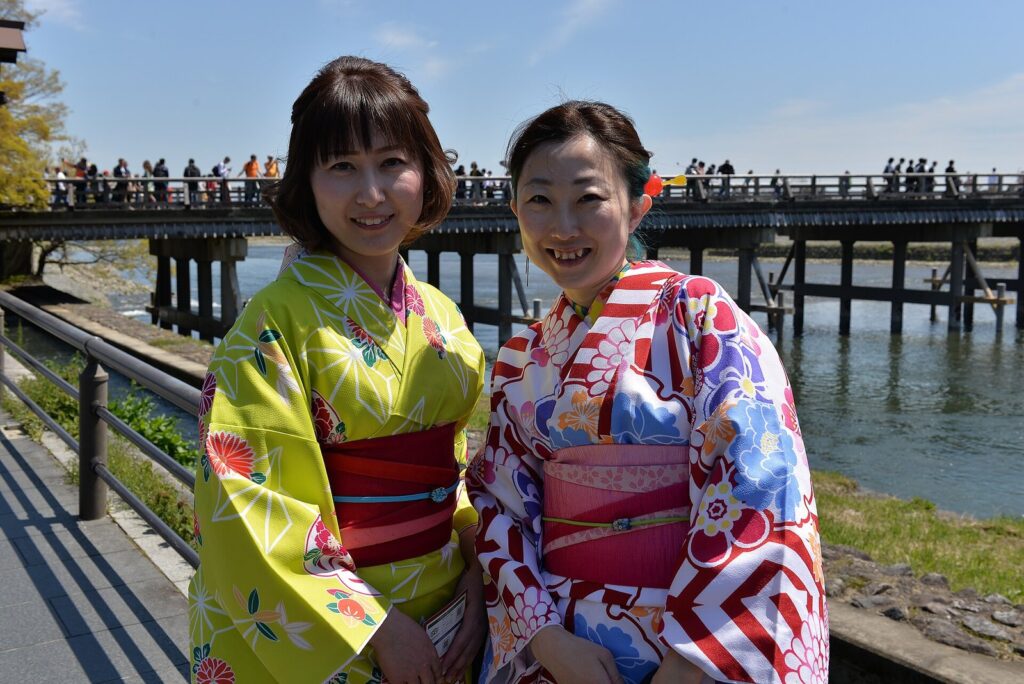
Featured image: “2019-04-16 Two lovely lasses in kimonos smile for me against the Togetsukya bridge” by shankar s., CC BY 2.0, via Wikimedia Commons