If you only have one day to spare and want to trade the Tokyo skyline for forest, temple bells and a decent view of Mt. Fuji, Mount Takao is the answer most Tokyo residents reach for. It sits just outside the western edge of the city, it’s fully reachable on an ordinary commuter train, and it somehow still manages to feel like a real mountain — not a theme park with a nature backdrop. I live in Japan, and Takao is where I send friends who want a hike but don’t want to commit to a full Hakone or Nikko itinerary.
The quick answer
- How to get there: Keio Line limited express from Shinjuku to Takaosanguchi Station, about 50 minutes, roughly ¥390 one way with an IC card. No reservation needed.
- Cable car or chairlift: ¥490 one way / ¥980 round trip for adults (children ¥250 / ¥500), running from near Takaosanguchi Station up to the Fukuda-yama Station area partway up the mountain.
- Best season: Year-round, but autumn leaves (koyo) usually peak mid-to-late November, with the summit coloring first and the lower slopes following into early December.
- Easiest route: Trail 1 (Omotesando Trail), paved most of the way, passing the cable car’s upper station, the monkey park and Yakuo-in Temple before reaching the 599-meter summit.
- Time needed: A half-day is enough for the cable car plus Trail 1 round trip; a full day lets you add a loop trail and the Takao 599 Museum.
- On a clear winter morning, the summit observation deck has one of the better casual views of Mt. Fuji you’ll get without a dedicated Fuji trip.
Getting there from Tokyo
Takao is unusually convenient for a mountain. From Shinjuku Station, take the Keio Line — the limited express (keikyu or junkyu) direct to Takaosanguchi Station takes about 50 minutes and costs around ¥390 with a Suica or Pasmo. There’s no need to reserve a seat or buy a special ticket in advance; just tap in and ride like any other Tokyo train.
Some travel sites sell a Keio one-day pass bundled with a cable car or chairlift ticket, discounted around 20% off buying the two separately — worth it if you’re doing a round trip on the cable car and want to skip the ticket line. 👉 Klook Mt. Takao cable car and train pass
Takaosanguchi Station itself is worth a glance — it’s one of the more architecturally striking suburban stations near Tokyo, designed with a cedar-wood roof that nods to the mountain above it. From the station, it’s about a five-minute walk to the Kiyotaki cable car and chairlift station.
Cable car, chairlift, or walk
You don’t need the cable car to climb Mt. Takao — plenty of people walk the whole way — but it saves the steepest, least interesting first stretch and leaves more energy for the actual forest trail above.
- Cable car: enclosed, fast, runs even in light rain, better if you’re short on time or traveling with kids or older relatives.
- Chairlift: open-air, slower, more fun if the weather’s good and you don’t mind being exposed to the elements.
- Both cost the same: ¥490 one way, ¥980 round trip for adults.
If you forgot gloves or a warmer layer for the chairlift in late autumn, don’t worry about it — there are vending machines and small shops at both the base and upper stations, and Hachioji and Shinjuku have full sporting goods stores if you need something more serious before you head out.
Which trail to take
Mount Takao has around eight numbered trails of varying difficulty, but almost every first-time visitor wants Trail 1.
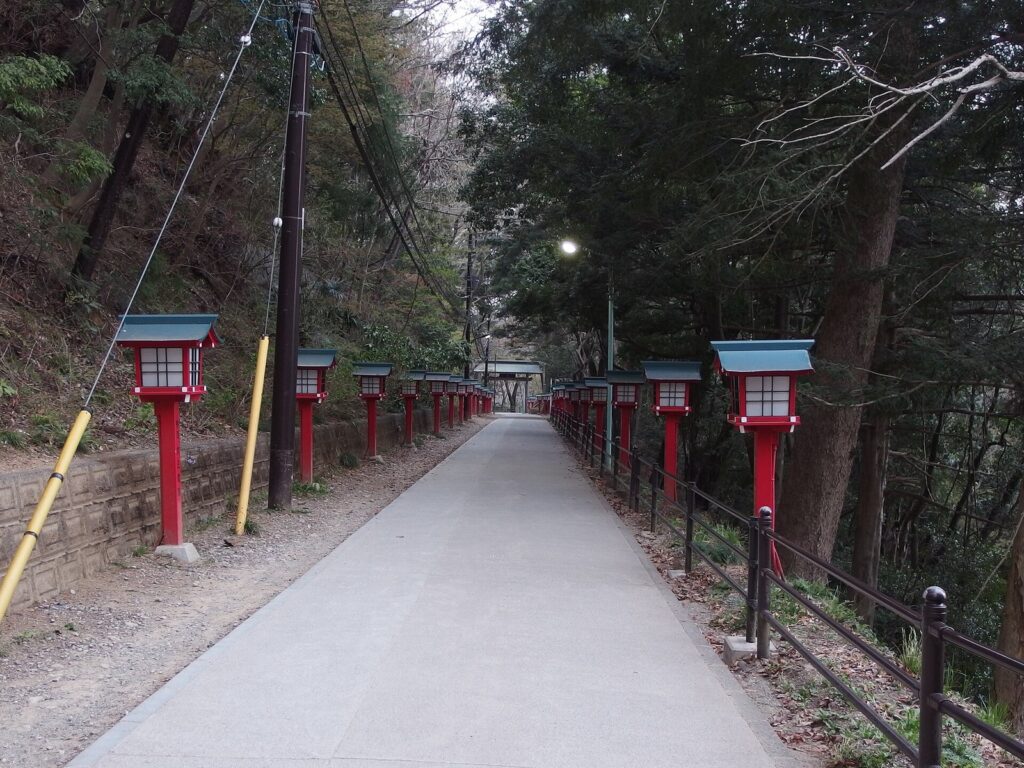
Trail 1 (Omotesando Trail) is mostly paved, well-signed, and passes the top cable car station, a small monkey park and botanical garden, and Yakuo-in Temple — officially Takaosan Yakuo-in Yukiji, a working Buddhist temple founded over 1,200 years ago that still anchors the mountain’s identity as a site of shugendo mountain worship. Statues of tengu, the beaked, red-faced mountain spirits associated with Takao in local folklore, line parts of the approach. From the temple it’s a further climb to the 599-meter summit, where there’s an observation deck, a few simple restaurants, and — on a clear day — a view toward Mt. Fuji on the horizon.
Round trip on Trail 1 from the upper cable car station takes most people about two to three hours at an easy pace, including stops at the temple.
If you want something quieter, Trail 6 (Biwa Waterfall Trail) follows a stream most of the way up, passing a small waterfall still used for ascetic training by Yakuo-in’s monks, and has a noticeably more forested, less crowded feel than Trail 1. It’s a reasonable option for the way down if you walked up via Trail 1, giving you a loop instead of backtracking.
When to go for autumn leaves
Mount Takao’s koyo season is one of the most reliable near Tokyo, largely because the mountain’s elevation spreads the color change over several weeks rather than all at once. As a rough guide:
| Area | Typical peak |
|---|---|
| Summit and Momijidai (maple terrace) | Mid-to-late November |
| Yakuo-in Temple grounds | Late November |
| Lower slopes and cable car base | Late November to early December |
Because the color moves down the mountain gradually, late November tends to be the safest single window if you want a decent spread of red and gold without needing to track the exact week. It’s also, unsurprisingly, the busiest period — expect crowds and queues for the cable car on weekends during peak color, so a weekday visit or an early start helps.
What to bring (and what not to worry about)
Takao doesn’t require technical gear. Trail 1 is paved or well-maintained dirt the whole way, and you’ll see people hiking it in sneakers. Still, a few basics make the day more comfortable:
- Layers — the summit is noticeably cooler and windier than the base, especially in late autumn.
- A bottle of water; there are vending machines at the base and partway up, but fewer near the summit.
- Comfortable walking shoes rather than sandals, since even the paved sections have uneven steps.
If you show up without any of this, you’re not in trouble. Convenience stores near Takaosanguchi Station sell drinks and snacks, and Hachioji — one stop away — has larger shops for a rain jacket or better shoes.
Beyond the summit: museum and onsen
At the base of the mountain, the Takao 599 Museum (named for the summit’s elevation in meters) is a small, free museum covering the mountain’s wildlife and ecosystem — a good stop if you arrive early or want shelter from rain before heading up.
After the hike, several onsen facilities near Takaosanguchi Station let you soak and wash off before the train back to Shinjuku, which is a far better way to end the day than sitting on a crowded train in hiking clothes. Guided options bundling the hike with a hot spring stop are available if you’d rather not plan the logistics yourself. 👉 Klook Mt. Takao hiking tour with onsen
FAQ
Do I need to book cable car tickets in advance? No, same-day tickets are sold at the station, though lines form on autumn weekends. Buying a combined Keio + cable car pass in advance can save you a ticket-counter stop.
Is Mount Takao good for kids or older travelers? Yes — Trail 1 is paved most of the way and the cable car removes the steepest section, which is why it’s a popular family and senior destination, not just a hiker’s mountain.
How does Takao compare to Hakone or Nikko for a day trip? Takao is faster and simpler — one train line, under an hour, no transfers. Hakone and Nikko involve more travel time but offer more to see once you arrive (onsen towns, major shrines). Takao is the better choice if you specifically want a hike without eating up your whole day in transit.
Can I see Mt. Fuji from the summit? On clear days, yes, though it’s a distant view rather than a close-up — don’t plan the trip around it, especially in summer haze. Winter mornings tend to offer the clearest sightlines.
Is it crowded? On autumn weekends, very. Weekday visits or an early morning start are the easiest way to avoid the worst of the cable car queues.
The verdict
Mount Takao won’t give you the drama of Fuji or the onsen-town atmosphere of Hakone, but for a half-day or full-day escape from central Tokyo with minimal planning, it’s hard to beat — especially from mid-November, when the slopes turn color one elevation band at a time. Take the Keio Line out, ride the cable car up, walk Trail 1 past Yakuo-in Temple to the summit, and you’ll be back in Shinjuku in time for dinner having actually left the city for a few hours.
Written from Japan by the Wayfarer Japan team — practical travel guides from people who live here.
Featured image: “Empty Yakuoin Temple @ Mount Takao (13778871674)” by Guilhem Vellut from Annecy, France, CC BY 2.0, via Wikimedia Commons