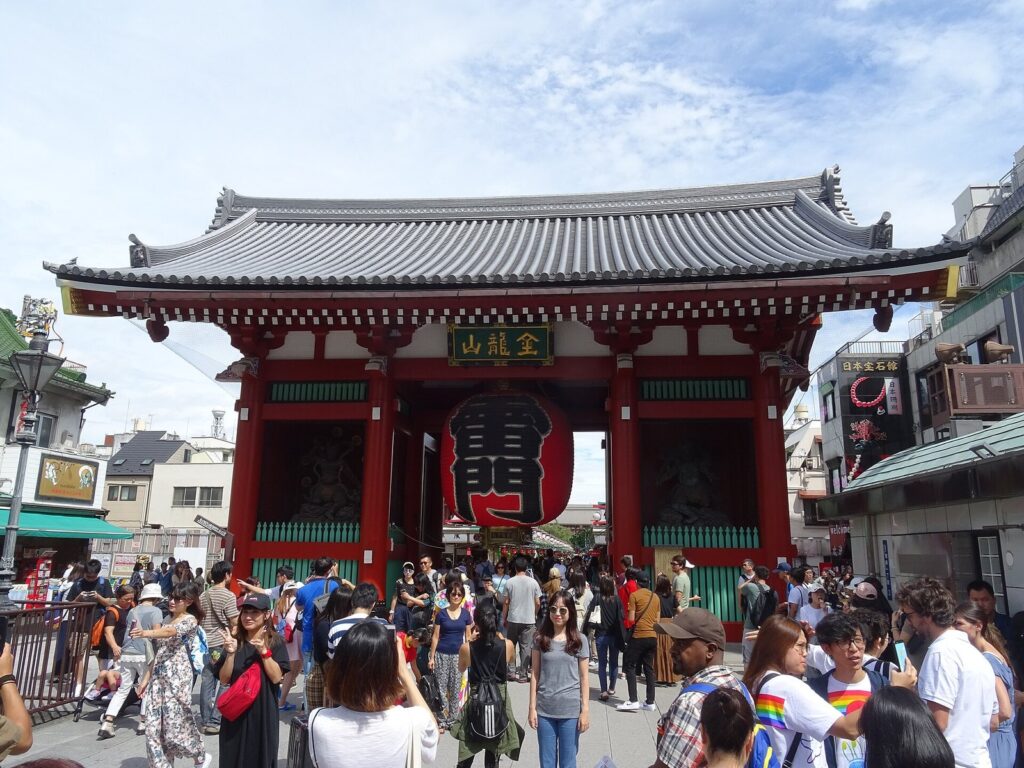
I live in Japan, and of all the Tokyo neighbourhoods visitors ask me about, Asakusa is the one with the best-kept transport secret: there is a train that runs from the platform under Narita Airport all the way to Asakusa Station without you ever changing trains. Most people never find it, because it does not have “airport” in its name, it is not advertised at the ticket counter, and only about half the trains on that line actually do it.
Get it right and you are at Kaminarimon for about ¥1,290. Get it wrong and you are dragging a suitcase up the stairs at Ueno wondering why nobody told you.
The quick answer
- Arriving before about 21:00 and travelling light? Take the Keisei Access Express bound for Nishi-Magome or Haneda Airport — direct to Asakusa, about 50–60 minutes, ¥1,290.
- Want a reserved seat and the shortest time on your feet? Take the Skyliner to Keisei-Ueno (about 40 minutes, ¥2,470), then the Ginza Line two stops to Asakusa (¥180, five minutes).
- Counting every yen? The Keisei Main Line limited express also runs through to Asakusa for ¥1,100 — it just takes 20–30 minutes longer.
- Lots of luggage, small children, or a hotel you cannot face walking to? The Airport Limousine Bus to the Asakusa View Hotel costs ¥3,100 and needs no transfers, but there are only about five a day.
- Arriving late at night? After roughly 21:15 the direct trains stop running through to Asakusa. Switch to the Skyliner plus the Ginza Line — the metro still runs well past midnight.
- Not sure Asakusa is the right base? Where to Stay in Tokyo covers how it compares with Shinjuku and Shibuya before you book.
The routes at a glance
| Access Express (direct) | Skyliner + Ginza Line | Keisei Main Line ltd. exp. | Limousine Bus | Flat-rate taxi | |
|---|---|---|---|---|---|
| Total time | ~50–60 min | ~55–60 min door to door | ~80–90 min | ~100–120 min | ~60–75 min |
| Total cost | ¥1,290 (¥1,276 by IC) | ~¥2,650 | ¥1,100 (¥1,087 by IC) | ¥3,100 | ¥26,000 + tolls |
| Transfers | None | One (short walk at Ueno) | None | None | None |
| Seat | Unreserved, commuter-style | Reserved, luggage racks | Unreserved | Reserved | Yours |
| Frequency | Roughly every 40 min | Every 20–40 min | Sparse | About 5 a day | On demand |
These are 2026 figures, accurate as of writing and taken from the operators’ own fare tables — but Japanese fares get revised and bus timetables get trimmed, so treat them as close estimates and confirm before you book.
Option 1: The direct train nobody tells you about
Keisei’s Access Express runs along the Narita Sky Access line and then, crucially, keeps going onto the Toei Asakusa subway line — the same line that serves Asakusa Station. No transfer, no stairs, no second ticket. Narita Airport to Asakusa is ¥1,290 (¥1,276 with a Suica or PASMO) and takes roughly 50 to 60 minutes depending on the service.
The catch, and it is the whole trick of this article: not every Access Express goes there. Roughly half of them terminate at Keisei-Ueno instead, which is a fine destination but nowhere near Asakusa.
- Board a train whose destination board says Nishi-Magome (西馬込) or Haneda Airport (羽田空港). Those are the ones that dive under central Tokyo via the Asakusa line.
- Do not board one that says Keisei-Ueno (京成上野). Same platform, same train type, completely different ending.
- Through-services to Asakusa leave roughly every 40 minutes, so if the next one is a Ueno train, it is often worth waiting rather than improvising.
Tapping through with an IC card is the simplest way to ride it — no ticket machine, no working out which company’s fare applies to which section. If you have not set one up yet, How to Use Suica in Japan explains adding one to your phone before you land, which is what I would do.
One more small mercy: the trains are ordinary commuter stock with no reserved seats, but they start their run at the airport, so you can almost always sit down and keep your suitcase beside you.
Option 2: Skyliner to Ueno, then two stops on the Ginza Line
The Skyliner is the fast, comfortable one: reserved seats, proper luggage racks, and around 40 minutes from the airport to Keisei-Ueno at ¥2,470. It does not serve Asakusa, but it does not need to — from Ueno, the Tokyo Metro Ginza Line reaches Asakusa in about five minutes for ¥180.
Realistically you are looking at ¥2,650 and just under an hour door to door, including the walk between the Keisei terminal and the metro entrance at Ueno. That walk is the only downside: it is a few minutes, it involves an escalator or two, and it is mildly annoying with two large cases.
Buying the Skyliner ticket online before you fly is usually about ten percent cheaper than the counter price, and it means walking straight to the platform instead of queueing behind forty other people who have just cleared immigration.
👉 Klook Keisei Skyliner ticket
Option 3: The cheapest train (¥1,100)
Keisei’s older Main Line limited express also runs through to Asakusa, and because it takes the slow, scenic route through the Chiba suburbs rather than the fast Sky Access tracks, it is ¥1,100 — ¥1,087 by IC card. Journey time is roughly 80 to 90 minutes.
I would only take it if the timing happened to line up, or if the ¥190 saving genuinely mattered on a long trip. The bigger issue is frequency: through-services on this line are sparse, so you can easily lose the time you saved standing on a platform. If you want the full comparison of every Narita route to every part of the city, Narita Airport to Tokyo: All Options Compared covers the rest of them.
Option 4: Buses, and when they make sense
There are two very different bus options and they are constantly confused with one another.
The Airport Limousine Bus to the Asakusa View Hotel is the no-transfers option: ¥3,100 for an adult, a reserved seat, your suitcase in the hold, and a drop-off a short walk from the temple district. The price of that comfort is time and inflexibility — 100 to 120 minutes depending on traffic, and only around five departures a day, running roughly from mid-morning to early evening. If your flight lands at 21:00, this bus does not exist for you.
👉 Klook Narita Airport Limousine Bus
The Airport Bus TYO-NRT is the budget one: ¥1,500 to Tokyo Station in about 65 minutes when the expressway behaves, with a higher fare on late-night and early-morning services. It does not go to Asakusa, but from Tokyo Station you can hop to Kanda and take the Ginza Line, which adds about 20 minutes and ¥360. It is a good fallback when the trains have been disrupted, and honestly a pleasant ride in daylight.
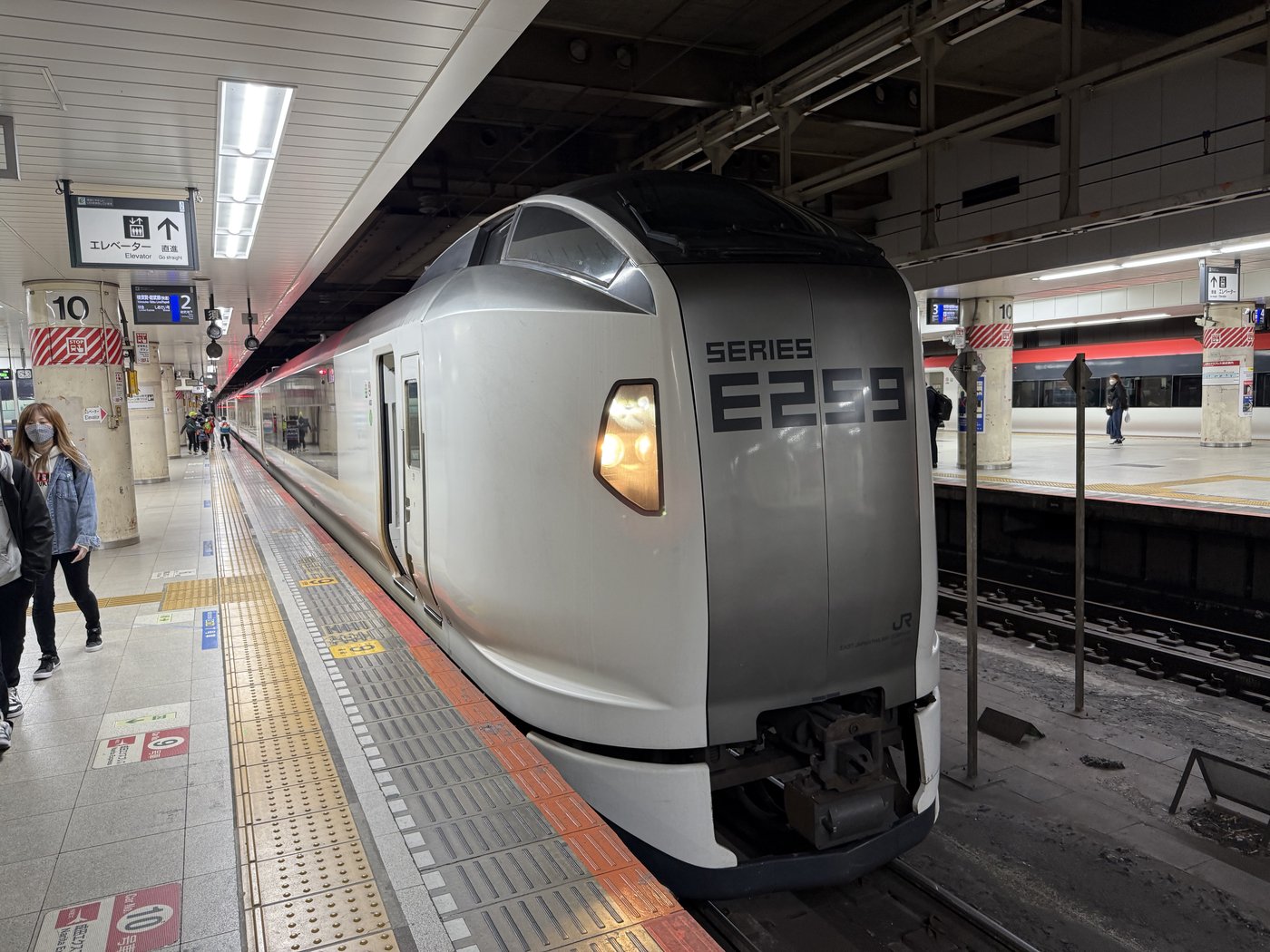
And the Narita Express? Skip it for Asakusa. The N’EX is a fine train — roughly ¥3,200 to Tokyo Station after the March 2026 JR fare revision — but it points at Shinjuku, Shibuya and Yokohama, and reaching Asakusa from it means paying premium-express money and then transferring anyway. It earns its fare for other destinations, not this one.
Option 5: Taxis and late arrivals
A flat-rate taxi from Narita into Taito ward, which is where Asakusa sits, runs about ¥26,000 during the day and ¥30,000 between 22:00 and 05:00, with expressway tolls added on top. That is real money, but split between four adults arriving at midnight with luggage it is not indefensible.
The more useful late-night knowledge is this: the last through-train to Asakusa leaves Narita at around 21:15. After that, Access Express services run to Keisei-Ueno or Keisei-Takasago instead, and the last Skyliner of the day departs a little after 23:00. So for a late landing the answer is almost always Skyliner to Ueno, then the Ginza Line — the metro’s last trains to Asakusa run past midnight.
Miss everything and you are choosing between the taxi and an airport hotel. At 1am, the airport hotel is usually the better decision.
Which Asakusa station are you actually going to?
This trips up more people than the trains do. There are three separate stations called Asakusa, plus one more nearby with a similar name:
- Toei Asakusa Line (A18) — where the direct airport trains arrive. Exits A4 and A5 put you closest to Kaminarimon.
- Tokyo Metro Ginza Line (G19) — where you arrive from Ueno. Basically the same block; the two connect underground.
- Tobu Asakusa Station — the terminal for trains to Nikko, inside the Matsuya department store building.
- Asakusabashi, two stops away, is a different neighbourhood entirely. Watch for it when you type your hotel into a route app.
All of them are within a few minutes’ walk of each other, so a mistake here costs you very little. But lifts are limited on the Toei side, so if you have a heavy case, look for the elevator signs before committing to a staircase — or send the luggage ahead by takkyubin and arrive with a day bag. Getting Around Tokyo has more on how the three operators fit together once you are in the city.
FAQ
Is there really a train from Narita straight to Asakusa? Yes. Keisei’s Access Express through-runs onto the Toei Asakusa Line. You need one bound for Nishi-Magome or Haneda Airport, not Keisei-Ueno, and they leave roughly every 40 minutes.
Can I use the Japan Rail Pass for this? No. The Japan Rail Pass (commonly called the JR Pass) covers JR trains, and none of the direct Asakusa routes are JR. Your JR option is the Narita Express to Tokyo Station and a transfer, which is slower and more awkward than the Keisei route. Save the pass for the shinkansen.
Do I need to book the Access Express in advance? No — it is an ordinary commuter train with no reservations and no surcharge. Just tap in with an IC card. Only the Skyliner and the buses need booking.
What if I land at Terminal 3? Terminal 3 has no station of its own. Walk or take the free shuttle to Terminal 2, where all of these trains and buses depart from. Allow 15 extra minutes.
Is Asakusa a good place to stay for a first trip? It is one of the better-value bases in Tokyo — atmospheric, well connected and cheaper than Shinjuku or Ginza. The trade-off is that it goes quiet early.
The verdict
If you land before about nine in the evening and can carry your own bags, take the Access Express bound for Nishi-Magome or Haneda. One train, one tap, about an hour, ¥1,290, and you surface a five-minute walk from Sensoji. There is no cleverer way to do this journey.
If you would rather pay for a reserved seat, take the Skyliner and add two stops on the Ginza Line. It costs about a thousand yen more and saves almost no time, but after a long flight the guaranteed seat and the luggage rack are worth something real — and it is the right answer for any late arrival.
The bus is for people with more suitcases than hands, and the taxi is for people arriving after the trains have given up. Everyone else: read the destination on the side of the train, and enjoy the fact that Tokyo quietly built a direct line to the oldest temple in the city.
Written from Japan by the Wayfarer Japan team. Prices and schedules are approximate for 2026 — always confirm with the operator before booking.
Featured image: “Kaminarimon in 2018” by Christophe95, CC BY-SA 4.0, via Wikimedia Commons