I live in Japan, and Yokohama is one of the trickier airport transfers to explain, because Narita and Yokohama sit on almost opposite sides of the greater Tokyo area. There is no single “obvious” train the way there is for central Tokyo. You are choosing between a direct but pricier limited express, a cheaper train with one change, a slow but simple bus, or a taxi that will genuinely dent your budget.
None of the options are bad, exactly — they just suit different trips. If you land tired with a hotel booked right by Yokohama Station, the direct train is worth the extra yen. If you are counting every yen or arriving with a JR-adjacent rail pass, the cheaper transfer is barely any real hardship.
The quick answer
- Want the simplest option with no transfers? Take the Narita Express (N’EX) direct to Yokohama Station — about 90 minutes, roughly ¥4,370, with reserved seats and luggage space.
- Counting every yen? The Keisei Sky Access line to Yokohama (one change, usually at Nippori or Sengakuji onto the Keikyu line) costs around ¥1,730 and takes about 1 hour 45 minutes.
- Even cheaper, if you have time to spare? The Keisei Main Line limited express connecting through works out to roughly ¥1,630, closer to 2 hours door to door.
- Lots of luggage or travelling as a group? The Airport Limousine Bus to YCAT (Yokohama City Air Terminal) costs about ¥4,000 and needs no transfers, though it takes 1 hour 40 minutes and can run longer in traffic.
- Landing very late or very early? Check train times carefully — the last direct N’EX and the last convenient Sky Access connections both run out well before midnight; a taxi or an airport-area hotel may be the only realistic option.
- Not sure Yokohama is worth the detour at all? Best Day Trips from Tokyo and Things to Do in Tokyo are good starting points if you are still finalizing your itinerary.
The routes at a glance
| Narita Express (direct) | Keisei Sky Access + transfer | Keisei Main Line ltd. exp. | Limousine Bus | Taxi | |
|---|---|---|---|---|---|
| Total time | ~85–90 min | ~1h 45m | ~2h | ~1h 40m (traffic-dependent) | ~1h 30–40m |
| Total cost | ~¥4,370 | ~¥1,730 | ~¥1,630 | ~¥4,000 | ¥23,000–38,000+ |
| Transfers | None | One | One (at Aoto/Ueno) | None | None |
| Seat | Reserved, luggage racks | Unreserved, commuter-style | Unreserved | Reserved | Yours |
| Frequency | Roughly hourly, more often midday | Every 20–40 min | Sparser | Roughly hourly, 8am–8pm | On demand |
These are 2026 figures taken from the operators’ own fare pages, but Japanese train and bus fares get revised and timetables get trimmed without much notice, so treat them as close estimates and double-check before you travel.
Option 1: The Narita Express, if you just want it handled
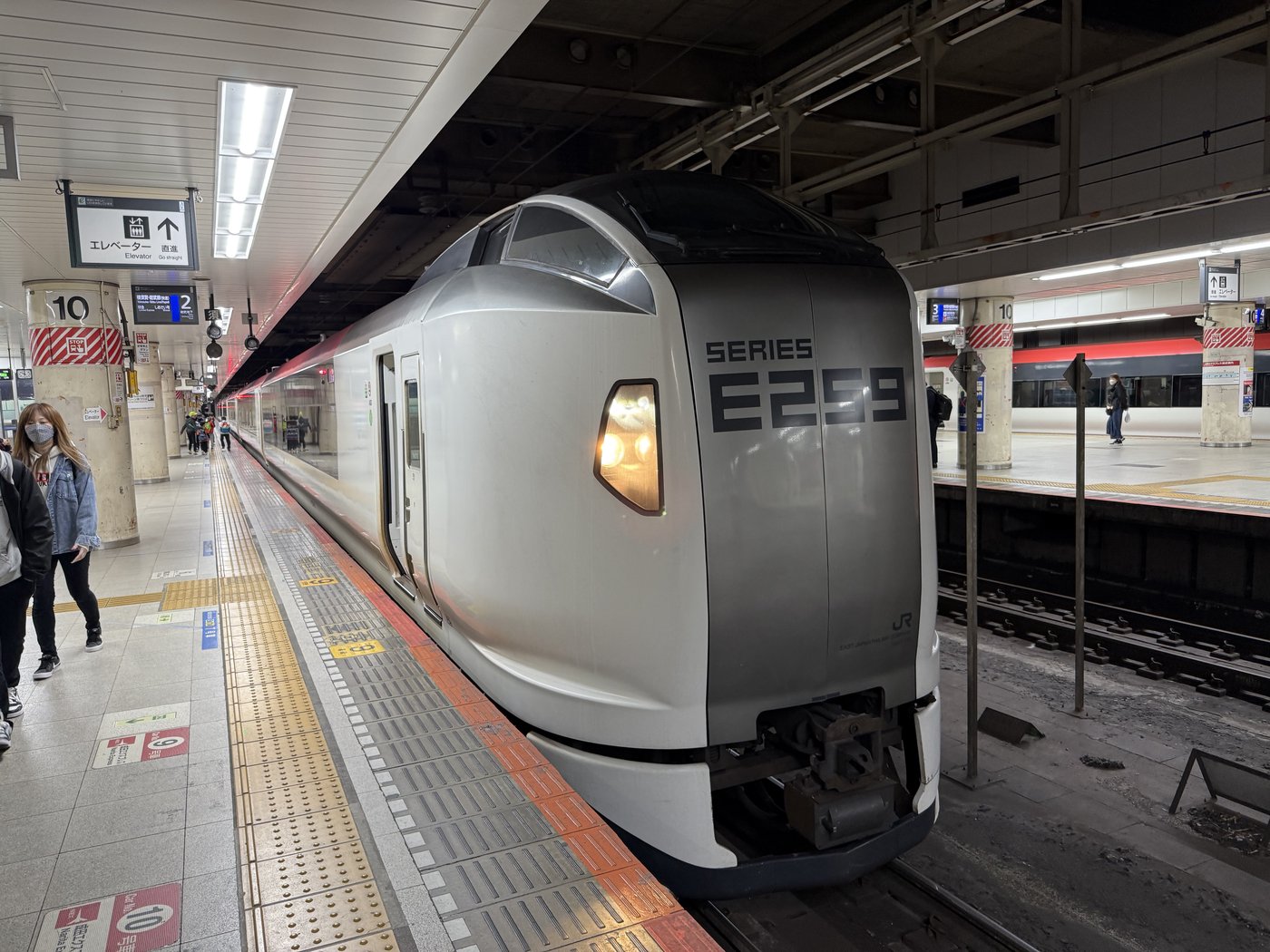
The Narita Express (N’EX) is JR East’s airport limited express, and one of its four routes runs directly through to Yokohama Station without you touching another train. You board at the airport, sit in a reserved seat with a proper luggage rack, and step off roughly 85 to 90 minutes later at Yokohama.
The fare is about ¥4,370 one way. Seats can be reserved online or at the ticket machines in the arrivals hall before you board, which matters more here than on shorter Tokyo-bound routes — services to Yokohama run only about once an hour outside the midday peak, so missing your booked train can mean a longer wait than you’d expect.
If you already have a Japan Rail Pass or one of the JR East regional passes, the N’EX is effectively free or heavily discounted, which changes the math completely — check Regional JR Passes and Japan Rail Pass 2026: Is It Still Worth It? if you are still deciding whether a pass makes sense for your trip.
Option 2: Keisei Sky Access, for the price-conscious
The cheaper route uses the Keisei Sky Access line, the same fast line that runs the Skyliner into central Tokyo, but instead you transfer partway — commonly onto the Keikyu line, which runs trains through to Yokohama — rather than riding all the way into Ueno. Total fare comes out to roughly ¥1,730, and the journey takes about 1 hour 45 minutes including the change.
These are ordinary commuter trains: no reserved seat, no guaranteed luggage space, though there is usually an overhead rail for smaller bags. It is entirely manageable with one suitcase each; it gets more awkward with a family’s worth of luggage and a tight connection window. Trains run every 20 to 40 minutes for most of the day, so a missed connection is a minor inconvenience rather than a real problem.
If you already have a Suica, PASMO, or Welcome Suica loaded, you can tap through the whole journey without buying a paper ticket — see How to Use a Suica Card in Japan if you have not set one up yet.
Option 3: Keisei Main Line, the slowest and cheapest
For an even smaller saving, the Keisei Main Line limited express (via a transfer around Aoto or Ueno) gets you to Yokohama for about ¥1,630 — only slightly less than the Sky Access route — but takes closer to two hours with the connection. Given the tiny price difference, most travellers are better off with Option 2 unless the Sky Access transfer genuinely does not line up with your arrival time.
Option 4: The Airport Limousine Bus
The Airport Limousine Bus runs direct from Narita Airport to YCAT (Yokohama City Air Terminal), a short walk from Yokohama Station, for about ¥4,000 one way, with a child fare around ¥2,000. No transfers, a reserved seat, and generous luggage storage underneath the bus make it comfortable — but the trip takes around 1 hour 40 minutes in ideal traffic, and Narita Airport expressway traffic is not always ideal, so budget extra time if you have a tight connection on the other end.
Buses run roughly once an hour between about 8am and 8pm. Booking ahead online is worth doing in peak season, though same-day counter bookings are usually available too.
👉 Klook
Option 5: Taxi, for door-to-door convenience
A taxi from Narita to Yokohama takes roughly 1 hour 30 to 40 minutes on the expressway, but it is the most expensive option by a wide margin — metered fares can run ¥30,000 or more, while pre-booked fixed-price transfers are typically somewhat cheaper, in the ¥23,000–28,000 range depending on the exact Yokohama address and the operator. It only makes sense for groups splitting the cost, families with a lot of luggage and small children, or very late-night arrivals when trains have stopped running.
👉 Klook
FAQ
Is there a direct train from Narita Airport to Yokohama? Yes — the Narita Express runs one of its four Tokyo-area routes straight through to Yokohama Station with no transfer, in about 85–90 minutes.
What’s the cheapest way from Narita to Yokohama? The Keisei Sky Access line with a transfer onto the Keikyu line, at roughly ¥1,730, though the Keisei Main Line option is a few hundred yen cheaper still if you don’t mind the extra 20–30 minutes.
Can I use a Suica or PASMO for the whole trip? Yes, for the train options. Tap in at the airport and tap out at Yokohama; the fare is deducted automatically, including across the transfer.
Is the Narita Express worth the extra cost over the train transfer? If you value one seat, one ticket, and not watching a transfer window, yes. If you’re travelling light and the roughly ¥2,600 difference matters, the Sky Access transfer is easy enough for most travellers.
How early should I book Limousine Bus tickets? Same-day counter bookings usually work outside peak season, but booking a day or two ahead online is safer around Golden Week, Obon, and the New Year holidays.
The verdict
For most travellers heading straight to a Yokohama hotel after a long flight, the Narita Express is the easiest choice — one seat, one ticket, no transfer to think about, for about ¥4,370. If the budget matters more than the extra hour, the Keisei Sky Access transfer at roughly ¥1,730 is a perfectly comfortable trade-off, especially if you’re already used to tapping an IC card through Japanese train stations. Save the taxi for a genuinely late arrival or a group that makes the math work.
Written from Japan by the Wayfarer Japan team — we live here, we ride these routes ourselves, and we update this guide whenever fares or schedules change.
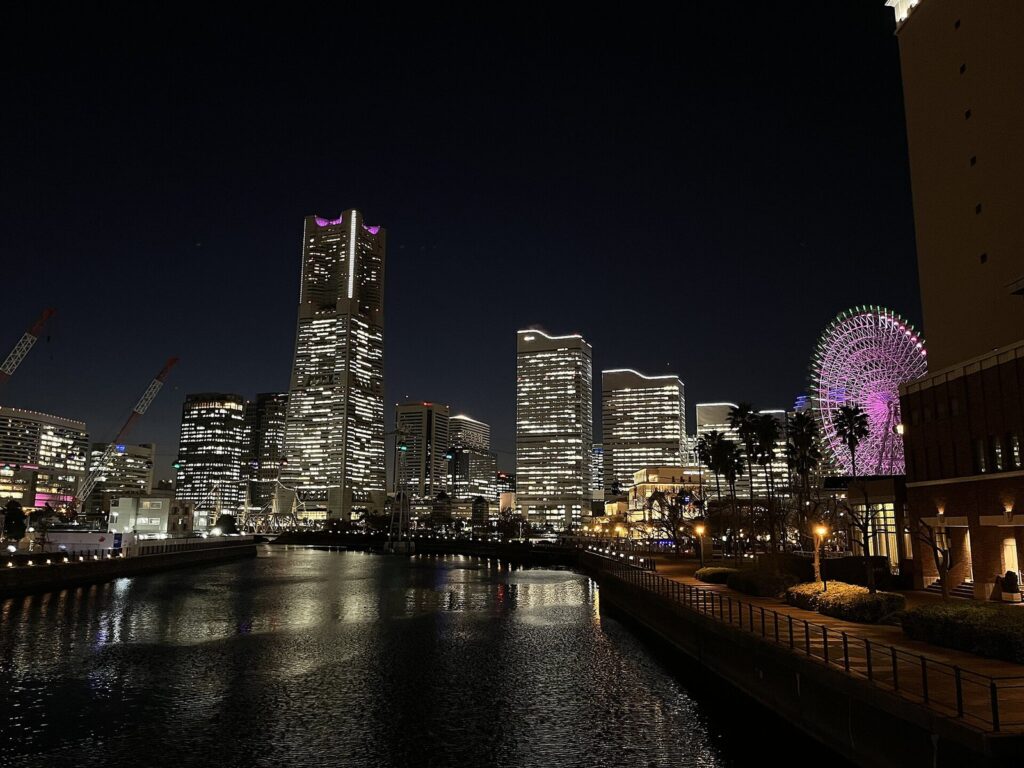
Featured image: “Minato Mirai – Yokohama Skyline March 2025” by Justin Taylor, CC BY 2.0, via Wikimedia Commons