The first time a visiting friend stood in front of a vending machine near my apartment and asked, completely seriously, “why is there a machine selling hot soup on a street corner,” I realized how normal this had become to me. I live in Japan, and vending machines are just furniture — they’re on train platforms, outside temples, halfway up hiking trails, next to rice paddies with no house in sight. You stop noticing them the way you stop noticing streetlights. Visitors notice immediately, and the questions are always the same: how many of these things are there, what can you actually buy, and do you need cash?
Here’s what’s really going on with the machines you’ll walk past dozens of times a day.
The quick answer
- Japan has roughly 4 million vending machines — close to one for every 30 people, among the highest densities anywhere in the world.
- Most machines sell drinks, but the category runs far wider: hot corn soup, instant ramen, fresh eggs, batteries, umbrellas, and even surprise “capsule toy” (gachapon) machines.
- A standard can or bottle runs about ¥130–210; water and green tea sit at the low end, canned coffee and sports drinks a bit higher.
- Around 85% of machines take IC cards (Suica, PASMO, ICOCA and the other interoperable transit cards) with a simple tap — no PIN, no signature.
- The number of drink machines is actually shrinking, down to its lowest point in roughly 30 years, as convenience stores and cashless payment eat into the business.
A nation of vending machines: the real numbers
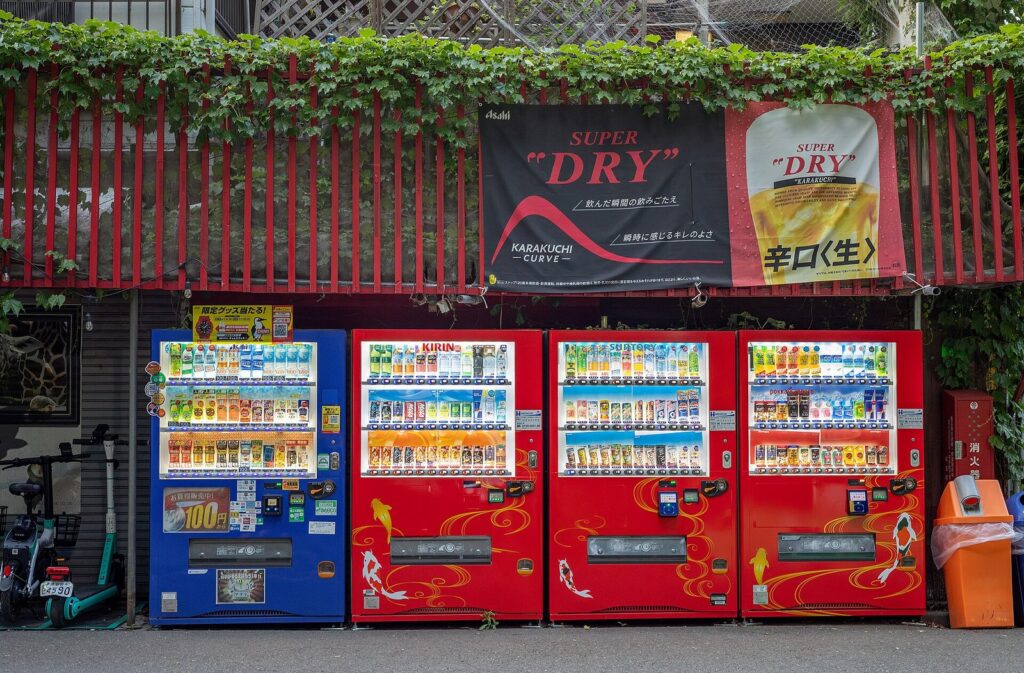
Estimates vary by source and year, but the Japan Vending System Manufacturers Association has put the national total at around 3.9–4 million machines, which works out to roughly one machine for every 30 people — a ratio unmatched by any other large country. The classic image is the drink machine, and drinks are still the backbone of the business, but the real number of pure soft-drink machines has actually been falling for years, down to its lowest level in about three decades as 24-hour convenience stores, home delivery and cashless alternatives chip away at casual drink purchases. What you’ll still see everywhere, though, is density: on a single block in central Tokyo it’s common to pass three or four machines run by competing drink brands, sometimes standing side by side.
What’s actually inside them
Cold and hot canned or bottled drinks are the baseline — and yes, the “hot” row is real. Japanese vending machines have sold heated drinks since the 1970s, marked with a red label instead of blue, so you can grab a hot can of coffee, corn soup, or milk tea on a cold platform without ever going inside anywhere. Beyond drinks, the variety gets genuinely strange in a fun way: instant ramen and hot noodle bowls, fresh eggs from a nearby farm, bananas, umbrellas for sudden rain, phone chargers, neckties, and the capsule-toy (“gachapon”) machines that dispense small collectible figures for a few hundred yen. None of this is a gimmick built for tourists — it reflects a culture that’s comfortable automating almost any small, repeatable transaction, from a train platform snack to a shrine’s fortune slips.
Pricing is honest and posted right on the machine. A bottle of water or green tea usually runs ¥100–130, canned coffee ¥110–150, and sports drinks or specialty teas ¥120–160. Major-brand drinks crossed the ¥200 line for the first time in late 2025, so don’t be surprised if a well-known cola or juice brand costs noticeably more than the no-frills water next to it — treat any specific price here as a rough guide and check the machine’s own display, since vending companies adjust pricing by location and season.
How to pay
Cash still works everywhere — coins and ¥1,000 notes are universally accepted, which matters because Japan’s older machines were built cash-first and many still are. The faster option, and the one I use for almost every purchase, is a transit IC card: Suica, PASMO, ICOCA and the other regional cards are interoperable nationwide, and roughly 85% of machines now accept a simple tap, the same tap you use to get through a train gate. There’s no PIN, no signature, nothing to sign — just hold the card near the reader for a second. If you’re setting one up for the first time, How to Use a Suica Card in Japan covers exactly how to load and tap one. Newer machines in stations and tourist-heavy areas are increasingly adding credit card and smartphone contactless payment too, but it’s not universal yet, so an IC card loaded with two or three thousand yen remains the single most reliable way to buy from any machine you pass, anywhere in the country. If you’re still deciding how much to rely on cash versus cards generally during your trip, Cash or Card in Japan goes through the bigger picture.
Reading the machine
Most machines are refreshingly simple once you know the pattern: drink photos are displayed on buttons or a touchscreen, the price sits directly under each photo, and a lit-up button means it’s in stock — an unlit one means sold out, so don’t bother pressing it. Red-framed labels or a red background mean hot; blue means cold, and on some machines you’ll find both temperatures of the same drink side by side. Insert cash or tap your card first, or on many newer machines you can press the drink button first and pay after — either way, the can or bottle drops into a tray at the bottom with a satisfying thud. A small flap or bin nearby is for empty cans and bottles; it’s for recycling items bought from that machine, not general trash, so don’t use it to dump unrelated garbage.
Why so many, and why the number is falling
The usual explanations — high urban density, low street crime, a strong cash culture that favored exact-change machines for decades — are all part of it, but the honest modern picture is more mixed. Convenience stores (the subject of its own deep dive in Convenience Stores in Japan) now offer the same drinks plus hot food, ATMs and bathrooms, which has pulled casual purchases away from standalone machines. Combine that with rising electricity costs, an aging population of small vending-route operators, and the broader shift to cashless payment, and you get the real trend: fewer pure drink machines than a decade ago, even as the ones that remain get smarter, with touchscreens, card readers and even AI-based age verification for alcohol and tobacco machines.
FAQ
Can tourists use vending machines without a Japanese bank account or phone number? Yes. Cash works in every machine, and a prepaid IC card (which you can buy and top up with cash at any train station) works in the vast majority of them. Nothing requires a local bank account.
Do vending machines sell alcohol or cigarettes to anyone who walks up? Alcohol and tobacco machines exist but are increasingly restricted — many now require a Japanese ID-linked card (like Taspo for cigarettes) or are placed inside stores where a clerk checks age, specifically to prevent casual underage access.
What happens if a machine takes my money and doesn’t dispense a drink? Look for a coin return lever or button, usually on the lower front of the machine, and try again. If it still fails, most machines display a help-line sticker; a nearby shop or station staff member can also help if the machine is on their property.
Is it true some machines are in extremely remote places? Yes — it’s one of the more charming quirks of the system. Drink machines show up on quiet mountain roads, at the edge of rice fields, and on small islands with only a handful of residents, placed there decades ago by route operators and still restocked on a schedule.
The verdict
A Japanese vending machine is never just a soda dispenser — it’s a small, honest transaction that happens to be unusually reliable, whether it’s handing you a hot can of corn soup on a freezing platform or a fresh egg on a farm road with no shop in sight. Carry some cash as a backup, but load a little value onto an IC card and you’ll be able to buy from almost any machine you pass without a second thought, which is exactly how residents treat them.
Written from Japan by the Wayfarer Japan team.
Featured image: “Beverage vending machines in Wadabori Park in Omiya, Suginami, Tokyo, Japan, 2024 May” by Ximonic (Simo Räsänen), CC BY-SA 4.0, via Wikimedia Commons