Almost every first-time itinerary I help a friend with hits the same fork: they’ve booked their city hotels, and then someone tells them “you have to stay in a ryokan.” What nobody explains is that a ryokan isn’t a fancier hotel — it’s a different product, with different pricing, a different daily schedule, and its own set of things it does badly. I live in Japan and stay in both: business hotels when I’m passing through a city, a ryokan when the point of the trip is to slow down. Here’s how to decide which belongs where.
The quick answer
- Staying in a city (Tokyo, Kyoto, Osaka) and sightseeing all day? → Hotel. Cheaper, flexible hours, and you’re not paying for meals you’ll skip.
- Going to an onsen town, the mountains, or the coast? → Ryokan. This is what it’s designed for, and it’s the whole reason to go.
- Traveling as a couple or family of 3–4? → Ryokan pricing is per person, so do the math before you assume it’s a splurge for two and a bargain for four. It isn’t.
- Arriving late, leaving early, or on a tight budget? → Hotel. A ryokan you check into at 21:00 is money burned.
- Want both without wrecking your budget? → City hotels for most nights, one or two ryokan nights somewhere like Hakone, Kinosaki or Nikko. This is what I recommend to almost everyone.
Book the ryokan night first — good ones sell out months ahead — then fill in city hotels around it. 👉 Booking.com Japan
What a ryokan actually is
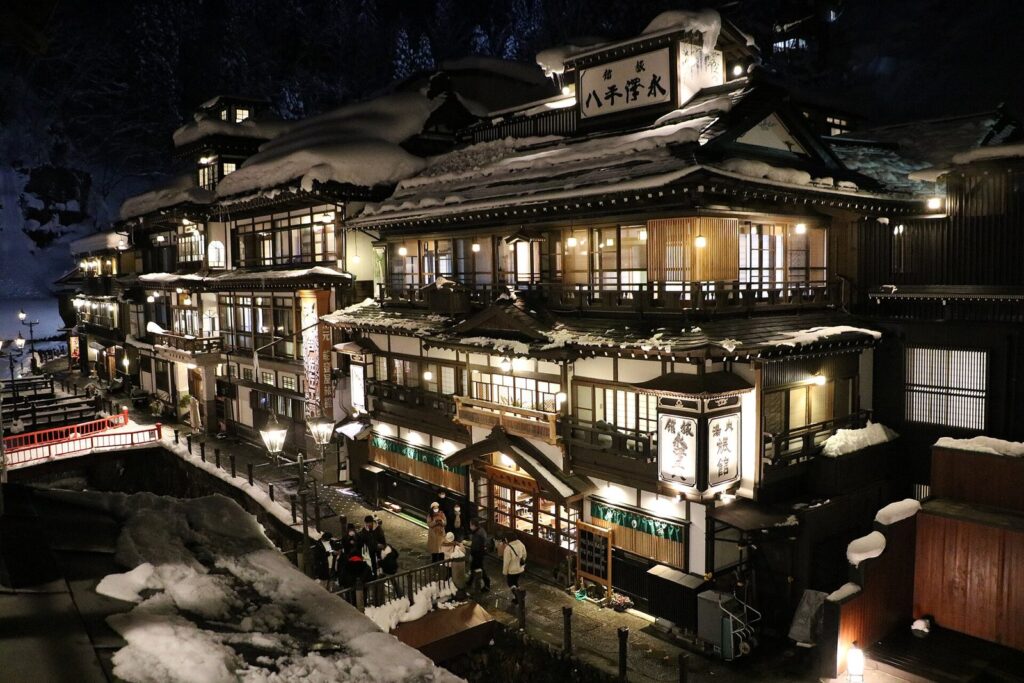
A ryokan is a traditional Japanese inn: tatami-mat rooms, futon bedding laid out on the floor, a yukata robe to wear around the building, communal (and sometimes private) hot spring baths, and — this is the important part — dinner and breakfast included, usually a multi-course kaiseki dinner built around local and seasonal ingredients.
That last point is what confuses people about the price. A rate quoted at ¥25,000 is typically ¥25,000 per person, per night, with two meals, not per room — the standard plan is called ippaku-nishoku (one night, two meals). Room-only plans exist at some properties, but the kitchen is the heart of a real ryokan.
The day runs on a schedule, and this catches travelers out more than anything else:
- Check-in is typically 15:00, and they mean it — arriving after 18:00 without warning can mean losing your dinner slot entirely.
- Dinner is served at a set time, often 18:00 or 18:30, either in your room or a dining room.
- Breakfast is also fixed, usually 07:30–08:30, and it’s a full Japanese spread — grilled fish, rice, miso soup, pickles.
- Check-out is early, commonly 10:00 rather than the 11:00–12:00 you’d expect at a hotel.
Come in with that rhythm in mind and a ryokan night is one of the best things you’ll do in Japan. Fight it, and you’ll feel rushed and vaguely told-off.
What a Japanese hotel actually is
Japanese hotels split into fairly clear tiers, and the middle one is the one visitors underestimate.
Business hotels (APA, Toyoko Inn, Dormy Inn, Route Inn and similar) are the workhorses: small, efficient rooms next to train stations, priced roughly ¥8,000–20,000 per room per night depending on city and season. Rooms are genuinely small — 12–15 square meters — but clean, quiet, and everything works. Dormy Inn in particular has large communal baths and free late-night ramen, a soft landing if you’re curious about bathhouse culture but not ready to commit to a ryokan.
Mid-range and international hotels in Tokyo now average around ¥25,000 per room per night, and city-wide rates have climbed hard — Tokyo’s average daily rate hit about ¥33,000 in May 2026, up nearly 13 percent year on year. Japan is no longer the accommodation bargain it was in 2019.
The pricing unit is the real difference. Hotels charge per room; ryokan charge per person. Two people in a ¥20,000 hotel room pay ¥10,000 each. Two people at a ¥25,000-per-person ryokan pay ¥50,000. For solo travelers this flips — many ryokan either refuse single bookings or add a large surcharge, so a hotel is often your only sensible option.
| Ryokan | Hotel | |
|---|---|---|
| Priced per | Person | Room |
| Typical 2026 rate | ¥15,000–30,000 pp (mid-range), ¥40,000+ pp for high-end | ¥8,000–20,000 per room (business), ~¥25,000 (mid-range Tokyo) |
| Meals | Dinner + breakfast usually included | Breakfast sometimes, often extra |
| Check-in / out | ~15:00 / ~10:00, fixed dinner time | ~15:00 / 11:00–12:00, flexible |
| Bathing | Communal onsen, sometimes private baths | En-suite unit bath; some have large baths |
| Best for | Onsen towns, slow nights, couples | Cities, sightseeing bases, solo travel |
Figures are approximate and vary hugely by season — always confirm at booking. 👉 Agoda Japan hotels
Where a ryokan is genuinely worth it
Ryokan exist in cities too, but the experience is built around hot springs and scenery, so the return is much higher outside the metropolis:
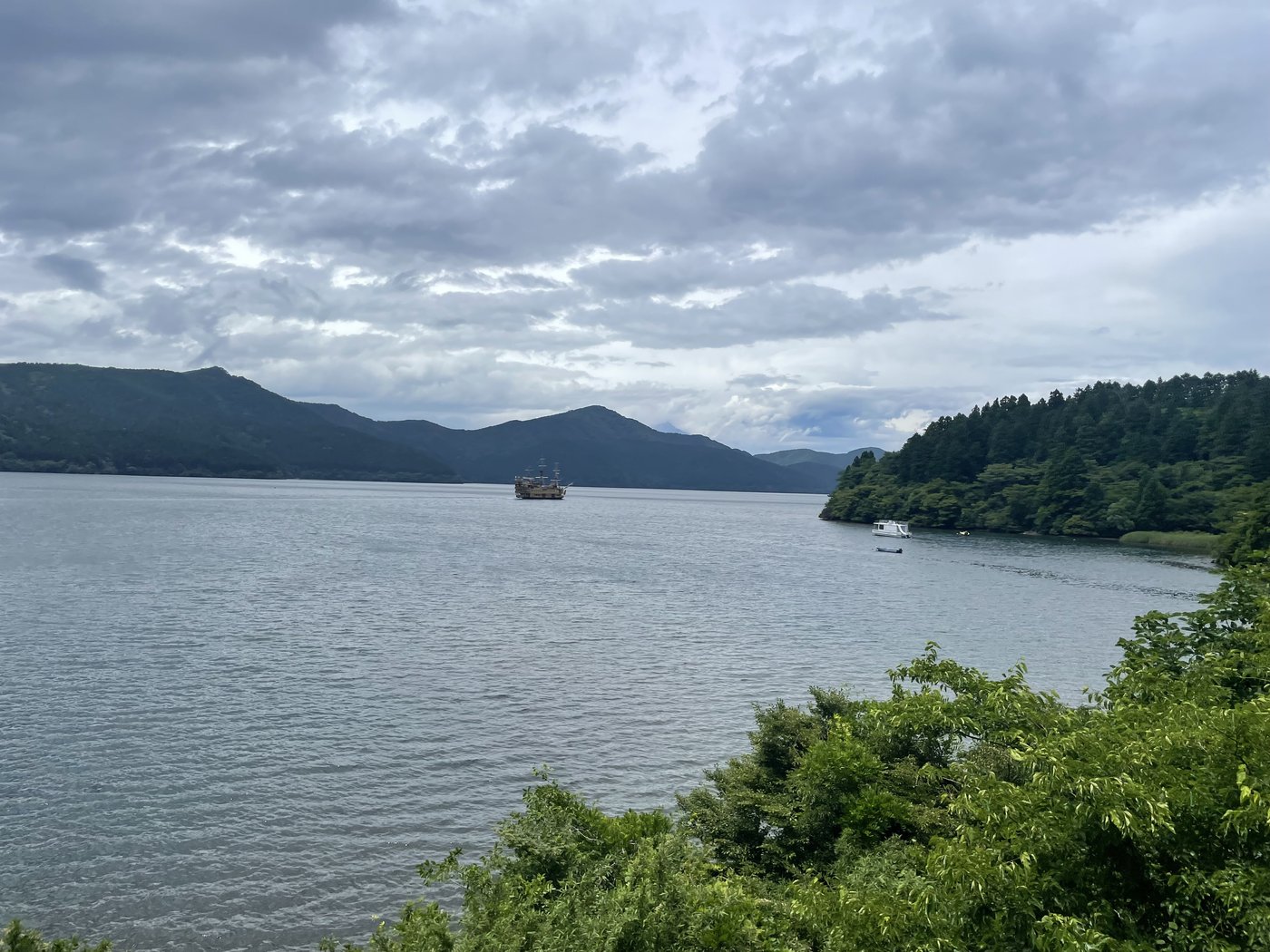
- Hakone — the easiest ryokan night from Tokyo, roughly 90 minutes out, with Lake Ashi and Fuji views on a clear day. See Best Day Trips from Tokyo for how it fits a Tokyo-based itinerary.
- Kinosaki Onsen — a small town on the Sea of Japan where guests wander between seven public bathhouses in yukata and wooden sandals. The town itself is the attraction.
- Nikko / Kusatsu / Gero — classic hot spring destinations with strong ryokan traditions and good rail access.
- Kyoto machiya-style inns — atmospheric, but often without hot springs and at a price premium; see Where to Stay in Kyoto for how the neighborhoods compare.
If one ryokan night is your only reason to leave the city, check Is the Japan Rail Pass Worth It? before buying a pass for it.
👉 Klook Hakone onsen and experiences
Practical things nobody tells you
Tattoos. There’s no law against tattoos at onsen, but each property sets its own rule, and bans are still common at traditional ryokan. The reliable workaround is a private bath — kashikiri-buro, reserved for 45–60 minutes, either free or around ¥2,000–5,000 per session. Email the ryokan and ask directly before booking; front desks field this question constantly and a written yes removes all the doorway anxiety.
Dietary needs. Kaiseki is planned days in advance, so allergies, vegetarian and halal requests must go in at booking, not on arrival. Many ryokan can accommodate; almost none can improvise at 18:00. If you can’t get confirmation, book a room-only plan and eat in town.
Kyoto’s lodging tax went up on March 1, 2026 — now ¥200 to ¥10,000 per person per night depending on the room rate, Japan’s highest. On a ¥60,000-per-person ryokan room that’s ¥4,000 each, per night, usually collected at check-in. Budget for it.
Luggage. Tatami rooms are not built for two large suitcases. Use takkyubin forwarding to send your bags ahead to your next city hotel and arrive with an overnight bag — roughly ¥2,000–3,000 per case, arranged at any convenience store or hotel front desk.
Shoes come off at the entrance, and you’ll wear slippers indoors and nothing on the tatami. Wear socks you don’t mind being seen in. Forgot something? Don’t panic — a convenience store or a Uniqlo will sort you out in most towns.
The itinerary that works
For a typical 10–14 day first trip: hotels in Tokyo and Kyoto for the sightseeing-heavy stretches (see Where to Stay in Tokyo), with one or two ryokan nights slotted in when you move between regions — Hakone between Tokyo and Kyoto, or Kinosaki as a detour from Kyoto. You get the experience on the nights when a slow evening is welcome rather than an interruption, and you don’t pay per-person rates for the eight nights you’d rather spend at an izakaya.
Book that ryokan night on a day with nothing scheduled after 15:00. It does more for the experience than spending twice as much.
FAQ
Is a ryokan more expensive than a hotel? Per night, usually yes — but it includes dinner and breakfast, which in a city would cost ¥5,000–10,000 per person anyway. Compare total spend, not headline rates. The catch is per-person pricing: a family of four pays four times.
Can I stay in a ryokan alone? Sometimes, but many won’t take single bookings, and those that do often charge a solo surcharge of 20–50 percent. Filter for solo-friendly properties or choose a hotel with a large communal bath instead.
Do I have to eat the kaiseki dinner? No — room-only and breakfast-only plans exist. But at a traditional ryokan the kitchen is the main event, and skipping it often means the rate barely drops. If you don’t want a long formal dinner, book a hotel.
Are ryokan good for children? Many are excellent — futons on tatami mean no bed-falling worries, and family plans with kid-friendly meals are common. Confirm the child rate when booking, since kids are usually priced per person too.
Should I book a ryokan for my whole trip? No. The fixed meal times and 10:00 check-out clash with city sightseeing, and the cost compounds fast. One or two nights is the sweet spot for nearly everyone.
The verdict
Book hotels for cities and ryokan for onsen towns. Hotels are cheaper per person, flexible about your hours, and located exactly where you want to be for sightseeing — which is what you need for most of a first trip. A ryokan is not a nicer version of that; it’s an evening you plan your day around, and it rewards you accordingly when you give it the space to work.
If you take one thing from this: check whether the rate you’re looking at is per person or per room before you compare anything. That single line does more damage to Japan travel budgets than any other misunderstanding I see.
Next: Where to Stay in Tokyo and Best Day Trips from Tokyo (internal links).
Written from Japan by the Wayfarer Japan team. Some links are affiliate links that support the site at no extra cost to you.
Featured image: “Evening twilight Ginzan Onsen town seen from the guest room of Kosekiya Bekkan” by さかおり, CC BY-SA 4.0, via Wikimedia Commons