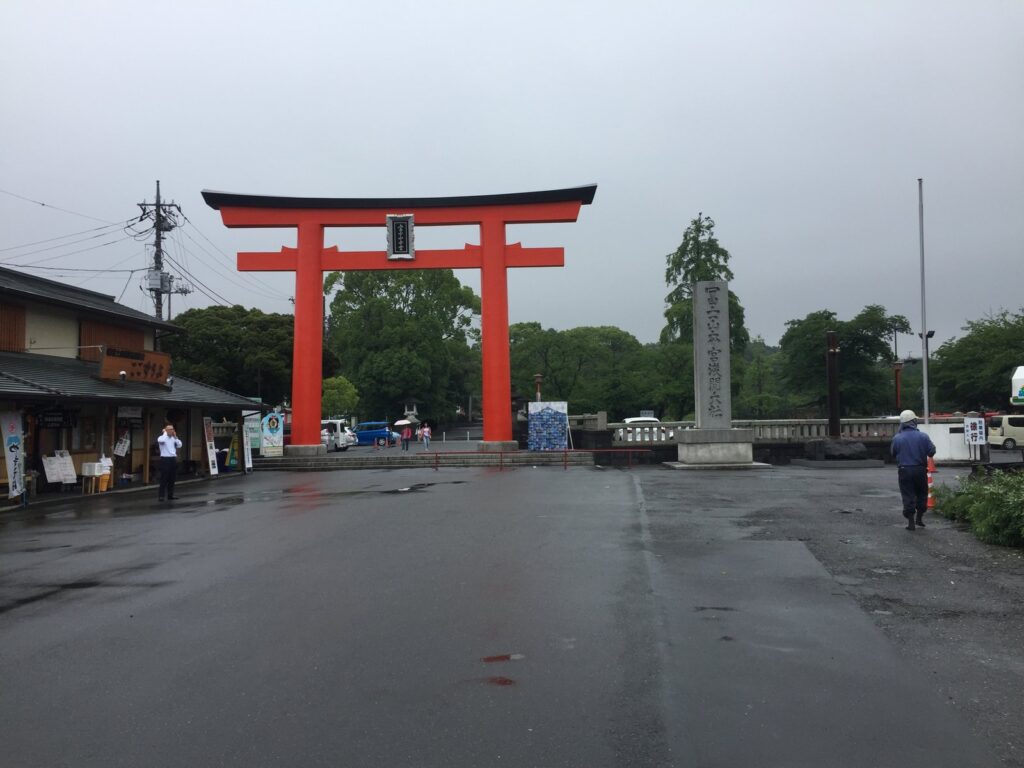
On 19 March 2026, a man from the Japan Meteorological Agency stood in front of one specific tree at Yasukuni Shrine in Tokyo, counted the open flowers, found at least five, and told the country that spring had started. It made the evening news. It always does.
I live in Japan, and the first few years here I found this genuinely strange. A national weather agency does not send officials to look at plum trees, or wisteria, or the hydrangeas that are arguably a better flower. It does this for cherry blossoms, at fifty-eight designated trees around the country, every single year.
The short explanation is that sakura are not really a flower here. They are a calendar, a national mood, an old religious idea, and a piece of nineteenth-century engineering, all at once. Here is how a tree ended up carrying that much.
The quick answer
- Flower-viewing started with plum, not cherry. Ume was the imported, prestigious, Chinese-literary flower. Sakura won by being local.
- The name may come from the rice gods. One long-standing theory reads sa as the deity of the rice fields and kura as its seat — the tree the god comes down into each spring.
- The blossoms are prized for falling, not for blooming. The aesthetic of mono no aware — the pathos of things that pass — attaches to sakura more than to anything else.
- Almost every famous tree is the same tree. Somei Yoshino is a clone, propagated by grafting since the 1800s, which is why a whole city blooms and drops in unison.
- Hanami today is mostly a picnic. Convenience-store food, a plastic sheet, colleagues, beer. The philosophy is real, but nobody is discussing it at the time.
Before sakura, there was plum
The oldest surviving Japanese poetry anthology, the Man’yoshu (compiled around 759), has roughly 110 poems about plum blossom and only about 40 about cherry. Plum wins, and it is not close. Flower-viewing arrived from China along with writing, Buddhism, city planning and everything else the Nara court admired, and the flower that came with it was the plum: fragrant, blooming in cold February, associated with scholarship.
The switch happened in the Heian period, when the court in Kyoto stopped looking to China for validation and started building an aesthetic of its own. In 812, Emperor Saga held a flower-viewing banquet at Shinsen-en garden in Kyoto — the event usually cited as the first imperial hanami, and it was cherry. By the time of the Kokinshu anthology a century later, “flower” in a poem meant sakura with no further explanation. Nothing more needed to be said.
That shift is small but tells you a lot about the period we cover in The History of Kyoto: a court that had stopped importing its taste and started exporting it.
The god in the tree
There is an older layer under the poetry. Rural Japan read the blossoms agriculturally: when the mountain cherries opened, it was time to prepare the rice paddies. The tree was a timer for the most important work of the year.
That practical function acquired a religious one. In one widely-repeated etymology, sakura combines sa — a word associated with the deity of the rice fields — and kura, a seat or platform for a kami. The tree is where the god sits when it comes down from the mountains for the growing season. Farmers made offerings of food and sake under the blossoms and shared them, which is the ancestor of the picnic people now hold in city parks with convenience-store fried chicken.
Whether that etymology is historically airtight is debated, but the underlying instinct — that a natural thing can be the temporary residence of a kami, rather than a symbol of one — is exactly the logic we explain in Shrines, Shinto and Japanese Mythology. A rope around an old tree means the same thing.
Why the falling matters more than the blooming
Ask why the Japanese love cherry blossoms and you will get told, correctly but uselessly, that it is because they are beautiful. The more accurate answer is that they are brief.
Full bloom lasts about a week. A single day of rain or wind ends it. The flowers do not wilt on the branch and go brown; they let go while still perfect, and the petals come down in a way that has its own word, hanafubuki — flower blizzard. The most photographed moment of the season is arguably not peak bloom but hanaikada, “flower raft,” when fallen petals cover a canal surface completely.
This is the concrete form of mono no aware, the gentle sadness at the passing of things that the scholar Motoori Norinaga identified in the eighteenth century as the central sensibility of Japanese literature. Beauty is more moving because it is ending. It is a first cousin to the aesthetic in Wabi-Sabi: The Japanese Art of Beauty in Imperfection, though warmer and more social — wabi-sabi likes a cracked bowl, sakura likes a crowd under a tree that will be bare next week.
The samurai class took the same image and made it harder. A blossom that falls at its peak rather than fading became a model for a warrior’s death, an idea that runs through the material in Samurai and Bushido. In the 1930s and 40s the state took that reading and used it heavily: young pilots told they would scatter like petals for the emperor, cherry trees planted across the empire, a blossom painted on the side of a suicide aircraft. It is the darkest chapter in the flower’s history and it is not much discussed in spring, but it is why some scholars are careful about calling sakura symbolism timeless. It has been rewritten more than once.
The clone that made modern hanami possible
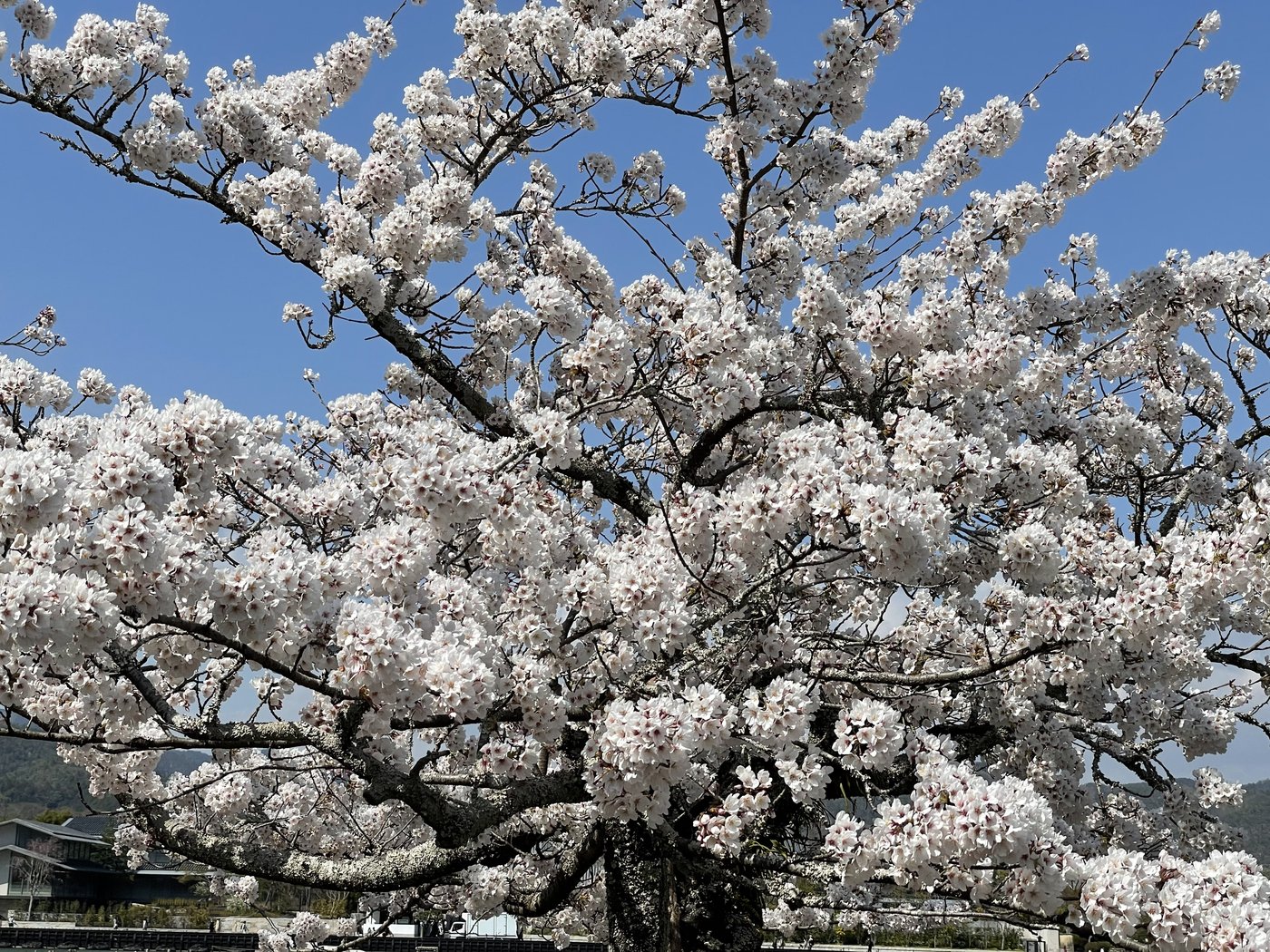
Here is the part that surprises most visitors. The tree in almost every famous photograph — riverbanks in Tokyo, castle moats, school entrances — is a single cultivar called Somei Yoshino, and every one of them is genetically identical.
It was developed in the village of Somei, now part of Komagome in northern Tokyo, in the late Edo period, a hybrid probably of Oshima-zakura and Edo-higan. It has three qualities that made it a national standard: it flowers profusely before the leaves open, so the tree reads as pure cloud rather than pink-and-green; it grows fast; and it cannot self-pollinate usefully, so it is propagated by grafting — that is, by cloning.
Mass plantings followed through the Meiji period and again after 1945, when cherry trees went in along new riverside embankments and around schools, cheap and quick and symbolically clean. The result is that a Japanese city’s cherry trees are effectively one organism with thousands of trunks. They respond to the same temperature at the same time, open together, and drop together. That unison is what makes a bloom forecast possible, what makes an entire city change colour in a week, and what makes the whole thing feel like an event rather than a gardening season.
It is also a monoculture, which specialists worry about, and it is why the JMA can rely on one tree at one shrine to speak for a city.
What hanami is actually like
Less spiritual than you might hope, and better for it.
People pick a park, spread a blue plastic sheet, and sit for a few hours with food and drink. In companies, the most junior person is traditionally sent early to hold the ground, sometimes from mid-morning. Convenience stores run seasonal bento. Every product on the market turns pink for six weeks — sakura lattes, sakura Kit Kats, sakura beer. Popular parks have night illuminations, called yozakura, which are worth an evening.
Practical realities: the season is the single busiest travel period for inbound visitors, so hotels in Tokyo and Kyoto are booked and priced accordingly months ahead — we go through the timing trade-offs in Best Time to Visit Japan. Forecast dates move, and a week’s error is normal. In 2026 Tokyo’s flowering came on 19 March, several days ahead of the long-term average; Kyoto reached full bloom around 1 April. Warmer winters have been nudging these dates earlier for decades, which is a small, visible piece of climate data that ordinary people track without meaning to.
If you miss the peak, go north. The front moves up the archipelago over roughly seven weeks, reaching Hokkaido in late April or early May.
FAQ
Are cherry blossoms scented? Barely. Somei Yoshino has almost no fragrance — the scent people associate with sakura products comes from the salt-pickled leaves.
Can I pick a branch or a flower? No. Breaking cherry branches is a genuine social taboo here, and in public parks it is treated as damage to property. Photograph the fallen petals instead.
Do I need to book a hanami spot? Not for yourself. Ordinary parks are free and first-come. Some formal gardens charge admission and a few run reserved night sessions.
Is a paid cherry blossom tour worth it? Rarely. This is one of the few great Japanese experiences that requires no ticket, no reservation and no guide — just a park and a mat.
What if the trees are bare when I arrive? Later-blooming varieties like yae-zakura run one to two weeks behind Somei Yoshino, and mountain areas are behind the cities. A guide has never yet failed to find someone a blossom.
The verdict
The reason a weather agency counts flowers on one tree is that sakura are doing several jobs at once here: an old agricultural clock, a religious idea about where gods sit, a literary shorthand for impermanence, a piece of Edo-period horticulture that made a whole country bloom on the same schedule, and now a picnic.
If you are here for it, do the ordinary version. Buy food at a convenience store, find a park in the late afternoon, sit under a tree that is identical to ten thousand others, and watch petals come down on people who are mostly talking about work. That is what it looks like from the inside, and the sadness underneath is real precisely because nobody mentions it.
Written from Japan by the Wayfarer Japan team. Prices and details are approximate and change — always confirm before you book.
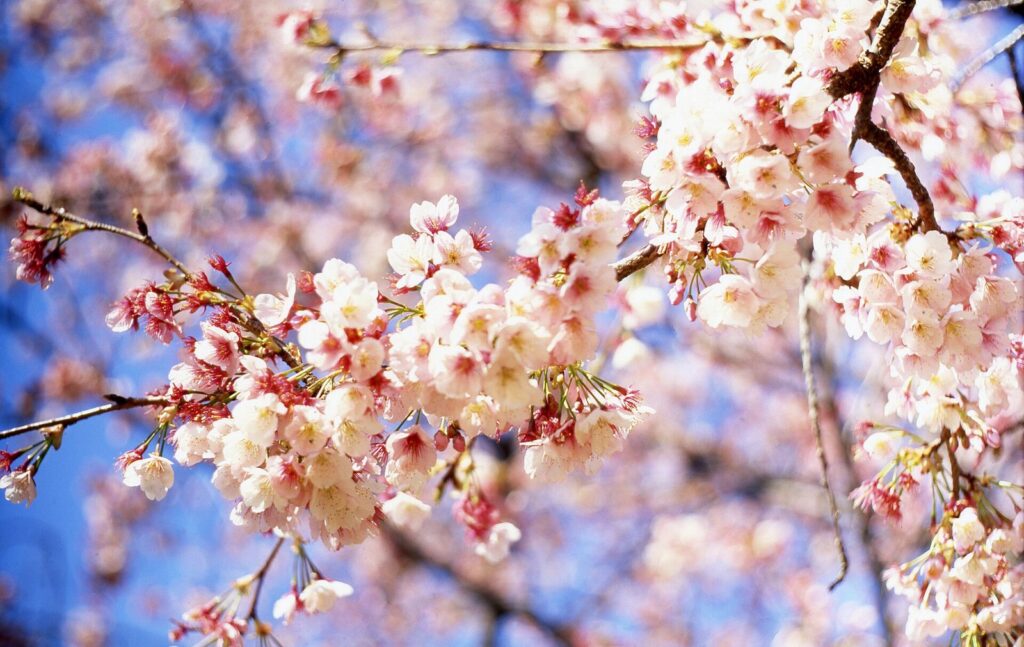
Featured image: “Cherry Blossom – Flickr – mrhayata” by mrhayata from Tokyo, Japan, CC BY-SA 2.0, via Wikimedia Commons