I live in Japan, and the thing that changed how I drink sake was learning it isn’t wine at all. “Rice wine” is the English label everyone reaches for, but it’s closer kin to beer, brewed from a starchy grain rather than sugary fruit, by a process no beer or wine actually uses. Once a friend who runs a small izakaya near my station walked me through what’s happening in the tank, the wall of unfamiliar labels — junmai, ginjo, daiginjo, nigori — stopped being a puzzle and started making sense. Here’s the version I wish someone had given me on day one.
The quick answer
- Sake (nihonshu in Japanese) is brewed from rice, water, koji mold and yeast, using a process where starch conversion and fermentation happen in the same tank at once — closer kin to beer than wine.
- Junmai means “pure rice” — no added distilled alcohol. Ginjo, daiginjo and honjozo all have a small amount added to shape the aroma and flavor.
- The seimaibuai (rice polishing ratio) shows how much of the grain was milled away; lower numbers mean more polishing and a lighter, fruitier, pricier sake.
- Traditional brewing happens in winter, when cold keeps unwanted bacteria down, led by seasonal master brewers called toji.
- Hiyaoroshi, sold roughly September to November, is the sake world’s proper autumn release — worth seeking out this season.
- In December 2024, UNESCO added traditional sake brewing to its Intangible Cultural Heritage list, alongside washoku and kabuki.
Rice, mold and a trick no beer or wine uses
Beer starts with malted barley, which already has the enzymes needed to turn starch into sugar. Wine skips that step entirely, since grape juice is already full of sugar yeast can eat directly. Sake does something else: raw rice has no usable sugar, so brewers first inoculate steamed rice with koji-kin (Aspergillus oryzae), a mold that produces the enzymes needed to break starch down into sugar. That koji rice is then combined with more steamed rice, water and yeast in the same tank, where starch-to-sugar conversion and sugar-to-alcohol fermentation happen simultaneously rather than in sequence — “multiple parallel fermentation,” part of why sake ends up stronger than beer or wine straight out of the tank, typically 15-16% alcohol before dilution at bottling.
Water matters just as much. Nada near Kobe and Fushimi in Kyoto grew into Japan’s two biggest brewing regions largely because of it: Nada’s hard, mineral-rich miyamizu spring water produces a drier style that shipped well to Edo-period Tokyo, while Fushimi’s softer water leans gentler and rounder. Niigata, buried in winter snow, built its name on cold, mineral-light meltwater and a crisp, dry style called tanrei karakuchi.
Junmai, ginjo, daiginjo: what the labels are actually telling you
The two things every sake label is trying to communicate are whether alcohol was added, and how much of the rice grain was polished away before brewing.
Junmai (“pure rice”) has no added distilled alcohol — just rice, water, koji and yeast. Everything without “junmai” in the name has a small, tightly regulated amount of brewer’s alcohol added, which lightens the body and can sharpen the aroma — a very different thing from the alcohol used to cheaply stretch sake during wartime rice shortages (more on that below).
Seimaibuai, the rice polishing ratio, is the other axis. Rice grains have fat and protein concentrated near the outside, which produce heavier, earthier flavors during fermentation; polishing that away leaves the starchy core and a cleaner, fruitier result. A seimaibuai of 70% means 30% of the grain was milled off; 50% means half was polished away. The general ranking:
| Grade | Rice polished to (or better) | Added alcohol? |
|---|---|---|
| Honjozo | 70% | Yes, small amount |
| Junmai | No minimum requirement | No |
| Ginjo | 60% | Yes, small amount |
| Junmai Ginjo | 60% | No |
| Daiginjo | 50% | Yes, small amount |
| Junmai Daiginjo | 50% | No |
Ginjo-grade sake is also fermented slower and colder than ordinary sake, which is what produces its trademark fruity, almost melon-or-banana aroma, known as ginjo-ka. As a very rough rule of thumb: junmai styles tend to taste more like rice and umami, while ginjo and daiginjo styles lean fragrant and delicate, and the more heavily polished the rice, the higher the price tag usually climbs.
From shrine offering to Edo-period big business
Rice fermentation for drinking in Japan goes back roughly two thousand years. The earliest version, kuchikami no sake (“chewed-mouth sake”), was made by chewing rice and spitting it into a vessel, since enzymes in saliva can break starch into fermentable sugar — a method also found independently in other early rice- and corn-growing cultures. Brewing stayed closely tied to Shinto shrines and the imperial court for centuries, offered to the gods before anyone drank it, which is part of why sake is still poured at Shinto weddings, New Year visits and the ground-breaking ceremonies held before a building’s construction.
Commercial brewing closer to today’s industry developed through the Muromachi and into the Edo period (1603-1868), when Nada and Fushimi grew into major production centers shipping barrels by sea to feed Edo’s (now Tokyo’s) enormous thirst. This is also when the toji system solidified: a head brewer, traditionally a seasonal specialist, would lead a crew of kurabito recruited from farming villages during the winter off-season, when the cold weather was exactly what fermentation needed. Regional toji guilds, most famously the Nanbu toji of Iwate, Echigo toji of Niigata and Tanba toji of Hyogo, passed brewing knowledge down through generations of migrant winter labor.
The twentieth century was rougher on sake’s reputation than most drinkers realize. Rice shortages during and after the Second World War led to a legalized practice of stretching scarce rice with added alcohol, sugar and glutamate to triple output from the same grain, nicknamed sanbaizo (“tripled sake”). It kept supply flowing through hard years, but it also filled shelves with thin, cheap sake for decades and left many Japanese drinkers thinking of it as old-fashioned and low-quality well into the 1980s. The junmai and ginjo boom that followed, led by small breweries pushing quality over volume, was largely a reaction against that era — the reason the good stuff in a Tokyo bottle shop today looks nothing like what your grandparents’ generation might have grimaced through.
Autumn is sake’s actual season
If you only remember one seasonal detail, make it this: proper sake brewing has always been a winter activity, called kan-zukuri, timed to the cold months because low temperatures slow fermentation and keep unwanted bacteria from spoiling the batch. Sake pressed over winter is pasteurized once in spring, then aged quietly through summer in tanks. Sometime between September and November, that rested sake is bottled and released without a second pasteurization, under the name hiyaoroshi or akiagari (“finished in autumn”), a practice dating back to the Edo period. Skipping the second pasteurization keeps a rounder, more mellow character than the sharper sake released fresh in spring, and it’s sold as a genuinely limited product rather than a year-round line. If you’re in a bottle shop or izakaya here between September and November, a bottle labeled hiyaoroshi or akiagari is worth asking your server about — the closest thing sake has to a beaujolais nouveau moment, minus the marketing hype.
How Japan actually drinks it
One thing that surprises visitors is how wide sake’s serving-temperature range is. Unlike wine, where “warm” usually means a flaw, sake is served chilled around 5-10°C, at room temperature, or heated anywhere from gently warm to genuinely hot, well above 50°C. Delicate ginjo and daiginjo sakes are usually served chilled to show off their aroma, while fuller-bodied junmai styles often hold up well warmed in winter, and asking izakaya staff how they’d serve a particular bottle is completely normal, not a beginner’s question.
FAQ
Is sake stronger than wine? Yes, before dilution. Sake typically ferments to around 18-20% alcohol and is usually diluted with water at bottling down to roughly 13-16%, similar to or slightly above most wine.
What does “nihonshu” mean, and is it different from sake? Nihonshu is simply the Japanese word for what English calls sake. In Japan, “sake” (酒) can refer to alcoholic drinks in general, so nihonshu is the more precise term if you want to be understood exactly.
Does sake need to be served hot? No. That’s a common misconception outside Japan, often shaped by cheap, low-grade sake historically served hot to mask its flaws. Premium ginjo and daiginjo sakes are almost always served chilled.
What is nigori sake? A cloudy, unfiltered style made by straining the mash through a coarse mesh rather than a fine one, leaving rice sediment behind for a sweeter, thicker texture. It’s a filtration style, not a grade like junmai or ginjo, and can be combined with either.
The verdict
Sake’s reputation problem outside Japan is mostly a labeling problem: “rice wine” undersells a drink brewed more like beer, aged on its own seasonal calendar, and capable of a range from delicate and floral to rich and warming that most wine lists can’t match. You don’t need the polishing percentages memorized to enjoy it — just that junmai means no added alcohol, that lower seimaibuai numbers mean lighter and pricier, and that if you’re here in autumn, a bottle labeled hiyaoroshi is the one worth chasing. For more on how the seasons shape what’s on the table here, see our guide to Japan’s autumn food season.
All facts checked against current brewing-industry and UNESCO sources as of September 2026.
Written from Japan by the Wayfarer Japan team.
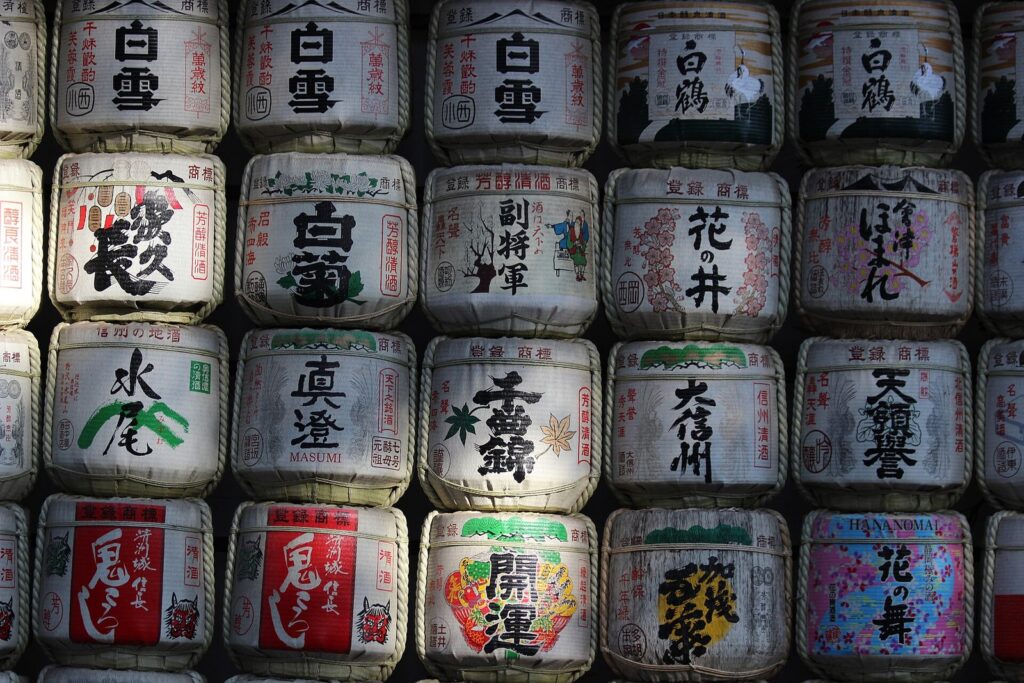
Featured image: “Meiji Jingu sake barrels closeup 2016-12-04” by KFP, CC BY 4.0, via Wikimedia Commons