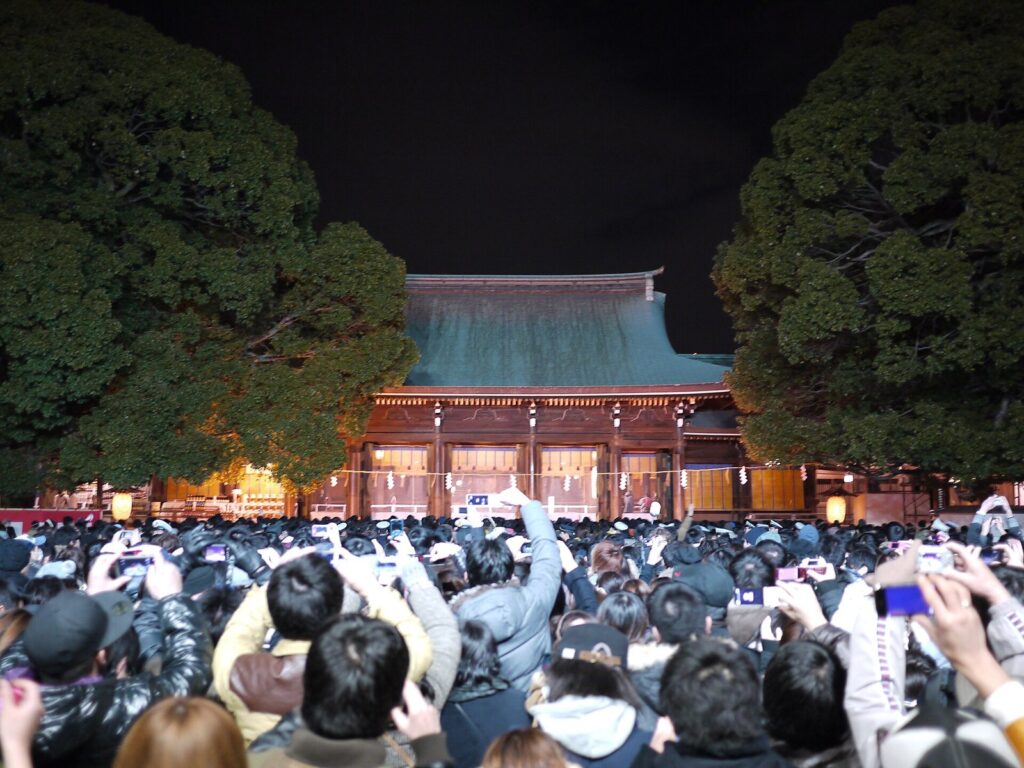
Every January 1st, I watch the same thing happen near my train station: a shrine that is empty and quiet for 364 days a year suddenly has a queue stretching around the block, food stalls set up overnight, and a line of people in their best coats shuffling forward in the cold at seven in the morning. That is hatsumode — Japan’s first shrine visit of the new year — and it is one of the few truly nationwide traditions that is not run by a store, a train company, or a convenience chain. It just happens, everywhere, at once.
If you are in Japan over the New Year period, hatsumode is one of the most interesting things you can watch or take part in, and it is open to visitors with no reservation, no fee, and no particular religious belief required. Here is what it actually is and how to do it without losing a whole afternoon to a queue.
The quick answer
- Hatsumode (初詣) is the year’s first visit to a shrine or temple, made to thank the gods for the year just finished and ask for a good one ahead.
- The core period is January 1–3, called sanganichi. About 70 percent of the population makes a hatsumode visit within these three days, though going later in January still counts as long as it’s your first visit of the year.
- Big-name shrines get genuinely enormous crowds: Meiji Jingu in Tokyo draws an estimated 3 million-plus visitors over the New Year period, Sensoji in Asakusa around 2.8 million, and Fushimi Inari in Kyoto around 2.7 million — mostly packed into the first three days.
- A small neighborhood shrine works just as well and takes ten minutes instead of two hours. Hatsumode is a personal ritual, not a tourist checklist item.
- The busiest window is midnight on December 31 into the early hours of January 1. If you want to avoid the worst of it, go on January 2 or 3 in the late morning instead.
- Related: Shinto Shrines and Mythology explains what you’re actually looking at once you’re inside, and Japanese New Year Traditions covers the rest of the holiday — osechi food, mochi, the countdown.
What hatsumode actually is
Hatsumode is not a festival with a fixed program; it’s closer to a nationwide open house. Shrines that see a few dozen visitors a day for most of the year stay open through the night on December 31, string up lanterns, bring in extra staff to sell charms, and let a very long, very patient queue file past the main hall one small group at a time.
The visit itself is quick. You approach the hall, toss a coin into the offering box (five yen is the traditional amount, because go-en — five yen — sounds like the word for a meaningful connection, but any small coin is fine), bow twice, clap twice, make a silent wish or prayer, and bow once more. If there’s a bell rope, you ring it before you pray. The whole thing takes about fifteen seconds once you’re at the front — the two hours is almost entirely the walk to get there.
Most people also pick up at least one of three things while they’re there: an omamori, a small embroidered charm for a specific kind of luck — traffic safety, exam success, good health — usually priced around ¥800–1,000; an omikuji, a random paper fortune that costs roughly ¥100–300 depending on the shrine; or a hamaya, a decorative arrow bought once a year and displayed at home to ward off misfortune, which last year’s arrow is returned to the shrine to make room for. None of this is required. Plenty of people just bow, wish, and leave.
Shrine or temple — does it matter?
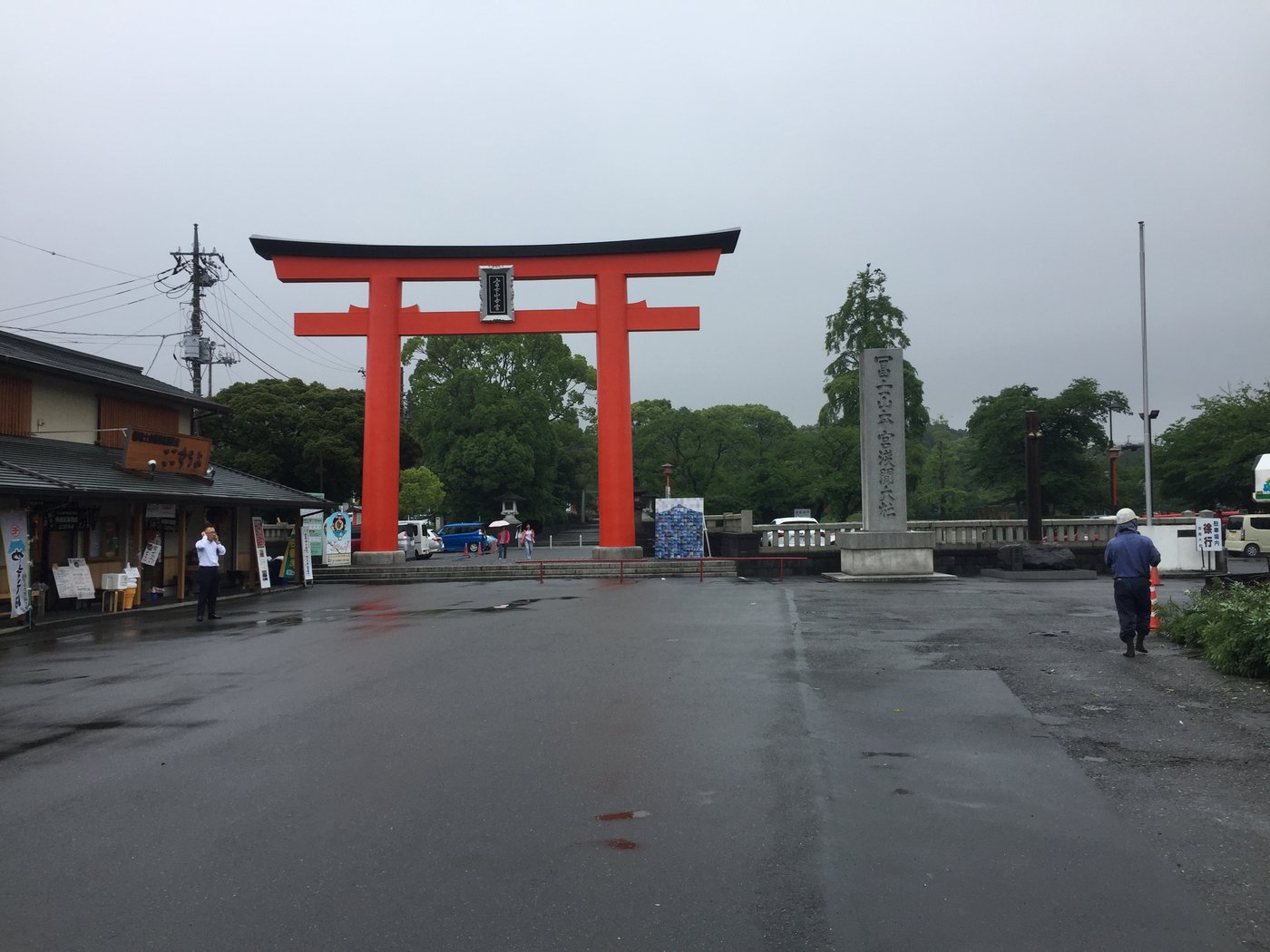
Not really, and this is a point of genuine confusion for visitors who’ve just read about Shinto and Buddhism being different religions. Hatsumode is traditionally a shrine visit (Shinto), but huge numbers of people also make their first visit of the year to a Buddhist temple like Sensoji, and nobody treats this as a contradiction. Most people in Japan move between both without thinking about it as a religious choice — more on why that overlap exists in Shinto vs. Buddhism. For hatsumode purposes: if it has a torii gate, it’s a shrine; if it has a Buddha statue and incense, it’s a temple; both are correct answers for New Year.
Where people actually go
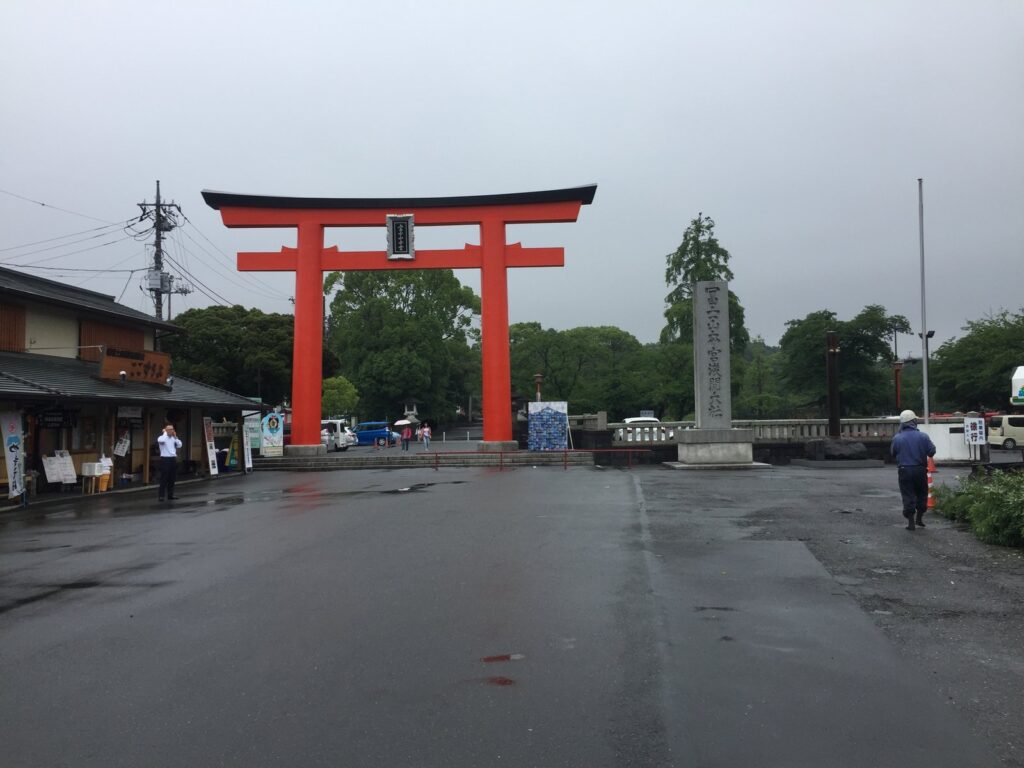
The three names that come up constantly are Meiji Jingu (a forested shrine next to Harajuku, dedicated to Emperor Meiji), Sensoji in Asakusa (Tokyo’s oldest temple, with the giant red lantern everyone has seen in photos), and Fushimi Inari in Kyoto (the shrine with thousands of orange torii gates climbing the hillside). All three are genuinely worth seeing at any time of year — but at hatsumode, all three also mean a security-managed queue, one-way walking routes enforced by staff and police, and an hour or more of standing before you reach the offering box.
Residents mostly don’t do this. The shrine I go to on January 1st has maybe two hundred people over the whole morning, not two million, and it’s a five-minute walk from my apartment. If you’re staying somewhere for more than a day or two, ask at your hotel or look at a map for the nearest shrine with a torii gate — almost every neighborhood in Japan has one, and showing up to a small local shrine on January 2nd or 3rd gets you the same ritual, the same atmosphere of families in their New Year best, and none of the queue.
When to go, and how to get there
The single busiest moment of the entire year at a shrine is the countdown to midnight on December 31, when crowds build for hours beforehand to be among the first visitors. If that sounds appealing, commit to the whole night — leaving a packed shrine grounds partway through is harder than arriving. If it doesn’t, the practical move is to wait until January 2nd or 3rd and go in the late morning, after the overnight crowd has thinned but before the next wave of people arrive with time off work.
Transport on New Year’s Eve itself is unusual by Japanese standards: most train lines stop at their normal late-night time and don’t restart until the regular early-morning schedule, which means a shrine visit timed around midnight can leave you stranded. Tokyo is the exception — JR East and a handful of Tokyo Metro lines run all night on December 31 specifically to move hatsumode crowds, though coverage is patchy station by station, so check the specific line you plan to use rather than assuming “Tokyo runs all night” covers your route. Outside the big cities, plan to walk, taxi, or simply stay near the shrine until morning trains resume.
FAQ
Do I need to be religious to do hatsumode? No. The large majority of people making the visit don’t practice Shinto or Buddhism day to day; it’s treated as cultural practice, closer to making a resolution than an act of faith.
Is it free? Yes, entering the shrine grounds and making the visit costs nothing. You only pay if you choose to buy an omamori, omikuji, or hamaya.
What should I wear? Whatever you’d wear outside in Japan in winter — nothing special is expected, though plenty of people do wear kimono for the occasion. There’s no dress code for visitors.
Can I do hatsumode later in January if I miss the first few days? Yes. The first three days are the traditional peak, but the custom is simply “your first shrine visit of the year,” and many people genuinely make theirs in mid-January.
The verdict
Hatsumode is one of the easiest pieces of Japanese culture for a visitor to take part in rather than just watch — there’s no ticket, no language barrier beyond copying what the person in front of you does, and no wrong way to do it. Skip the three most famous names if you’re short on patience, find a shrine within walking distance of wherever you’re staying, and go on the morning of January 2nd or 3rd. You’ll get the lanterns, the stalls selling amazake and yakisoba, the queue of families in good coats, and fifteen quiet seconds at the front of it — which is really the whole point.
Written from Japan by the Wayfarer Japan team, who split hatsumode between a two-hundred-person neighborhood shrine and, most years, standing in the cold wondering if it was too late to just go home and come back on the 2nd.
Featured image: “Hatsumoude, New Year's visits to a shrine” by Yoshikazu Takada, CC BY 2.0, via Wikimedia Commons