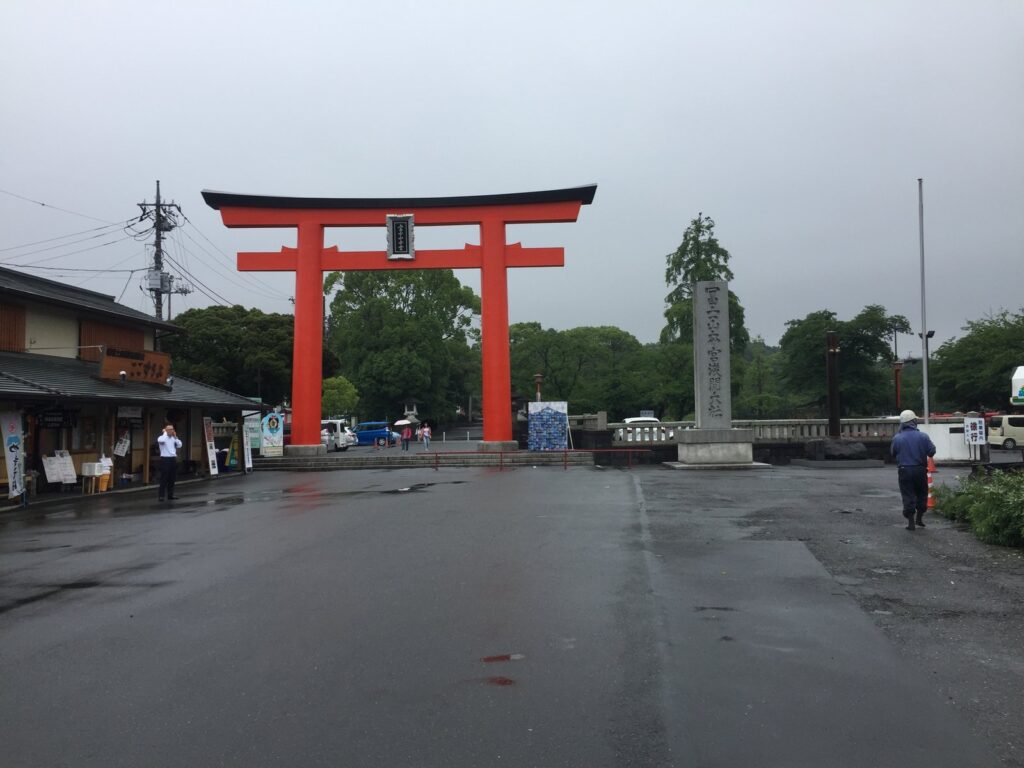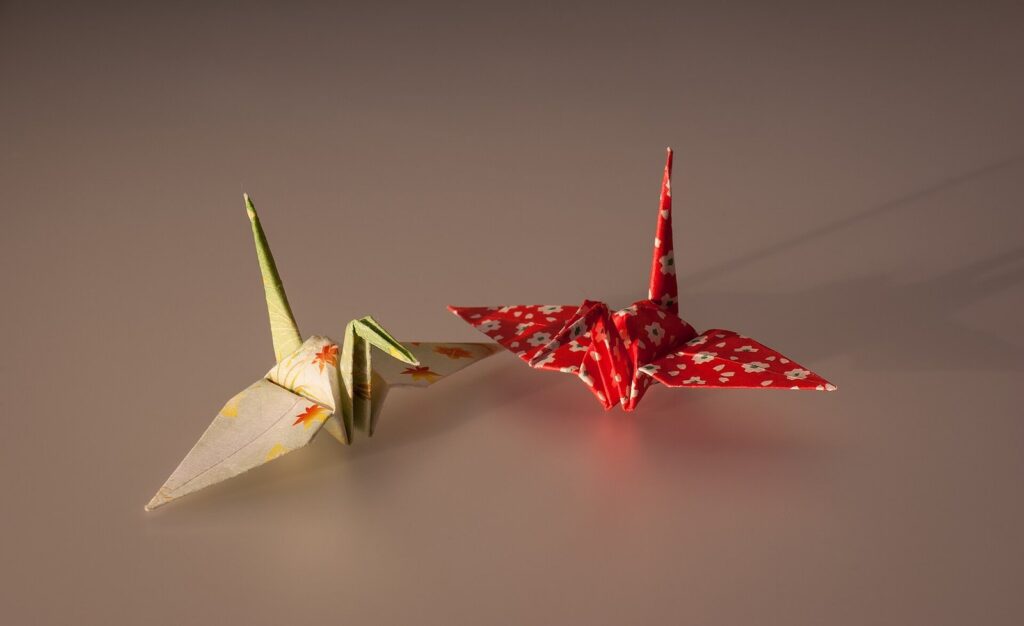
I live in Japan, and one of the small surprises for visitors is how often origami shows up outside of souvenir shops — folded into a gift’s wrapping paper, printed on a train station mural, or taught for free at a community center on a rainy Tuesday afternoon. It isn’t a museum piece here. It’s closer to a shared cultural reflex, something most people learned as children and never quite forgot.
But the common version of origami’s story — that it’s an ancient, unbroken folk art stretching back a thousand years — isn’t quite right. The real history is more interesting, and it explains why origami still means something in Japan beyond paper cranes on a keychain.
The quick answer
- Paper itself reached Japan from China by way of Korea around the 6th century CE, brought largely by Buddhist monks — for centuries it was too expensive for play.
- Folded paper first mattered for Shinto and ceremonial use (gift-wrapping and good-luck charms), not recreation.
- Recreational folding only spread widely in the Edo period (1603–1868), once paper became cheap enough for ordinary households.
- The term “origami” itself and its modern status as a respected art form are largely 20th-century developments, led by one artist: Akira Yoshizawa.
- The paper crane’s association with peace comes from a specific, real story — that of Sadako Sasaki — not an ancient legend.
- You can still see origami practiced seriously in Tokyo today, including at a dedicated hall that’s been open since 1972.
From Ceremony to Craft: Origami’s Real History
Paper reached Japan from China, via Korea, around 550 CE. For the centuries that followed, it stayed a luxury good, reserved for Buddhist sutras, court documents, and Shinto ritual. The earliest folded paper in Japan wasn’t decorative — it was functional and sacred. Noshi (a folded strip attached to formal gifts) and tsutsumi (ceremonial wrapping) were ways of marking something as respectful or auspicious, a practice that still echoes in how carefully gifts are wrapped in Japan today.
Recreational paper-folding — what most people now picture as origami — had to wait for paper to become affordable. That happened during the Edo period, when regional paper industries scaled up production and washi became cheap enough for households to fold for fun rather than ceremony. The oldest surviving instruction manual, Senbazuru Orikata (“How to Fold One Thousand Cranes”), dates to 1797 — a useful anchor point, since it shows that organized, teachable paper-folding is a few centuries old, not a millennium old.
It’s worth being direct about a common myth here: origami wasn’t invented as a tourist craft or an export novelty for foreign visitors. It grew out of genuine domestic ceremonial and recreational traditions, long before Japan had international tourism at all. The version sold in souvenir shops today is a much later commercial layer on top of something considerably older and, for a long time, considerably more formal.
Akira Yoshizawa and the Birth of Modern Origami
If one person is responsible for origami’s reputation as an art form rather than a children’s pastime, it’s Akira Yoshizawa (1911–2005). Working largely alone through the mid-20th century, Yoshizawa moved origami away from flat geometric folds and toward sculptural, lifelike forms — animals with believable posture, faces with real expression. He’s often credited with having created tens of thousands of models over his lifetime, though that figure comes from his own estimate rather than an independently verified count; only a few hundred were ever formally diagrammed and published, across 18 books.
Yoshizawa’s other major contribution was practical: a system of arrows and dashed lines for showing how a fold should move, developed further by the American folder Samuel Randlett and published in 1961 as what’s now called the Yoshizawa–Randlett system. If you’ve ever followed an origami diagram anywhere in the world, you’ve used it. It’s the reason origami instructions can cross languages without translation — the folds speak for themselves.
The Legend of Senbazuru: A Thousand Paper Cranes
Ask most visitors what they know about Japanese paper-folding, and the answer is usually “the crane means peace.” That association isn’t ancient folklore — it traces to one specific person.
Sadako Sasaki was two years old when the atomic bomb was dropped on Hiroshima in 1945. Ten years later, in February 1955, she was diagnosed with leukemia caused by radiation exposure. While hospitalized, she began folding paper cranes, inspired by the old senbazuru tradition that folding a thousand cranes grants a wish. She died that October. Exactly how many cranes she completed is genuinely disputed — her family has said around 1,400 in total, while a museum account suggests she reached 1,000 by late August and kept folding afterward. Rather than pick a number, it’s more honest to say the sources disagree, and that the disagreement doesn’t change what the story means.
A statue of Sadako holding a crane was unveiled in Hiroshima Peace Park in 1958, and it still receives an estimated ten million folded cranes a year from visitors and school groups around the world. It’s the reason a children’s paper craft became, for much of the world, a symbol of peace rather than just a shape.
Origami Beyond Crafts: Science, Space and Surgery
The part of origami’s story that surprises people most is how seriously engineers take it. Japanese scientist Koryo Miura designed a folding pattern — now called Miura-ori — that compresses a flat sheet into a tiny package that unfolds in one clean motion. It flew on a Japanese satellite in 1995 as a solar array, and variations of it are still studied for space hardware today, with NASA’s Jet Propulsion Laboratory having collaborated with origami artist Robert Lang on foldable solar arrays. Separately, researchers at Oxford used an origami fold called the waterbomb base to design expandable heart stents, and similar folding logic has influenced how car airbags are packed to deploy safely. None of this is a coincidence — origami is, at its core, applied geometry, and geometry that works on paper tends to work on steel and fabric too.
Where to See (and Try) Origami in Japan
If you want to see origami treated as a living craft rather than a souvenir rack, the Ochanomizu Origami Kaikan in Tokyo’s Bunkyo ward is worth the detour. It’s been open since 1972, admission is free, and alongside a small shop and gallery it runs a hand-dyed washi paper workshop you can watch in progress. It keeps fairly specific hours — open 9:30am to 4:30pm, closed Sundays, public holidays, and the New Year period — so check before you go.
Many community centers and some hotels also offer short, free origami sessions aimed at travelers, and it’s a common feature of Japanese elementary school life, so children’s museums sometimes include it too. If you’re building out a Tokyo itinerary and want something low-cost and reflective between bigger sights, it pairs naturally with other quieter cultural stops — the kind of thing that sits well alongside a visit built around the tea ceremony or a stop to learn ikebana.
FAQ
Is origami religious? Not anymore, though its roots are tied to Shinto ceremonial folding. Modern recreational origami carries no religious requirement — it’s a secular craft, even when the forms (like the crane) carry symbolic weight.
Do I need special paper? No. Traditional origami paper (kami) is thin and colored on one side only, which makes folds crisper, but any square sheet of regular paper works for learning.
Is one thousand cranes a real tradition or just a saying? It’s a real, older folk belief — that folding a thousand cranes grants a wish or long life — that predates Sadako Sasaki. Her story is why it became globally associated with peace specifically, rather than wishes in general.
Can beginners actually learn it in Japan? Yes. Free short lessons show up at cultural centers, some hotels, and dedicated spaces like Origami Kaikan. No reservation or Japanese ability is usually needed for a basic crane or box fold.
The verdict
Origami’s actual history is shorter and more specific than its reputation suggests — a few centuries of recreational folding sitting on top of even older ceremonial roots, formalized into a true art form mostly within living memory, thanks largely to one obsessive 20th-century artist. That’s part of what makes it worth paying attention to as a visitor: it isn’t a frozen ancient tradition behind glass, it’s a craft that was still being reinvented within the last hundred years, and is quietly still being reinvented now, in engineering labs as much as classrooms.
Written from Japan by the Wayfarer Japan team — we live here and write what we’d actually tell a friend before their trip.