I live in Japan, and the thing that took me longest to understand about Kyoto is that it is not a preserved city. Visitors arrive expecting something like Bruges or Prague — an old place that simply stayed old. Kyoto is the opposite: it burned, more or less completely, several times, and what you walk through today is the accumulated result of a thousand years of rebuilding on the same street grid. That grid is the real antique. Once you know how it got there, the city stops being a checklist of temples and starts being legible.
The quick answer
- Kyoto was Japan’s capital from 794 to 1868 — 1,074 years, under the name Heian-kyo, “the capital of peace and tranquility.”
- It was laid out as a copy of Chang’an, the Tang Chinese capital: a rectangular grid with the palace at the north end. The grid survived everything that followed.
- Political power left early. From 1185 the shoguns ruled from Kamakura and later Edo. Kyoto kept the emperor, the court and the culture.
- The Onin War (1467–77) destroyed most of the city. Almost nothing you see predates it except a handful of outlying temples.
- The emperor left for Tokyo in 1868 and the city nearly collapsed — then reinvented itself with a canal, hydroelectric power and a manufactured festival.
- It was deliberately spared the atomic bomb and the worst firebombing, which is why anything old is still standing at all.
794: a capital drawn on graph paper
Japan’s court had a habit of moving. Nara (Heijo-kyo) had been the capital since 710, but by the 780s Emperor Kanmu wanted distance from the Buddhist temple establishment that had grown powerful there. He tried Nagaoka-kyo first, abandoned it after ten unlucky years, and in 794 moved to the basin where Kyoto now sits — flat, ringed by mountains on three sides, with two rivers and good water.
The plan was borrowed wholesale from Chang’an in Tang China. A rectangle roughly 4.5 by 5.2 kilometers, cut into a checkerboard of blocks, with the imperial palace at the top of the centerline and a ceremonial boulevard, Suzaku Avenue, running south from it about 84 meters wide — wider than most highways today. Streets were numbered as avenues: Ichijo (first), Nijo (second), Sanjo (third), Shijo (fourth). Those are still the names of Kyoto’s main east–west streets. When you get off at Shijo to shop, you are using an eighth-century address.
One thing went wrong immediately. The western half of the grid was low and marshy, and people simply refused to live there. The city drifted east toward the Kamo River and stayed there — which is why “central Kyoto” today sits well east of where the planners intended, and why the original palace site is now a quiet residential neighborhood with a stone marker in a park.
The Heian court: 400 years of very refined boredom
The Heian period (794–1185) is the era every Japanese schoolchild associates with Kyoto: aristocrats in twelve-layered robes, poetry exchanged as courtship, careers made and lost over the quality of your handwriting. The Fujiwara family ran the country by marrying daughters to emperors and governing as regents for their own grandsons.
It also produced the literature. Sei Shonagon’s The Pillow Book and Murasaki Shikibu’s The Tale of Genji — often called the world’s first novel, written around 1008 — were both written by women at this court, in the newly invented kana script that men of the time considered beneath them. If you visit the Uji riverbank south of the city, you are in the setting of Genji’s final chapters, and there is a museum there devoted to it.
Almost none of the physical Heian city survives. What does survive is the layout, the street names, and the calendar: several of Kyoto’s festivals, including the Aoi Matsuri in May, are court rituals that have simply never stopped.
The century Kyoto burned
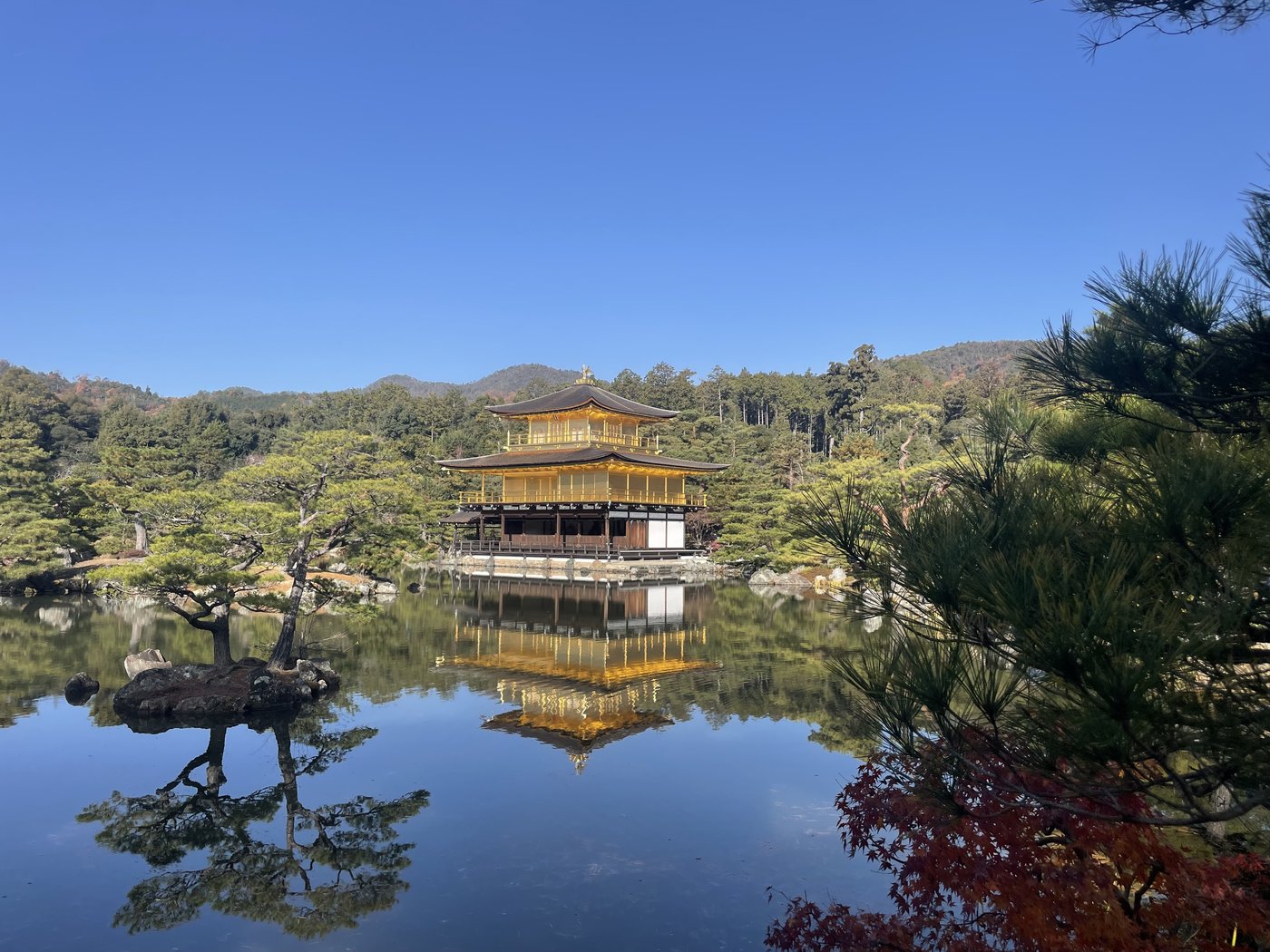
Power drained away first. In 1185 the Minamoto clan won the Genpei War and set up a military government in Kamakura, 400 kilometers east. The emperor stayed in Kyoto with the prestige and none of the army. The Ashikaga shoguns brought government back to Kyoto in 1336, and the century that followed gave us the postcard buildings — Kinkaku-ji, the Golden Pavilion, built as a retirement villa in 1397; Ginkaku-ji, its deliberately understated cousin, in 1482 — along with the tea ceremony, noh theater, flower arranging and the tatami-and-alcove room that Japanese interiors still copy.
Then it fell apart. The Onin War (1467–77) was a succession dispute between two warlords that turned into a decade of street fighting inside the capital itself. Contemporary accounts describe the entire northern city as burned ground. The war triggered the Sengoku (“warring states”) era, and Kyoto spent the next century being fought over, occupied and burned again.
Two details from that period tell you a lot about the city. The Gion Matsuri, Kyoto’s great July festival, was suspended for 33 years during the fighting — and then revived in 1500 not by the court or the shogun but by the merchant townsmen, the machishu, who paid for the floats themselves. Their descendants’ neighborhood associations still run it. And when Toyotomi Hideyoshi rebuilt the ruined city in the 1590s, he re-cut the blocks into long, narrow plots and herded the scattered temples into a single north–south strip. That is why Kyoto townhouses are famously “eel beds” — three meters wide and twenty deep — and why there is a street called Teramachi, “temple town,” with temples still lining it.
1868: the emperor packs
The Tokugawa shoguns ruled from Edo (Tokyo) for 265 years and kept an eye on Kyoto from Nijo Castle, built in 1603 — a fortified palace whose famous “nightingale floors” chirp underfoot. In a neat piece of symmetry, it was in that same building, in 1867, that the last shogun announced he was returning power to the emperor.
What followed was the worst thing that ever happened to Kyoto, and it was bloodless. In 1868 the young Emperor Meiji traveled to Tokyo, and never came back. The court, the nobility and their entire economy went with him. Kyoto’s population fell by roughly a third. Whole aristocratic districts emptied out.
The recovery was aggressive and, for a city that trades on tradition, startlingly modern. Kyoto dug a canal through a mountain from Lake Biwa, finished in 1890 and designed by a 21-year-old engineer, to bring water, freight and industrial power into the basin. In 1891 it drove Japan’s first commercial hydroelectric plant, and in 1895 that electricity ran Japan’s first electric streetcar. That same year, for the city’s 1,100th anniversary, Kyoto built Heian Jingu shrine as a partial replica of the original palace and invented a brand-new festival, the Jidai Matsuri, in which citizens parade in the costumes of every era of Kyoto history. It is held every October 22 and it is, essentially, very good civic marketing that worked.
The bomb that didn’t fall
Kyoto sat at the top of the American atomic target list in 1945: large, intact, and ringed by hills that would have neatly contained the blast for measurement. Secretary of War Henry Stimson removed it personally, twice, over the objections of the targeting committee, on the grounds that destroying Japan’s cultural capital would poison relations for generations. Nagasaki replaced it on the list in late July.
Kyoto was not untouched — it was bombed five times in 1945, killing around 300 people, the worst raid hitting the Nishijin weaving district in June — but it escaped the mass firebombing that flattened Tokyo, Osaka and 60 other cities. Every wooden building you photograph in Gion exists because of that decision.
The postwar city has kept arguing with itself ever since: Kyoto Tower (1964) and the vast glass-and-steel Kyoto Station (1997) both went up over furious objections about ruining the skyline, while strict sign and height rules elsewhere mean even the convenience stores have muted brown signage. In 1994, 17 sites in and around the city were listed together by UNESCO as the Historic Monuments of Ancient Kyoto. In 1997 the city gave its name to the Kyoto Protocol.
FAQ
Is Kyoto still officially the capital? There was never a law moving the capital to Tokyo — the emperor simply left and didn’t return. A small number of Kyoto residents will tell you, with varying degrees of seriousness, that Tokyo is only borrowing it.
How old are the temples I’m actually looking at? Usually younger than they seem. Kinkaku-ji is a 1955 reconstruction after a monk burned it down in 1950. Many main halls are Edo-period rebuilds of medieval rebuilds. The institutions are ancient; the timber generally isn’t.
Can I visit the Imperial Palace? Yes, and it’s free with no reservation. The Kyoto Imperial Palace opens around 9:00 and closes mid-to-late afternoon depending on the season, shut on Mondays. Nijo Castle charges about ¥1,300 including the Ninomaru Palace. Check current hours and prices before you go.
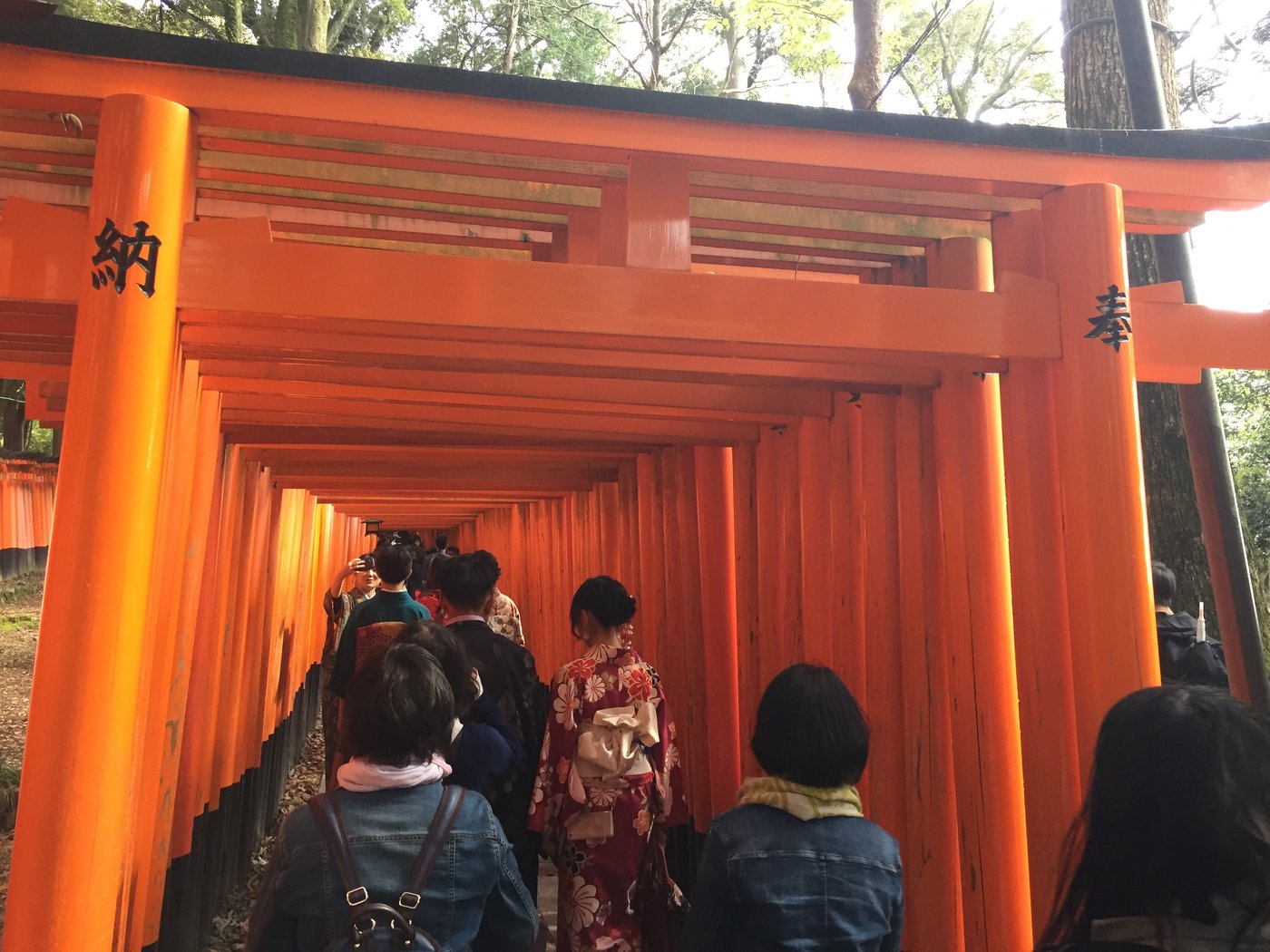
What’s the oldest thing in Kyoto? Older than the capital itself: Fushimi Inari Taisha traces its founding to 711, and Kiyomizu-dera to 778 — both predate 794. See Shrines, Shinto and Japanese Mythology for how to visit them.
Should I see Nara too? If you care about this history, yes. Nara was the capital immediately before Kyoto and its Buddhist monuments are genuinely older. Nara Day Trip Guide covers it in a day from either Kyoto or Osaka.
The verdict
Spend one morning walking the grid rather than riding between temples. Start at the Kamo River around Sanjo, walk west along a numbered avenue, and notice that you are following a line drawn in 794 that has outlived the palace, the court, the shoguns and two near-total destructions.
The useful shift is to stop thinking of Kyoto as old and start thinking of it as continuous. Nothing here survived by being left alone. The festival was revived by shopkeepers, the pavilion was rebuilt after arson, the city was saved by one American official’s memo, and the streets you walk are a Chinese urban plan that a Japanese city has been quietly editing for twelve centuries. That’s a better story than preservation.
Next: Kyoto Travel Guide for First-Timers and Best Things to Do in Kyoto (internal links).
Written from Japan by the Wayfarer Japan team.
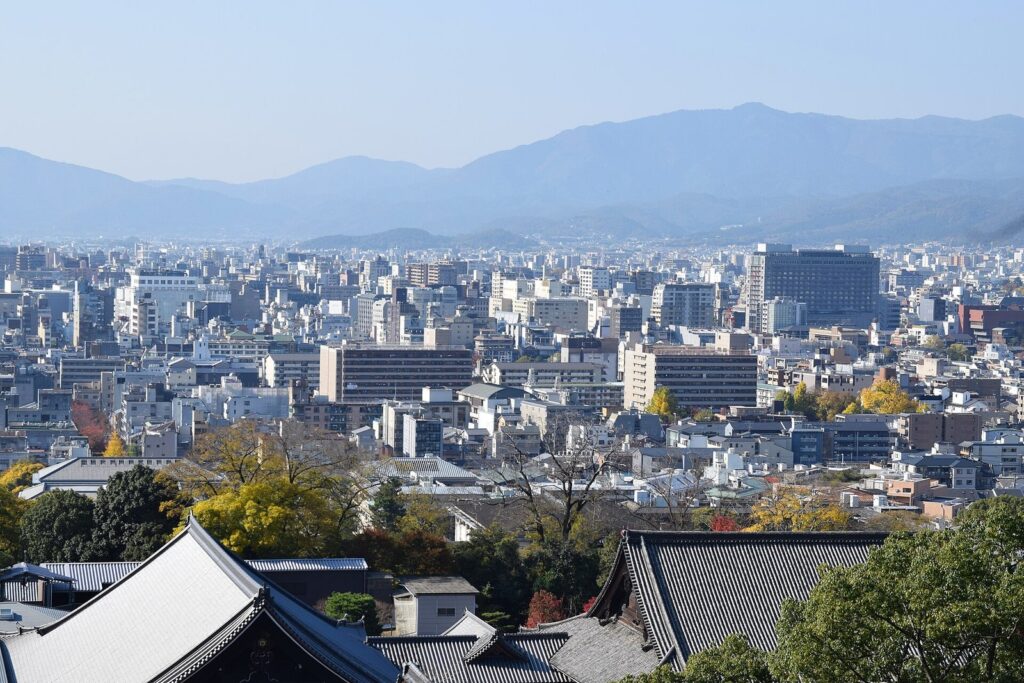
Featured image: “Kyoto (39652452022)” by Raita Futo from Tokyo, Japan, CC BY 2.0, via Wikimedia Commons