I live in Japan, and the thing that surprised me most about Mount Fuji is not how it looks. It is how differently it is treated depending on where you stand. From a Tokyo office window on a clear winter morning it is scenery — people take a photo and get back to work. In Fujinomiya, the town at its southwestern foot, it is an address: the mountain is the shrine, and the shrine owns the summit.
Almost every visitor arrives thinking of Fuji as a beautiful shape. In Japanese religious history it was, for most of a thousand years, something to be feared and calmed. The beauty came later. UNESCO agreed with that reading in 2013 and listed it not as a natural wonder but as a cultural one — a distinction that annoys some people and is, I think, exactly right.
The quick answer
- Fuji is a working volcano, and worship of it began as damage control. The Sengen shrines at its base exist to keep it quiet. It last erupted in 1707.
- Its deity is a goddess, Konohanasakuya-hime — a blossom princess associated with fire, childbirth and impermanence.
- There are roughly 1,300 Sengen (Asama) shrines across Japan. The head shrine is Fujisan Hongu Sengen Taisha in Fujinomiya, and it owns the mountain above the 8th station.
- Climbing Fuji started as a religious act, organised by the Edo-period Fuji-ko societies. Ordinary Tokyo townspeople who could not make the trip climbed miniature Fujis built in their own neighbourhoods.
- Women were formally banned from the summit until 1872. At least one climbed anyway, forty years early, in men’s clothes.
- You do not need to climb to see any of this. The religious heart of Fuji is at the bottom, and it is free.
First it was a threat
Fuji is 3,776 metres of active volcano sitting in the middle of the most densely settled corridor in Japan. Before it was a symbol it was a neighbour with a temper: the Hoei eruption of 1707, the last one, dropped ash on Edo 100km away, thick enough to ruin farmland for years.
The reason there is a grand shrine at the foot of Fuji at all is that people wanted the eruptions to stop. Shrine tradition credits the early Heian general Sakanoue no Tamuramaro with moving Fujisan Hongu Sengen Taisha to its current site in Fujinomiya around 806, after a run of eruptions, specifically to pacify the mountain’s deity.
This is normal Japanese religious logic, and it is the piece most visitors miss. A kami is not necessarily benevolent, and enshrining something is often a way of managing it. If you have read our guide Shrines, Shinto and Japanese Mythology: A First-Timer’s Guide, this is the same instinct at national scale — except the enshrined thing is 3,776 metres tall and visible from Tokyo.
The goddess inside the mountain
The deity of Fuji is Konohanasakuya-hime, “the princess who makes the trees bloom,” worshipped at Sengen shrines as Asama no Okami.
Her myth explains the mountain’s whole emotional register. In the Kojiki account she marries a heavenly grandson, becomes pregnant after a single night, and is accused of infidelity. To prove the children are his, she seals herself inside a birthing hut and sets it on fire — reasoning that no ordinary child would survive. Three sons are born in the flames.
So the goddess of Japan’s most famous volcano is a figure of fire, of childbirth, and of blossoms that fall almost immediately after opening. Japanese aesthetics rarely separate beauty from transience — if you have wondered why this country organises its calendar around a week of falling petals, the answer sits in the same drawer, and we go into it in Why Cherry Blossoms Mean So Much in Japan. One consequence: Sengen shrines are visited for safe childbirth and family matters, not only for volcano insurance. The mountain is not only a hazard to be appeased. It is a mother.
When climbing became a religion
For centuries the climb belonged to ascetics — mountain priests of the shugendo tradition doing austerities on the slopes. Then, in the Edo period, it went mass-market.
The engine was Fuji-ko, devotional societies traced to the ascetic Hasegawa Kakugyo (1541–1646). Members pooled money all year and each summer sent a few chosen representatives to climb on behalf of everyone else. They wore white — the colour of pilgrimage and of death, because the ascent was a symbolic dying and rebirth — chanted rokkon shojo, “purification of the six senses,” and slept at oshi houses, pilgrim lodgings run by hereditary guide-priests, some of which still stand on the Yoshida side.
By the early 19th century Fuji-ko was enormous in Edo, and it produced my favourite piece of Japanese religious engineering: the fujizuka. If you were old, poor, female or simply busy, you could not make the climb — so neighbourhoods built miniature Mount Fujis a few metres high, often from real lava hauled off the mountain, and you climbed those instead. The merit transferred. Hundreds existed in Edo; a handful survive in Tokyo shrine grounds today, usually opened to climbers only on specific days of the year.
The women who were kept off
Until the Meiji era, Fuji’s upper slopes were nyonin kinsei — closed to women on grounds of ritual impurity borrowed largely from Buddhist practice. Women could climb partway and worship from a designated point, and no further. In 1832 a Fuji-ko member named Takayama Tatsu reached the summit in men’s clothing with the quiet help of her group. The ban was not formally lifted until 1872, when the Meiji government opened the sacred mountains to women.
Today roughly half the people you pass on the trail are women and nobody thinks about it — a useful correction to the postcard version of Japanese tradition. These rules were made by people, fairly recently, and unmade the same way.
The mountain that exported Japan
Fuji appears in the Man’yoshu, Japan’s oldest poetry anthology, as a divine snow-covered presence you can only look up at. In The Tale of the Bamboo Cutter the elixir of immortality is burned on its summit — a legend later attached, probably after the fact, to a reading of the name as fushi, “no death.”
The version the world knows came much later. Katsushika Hokusai’s Thirty-Six Views of Mount Fuji, published in the 1830s, did what no religious text managed: it made the mountain portable. In most of those prints Fuji is not the subject but the constant in the background, while carpenters, fishermen and travellers get on with their lives — which is precisely how it works if you live here. The back of the current ¥1,000 note is The Great Wave, with Fuji small and calm behind the water.
That artistic afterlife is why the 2013 UNESCO inscription is worded as it is: Fujisan, sacred place and source of artistic inspiration, covering 25 component sites — shrines, lava caves, springs, pilgrim lodgings and the trails themselves. It is a listing about what people did with the mountain, not about the mountain.
How to see the sacred Fuji without climbing
Honestly, the climb is the least spiritual part now: a crowded overnight slog on volcanic gravel. As of 2026 all four routes charge a ¥4,000 entry fee with a permit booked online in advance, the Yoshida trail caps numbers at 4,000 climbers a day, and the season is short — roughly July to 10 September, with the Shizuoka trails opening later. If that is what you came for, our guide How to Climb Mt. Fuji in 2026: Permits, Trails and the Rules That Changed has the mechanics. These figures move; check the official prefectural sites before booking.
The religious mountain is at the bottom, and it is quieter.
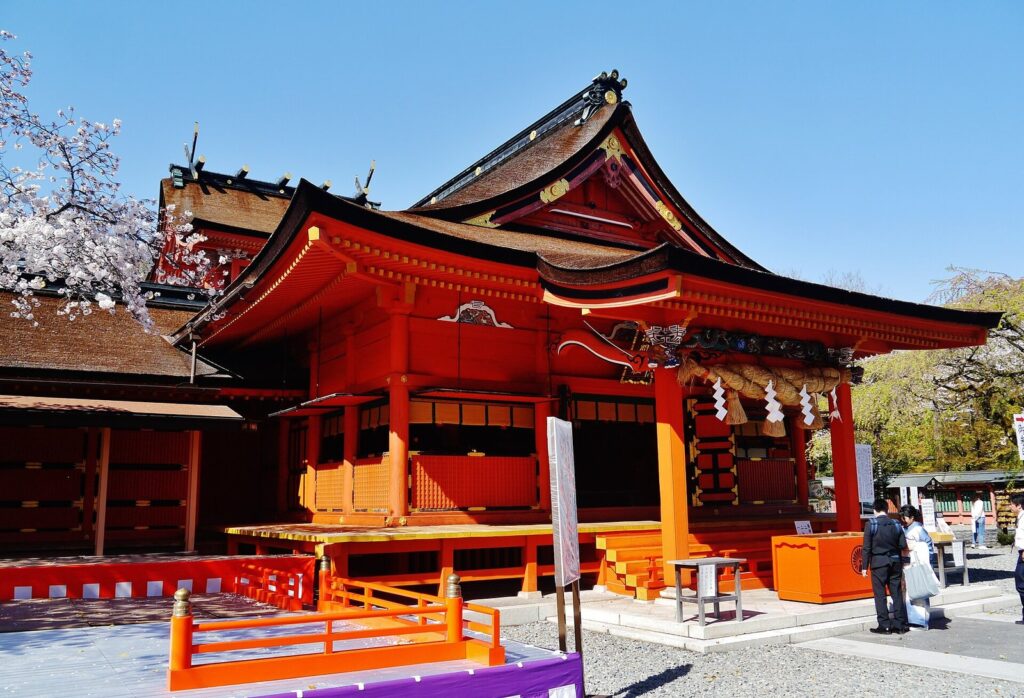
Fujisan Hongu Sengen Taisha (Fujinomiya). Free, open from early morning, about a 15-minute walk from JR Fujinomiya Station on the Minobu Line. The main hall, donated by Tokugawa Ieyasu in 1604, is a two-storey Sengen-zukuri structure you will not see anywhere else. On a clear day Fuji stands directly behind it, which makes the relationship obvious in a way no explanation can.
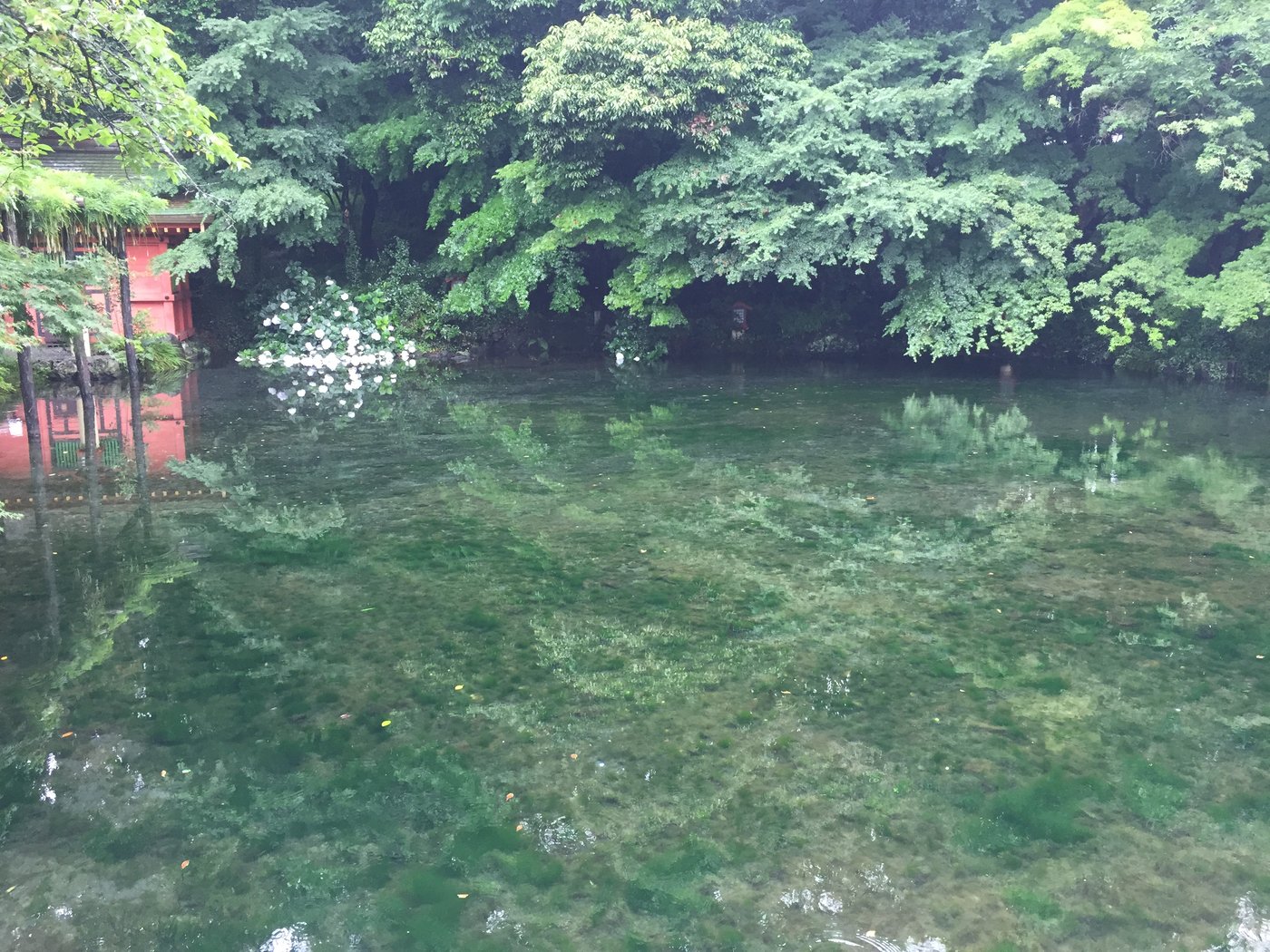
Wakutama Pond, in the same grounds, is fed by spring water that fell as snow on Fuji and spent decades underground. Edo pilgrims purified themselves here before setting off. It is startlingly clear and startlingly cold, and it is the one spot I would send anyone who wants to understand why this mountain got a shrine.
Mt. Fuji World Heritage Centre, eight minutes’ walk from the station, costs around ¥300 and puts a spiral ramp simulating the ascent inside an inverted-Fuji lattice building. Worth an hour, especially in bad weather.
From Tokyo it is roughly two and a half to three hours via the Tokaido Shinkansen to Shin-Fuji or Mishima plus a local connection — long for a day trip, comfortable as an overnight. If you would rather see Fuji from a distance with an onsen attached, Hakone Guide: Onsen, Mt. Fuji Views and Art (2026) is the easier version, and Mt. Fuji Tours from Tokyo: Which One to Book in 2026 covers the organised options.
FAQ
Is Mount Fuji a Shinto or Buddhist site? Historically both, thoroughly mixed. Shugendo asceticism blended the two, and the mountain kept Buddhist elements until the Meiji government forcibly separated the religions in the 1870s. Today the shrines are Shinto; our guide Shinto vs Buddhism: Japan’s Two Religions Explained covers why that split happened.
Does a shrine really own the top of Mount Fuji? Yes. The land above the 8th station belongs to Fujisan Hongu Sengen Taisha, settled through a long postwar dispute with the state. There is an okumiya, an inner shrine, at the summit, staffed during the climbing season.
Do Japanese people actually climb it? There is a well-worn saying that a wise person climbs Fuji once and only a fool climbs it twice. Most residents I know have never climbed it and are perfectly content looking at it.
Is it still considered active? Yes. It is monitored continuously and classed as active, with the last eruption in 1707. Nothing about a visit is dangerous, but the worship makes more sense once you know it.
Can I visit the shrine year-round? Yes — the grounds are free and open daily, unlike the mountain itself, which is climbable for about ten weeks in summer. Autumn and winter give the clearest views; see Best Time to Visit Japan: Cherry Blossoms, Seasons & Crowds (2026).
The verdict
Mount Fuji is not sacred because it is beautiful. It became beautiful because it was already sacred — and dangerous. A volcano got a goddess so it would stay calm; the goddess got 1,300 shrines; the shrines got pilgrims; the pilgrims got a mountain-shaped hill in their own neighbourhood when they could not make the walk. Hokusai came last.
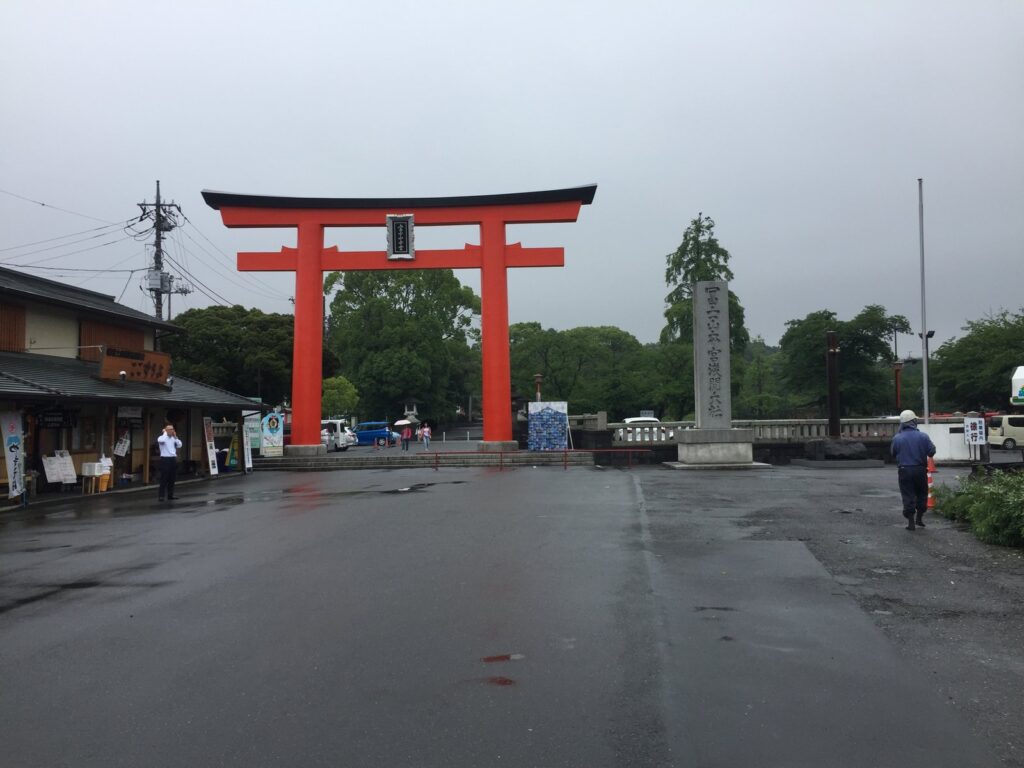
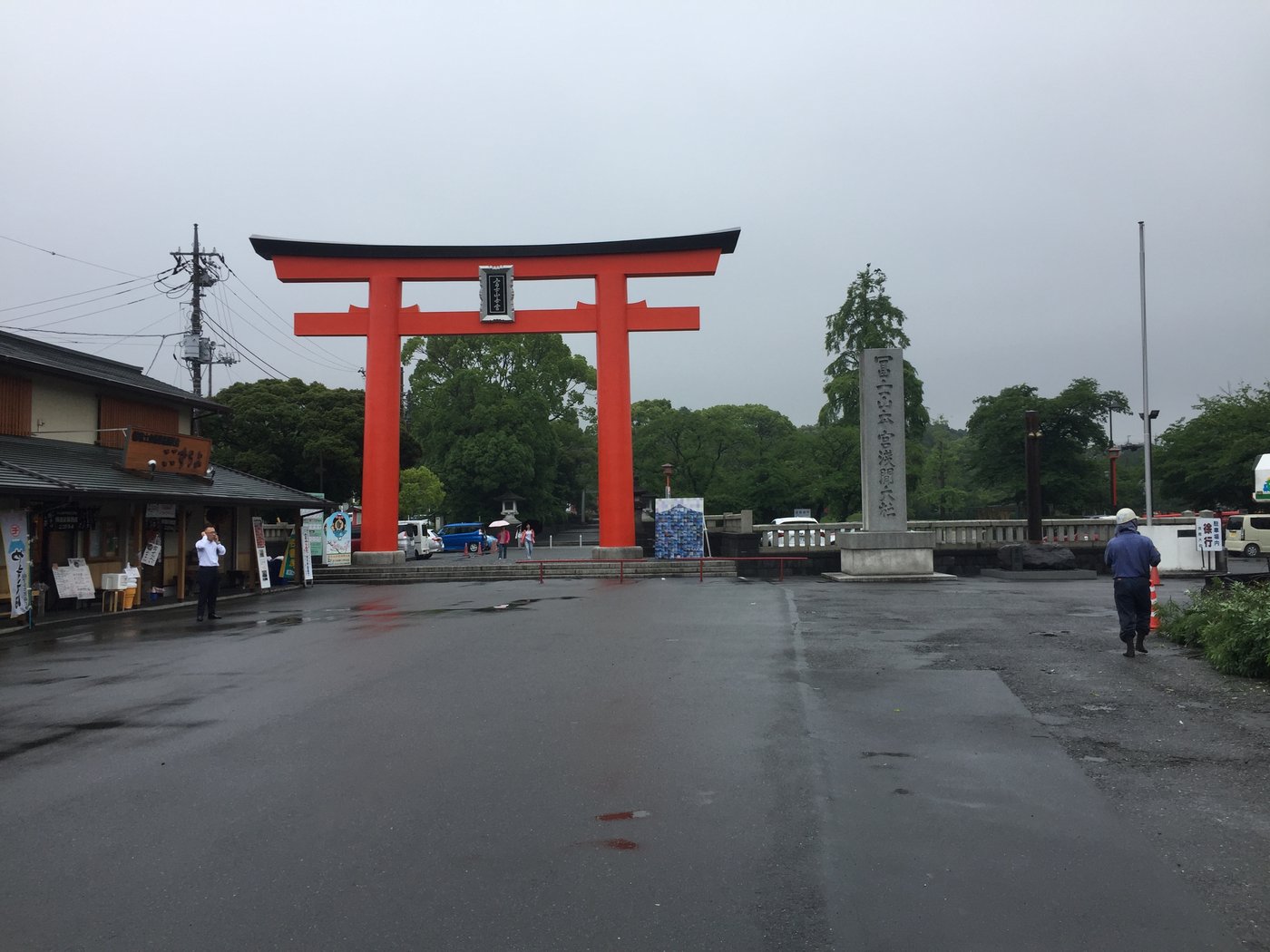
If you have one clear day and one decision to make, take the shrine at the bottom over the queue at the top. Stand at the great torii in Fujinomiya with the real mountain behind it, then go and look at the spring water. The rest of the story assembles itself from there.
Written from Japan by the Wayfarer Japan team.
Featured image: “Fujinomiya Fujisan Hongu Sengen-taisha Hauptschrein 04” by Zairon, CC BY-SA 4.0, via Wikimedia Commons