A friend visiting last spring asked me to find her “a ryokan with a private onsen, nothing too crazy.” I had to ask her back: did she mean a room with its own bath built in, or a ryokan where you can reserve a shared bath for twenty minutes to yourselves? She had no idea there was a difference, and neither do most first-time visitors, which is how people end up booking a plain room at a private-onsen property and never actually getting the private bath they came for.
I live in Japan and I’ve stayed in both kinds, for different reasons — a tattoo that makes communal bathing complicated for me, and plenty of trips where a couple just wants to soak without strangers around. Here’s how the two types actually work, what they cost in 2026, and how to book the right one on purpose.
The quick answer
- Two different things share the name “private onsen”: a room with its own bath (zen-shitsu rotenburo-tsuki) you can use anytime, and kashikiri-buro, a separate bath the whole ryokan shares that you reserve in time slots.
- Kashikiri-buro slots usually run 30–60 minutes, cost roughly ¥1,000–4,500 for the slot (sometimes free for overnight guests), and are often booked at check-in on a first-come basis.
- A room with a private in-room bath costs more than a standard room at the same ryokan — budget ¥25,000–40,000 per person with two meals at a solid mid-range property, and ¥50,000+ at well-known Hakone names.
- Kinosaki is the better-value base for this: private-bath rooms start closer to ¥10,000–20,000 per person, versus Hakone’s premium.
- Book the room, not just the ryokan — search filters and listing titles must say “private bath” or “in-room onsen,” because plenty of rooms at the same property don’t have one.
What “private onsen” actually means
The confusion is understandable because Japanese hospitality sites use both ideas loosely in English marketing. There are really two separate products.
A private bath built into the room (often listed as rotenburo-tsuki, “with open-air bath”) is a small wooden or stone tub on your balcony or in an attached alcove, filled with the same hot-spring water as the rest of the building. It’s yours for the whole stay — soak at 7am, soak again before bed, no reservation needed. These rooms cost noticeably more than a standard room at the same ryokan, because you’re paying for square footage and plumbing, not just the bath itself.
Kashikiri-buro (“rental bath”) is different: a separate bathing room, sized for two to four people, that the whole ryokan shares by reservation. You sign up for a slot — commonly 40 to 70 minutes — lock the door from the inside, and have it entirely to yourselves. Some ryokan include one free session per stay for every guest; others charge per slot, typically in the ¥1,000–4,500 range for the whole group, not per person. This is the cheaper, more flexible way to get a private soak if you don’t want to pay the premium for an in-room bath.
If a ryokan’s website only mentions “private bath available,” it’s worth emailing or calling to ask which type, and whether it’s included or an extra booking.
How booking actually works
For an in-room private bath, you book it like any other room type: search engines and ryokan sites list it as a distinct category, usually with “rotenburo,” “private onsen,” or “open-air bath” in the room name. These rooms sell out first, especially on weekends and during foliage or cherry blossom season, so book as early as you can — three to six months ahead for a well-known Hakone or Kinosaki property on a Saturday is normal.
For kashikiri-buro, the booking usually happens after you arrive. Reception will ask if you want to reserve a slot, and the best times — right before dinner, or first thing in the morning — go fast on a first-come, first-served basis. A few ryokan now let you reserve a kashikiri slot online in advance, so check the booking confirmation email or the property’s own site rather than assuming you can walk up and get the slot you want.
What it actually costs in 2026
Prices vary a lot by region, and these are rough per-person figures for one night including the traditional two meals (ippaku-nishoku) — always confirm the exact plan and tax/service charge before booking.
- Hakone, the easiest private-onsen trip from Tokyo (about 90 minutes by train), runs roughly ¥25,000–40,000 per person at solid mid-range ryokan with an in-room bath, climbing past ¥50,000–80,000 at the well-known luxury names near Lake Ashi.
- Kinosaki Onsen, on the San’in coast, is the better-value choice for the same experience — private-bath rooms start from around ¥10,000–20,000 per person at simpler inns, with the nicer properties landing in the ¥20,000–40,000 range.
- Kashikiri-buro sessions, where offered, add far less: often free for guests, or ¥1,000–4,500 for the group per slot when they’re a paid extra.
As a rule of thumb, a room with its own bath typically costs 30–60% more than the ryokan’s standard room on the same night — it’s worth comparing both prices before assuming the private-bath room is only a small upgrade.
Where to go for your first one
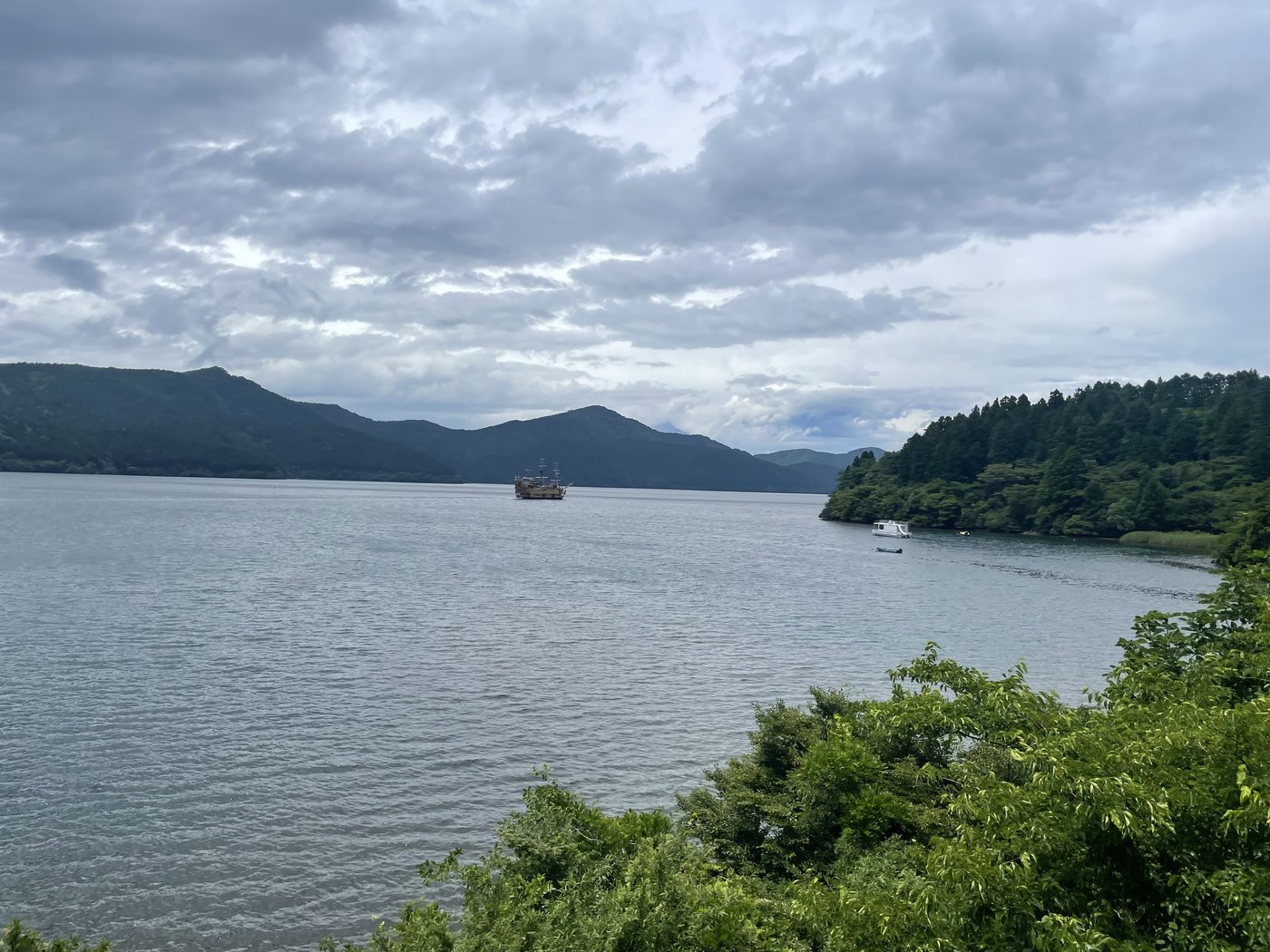
Hakone is the obvious choice if you’re based in Tokyo and want this to be simple: it’s close, well served by train and bus, and has the largest concentration of private-onsen ryokan in the country, many with mountain or Lake Ashi views from the bath itself. We cover getting there and getting around in our Hakone guide.
Kinosaki Onsen is quieter and more old-fashioned — a riverside town you walk around in a yukata between seven public bathhouses, with ryokan prices that make a private-bath room much more approachable. It pairs well with Kyoto or Osaka on a Kansai-based itinerary.
Izu Peninsula and Nikko are reasonable alternatives if Hakone’s rooms are sold out on your dates; both have their own private-onsen ryokan clusters and are a similar distance from Tokyo.
Why people actually book one
The honest reasons people pay the premium: couples or honeymooners who want to bathe together (communal baths in Japan are almost always gender-separated), anyone with a tattoo navigating Japan’s patchwork of tattoo rules at public baths, families with children of mixed gender past the age where they can use the opposite-gender bath together, and simply travelers who find a shared bath with strangers uncomfortable. None of these need justifying to a ryokan — “private bath room” or “kashikiri-buro” bookings are a completely normal and common request.
FAQ
Is a private onsen the same as a private hot spring source? No. Both types of private bath usually draw from the ryokan’s regular hot-spring supply (genuine onsen water, not just heated tap water) — “private” refers to who can use it, not where the water comes from. If the ryokan isn’t a registered onsen, ask; some city “onsen hotels” use recycled or non-mineral water in private tubs.
Can I book just a kashikiri-buro session without staying overnight? At some properties, yes — day-use (higaeri) kashikiri sessions exist, mostly in onsen towns geared toward day trippers. It’s less common than overnight bookings and worth searching for specifically.
Do I need to bring anything? Towels are provided in-room or at the kashikiri-buro entrance at almost every ryokan that offers private bathing. Bring nothing special — this is one of those things it’s fine to show up without, since the ryokan has it covered.
Is tattoo policy different for private baths? Generally yes — since no other guests are present, tattoos are rarely an issue in a private bath, which is exactly why many tattooed travelers choose this option over the communal bath discussed in our Your First Onsen guide.
The verdict
If you want the bath on your own schedule and don’t mind paying for it, book a room with an in-room bath — Hakone for convenience from Tokyo, Kinosaki for better value. If you just want one private soak without the premium, ask about kashikiri-buro at check-in; it’s cheaper, works at far more ryokan, and for most couples it’s honestly enough. Either way, book the specific room type or bath slot, not just the ryokan — “private onsen” on a listing page doesn’t guarantee every room has one.
Written from Japan by the Wayfarer Japan team — practical, no-nonsense travel advice from people who live here.