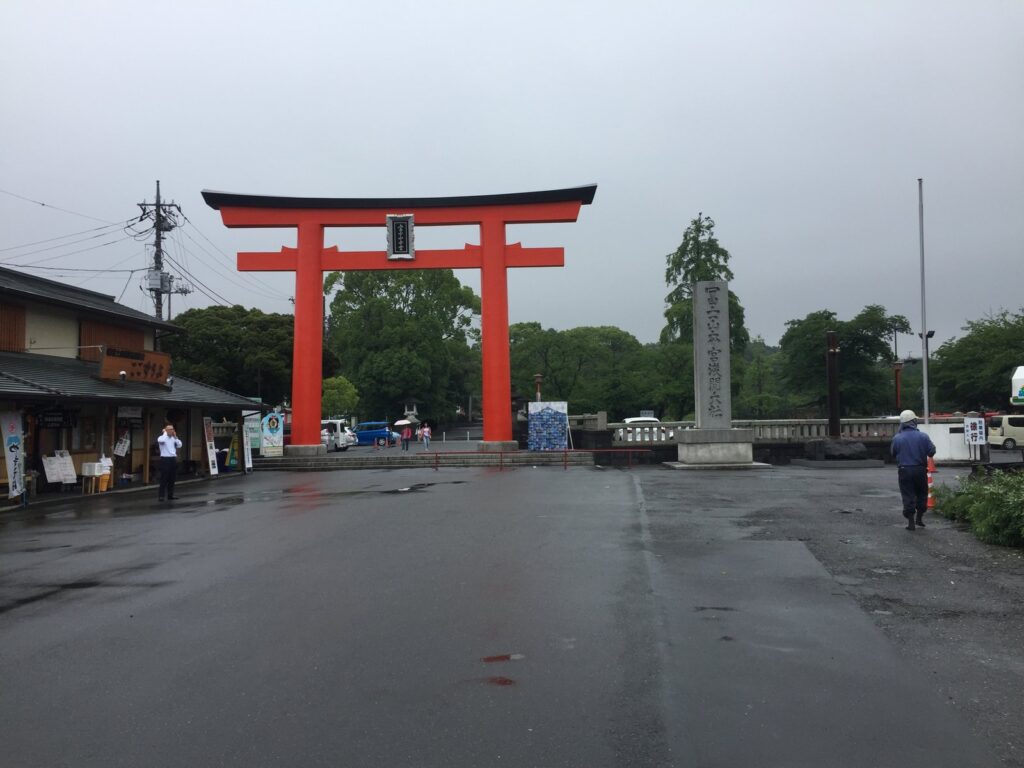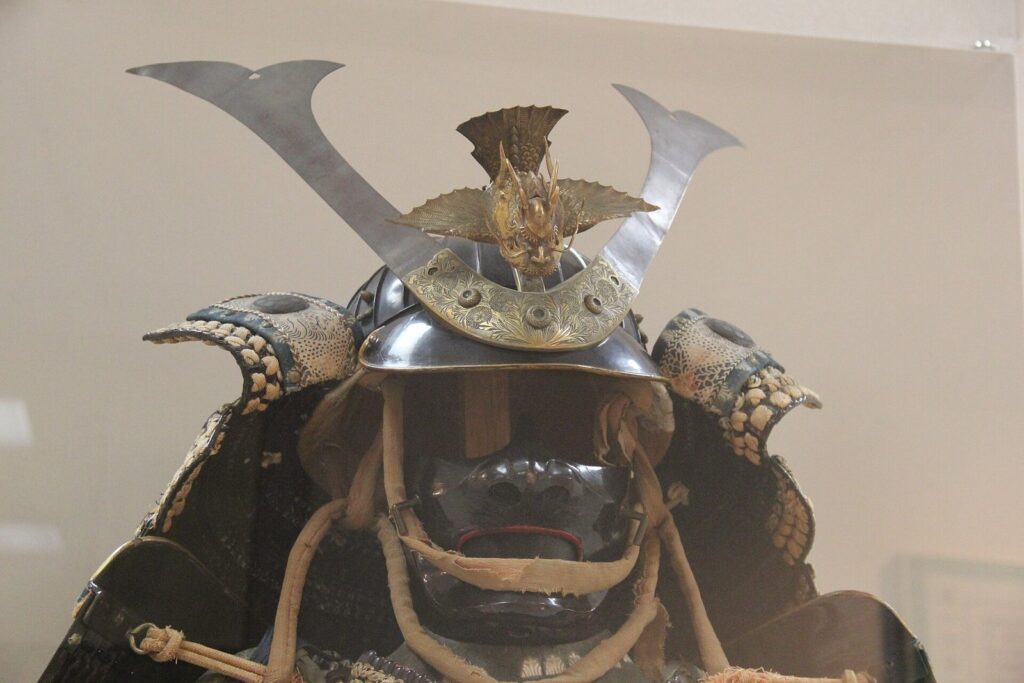
I live in Japan, and one of the odder things about it is how quietly the samurai are still here. Not in costume — in the language, in place names, in the kids at the school down the road who practice kendo on Wednesdays and treat it as a club, not reenactment.
The version that travels well abroad — silent, honor-bound, ready to die at any moment — is real, but mostly a late edit. The actual history is stranger and more human, and knowing it makes castles and museums here far more interesting than “old building, nice roof.”
The quick answer
- Samurai were originally provincial tax enforcers on horseback, not a noble caste. The word comes from saburau, “to serve.”
- They ruled Japan for roughly 680 years, 1185 to 1868, through three military governments while the emperor stayed in Kyoto as a figurehead.
- The bow was their signature weapon, not the sword. Their own name for their calling was “the way of horse and bow.”
- Bushido as a written code was mostly composed in peacetime, when samurai had become salaried administrators with no wars to fight.
- The class was legislated out of existence between 1871 and 1876, and its last stand was crushed by conscripts with rifles in 1877.
Where they actually came from
In the Heian period, the court in Kyoto was a world of poetry, incense and career-ending handwriting — I cover that in The History of Kyoto: 1,000 Years as Japan’s Capital. It was also a world that had stopped maintaining an army. Provincial governance was farmed out, and the families who could actually collect rice tax in the countryside were the ones who could put armed horsemen in a field.
Those families became the warrior class: rural, comparatively coarse, and treated at first as hired muscle. Two of them, the Taira and the Minamoto, got close enough to power to fight each other over it. The Genpei War (1180–1185) ended with the Taira destroyed at the sea battle of Dan-no-ura, near modern Shimonoseki, and in 1192 Minamoto no Yoritomo took the title sei-i taishogun — a temporary field command he made permanent and hereditary.
That was the trick that defined the next seven centuries: the emperor was never deposed. He stayed in Kyoto as the source of legitimacy while real government moved to the shogun’s headquarters — Kamakura, then Kyoto again, then Edo.
Seven centuries, briefly
Kamakura (1185–1333) is the lean, austere phase, and it produced the event every Japanese schoolchild can name: the Mongol invasions of 1274 and 1281, wrecked by typhoons later called kamikaze, “divine wind.” Japan won and went broke doing it — there was no conquered land with which to pay the warriors.
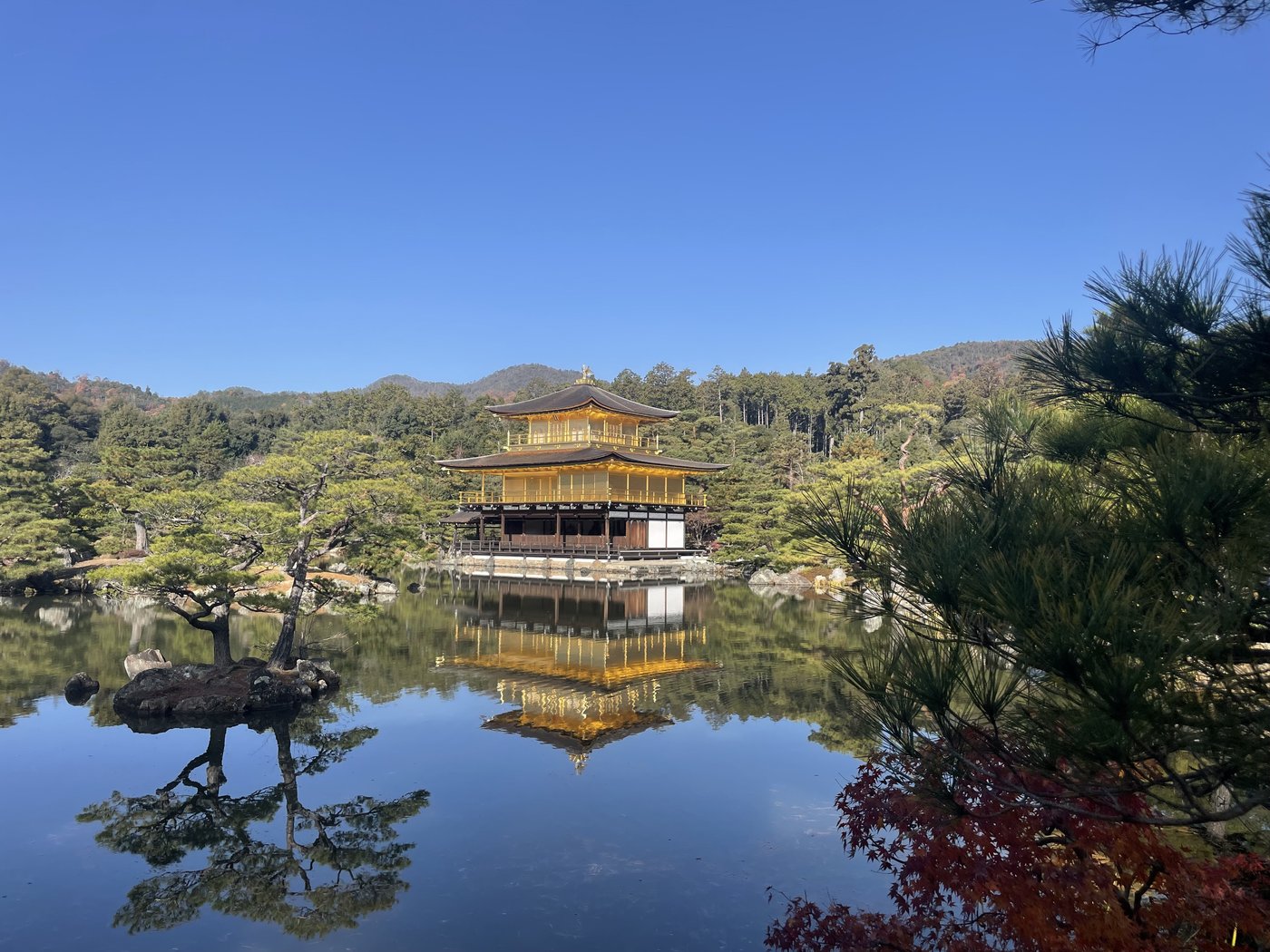
Muromachi (1336–1573) moved the shoguns back to Kyoto, and much of the culture we now call quintessentially Japanese was built by warriors with money: tea ceremony, noh theater, ink painting, the tatami room with an alcove. The Golden Pavilion was a shogun’s retirement villa.
Sengoku (roughly 1467–1600) is when it collapsed into a century of civil war — Takeda Shingen, Uesugi Kenshin, Oda Nobunaga — and where the romance dies if you look closely. Portuguese traders brought matchlock guns in 1543; within thirty years Japan was making them at scale, and Nobunaga’s massed gunners broke the Takeda cavalry at Nagashino in 1575. Battles were won by logistics, castle engineering and volley fire, not duels.
Then a firm lid. Toyotomi Hideyoshi — a peasant’s son who rose to rule the country, which tells you the class lines were still soft — ordered the Sword Hunt of 1588 and then froze the classes by law so nobody could repeat his career. Tokugawa Ieyasu won at Sekigahara in 1600. Edo (1603–1868) delivered 250 years of near-total peace, leaving a large professional warrior class with nothing to do.
Bushido: a code written after the fighting stopped
This is the part that surprises most visitors: the systematic literature of the warrior’s way is overwhelmingly a peacetime product.
The Book of Five Rings, by the duelist Miyamoto Musashi, dates from 1645, written in a cave decades after Japan’s last real battles. Hagakure, source of the line usually translated “the way of the warrior is found in death,” was dictated around 1709–1716 by a retired retainer turned monk who was grumbling that the young men of his day had gone soft. It was a nostalgia text, and barely read until the twentieth century.
The actual samurai of the Edo period were, functionally, civil servants: perhaps five to six percent of the population, drawing a fixed stipend in rice and staffing the domain bureaucracies — accounts, canal maintenance, criminal justice, protocol. Many were poor. Many were bored. Their two swords were legal status markers as much as weapons.
You can see the tension in Japan’s most retold true story, the forty-seven ronin. In 1701 a lord drew his sword inside Edo Castle, was ordered to commit seppuku the same day, and his retainers were left masterless. Forty-seven of them spent nearly two years pretending to be drunks and shopkeepers, then killed the official they blamed. The shogunate’s problem was exact — they had behaved like perfect vassals and like criminals at once — so it let them die by seppuku in 1703 rather than execute them. Their graves are at Sengaku-ji in Tokyo, still smoky with daily incense.
The word bushido became common currency later still. Nitobe Inazo published Bushido: The Soul of Japan in English in 1900, presenting the warrior ethic as a coherent moral system comparable to European chivalry — elegant, sincere, heavily idealized. It was a hit in the West, then translated back into Japanese, and that loop is where much of today’s global image of the samurai originates.
How it ended
Fast, and by legislation rather than battle. The Meiji government abolished the domains in 1871, introduced universal conscription in 1873, banned the public wearing of swords in 1876, and converted hereditary stipends into bonds that inflation promptly ate.
The last resistance was the Satsuma Rebellion of 1877, led by Saigo Takamori, who had helped build the government he ended up fighting. His samurai were beaten by a conscript army of former farmers with rifles. Twenty-one years later Tokyo put up a bronze statue of him in Ueno Park, in a plain kimono, walking his dog — absorb the loser as a national character, keep the sentiment, discard the politics.
Where to actually see it
Be a little skeptical of anything with “samurai” in the name and a ticket booth in a tourist district. Prices below are approximate — confirm before you go.
- Himeji Castle, the finest surviving original castle in Japan, an easy detour from Osaka or Kyoto. Admission changed in March 2026: adults who are not Himeji residents now pay about ¥2,500, up from ¥1,000, and under-18s enter free.
- Tokyo National Museum, Ueno. Superb sword and armor galleries, general admission about ¥1,000. Where you learn that a great blade is a metallurgical object, not a prop.
- Sengaku-ji, Tokyo. The forty-seven ronin graves; grounds free, small museum a few hundred yen.
- Nijo Castle, Kyoto, where the last shogun handed power back in 1867. Around ¥1,300 with the Ninomaru Palace.
- Preserved samurai districts — Nagamachi in Kanazawa, Kakunodate in Akita: real residential streets with earthen walls, not reconstructions.
FAQ
Did samurai really use katana as their main weapon? Not on the battlefield. Bow and horse first, then spears, then guns from the 1540s. The sword was a sidearm and later a badge of rank; its mystique grew as its practical use shrank.
Were there women samurai? Women of warrior households were trained, usually with the naginata polearm, and expected to defend the home. A few fought in the field — Tomoe Gozen in the Genpei War is the famous case.
Was seppuku common? It was a formal judicial and honorific procedure, not a casual gesture, and by the Edo period often symbolic — an assistant beheaded the man as he reached for the blade.
Where does this connect to religion? Zen shaped warrior aesthetics, but the picture is mixed — see Shinto vs Buddhism: Japan’s Two Religions Explained. And plenty of modern etiquette people attribute to samurai is simply Japanese manners, covered in Japan Etiquette: 15 Dos and Don’ts for Visitors.
The verdict
Read the samurai as a governing class, not a warrior fantasy, and everything you see here starts to line up. The castles are administrative headquarters with cannon-proof walls. The tea room is a shogun’s status project. The code is a peacetime attempt by armed bureaucrats to explain what they were still for.
That is not a deflation. A class that spent 250 years without a war and produced the tea ceremony, kabuki patronage and a literature of self-discipline is more interesting than one that only fought. Stand in the keep at Himeji and look down at the town: that is what those people actually did for a living — hold a place, run it, keep it standing.
For where to fit these sites into a trip, see The Perfect 7-Day Japan Itinerary for First-Timers and Best Things to Do in Kyoto.
Written from Japan by the Wayfarer Japan team.