I live about twenty minutes from the Sumida Hokusai Museum, and I still catch myself doing a double take at how many places in this city sell some version of the Great Wave. It is on tote bags in Asakusa, phone cases in Shibuya, the wrapper on a box of senbei, and the back of the current ¥1,000 note. Almost none of the people buying it know it was painted by a man in his seventies who had already changed his name more than thirty times, or that a version of the same wave hung on Claude Monet’s wall in France. Ukiyo-e is the most successful art export Japan has ever produced, and most visitors walk past the real thing without knowing what they’re looking at.
The quick answer
- Ukiyo-e (“pictures of the floating world”) is a genre of Japanese woodblock prints, and some paintings, that flourished from the 1660s to the late 1800s.
- A single print was never the work of one artist. A publisher, a designer, a block carver and a printer each did a separate job, and the same design was pulled hundreds of times from carved cherry-wood blocks.
- Early ukiyo-e depicted actors, courtesans and city life. Landscapes came later — Hokusai and Hiroshige turned it into travel art in the 1830s.
- After Japan reopened in the 1850s–60s, these prints reached Paris and triggered Japonisme, a craze that fed directly into Impressionism and Post-Impressionism.
- You can see real, centuries-old prints in Tokyo today for the price of a coffee, though most museums rotate their displays because the paper fades in light.
What “floating world” actually meant
“Ukiyo” was originally a Buddhist term for the sorrowful, impermanent world — a place to endure, not enjoy. Edo-period city dwellers took the word and quietly swapped its meaning. Their “floating world” was the pleasure districts: the kabuki theaters, the licensed Yoshiwara quarter, the sumo rings, the teahouses. If everything is impermanent anyway, the argument went, you might as well enjoy tonight. Ukiyo-e were the pop culture of that world — cheap, mass-produced images of the actors, courtesans and fashions everyone was talking about, closer to a concert poster or a magazine cover than to a museum painting.
The earliest prints, from artists like Hishikawa Moronobu in the 1670s, were single-color line drawings, sometimes hand-tinted afterward. Full color printing — “nishiki-e,” or brocade pictures — didn’t arrive until 1765, when Suzuki Harunobu worked out how to register multiple blocks precisely enough to layer colors without the image blurring. Everything that followed, including the prints tourists now recognize instantly, depended on that technical leap.
Four people, one print
What surprises most visitors is that “the artist” only designed a fraction of what you’re looking at. A publisher, the hanmoto, financed the project, chose the subject, and handled sales — closer to a modern editor than a patron. The designer drew the image in ink. A carver glued that drawing face-down onto a block of Japanese mountain cherry, cut away everything except the lines, and repeated the work on a separate block for every color. A printer then inked each block and pressed damp paper onto it by hand with a round pad called a baren, building up the full-color image one layer at a time.
This division of labor is why a “Hokusai” print exists in the hundreds or thousands: the carvers and printers, whose names rarely survive, did the physical work of multiplying it. It also explains why later impressions of the same design look weaker — the wood wears down block by block, so a print pulled early in the run looks sharper than one pulled a year later.
From actor portraits to Mount Fuji
For most of the Edo period, ukiyo-e meant bijin-ga (portraits of beautiful women), yakusha-e (actor prints sold like trading cards outside the kabuki theaters), and, discreetly, shunga (erotic prints, some of the era’s biggest sellers). Landscape was a minor category until the 1830s, when domestic travel restrictions loosened and pilgrimage and sightseeing became realistic ambitions for ordinary Edo residents.
Katsushika Hokusai answered that appetite with Thirty-Six Views of Mount Fuji, published when he was already in his seventies, of which The Great Wave off Kanagawa is one sheet. In most of the series, Fuji isn’t even the main subject — it sits calm and small in the background while fishermen, carpenters and travelers get on with ordinary life, which is roughly how the mountain still functions if you actually live within sight of it. If you want the fuller story of why Japan reveres that particular volcano, I’ve written about that separately in Mount Fuji in Japanese Culture and Religion. Utagawa Hiroshige followed with Fifty-Three Stations of the Tokaido, turning the highway between Edo and Kyoto into a bestselling travel brochure decades before anyone called it that.
The wave that reached Paris
Japan’s reopening in the 1850s, followed by its exhibits at the 1862 London and 1867 Paris world’s fairs, sent Japanese goods — kimonos, fans, lacquerware, and, almost as packing material, ukiyo-e prints — flooding into Europe. One often-repeated story has the French printmaker Félix Bracquemond discovering a volume of Hokusai’s sketchbooks used as wrapping paper for imported porcelain. Whether or not that exact anecdote is precise, the effect was real: by 1872 the critic Philippe Burty had coined “Japonisme” to describe the fashion sweeping French art and design.
Impressionist and Post-Impressionist painters didn’t just admire these prints, they collected them and copied their tricks. Monet kept a Great Wave hanging in his house at Giverny. Van Gogh painted direct oil copies of two Hiroshige prints and filled his own paintings with the flat color fields, bold outlines and cropped, asymmetrical framing that ukiyo-e made standard. Degas, Manet, Toulouse-Lautrec and Gustav Klimt borrowed the same vocabulary: unusual vantage points, subjects cut off by the frame’s edge, and large areas of empty space that Western painting hadn’t used that way before. A genre invented to describe Edo’s pleasure quarters ended up quietly rewriting the rules of French painting a continent away.
The influence runs forward, too. The word “manga” is often credited to Hokusai, who used it in 1814 for his own sketchbooks — “whimsical drawings.” The direct lineage from Hokusai to modern anime is a stretch, but the flat picture planes and bold linework of ukiyo-e are a real ancestor of the visual style manga and anime still use, a thread I trace in more detail in A Short History of Anime.
Where to actually see it in Japan
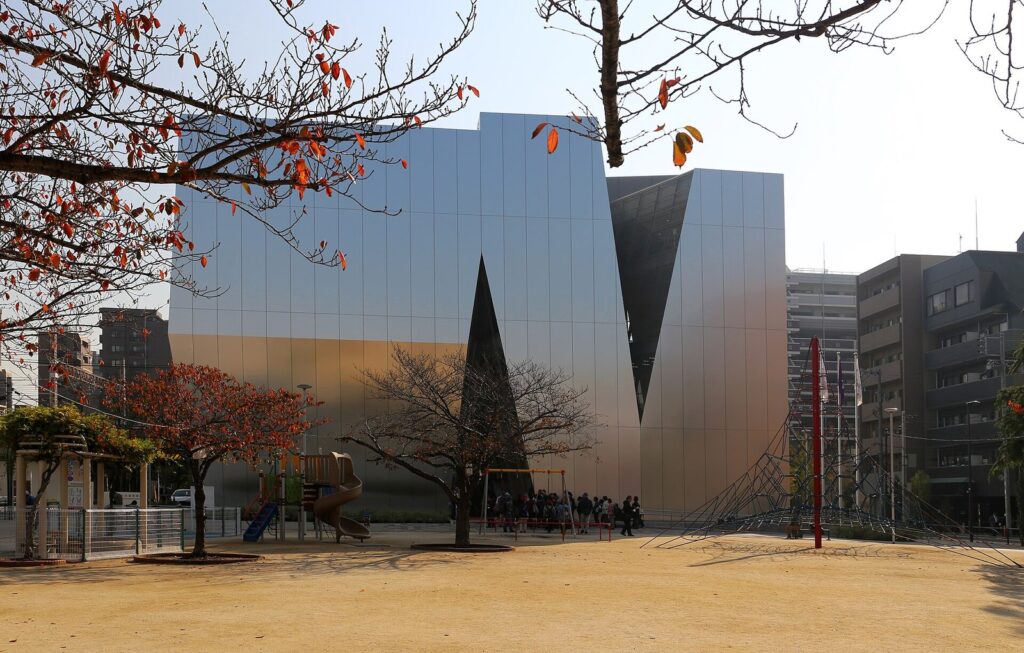
The Sumida Hokusai Museum, in the Tokyo ward where Hokusai was born and worked, charges around ¥400 for its permanent collection, with special exhibitions costing extra. The Ota Memorial Museum of Art in Harajuku is dedicated entirely to ukiyo-e, though it closes for short breaks between exhibitions to rotate the prints — the paper and pigments fade under light, so no museum keeps the same sheets on permanent display. The Tokyo National Museum in Ueno also rotates ukiyo-e through its Japanese gallery. None of this needs advance booking or a big budget; it’s some of the cheapest serious art-viewing in the city, and an easy add-on once you’ve done the standard temple circuit.
FAQ
Is ukiyo-e a painting or a print?
Both existed, but prints are what made the genre famous and affordable, since one carved set of blocks could produce hundreds of copies of the same design.
Are original Hokusai and Hiroshige prints valuable?
A genuine early-impression print can sell for a serious sum at auction, but later impressions and prints by lesser-known artists are often just a few thousand yen at print shops and antique markets — worth checking current prices before assuming anything is out of reach.
Why does Mount Fuji show up in so many of these prints?
Fuji was already a sacred pilgrimage site before Hokusai painted it; his series just made that reverence visible to people who would never climb it themselves.
Is ukiyo-e still being made today?
Yes. Workshops such as the Adachi Institute of Woodcut Prints in Tokyo still carve and print from historical designs by hand, and Tokyo even hosted a 2026 exhibition pairing Hokusai’s technique with the virtual singer Hatsune Miku, letting visitors carve and print their own version.
Can I buy an authentic print as a souvenir?
Yes, at print shops in neighborhoods like Jimbocho — just confirm with the seller whether you’re buying a genuine antique impression, a later reprint from the original blocks, or a modern reproduction, since the prices differ enormously.
The verdict
Ukiyo-e is worth five minutes of your attention beyond the souvenir shelf, because the real history is stranger and better than the wave on the tote bag suggests: a genre built to sell gossip about actors and courtesans, made by four different craftsmen who rarely got individual credit, that ended up in Van Gogh’s studio and on Monet’s wall. Seeing an actual print in person — the texture of the woodgrain, the slight unevenness a human printer’s hand leaves behind — makes that history click in a way no reproduction can.
Written from Japan by the Wayfarer Japan team — for travelers who want the real story, not just the postcard version.
Featured image: “Tokyo, sumida hokusai museum, esterno 01” by Sailko, CC BY 3.0, via Wikimedia Commons