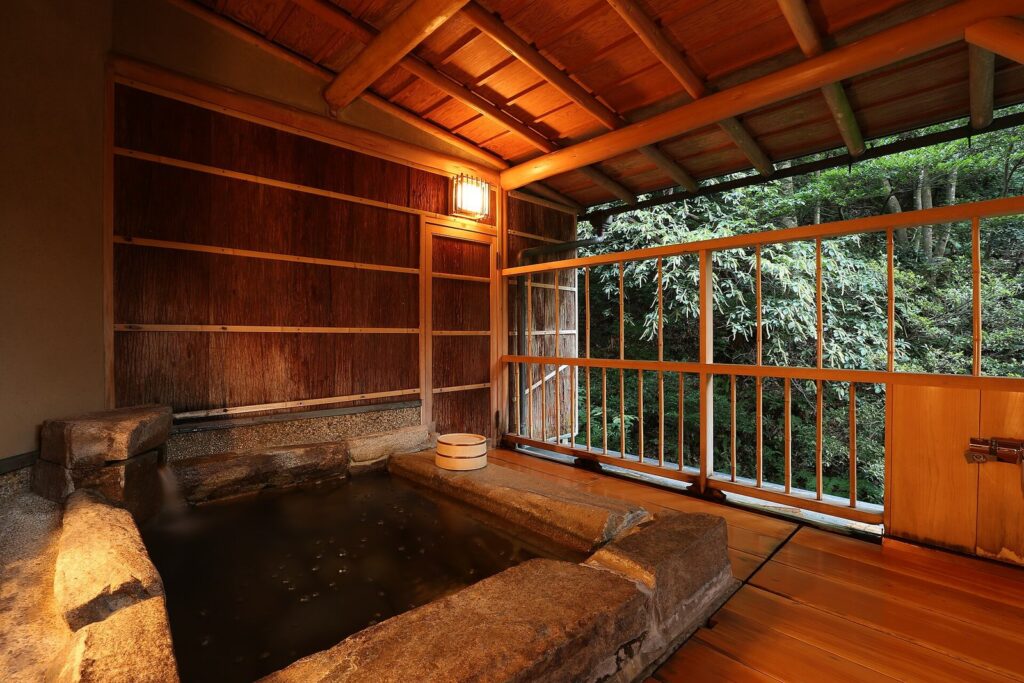
I live in Tokyo, and one of the things I tell visiting friends is that you don’t need a multi-day trip to have a proper onsen (hot spring) experience. Some of Japan’s best ryokan — traditional inns with tatami rooms, kaiseki dinners, and steaming hot spring baths — are a single train ride from the city. A few even put a private bath right on your own balcony, so you never have to worry about tattoos, modesty, or sharing a bath with strangers.
This guide covers the closest onsen towns to Tokyo that are realistic for a one- or two-night trip, what a ryokan stay actually involves, and what to book ahead versus what you can decide once you’re there.
The quick answer
- Closest option: Atami — about 35–50 minutes from Tokyo Station by Shinkansen, with dozens of onsen ryokan a short taxi ride from the station.
- Most famous option: Hakone — about 85 minutes from Shinjuku on the Odakyu Romancecar, with views of Mt. Fuji from some ryokan.
- Prettiest lakeside option: Kawaguchiko — about 1 hour 45 minutes from Shinjuku by highway bus, with Mt. Fuji views and onsen with a view of the mountain.
- Quieter, more traditional option: Kinugawa Onsen (near Nikko) — about 2 hours from Asakusa on the Tobu Spacia limited express.
- Book your room in advance, especially for weekends — the good ryokan with private baths sell out weeks ahead.
- A ryokan stay with two meals (kaiseki dinner and breakfast) typically runs from around ¥20,000 to ¥60,000+ per person per night, depending on the room and season; always check the current rate before booking.
Why stay at a ryokan instead of a hotel
A ryokan isn’t just a hotel with tatami floors. The format is usually: check in mid-afternoon, change into the yukata (cotton robe) provided, soak in the onsen before dinner, eat a multi-course kaiseki meal served in your room or a dining hall, soak again after dinner (or before bed), sleep on a futon laid out on the tatami, and have breakfast the next morning before a late checkout. It’s a slower pace than a city hotel, and that’s the point — it’s designed as a short reset, not just a place to sleep.
If the idea of a communal bath makes you nervous — because of tattoos, or just personal preference — look specifically for a room advertised as having its own private bath (sometimes called “kashikiri buro” for reservable private baths, or a room with its own outdoor tub). Most of the ryokan below offer at least some rooms like this.
Atami: the fastest hot spring escape
Atami sits right on the Tokaido Shinkansen line, which makes it almost absurdly convenient — you can be soaking in a hot spring less than an hour after leaving Tokyo. The Kodama and some Hikari trains stop here (Nozomi does not), with unreserved fares around ¥3,760 and reserved seats around ¥4,650 for the roughly 35–50 minute ride from Tokyo Station.
Atami itself is an old-fashioned seaside onsen town with a somewhat retro, nostalgic feel — think neon signs, a beach, and ryokan built into the hillside with ocean views. Higher-end properties here include full resort-style ryokan with private and public onsen and ocean-view kaiseki dining; rates for the nicest rooms with a private bath often start well above ¥50,000 per person, while simpler family-run ryokan can be found for a fraction of that. It’s a good pick if you want the shortest possible travel time and don’t mind a slightly more built-up, resort-town atmosphere.
Hakone: the classic choice, with Mt. Fuji views
Hakone is the most famous onsen destination near Tokyo, and for good reason — it combines hot springs with mountain scenery, art museums, and (on a clear day) views of Mt. Fuji across Lake Ashi. From Shinjuku, the Odakyu Romancecar limited express runs direct to Hakone-Yumoto with no transfers, taking around 85 minutes for a one-way fare of roughly ¥2,470 including the reserved-seat surcharge (prices creep up slightly year to year, so check current fares before you book).
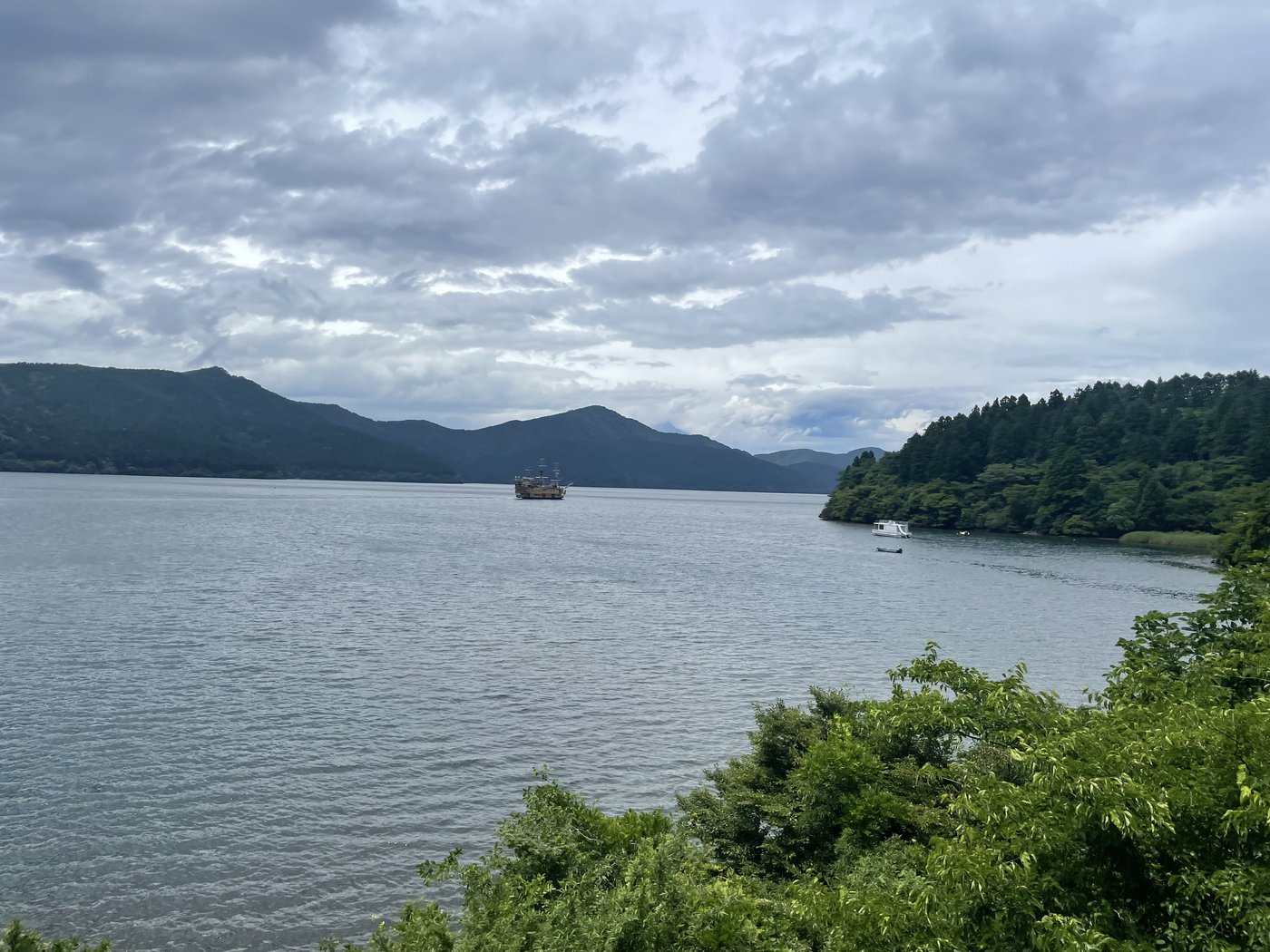
Once you’re in Hakone, ryokan are spread across several onsen areas — Hakone-Yumoto near the station, Gora and Sounzan up the mountain via the switchback railway, and quieter spots like Kowakidani. Many mid-range and upscale ryokan here offer rooms with a private open-air bath (rotenburo) on the balcony, which is the feature to search for if privacy matters to you. If you’re also curious about the area’s art museums, the old Tokaido stone road, and the pirate-ship cruise on Lake Ashi, our Hakone Guide covers the full day-trip version of the area in more detail.
Kawaguchiko: onsen with a Mt. Fuji view
If seeing Mt. Fuji is the priority, Kawaguchiko is hard to beat — several ryokan and hotels here have onsen baths that face the mountain directly, so you can soak while watching the sunset hit the summit (weather permitting). From Shinjuku, the cheapest way there is the highway bus, at around ¥2,200 one-way for a roughly 1 hour 45 minute ride; a more comfortable direct limited express train also runs a few times a day for about ¥4,200 and takes closer to 2 hours.
Kawaguchiko has grown into a fairly touristy lakeside town, so book your room with a Fuji view specifically — not every property has one, and the view rooms are the first to sell out. It pairs naturally with a longer Mt. Fuji day trip if you have the time; see our guide to climbing Mt. Fuji if you’re considering the mountain itself rather than just the view.
Kinugawa Onsen: the quieter, more traditional pick
Kinugawa Onsen, near Nikko, is less on the international tourist radar than Hakone or Kawaguchiko, which makes it a good choice if you want a more low-key, traditional atmosphere. The Tobu Railway’s Spacia limited express runs directly from Asakusa Station to Kinugawa Onsen in about 2 hours, and the newer Spacia X trains add premium seating and even private compartments if you want to make the ride itself part of the experience.
The town sits in a river gorge, and many ryokan here have baths overlooking the water. Because it’s a longer trip than Atami or Hakone, it works best as an overnight rather than a day trip — and it combines well with a stop in Nikko itself to see the Toshogu shrine complex, which our Nikko day trip guide covers in detail.
What to book ahead vs. decide later
- Book your ryokan room ahead of time, especially for weekends and any date near a Japanese holiday — rooms with private baths are limited in number and the good ones sell out weeks in advance.
- Reserve your train seat for the Romancecar or Spacia if you’re traveling on a weekend; these limited express trains are all-reserved-seat and do sell out.
- You don’t need to plan every meal. Most ryokan rates include dinner and breakfast, so once you’ve picked your ryokan, food for that stay is already sorted.
- Don’t worry if you forget something. If you didn’t pack a change of clothes for two days, convenience stores near any of these stations sell basics, and a Uniqlo or GU is usually within reach in the bigger towns if you need more.
FAQ
Do I need to speak Japanese to stay at a ryokan? No. Many ryokan near Tokyo are used to foreign guests and have some English-speaking staff or use translation apps at check-in. Booking through an English-language site also usually means the property is comfortable hosting international guests.
What if I have a tattoo? Many public onsen still restrict visible tattoos, though this is slowly changing. The simplest fix is to book a room with a private bath, or look specifically for a ryokan listed as tattoo-friendly.
Is one night enough? One night works for Atami or Hakone given the short travel time — you’ll still get an evening soak, dinner, a morning soak, and breakfast. For Kinugawa Onsen or a Kawaguchiko trip combined with Fuji sightseeing, two nights gives you more breathing room.
Can I do this as a day trip instead of staying overnight? Yes, technically — day-use onsen plans exist at some ryokan and public bathhouses in all of these towns. But you’ll miss the kaiseki dinner and the slower pace that makes a ryokan stay worthwhile in the first place.
The verdict
For the shortest possible trip, Atami is unbeatable — under an hour from Tokyo Station and still a full onsen-town experience. For the classic ryokan-with-a-view trip, Hakone is the safest choice and the easiest to combine with sightseeing. If Mt. Fuji is the whole point, go to Kawaguchiko and book a Fuji-view room specifically. And if you’d rather skip the crowds entirely, Kinugawa Onsen delivers a quieter, more traditional stay at the cost of a slightly longer ride. Whichever you pick, book your room — and your train seat, if it’s a reserved limited express — before you go.
Written from Japan by the Wayfarer Japan team — practical, honest travel advice from people who actually live here.
Featured image: “Japanese-style Superior Room with Open-Air Bath (21285166194)” by Nishimuraya Kinosaki Onsen, CC BY 2.0, via Wikimedia Commons